
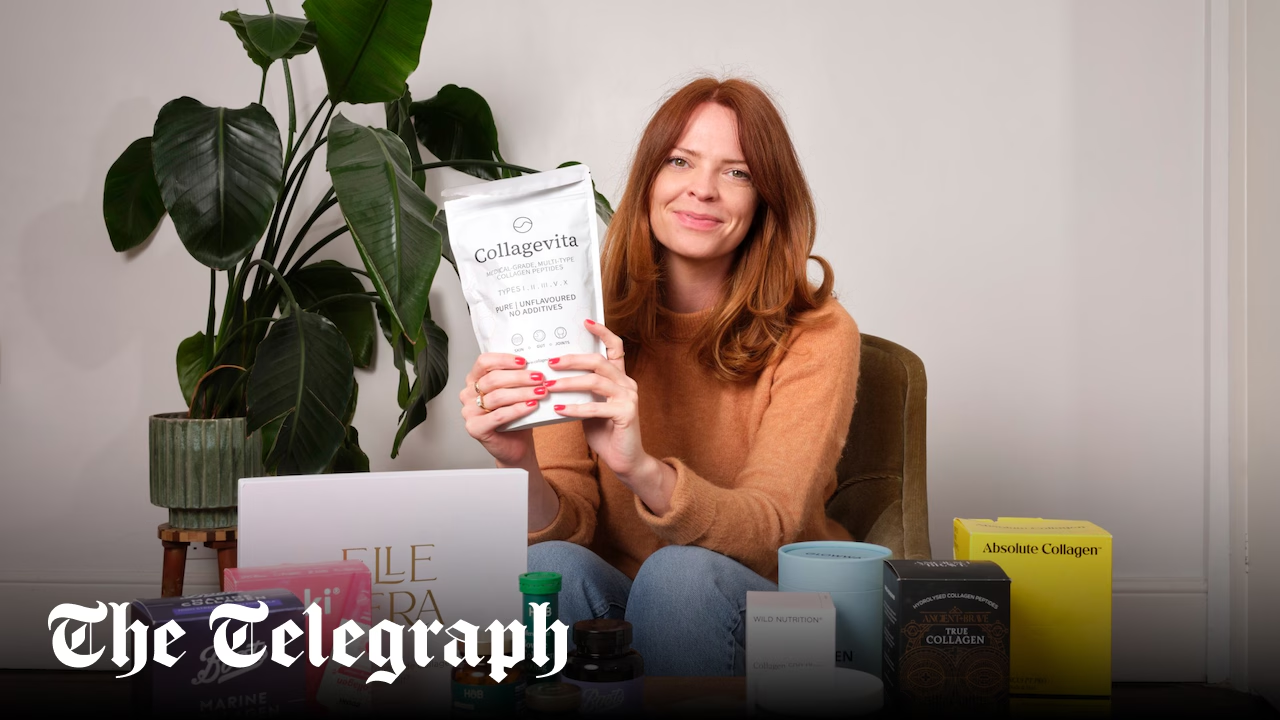
At some point in my thirties, Botox and joint pain became regular segments in conversations. On a group holiday with friends this summer, I counted one slipped disk, one sprained knee, two sore shoulders and several discussions about whether we should get facial tweakments to make us look 25 again.
I would be delighted if a good collagen supplement would save me from it all.
Obsessed as we all are with ageing, the collagen supplement market is exploding: you can buy it in tablets, ampoules, gels, sachets and powders, in an array of fruity flavours – and it promises to stimulate collagen production and do away with your fine lines and wrinkles, and soothe joint pain.
“Sometimes collagen marketing makes you think you’re going to wake up looking like a baby the next day,” says consultant dermatologist and nutritionist Dr Thivi Marauthappu. “I would not hang your hat on that,” she says. Registered nutritionist and author of the Low Appetite Cookbook Rob Hobson also warns that its effectiveness can be oversold and points to research which is “promising but not definitive”.
I’ve been testing collagen products for months. My full reviews are below, but here’s a quick look at my favourite collagens. At Telegraph Recommended, we only award our Best Buy badge to products that achieve five stars. The following collagen products achieved that accolade – and two Holland & Barrett products also met our criteria for a Best Value product.
“Collagen is the most abundant protein in your body,” explains Dr Marauthappu. “In skin, it’s like a structural scaffold. I like to think of it as the mattress under your duvet. All your springs in your mattress need to be strong and bouncy and it’s the collagen that’s responsible for that.”
“It helps provide strength and structure to tissues including the skin, bones, tendons and cartilage,” adds Hobson.
Your body naturally makes collagen using amino acids in the protein that you eat, but as you age, production slows and after early adulthood, our ability to replenish collagen depletes by one per cent each year. “It really falls off a cliff when your oestrogen starts dropping in perimenopause and it’s at that point women notice structural changes in their skin,” explains Dr Marauthappu.
The theory is that when you ingest a collagen supplement, your body will break it into peptides and amino acids that will stimulate collagen production but as yet, there is no definitive research to prove that’s what’s happening. What’s more, the research that has been conducted is often funded by the companies selling the supplement.
In fact a review of these studies found a clear split between those that were industry funded and those that were not, with the former finding significant improvements in skin hydration after taking collagen and the latter finding no effect on skin.