

It’s not just Hailey Bieber that takes a shot of shot of olive oil with lemon every morning – television presenter Angela Scanlon admitted on the latest episode of the foodie podcast, Dish, that she too ‘glugs’ a shot of olive oil ‘down the hatch in the morning’.
And they’re not the only ones. Kourtney Kardashian routinely drinks a tablespoon of extra virgin olive oil when she wakes up, according to her site, Poosh. Gwyneth Paltrow’s Goop has promoted the practice on its socials. And, a Beyoncé-backed wellness company sells a $68 bottle of the stuff that comes with its own shot glass.
‘Sometimes I’ll do it with lemon, or mix it with lemon, but then I kind of think in hindsight that might be a little curdl-y,’ Scanlon tells podcast hosts Nick Grimshaw and Angela Hartnett OBE.
As for why she’s gulping down a daily shot of olive oil, Scanlon doesn’t give a specific reason – and notably, she makes no claims about it helping with weight loss, digestion, skin or immunity. She simply describes it as part of her morning routine.
When the conversation turns to lemon water, Scanlon says she thinks she’s ‘a bit intolerant to lemon’ because it makes her ‘break out’, although she adds: ‘You can’t duck and dive and swerve lemon. Like, what is life without it?’
So, is the celeb-loved trend worth the hype? Should we update the old saying to ‘a shot of olive oil a day keeps the doctor away’?
To get to the bottom of it, we tapped experts to learn more. Below, they share whether the olive oil shot trend actually works and how you can incorporate a healthy dose of olive oil into your everyday diet.
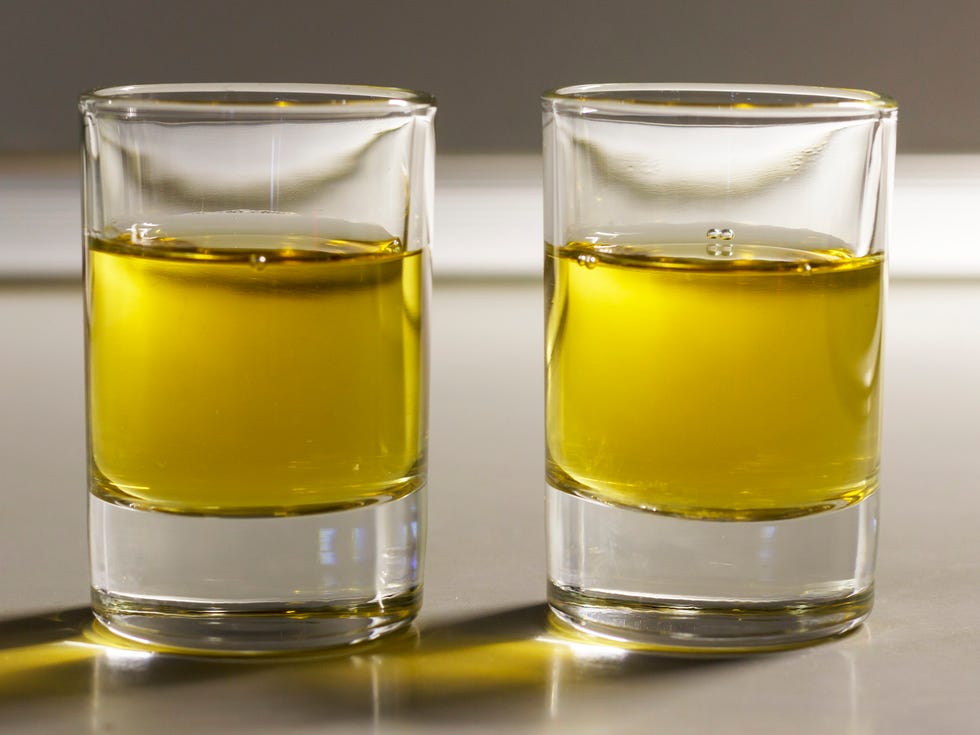
Aleksei Vel.
Is a daily shot of olive oil good for you?
Olive oil does have some pretty legit health benefits, experts agree. It’s a staple in the Mediterranean diet, which is consistently touted as one of the healthiest diets, linked with heart health, brain health, and longevity.
In addition to olive oil, the Med diet emphasises foods like fruits, vegetables, nuts, legumes, and fish while cutting down on highly processed foods and added sugar, explains women’s health expert Dr Navya Mysore.
As for olive oil itself, it doesn’t actually matter how you consume the liquid. ‘You aren’t necessarily getting any added benefit by taking it as a shot,’ she says. No matter how you consume it, these are the benefits you’re getting.
It may help reduce inflammation
Olives – and olive oil – are packed with antioxidants, which are compounds that help protect cells from damage, Dr Mysore says. Specifically, they contain polyphenols, a type of antioxidant that has anti-inflammatory properties. ‘Extra-virgin olive oil is particularly rich in polyphenols, which contribute to both its peppery, or slightly bitter taste, and many of its health benefits,’ Dr Mysore says.
A 2021 study found that olive polyphenols contain a host of benefits, such as counteracting ageing and protecting against neurodegeneration, cardiovascular and metabolic diseases, and even cancer.
Moreover, a 2025 study found that consuming extra-virgin olive oil not only has strong anti-inflammatory properties, but also modulates gut and oral microbiota, demonstrating a prebiotic effect.
It’s good for your heart
More than that, olive oil is excellent for heart health. Olive oil lowers LDL (low-density lipoprotein) cholesterol, says dietitian Dana White. A quick lowdown on the two kinds of cholesterol: LDL cholesterol, or ‘bad’ cholesterol, contributes to fatty buildup in your arteries and heart, while HDL (high-density lipoprotein) cholesterol, or ‘good’ cholesterol, takes that LDL away from your arteries and back into the liver, where it can properly be broken up and disposed of.
According to a 2022 study originally published in the British Journal of Nutrition, extra-virgin olive oil polyphenols can improve HDL function, allowing the good guy of cholesterol to do its job better. Plus, another study published in 2025 echoed similar findings, concluding that a diet high in extra-virgin olive oil, such as the Mediterranean diet, correlates with healthy arteries and a reduced risk of cardiovascular events.
It, uh, could help get things moving, too
In Hailey Bieber’s video with Time, she claimed a shot of olive oil each morning helps ‘[coat] your gut,’ getting the digestive tract started on the right foot.
While Dr Mysore says olive oil can potentially help get things moving down there, the jury is still out on whether it’s because it’s actually coating the gut or because the high fat content helps trigger a bowel movement – but it’s looking like the latter. White says, ‘the “coating your gut” thing makes absolutely no scientific sense at all.’
But it’s unclear if olive oil actually helps your skin
Many celebs – Bieber included – have touted olive oil for its skin care benefits, but the science there is a little murkier. ‘A daily tablespoon of extra-virgin olive oil can absolutely be part of a healthy diet, but the skin benefits are being oversold,’ says Heather D. Rogers, a Seattle-based procedural dermatologist and owner of Modern Dermatology.
While olive oil does have many health perks thanks to its antioxidant and anti-inflammatory properties, ‘there’s no evidence that taking a daily shot of olive oil, by itself, will noticeably improve the skin,’ she says. That said, we know olive oil can be an important part of a healthy diet, and ‘healthier bodies do often have healthier skin,’ she adds.
How to incorporate olive oil into your daily routine
If you want to try the olive oil shot trend, Dr Mysore says there’s no harm in doing so – with a couple of caveats. If you’re prone to nausea, frequently experience acid reflux, have gallbladder disease, or are pregnant, a shot of olive oil could cause some discomfort or exacerbate the condition. But ‘if you’re otherwise healthy and you want to give it a try, I don’t think there’s any harm in it,’ Dr Mysore says.
Experts agree that an easier (and just as effective) alternative to the olive oil shot trend is simply incorporating olive oil into your daily diet. The best way, White says, is to eat it raw, like poured over a salad or on hummus. ‘Something like [olive oil] helps you absorb fat-soluble vitamins, so if you were to drizzle that or use it in a vinaigrette, it’s going to help you absorb the fat-soluble vitamins in those ingredients,’ she says.
Cooking, roasting, and sautéing with it is great, too, as long as you don’t burn the oil, which could compromise some of those nutrients or contribute to a bitter taste, adds White.
No matter how you do it, here are a few things to keep in mind:
The amount of olive oil you should consume per day depends on your own caloric intake and goals
If you’re wondering how much olive oil you need to reap its health benefits, experts say there’s really no one-size-fits-all recommendation. Dr Mysore suggests a good ballpark to aim for is one to two tablespoons per day, but still, it depends on your overall calorie needs, eating habits, and personal preferences.
It’s also worth keeping portion sizes in mind. Each tablespoon of olive oil roughly contains 120 calories, says White. Because it’s calorie-dense, the amount that makes sense for you will depend on your broader nutrition goals.
‘Something to keep in mind is that olive oil has a lot of concentrated calories,’ she explains. ‘That’s not good or bad. If it’s leading to an excessive consumption of calories, then that could mean you’re adding some extra calories and potentially some weight gain you’re not looking for, versus sometimes people that are actually trying to seek out more calories, adding more olive oil to something is actually a good way to do that.’
Store it in a cool, dark place
To help preserve your olive oil’s flavour and quality, keep it in a cool spot away from direct sunlight, says White. A cabinet or pantry is ideal – just make sure it’s not too close to your stovetop or other heat sources, which can cause the oil to deteriorate more quickly.
On that same wavelength, it’s ideal to store your olive oil in a darker-colored bottle to protect it from light exposure.
Quality matters
The fresher, the better. In the grocery aisle, look for a bottle with a recent harvest date, says Dr Mysore. ‘Labels such as “extra-virgin” and “cold-pressed” can also be helpful, since these oils undergo less processing and tend to retain more of their beneficial compounds,’ she adds.
You’ll also want to pay attention to flavour and colour. According to White, darker, richer-flavoured olive oils tend to contain higher levels of antioxidants than lighter varieties.