
A cloud of garlic-scented steam billows from the open oven as chef Jason Halverson crouches in front of a tray of roasted, butter-slick Dungeness crab. “Oh, my God, I love you,” he says, gazing at the bounty of locally caught shellfish.
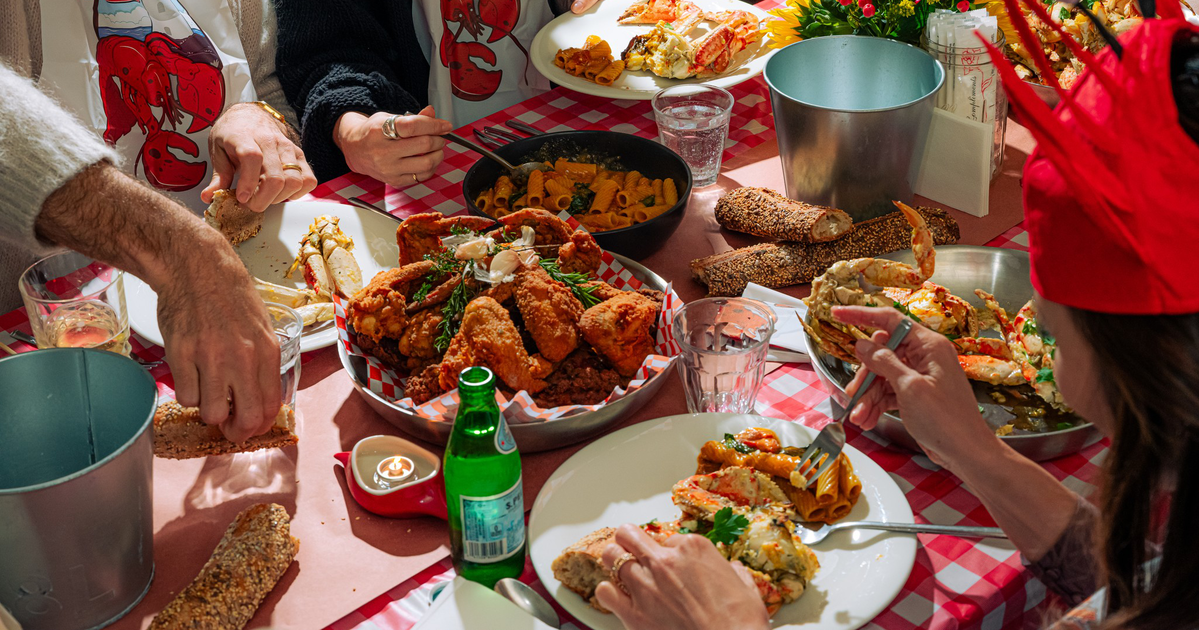
In about 25 minutes, a dozen friends and colleagues will fill his Marina District apartment for what has become an annual tradition: a blowout feast to celebrate the start of Dungeness season. In addition to heaping platters of fresh, bay-caught crab, the evening’s menu includes pasta drowned in a luscious sauce bolstered with crab fat, plus salad and heaps of crispy fried chicken.
Before launching Hi Neighbor Hospitality — the group behind The Vault Steakhouse, Trestle, Mama Oakland, and 7 Adams — in 2014, Halverson cooked at La Folie, Michael Mina, and others. But even if he has more kitchen experience than most, he’s adamant that any home cook can pull off a crab feast of their own.
“Hosting this kind of dinner is ballsy,” he says, “since your house can get the brunt of it, between the crab shrapnel and lingering smells of garlic and butter. But it’s high risk, high reward — and so much fun.”
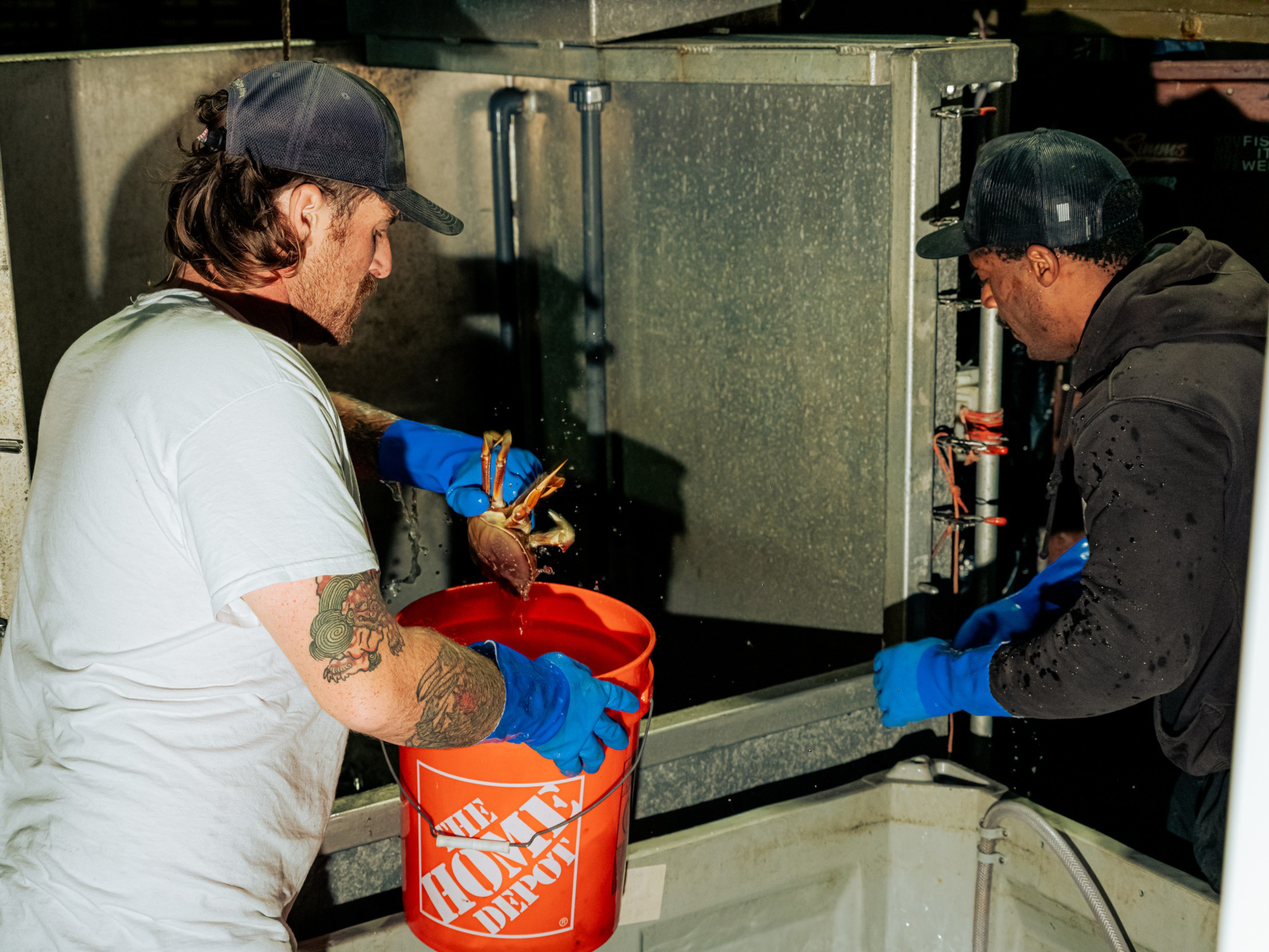


The first step to hosting a crab feast is to get your hands on some crab. For the past three years, Halverson has purchased his from the boats at Fisherman’s Wharf. This year, he headed to Pier 47 at 6 a.m. on a Sunday to get first-of-the-season crabs from Shawn Chen Flading’s boat FV KVINS.
To transport the crab, Halverson uses a rolling, khaki-colored Yeti Tundra cooler packed with ice. Though most of the wharf’s crab sellers accept Venmo or Zelle, cash is preferred — and he has plenty of it. This year, Dungeness off the boat costs $11 per pound, or roughly $25 per crab. Halverson’s haul — 21 crabs, including 14 for the feast and a few to give to neighbors and friends — costs $421.
The ideal timeframe for eating is immediately. “You really don’t want to try to store them any longer than 36 hours,” Halverson says. If you have to keep your crabs alive for a few hours, he suggests covering them with damp newspaper or, better yet, a layer of seaweed, which you can sometimes get from the folks on the boat. “What you want to do is try to store them kind of as cold as possible, without freezing,” he says. “And I like to try to keep some type of moisture on them.”

Because Halverson has to cook dozens of crabs, he heads to the kitchen at The Vault Steakhouse, where he can take advantage of the commercial stove and abundance of prep space. He brings water to a boil in a massive stainless steel stock pot, adding a spice mix of salt, cayenne pepper, fennel seed, and coriander seed in equal parts, a concoction he picked up while working at La Folie. If you’re boiling crab at home, he suggests using an 8-quart stock pot, which should fit two crabs. Add about one cup of spice mix.
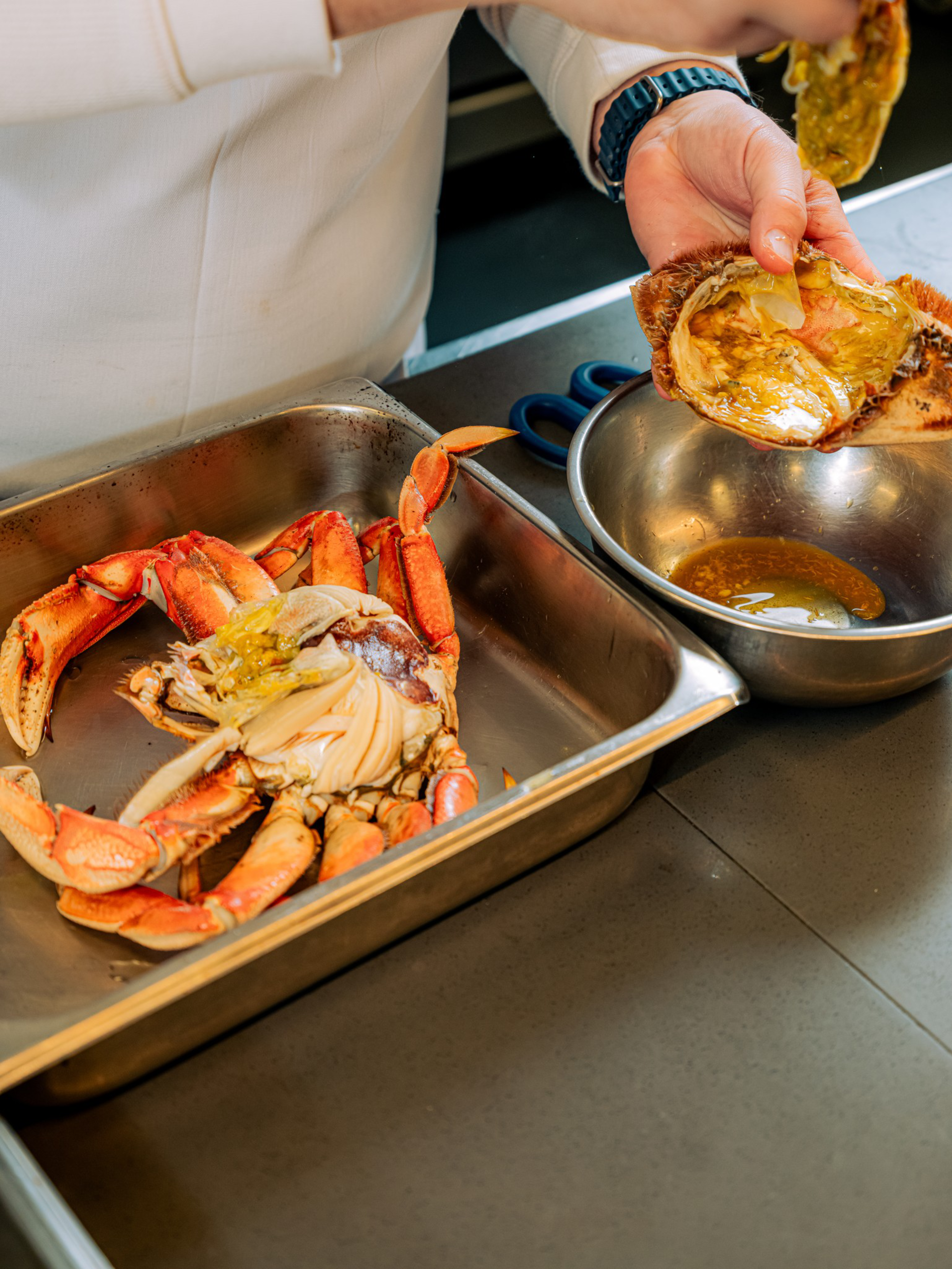
Since he plans to roast the crabs in butter after they’re boiled, Halverson slightly undercooks the meat. About 10 minutes at a roiling boil usually does the trick. Then he puts them in an ice bath and, once they’ve cooled, begins the messy work of breaking them down. “Rip off the head first — the top, the cabeza,” Halverson says, referring to the top shell. It will be filled with “fatty goodness,” which you should set aside to use for pasta sauce.
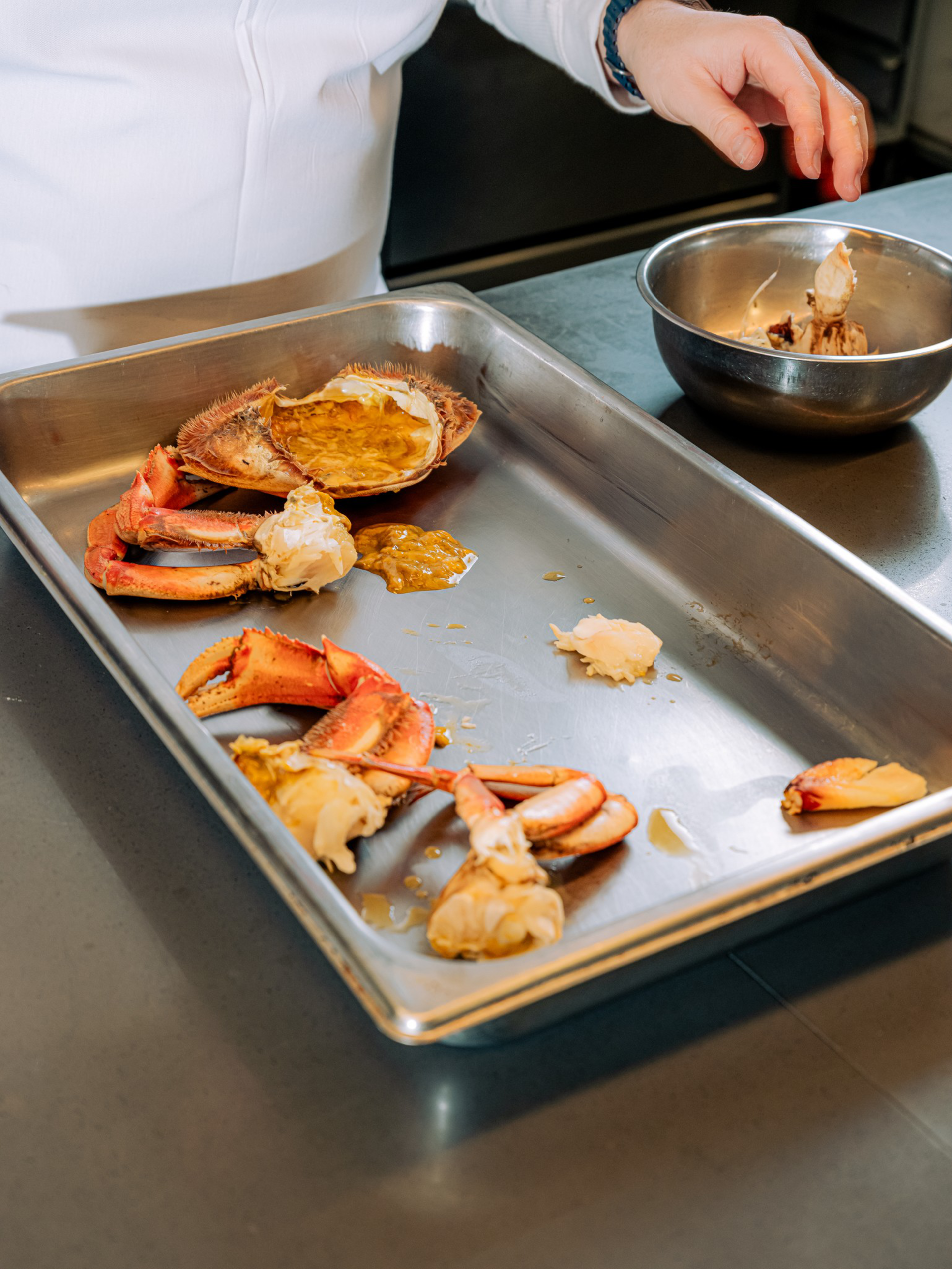
Then, Halverson flips the crab over to remove the apron, innards, and gills. He takes what’s left — essentially just the legs and claws — and cuts them into fourths, once down the middle where the abdomen used to be, then in half. “I like going down to quarters, because it doesn’t make you feel obligated to grab so much,” he says. “You don’t have to have such a full plate at all times.”


The rest of the party prep takes place at home. While the oven heats to 450 degrees, Halverson makes a compound butter, which is when his secret ingredient comes into play: Boursin, the soft, Gournay-style cheese. “I think this came about by accident — I was cooking, and I didn’t have enough butter,” he says. “But I had, for some reason, a lot of Boursin.”
He discovered that, unlike butter, which ends up pooling at the bottom of the pan, the cheese clings to the shells. This has become his go-to technique, mixing approximately equal parts of room-temperature butter with Boursin studded with herbs, plus whatever alliums he has on hand — usually a fistful of chives and a minced shallot.
After everything is blended (Halverson’s restaurant-style method is to pull on a pair of disposable gloves and mix everything by hand), he rubs each piece of crab with as much of the butter-cheese mixture as he can make stick. He transfers the butter-covered crab to a rimmed baking sheet, being careful not to overcrowd it, and roasts it in the oven for about 15 minutes. “You end up having this coating where you’re licking your fingers of Boursin and garlicky, cheesy butter,” Halverson says. “It makes it a little bit more fun … a little bit more robust.”
This year, the salad is made with a few things he had in the fridge: shaved radicchio, sliced persimmons and apples, and a lemon vinaigrette. “It doesn’t always have to be your traditional salad, but because we have lots of richness and lots of fat and garlic and super pungent flavors, we want a little bit lighter and sweeter,” he says. “It’s kind of like, follow your heart.”
But it’s the pasta that’s the sleeper hit. To make it, Halverson tosses the extra shells and other would-be discards into a pan with a generous nub of butter until just roasted, “so it becomes very aromatic.” Then he adds tomato paste and a splash of white wine, before filling the rest of the pot with water. In about 25 minutes, he has a quick crab stock. In a new pan, he sweats garlic, fennel, and onion, then adds cherry tomatoes and a cup or two of the stock. After letting it reduce, he bolsters it further with the fat he set aside earlier, which he has since transformed to a smooth paste with an immersion blender.
He finishes the parboiled pasta in the sauce, letting the noodles cook to a perfect al dente as the sauce thickens. “I don’t want to call it a pro move, but I’ve started to steer away from strand pastas,” he advises. “I love extruded and tube pastas” — rigatoni, penne, fusilli — “only because they’re better to serve. It’s less of a mess on your plate, and it’s easier for sharing.”

By now, Halverson’s guests have started to arrive and are sipping Champagne while he ferries food to a long, butcher-paper-covered table set up in the middle of the living room. Bubbles are the chef’s choice to drink with crab, though the evening’s pairings also include a zippy bottle of Austrian white: Emmerich Knoll Grüner Veltliner.
With crab crackers in hand and plastic bibs tied around their necks, the guests make quick work of the Dungeness over two hours, filling tabletop metal buckets with empty shells and crumpled paper napkins. By meal’s end, nearly everyone has torn off their bibs and is leaning back in their chairs, smiling and smelling of seafood and garlic.
Finally, Halverson ushers everyone out the door to tackle the mountain of dishes. In addition to a box of leftover fried chicken, he dispenses a few parting words of wisdom for anyone attempting to re-create the epic dinner party for themselves: “Have fun, have a big trash can ready to go, and there’s never too much butter.”