
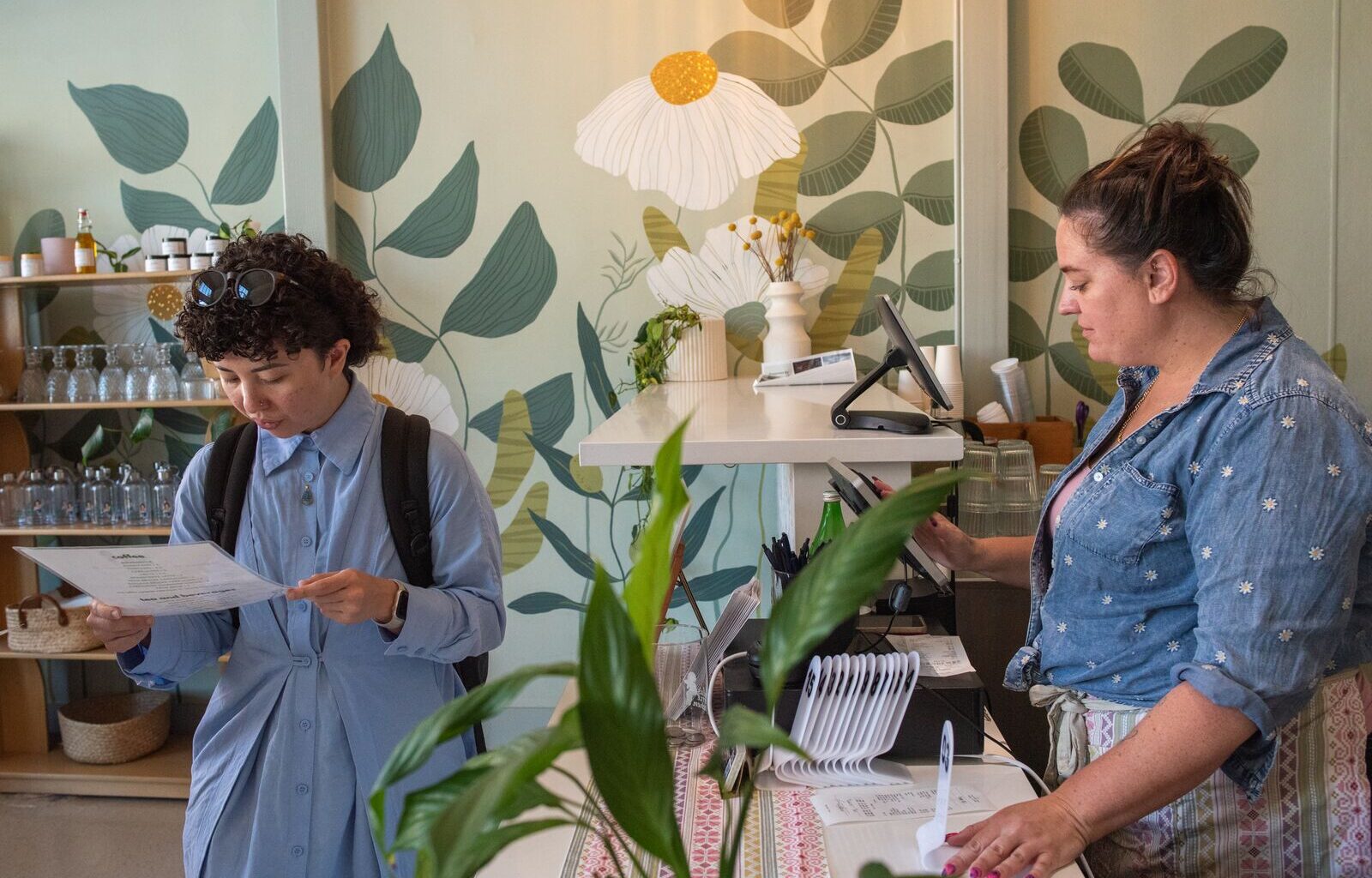
Darwin’s theory of evolution states that organisms evolve by developing characteristics that increase their ability to compete, survive and reproduce. Species that evolve to best adapt to their environments, the theory says, are most likely to survive.
It can be argued that this theory also applies to restaurants. As food, rent and labor costs soar, the restaurants that can adapt to a changing environment are ultimately the ones that will survive.
Chef Mona Leena Michael opened Lulu’s on Solano with full table service in the spring of 2024. Building on momentum from its original, smaller location in the Gilman District, sales started off strong for the Palestinian-Californian spot at its new location in Albany, but less than a year in, Michael noticed diners’ spending habits beginning to shift.
“We were doing pretty well, and then maybe eight months in, sales started dropping. It wasn’t reservations that were dropping — we were still getting the same amount of guest count — but people were spending less,” she said.
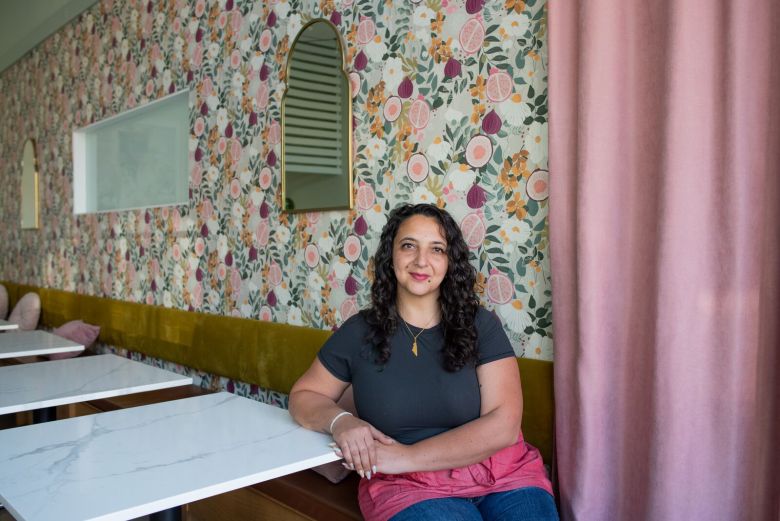 Mona Leena Michael, owner of Lulu’s Little Kitchen, recently switched to counter service, expanded the hours and consolidated seating into one dining room. Credit: Ximena Natera for East Bay Nosh
Slower sales are to be expected in the summer months and are usually nothing to panic about, Michael said; they tend to ramp back up in the fall and winter. But last November, after a typically slow summer, the numbers remained sluggish.
“That’s just been the general trend, slow summer, and then November hits, and …. we’re making back all that money that we lost in the summer. This year, that never happened,” Michael said. At its onset, Lulu’s check average hovered around $45 to $50 a person. Those numbers waned to $25 to $30 per person as diners responded to the rising costs of eating out.
At the beginning of 2026, Michael shut Lulu’s on Solano down and completely rethought her approach. In February, she relaunched as Lulu’s Little Kitchen, becoming just the latest in a growing list of restaurants that have shifted away from table service, waiters and reservations.
By now, there’s an unspoken rule about running a restaurant in the East Bay: if you’re offering full table service, you need to get comfortable seeing red in the ledgers. There are rising food and labor costs to consider, plus the astronomical rent prices typical of Bay Area real estate. On top of that, there are the changing spending habits of diners in a post-pandemic economy with a stubborn inflation problem; a recent McKinsey analysis reported that restaurant dine-in and takeout costs rose roughly 6% from January 2024 to September 2025. Making ends meet can be so stressful that it’s known to take a physical and mental toll on owners.
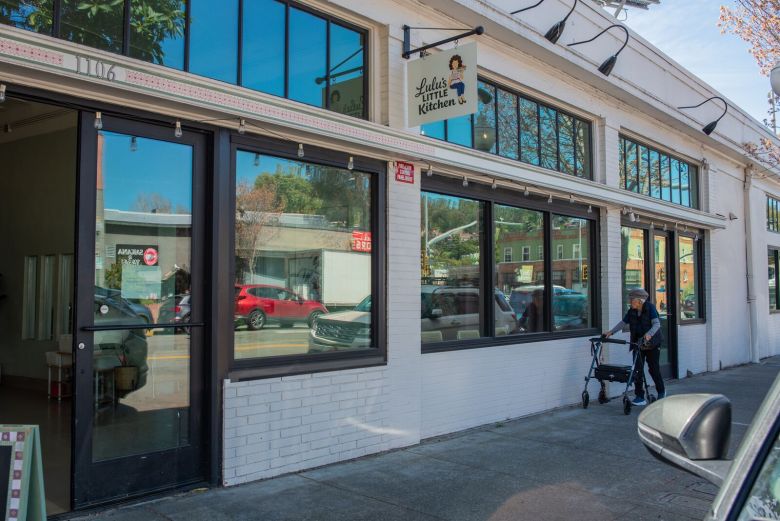 Lulu’s moved into a new, larger space in 2024, but has now downsized and an adjacent space formerly used for additional seating will now house a family member’s new business. Credit: Ximena Natera for East Bay Nosh
Restaurant operators are coping with this in different ways. Some business owners decide to sell. Others close up shop permanently or focus on catering and pop-ups to lower overhead costs. But for many, keeping a restaurant alive means ditching full table service and switching to a fast-casual counter service model — a trend that’s steadily gaining steam in the East Bay restaurant scene.
Operating at full-service capacity with dwindling sales was pushing Lulu’s to the financial brink. It became clear to Michael that pivoting to a counter service model would be the only path forward. “After a very slow November, December, we had to make the decision, because the math wasn’t math-ing anymore,” she said.
Restaurants get serious about evolving for survival
On the surface, slimming down from a full-service to fast-casual restaurant may seem like a simple change. It’s anything but.
In Lulu’s case, the transition to counter service required a substantial business overhaul. It involved paring back square footage to cut rent costs, axing the housemade bread program (running the ovens so frequently was jacking up the PG&E bill) and reducing the number of staff by half, plus reconfiguring operating hours. Michael analyzed which days and hours were historically the busiest, then concentrated the new hours around those times. The changes enabled her to streamline the prep process and offer the same dishes diners knew and loved at lower price points.
“We kept our recipes, so everything was still the same food, the same sauces, the same ingredients that we always use. We reconfigured them into composed dishes at a lower price point, which we were able to do by reducing our number of staff and streamlining the prep process that way,” she said. “So far, we’ve been three weeks in and our numbers are insanely different.”
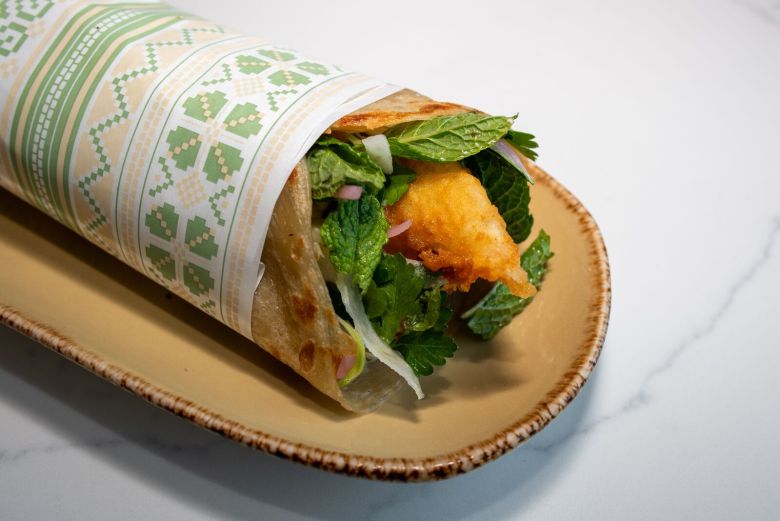
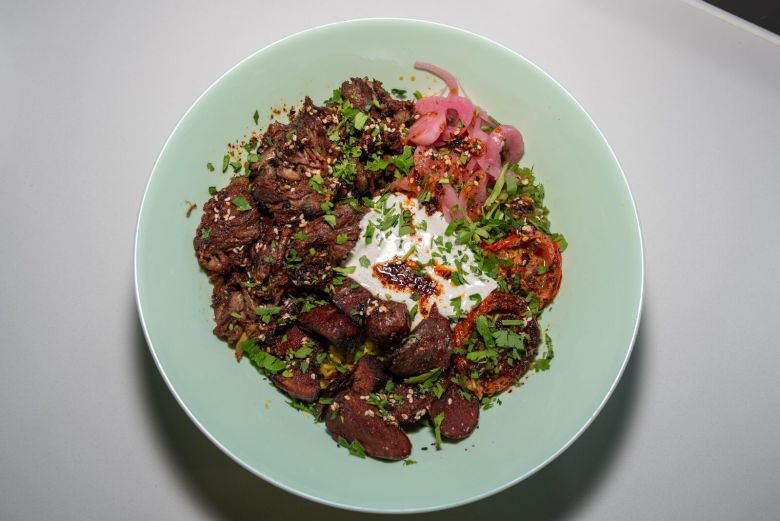
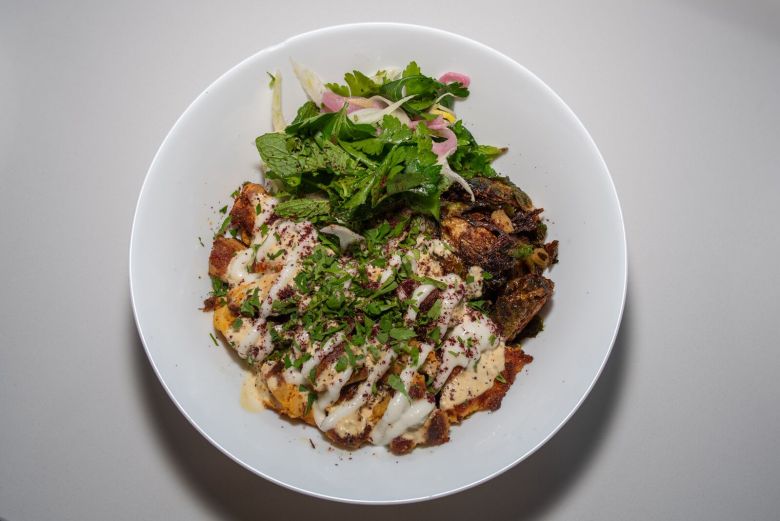
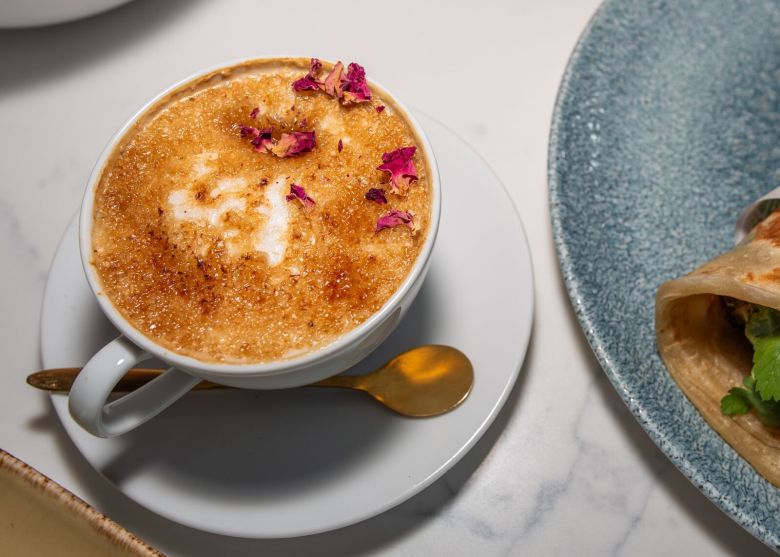
The revamped menu at Lulu’s features many familiar items that were reconfigured into composed dishes at a lower price point, including (clockwise from top left) a roti wrap with halloumi, braised lamb, a souflee latte, and a chicken kebab bowl. Credit: Ximena Natera for East Bay Nosh
Lulu’s is one of a handful of local restaurants that has moved to counter service in search of financial stability. Stella Dennig and Finn Stern, whose sit-down restaurant Daytrip shifted to its fast-casual iteration Daytrip Counter in 2025, have also noticed a considerable improvement in their business margins.
“We’ve seen our margins get so much better and our business gets so much more sustainable by focusing on volume,” Stern said. “We offer delivery, we offer pickup. We’re making it really convenient for people, from a price point, to eat our food, and it means we’re serving more people. I really think it will make Oakland a better place to live when we can all feel like it’s a little more affordable.”
“There’s less crying in the walk-in.”
Daytrip Counter Co-owner Finn Stern on the switch to counter Service and a set menu
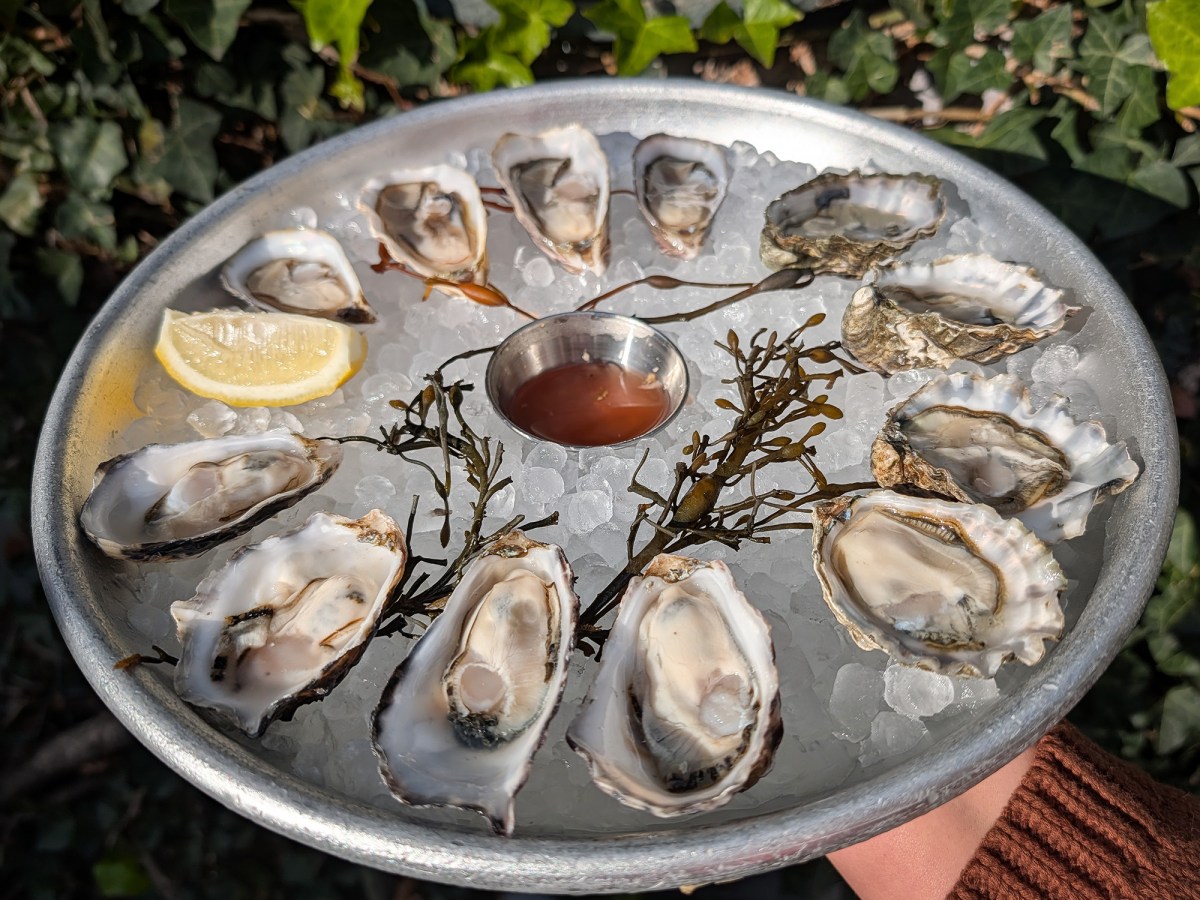
Ace Seafood (formerly Small Change), the Temescal seafood and oyster bar, also went from full table service to a hybrid counter service model in February. Similarly, the goal was to revamp the menu at a more affordable price point. Guests can now order at the counter, start a tab and grab silverware, while the front of house staff handles any additional food, drink or oyster orders tableside. And, like at Daytrip Counter, streamlining the menu to focus on volume has increased efficiency and helped lower costs.
“We’ve been able to bulk out the back of house a bit, which is great for the volume of food we are able to produce these days. We went from one fryer to three. One for fish, one for chicken and one for veg,” co-owner Peter Gutowski told Nosh in an email.
The counter service trend isn’t unique to the Bay Area. In 2024, Food & Wine reported that restaurateurs across the country — from Philadelphia to Austin to Reno — were feeling the pinch to move towards counter service. For many, it’s the only viable path to survival in this economy, one that’s being met with mixed feelings by owners and diners alike.
“I put it off for so long for a couple of reasons,” Michael said. “One, I really felt shitty having to reduce my staff and people depending on the restaurant to survive. That was messing with my emotions.”
“Part of it was really putting my ego aside and saying, listen, Mona, you’ve done what you could, you created a beautiful thing, the economy is changing, people’s needs are changing, it’s time to adjust and adapt to those needs. And I had to just do it, I took the plunge, and three weeks in, I’m just relieved,” she said.
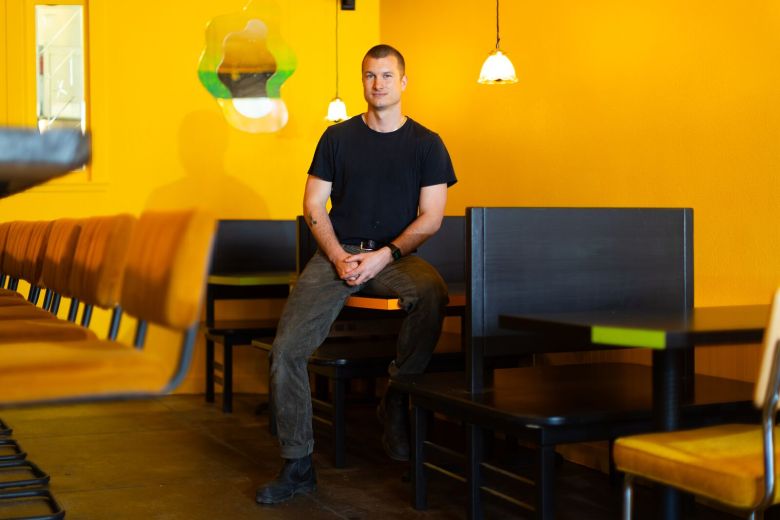 Daytrip Counter co-owner Finn Stern says the shift to counter service has noticeably improved his quality of life. Credit: Estefany Gonzalez for East Bay Nosh
Stern echoed Michael’s sentiment. While he said he misses Daytrip and its creative menu, he also noted that the shift to counter service has significantly improved his quality of life. Daytrip’s rotating menu placed severe strain on the restaurant’s financial health and his own stress levels. The fixed menu at Daytrip Counter makes it easier to predict costs and adds an extra layer of stability.
“My life is balanced. It helps when a menu stays consistent. It helps when we’ve embraced the convenience-oriented trends in dining,” he said. “We are accomplishing the goals that we set out to do when we originally opened Daytrip, so much more. That means respect towards employees, respect for the customers that walk in, all shareholders, including ourselves as business owners.”
“There’s less crying in the walk-in,” he added.
For diners, counter service can be a welcome change or a disappointing experience
Overall, restaurant owners are noticing generally positive customer feedback in response to new counter service models.
“Our transition to counter service has been very well received,” Gutowski said. “We’ve found this more casual approach allows people to enjoy our space more freely.”
Abigail Braceros lives in West Oakland and dines out regularly. She said she enjoys the bounty of fast-casual the East Bay has to offer, especially given the price point and flexibility that takeout and delivery-friendly restaurants provide.
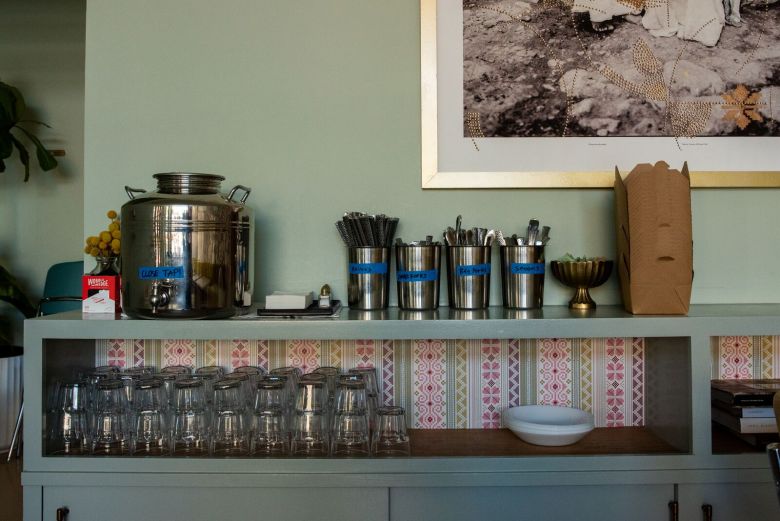
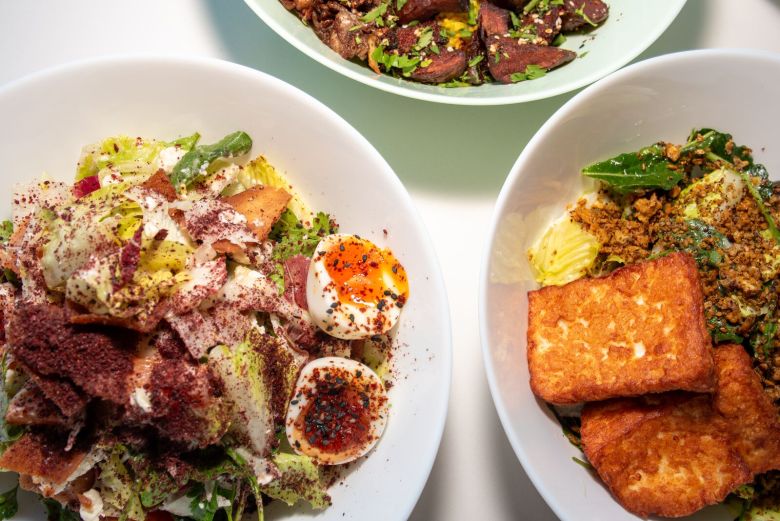 Top: To accommodate the move to counter service, Lulu’s Kitchen added a water and utensil station in the main dining room. Bottom: Lulu’s Little Kitchen’s refreshed menu includes a toum Caesar bowl, left, and fattoush salad with halloumi. Credit: Ximena Natera for East Bay Nosh
“I feel like [fast-casual] gives us more variety of ways that we can enjoy the food, whether at the spot, taking it to someone’s house and enjoying it there or going somewhere outside, at a park or somewhere by Lake Merritt,” she said.
Braceros also noted that counter service restaurants are giving fast food joints a run for their money. She recalled a time she drove up the I-5 from Los Angeles to Oakland and stopped at a Jack in the Box for a meal. It ended up running her between $15 and $20 — about the same, she thought, as it would cost to get a good meal at a local counter service restaurant.
“For the same cost, I can go to a fast-casual spot like Daytrip Counter and get a chicken salad for $15, $17. It’ll be healthier and more nourishing for almost the same price point,” she said.
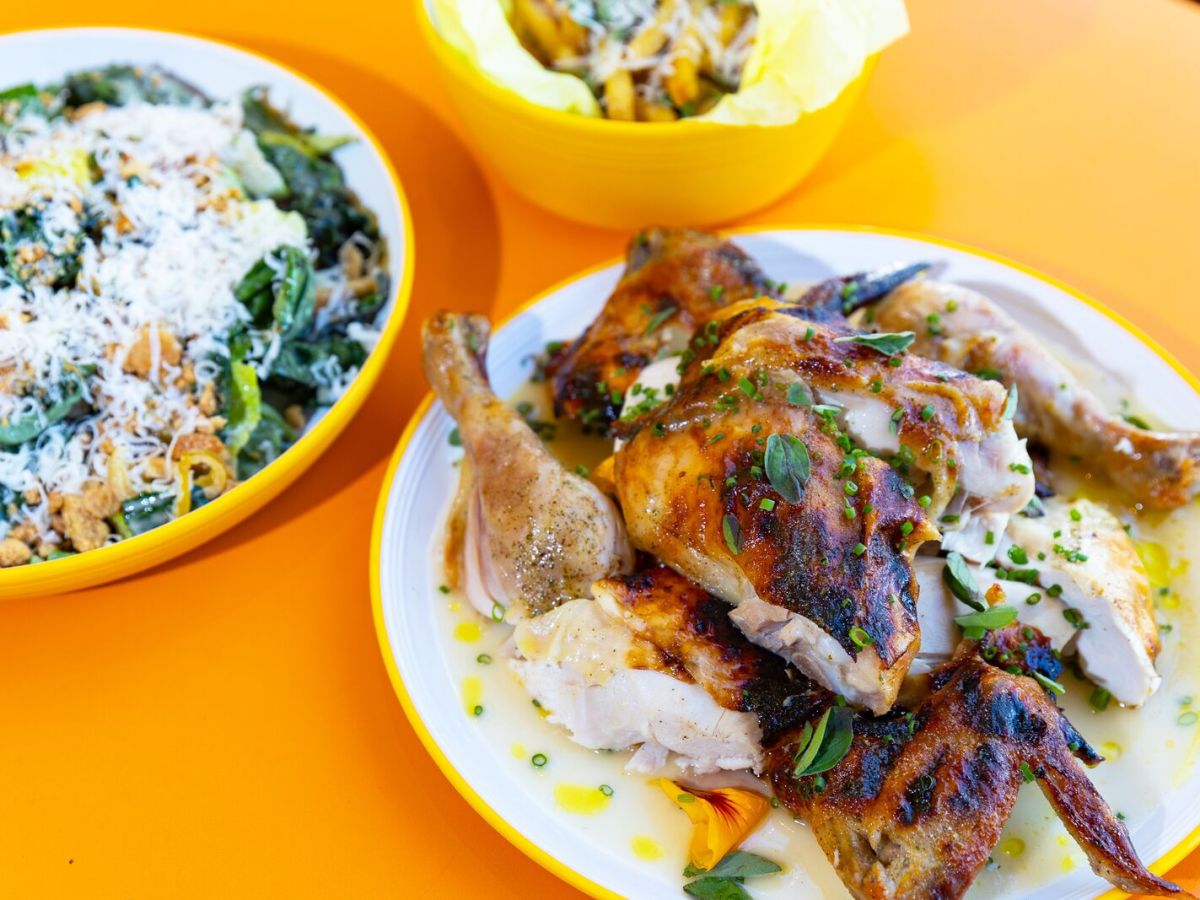
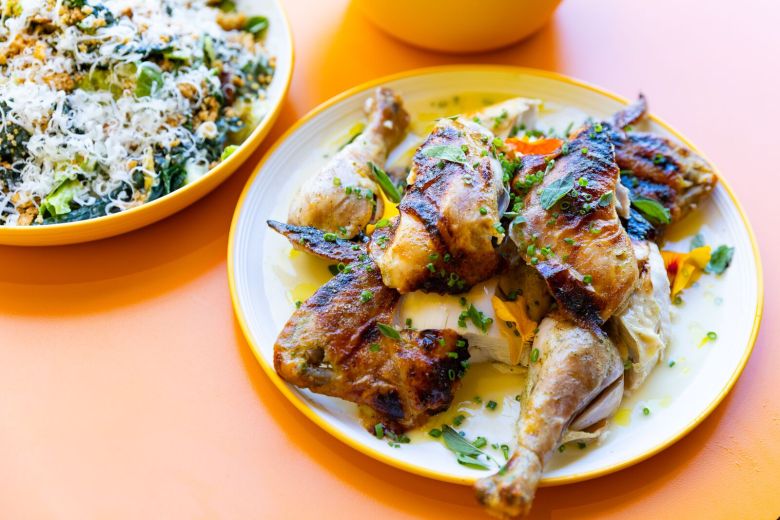 Daytrip switched from a fermentation-focused menu that changed daily to a set menu built around rotisserie chicken and salads. The restaurant has been in much better financial position ever since. Credit: Estefany Gonzalez for East Bay Nosh
There are, of course, diners that find the switch of a longstanding full-service restaurant somewhat jarring. Michael said her restaurant recently received a negative review from a customer who’d been upset by staff asking her to let waiting customers use the table after she’d finished eating.
“You’re not going to make everybody happy,” Michael said. “It’s an example of a guest that was our regular before and would come and dine and sit and catch up with friends and all that, and now that our concept has changed, she’s unhappy with it. There are still some situations where people are disappointed with things, but it’s so minimal. It’s so minimal compared to the people that are excited and coming in and spending money and supporting us.”
Lulu’s business model has changed considerably, but diners can still walk into the restaurant and expect the same hearty meals they’d grown accustomed to before the pivot.
“I don’t think our identity changed because our recipes are exactly the same,” Michael said. “We still have people coming in for the first time being like, ‘you didn’t get rid of the Caesar salad, thank God.’ So, they’re still able to get what they used to get at a lower price point, so they’re coming in more often, and they’re excited that it hasn’t completely changed.”
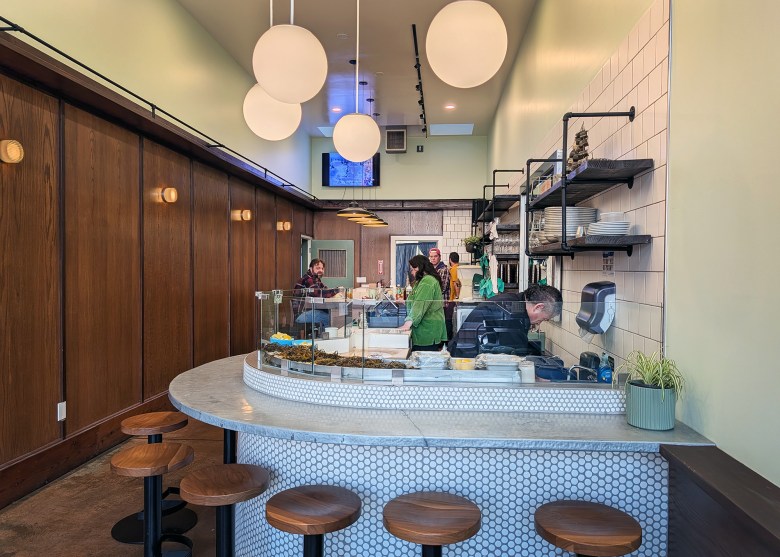 ACE Seafood, formerly Small Change, was taken over by new management early in 2026 who converted the restaurant to counter service. Credit: Courtesy of Peter Gutowski/Ace Seafood
This doesn’t mean sit-down dining is going away forever. In its recent restaurant consumer study, McKinsey noted that high-income baby boomers and millennials showed a strong preference for full-service restaurants as opposed to fast-casual and takeout spots. And while these demographics are plentiful in the Bay Area, the need for affordable, accessible dining has become apparent for restaurant owners and diners alike.
“After the pandemic, people went out in a different way and the infrastructure of the dining industry has changed … What are restaurants to do but adapt?” Gutowski said. “Do we think sit-down, full-service restaurants will go away? Definitely not. But do we think our modified counter service model is going to be our way to stay relevant and monetarily viable? For us, the answer is yes.”
Related stories
Fresh take: Ace Seafood seeks to reel in a broader audience with revamp and relaunch
March 4, 2026March 5, 2026, 7:21 a.m.
Oakland’s ‘party restaurant’ reinvents itself as affordable, family-oriented dining
April 16, 2025April 16, 2025, 2:11 p.m.
The César team is staging a comeback, with help from author Michael Lewis
March 30, 2026March 30, 2026, 3:18 p.m.
“*” indicates required fields