
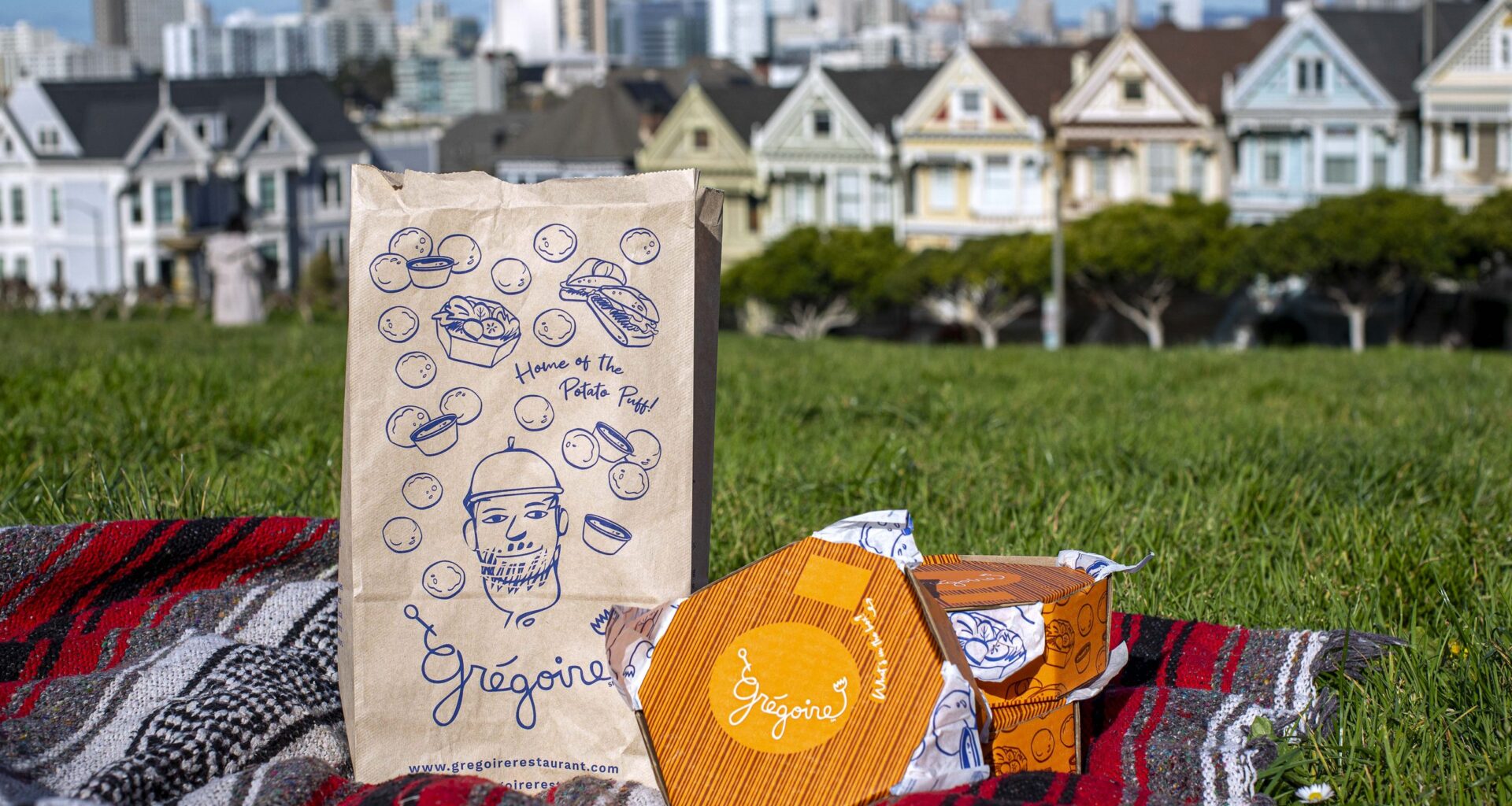
It’s no secret that owning and operating a food business is hard, but in the Bay Area it is its own beast. Owning a food business here means wading through a competitive market littered with high real estate costs, rising labor and food costs and a dining scene that, at times, can be unforgiving.
Yet a growing number of East Bay restaurants, bars and cafes are doing more than just keeping their doors open, they’re crossing the bridge and adding their culinary influence to one of the most celebrated food cities in the United States
Rose Pizzeria, named one of the best pizza spots in the country by the New York Times, made the jump with its Inner Richmond location in April. Elaichi Co. also expanded to San Francisco that month, bringing its chai-centric ethos to the downtown area. Other East Bay-born food businesses like Signal Coffee Roasters, Boichik Bagels, and Red Bay Coffee made their debuts earlier and left a considerable mark, having established multiple locations across San Francisco.
While there’s no foolproof formula for expanding a food business, restaurant consultant Stacey Jed has spent years watching Bay Area restaurateurs figure out what works — and what doesn’t.
Jed works with Full Plate Consulting, an organization that helps everyone from budding restaurateurs to seasoned hospitality professionals navigate the industry, from insurance and daily operations to culinary support and more. A former restaurant owner herself, Jed operated Bluestem Restaurant & Market, an upscale American eatery in downtown San Francisco, with her husband, Adam, for over a decade before shuttering.
“I’d always loved restaurants, and then I married a restaurateur, and he and I started collaborating, and then we opened our own restaurant and had that running for about 14 years in downtown San Francisco,” Jed said. “And then after COVID, a couple of years later, we decided to wind down. Being in the heart of San Francisco was a real challenge, and so we decided to move into consulting and help other restaurateurs.”
It’s the neighborhood, not the city
For Jed, one major tip she gives clients looking to expand is simple, but also easy to overlook: know your neighborhood and understand who you’re opening for.
“So one of the things that we advocate to our clients is you really have to build for your neighborhood,” Jed said. “Say you’re in Berkeley and you want to move to the mission, that’s not a guarantee that if you succeed in Berkeley that you’ll succeed in the Mission. Every neighborhood’s going to be different, and you really have to kind of treat it as a new concept, even if it’s sharing the same name.”
Nity Jaiswal, owner of Noor Indian Fusion Kitchen, learned that lesson the hard way.
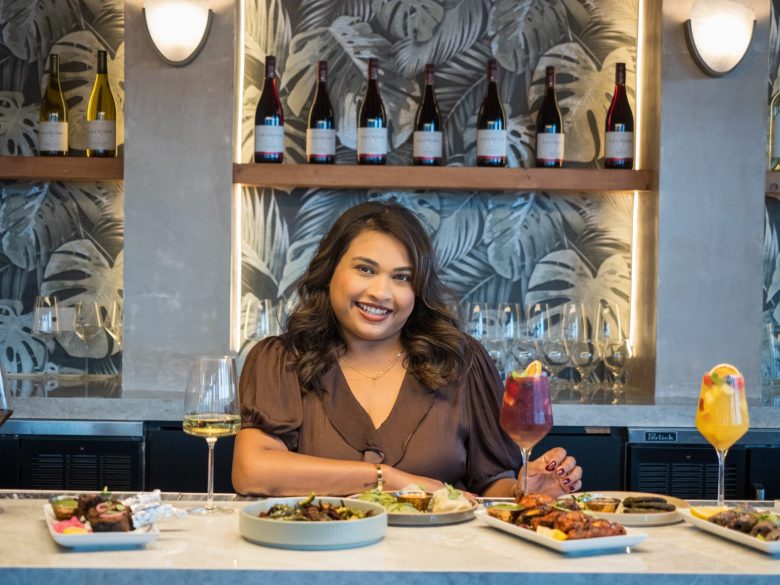 Nity Jaiswal, owner of Noor Indian Fusion Kitchen in Berkeley, soft opened hew new San Francisco restaurant at the end of August 2026. Credit: Courtesy of Noor Indian Fusion Kitchen
Jaiswal opened Noor Indian Fusion Kitchen as an Oakland ghost kitchen in 2022, before establishing her brick-and-mortar in Berkeley in 2024. Still, she had long dreamed of opening a location in San Francisco, but her first attempt at breaking into the SF food scene didn’t go as planned.
“So we did open a cloud kitchen two years ago in San Francisco, which we later shut down because, logistically, it wasn’t working out for us,” Jaiswal said. “In the cloud kitchen, because of the commissions we weren’t really making a lot of profit, so we ended up closing it.”
Part of the challenge, Jaiswal said, was the difference in customer base and how they ordered. While San Francisco did bring in a larger number of orders, they were often smaller in volume, making it harder for Jaiswal to convert into revenue. As opposed to the East Bay, where family-sized takeout orders or large parties would often come into her restaurant.
“Demographically SF is full of single people and very young nuclear families. Here it’s more like larger families, more people, and whenever we get people coming into the restaurant, they come in large groups.” Jaiswal said. “We tend to see like groups of eight people, 10 people. A family of four is at least always here. But over there, it was like two people ordering dinner.”
Despite that experience, Jaiswal returned to San Francisco at the end of August, soft opening a waterfront location of Noor on Brannan Street.
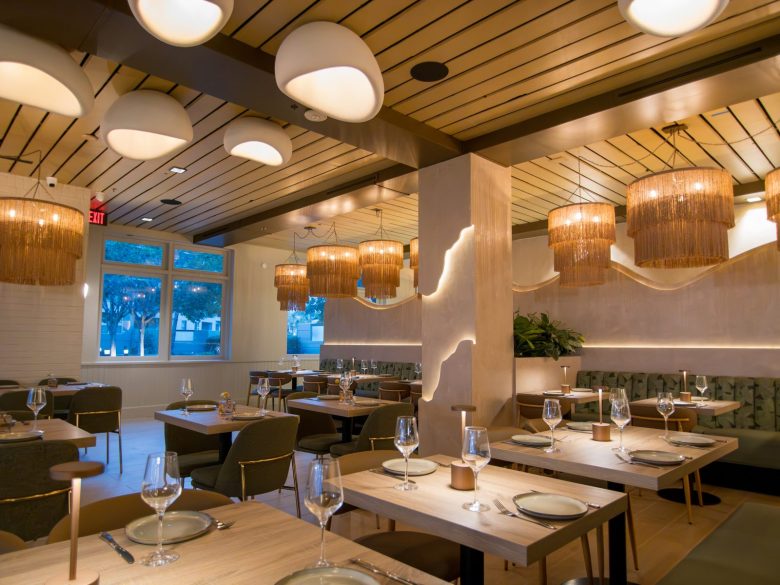 After starting in Berkeley, Noor Indian Fusion Kitchen moved out West to 100 Brannan St. in San Francisco. Credit: Courtesy of Nity Jaiswal
Jed also warns restaurateurs to be prepared for the financial and logistical realities of expanding, and that they need to be prepared to cross into a new cost and regulatory environment. This can mean being aware of costs, like administrative or permitting fees, to even figuring out if a dish makes sense financially on the menu, a lesson Jaiswal also echoes.
“Initially I would be like, ‘Oh, I want this on the menu’, but I didn’t ever think like, ‘Does it make sense financially’? Because some of the dishes that I had in the menu earlier were so labor intensive,” Jaiswal said. “It would take like five hours to just do the prep, and then again more prep when we serve it. And financially, it just didn’t make sense.”
Plus, making the numbers work isn’t just about cutting costs, it’s also about knowing what your customers are willing to pay for.
‘Expansion doesn’t fix a fragile operation. It really exposes it.’
Tommy Hester opened the Two Pitchers Brewing in 2021 in Oakland with his business partner Wilson Barr. Former college baseball pitchers, the duo’s concept of bringing radlers and shandies — or high quality beers mixed with fruit juices — into the mainstream U.S. beer market. The concept was a hit in the Bay, leading to their Ocean Beach taproom.
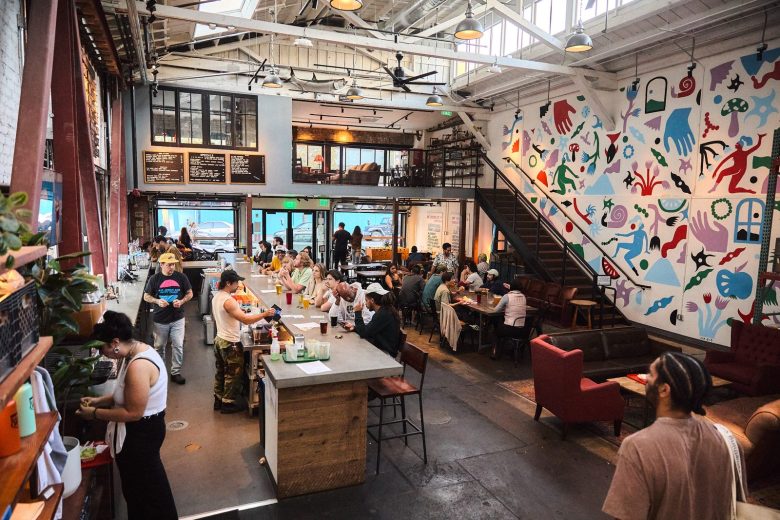 Tommy Hester and Wilson Barr, owners of Two Pitchers Brewing Company, opened their Ocean Beach taproom earlier this year. Now they’re gearing up for a third location in the Mission District. Credit: Courtesy of Tommy Hester
The beer industry has hit a rough patch, as trends show historically low rates of drinking in the U.S, with beer production specifically at its lowest in a decade, but this hasn’t deterred the duo In fact, Hester says Two Pitchers is thriving, and that they’re gearing up to launch their third location, this time an expansive 8,000 square-foot spot in the Mission District that was once a mayonnaise factory.
“Our goal every day is to kind of walk the walk and not just talk the talk,” Hester said. “You can make a really successful tap room and space by making it comfortable and community-focused by doing things like our $3 beer — things that are giving back to people, because when you try to meet them, you get even more back in return. They can feel when a space is kind of treating them fairly, when it’s trying to not just say hey we’re trying to be affordable but actually doing it. ”
But above all, Jed stresses that food entrepreneurs looking to expand their businesses should focus on building a strong foundation at their first spot before making any jumps across the bridge.
“You know, I think the businesses that make this leap have already built their playbook first,” Jed explained. “They’re not improving in a second city or a second location. You know expansion doesn’t fix a fragile operation. It really exposes it. You know the systems have to be solid before you add a second address.”
Restaurant owners Mayseto Wasem of Grand Lake Kitchen and chef Gregoire Jacquet of Gregoire echo this, noting that, without proper systems and trust in their employees and franchisees, they wouldn’t have been able to successfully grow beyond their first locations.
Grand Lake Kitchen opened on Lake Merritt in 2012, starting out as a 12-seat grab-and-go deli counter with wine service. After expanding and opening a second location in the Dimond District, Wasem acquired a third in San Francisco’s Noe Valley — which opened in March of this year.
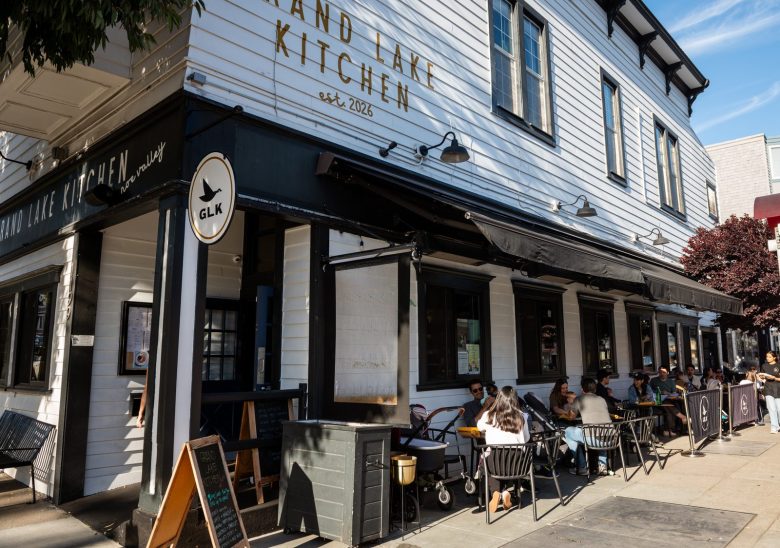 After running two locations in Oakland for years, Grand Lake Kitchen expanded to Noe Valley in March 2026. Credit: Grand Lake Kitchen
After expanding from one location to three, Wasem quickly learned that the growth of her restaurant would depend on streamlining restaurant systems and crafting a playbook for managers and employees to follow that is consistent and clear, across all restaurant sites.
“As a restaurant founder, or a small business owner you really need to transition from firefighting to systems. Otherwise, it’s not sustainable,” Wasem warns. “You know, we restaurant people are doers, and we are stubborn, and our work ethic is really good, possibly toxic at times, but you know what I mean. So there are a lot of things that you have to get real about if you’re going to be any good for your business, especially expanding into multiple locations.”
For Jacquet, learning about those realities was a different kind of challenge. On a busy kitchen line, or in any back-of-the-house gig, Jacquet is your man. Business management, on the other hand, he said, wasn’t exactly his strong suit when he first started out.
Jacquet first opened Gregoire in Berkeley in 2002, coming off of his tenure at the Ritz-Carlton in Puerto Rico. He further expanded into Oakland, opening a Piedmont Avenue location in 2006, which he ran for over 11 years until he made the decision to close.
“I never went to school. I mean, I went to cooking school, but not business school. But growing the business was always in my mind and my wife’s, and since we thought Gregoire was very successful we wanted to grow it, but I had no idea how to do that. And then I just burned out.”
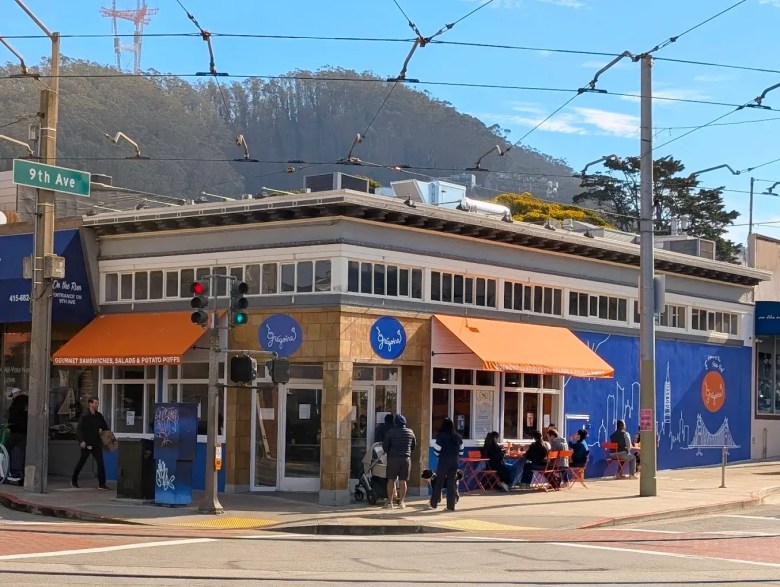 A branch of Grégoire opened in the Inner Sunset neighborhood of San Francisco in March 2026. Credit: Gregoire
So, when Jacquet and his wife flirted with the idea of trying to expand Gregoire again, he knew he needed a model that would fit his budget and current lifestyle. So Jacquet turned towards franchising — a hands-off model that allows businesses to license their branding and image to an independent owner who would sell Gregoire’s food and products, all while paying Jacquet a fee to do so. This model can help owners grow their food business without investing as much capital or time into managing the new location.
Jacquet spent time building out the franchise, working with lawyers and preparing a FDD, or a franchise disclosure document, before putting out a call for franchisee applications in 2024. Since then, he reports that his San Francisco location in the Inner Sunset is going strong.
“I had learned to not be so involved in the business, and I was working more, you know, overviewing and managing the store from above. I was like, ‘Oh, there’s a different way to grow. We can do it as a franchise.’”
“*” indicates required fields