
Sitting in a cargo box at the Port of Oakland are red lentils, or masoor dal, a main ingredient in Ethiopian cooking, that have travelled from Madhya Pradesh in central India. If all goes well, these lentils will soon be loaded into a truck headed to a packaging facility, split into bags, taken to a market on University Avenue in Berkeley, bought by Daniel Yeshiwas, owner of Cafe Colucci, an Ethiopian restaurant in Oakland, and served on top of some injera.
In a diesel sprinter van, Juan Catalan, a farmer at Catalan Farm, listens to the audiobook “The Richest Man in Babylon” again as he drives nearly 300 miles round trip to deliver produce from his family’s farm in Hollister to the Bay Area. Catalan drives up to 1,000 miles a week and needs to fill up his tank before every trip, costing about $130 each day.
 Daniel Yeshiwas, owner of Cafe Colucci, says the recent level of price volatility across all aspects of his business is unprecedented. Credit: Richard H. Grant for East Bay Nosh
While Milan International’s lentils and Catalan’s produce will end up on plates around the Bay Area, they will also end up as ingredients at Cafe Colucci. In the past two years, prices for imported ingredients and California-grown produce alike have increased significantly. With tariffs, fuel increases and supply chain issues, the market has become unpredictable. Running a restaurant has always been a business with slim profit margins, but this level of volatility is unheard of.
This is the story of the economics of one single dish at Cafe Colucci — the vegan combo.
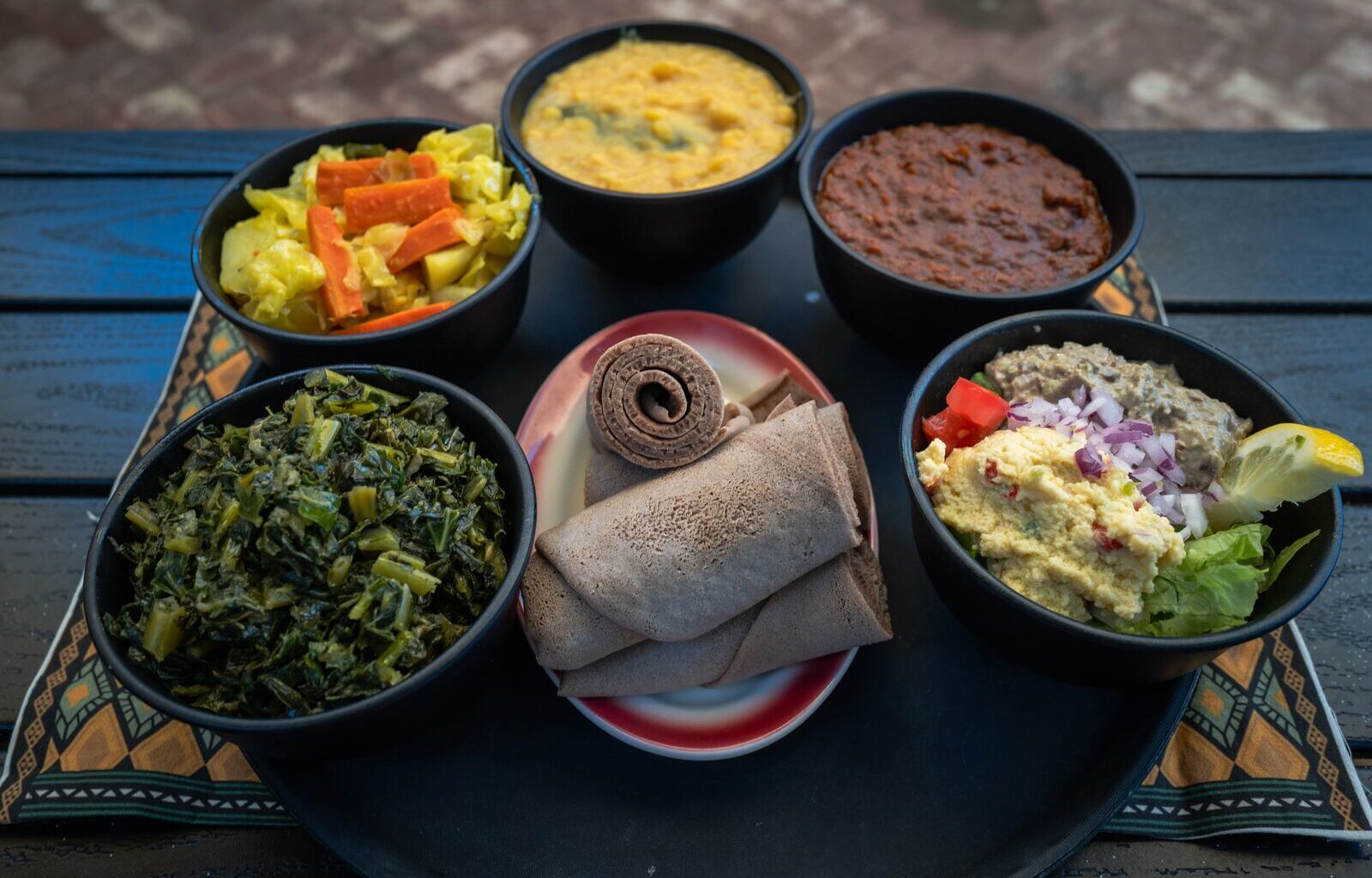
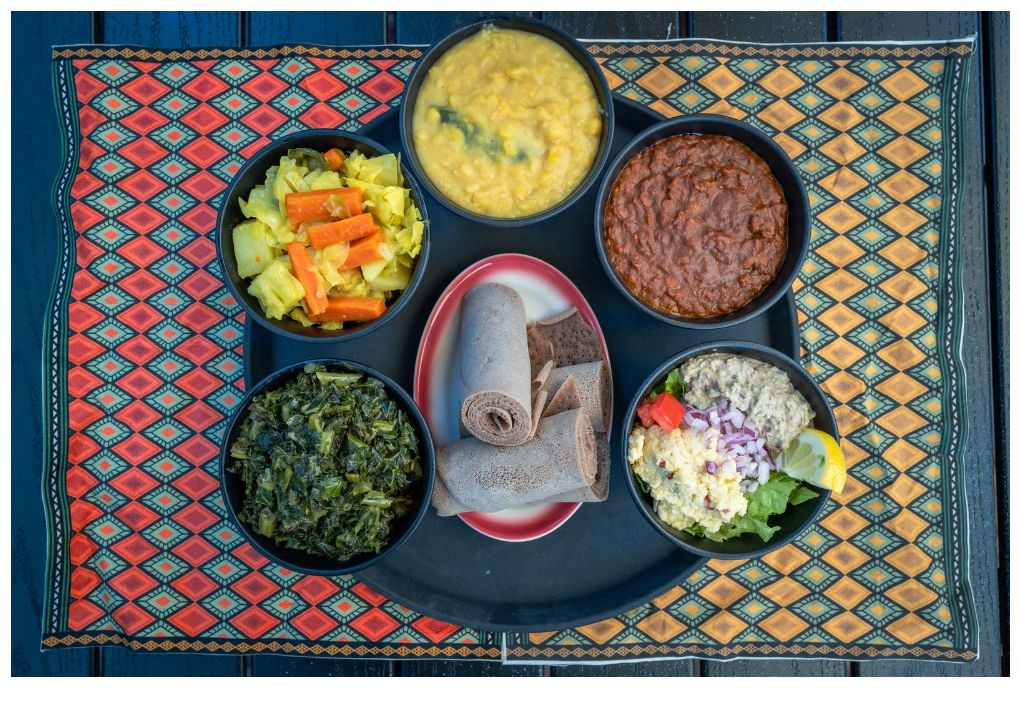
The vegan combo consists of a half dozen dishes: two lentil dishes, misser wot and kik alicha; atakilt, a stew of cabbage, potatoes and carrots; gomen, or collard greens; and two hummuses, buticha and azifa. Everything is served with injera, the spongy bread used to scoop up each bite. The dishes are made with spices sourced from Ethiopia, produce grown by small farms around the Bay Area and lentils from India.
The spices
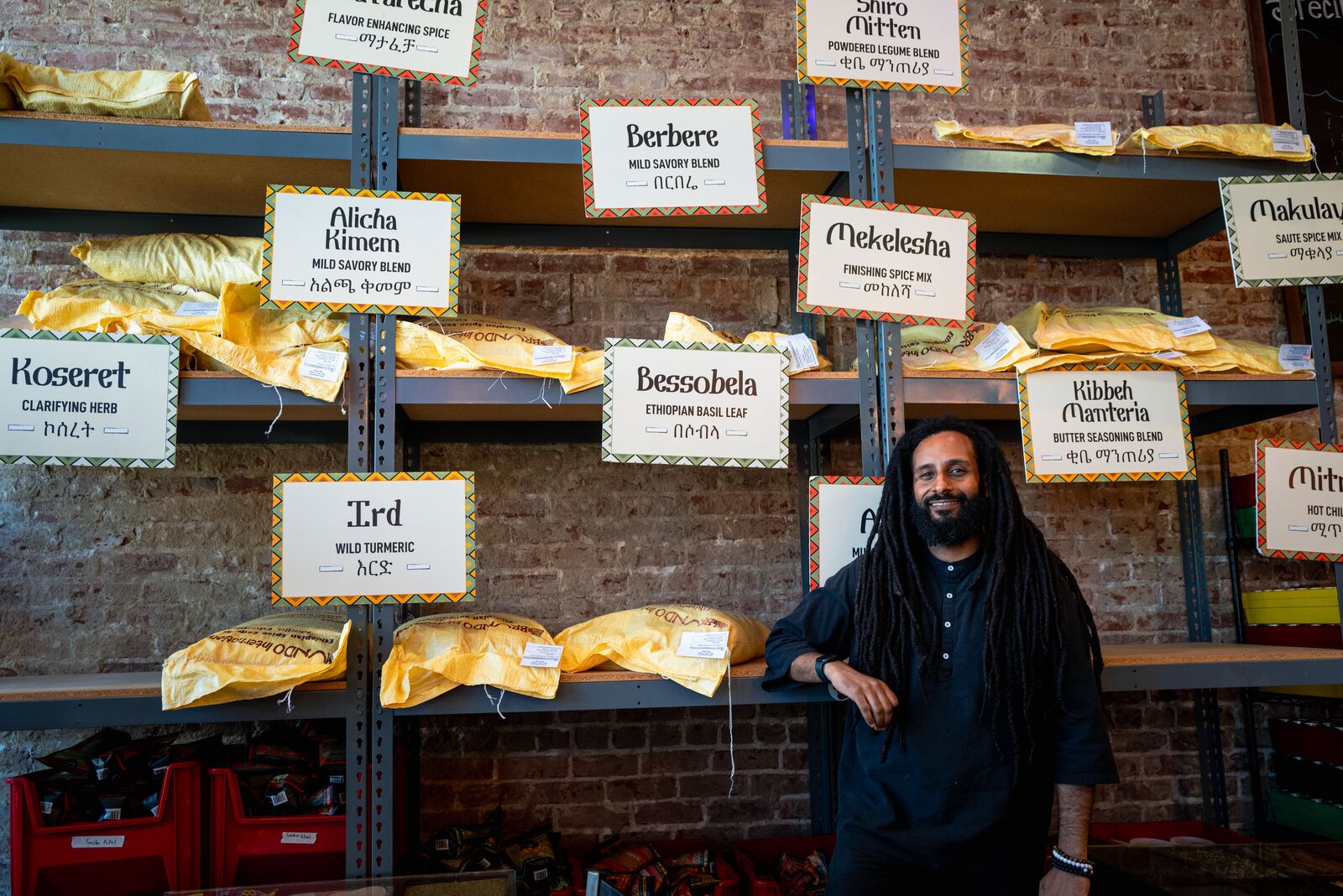
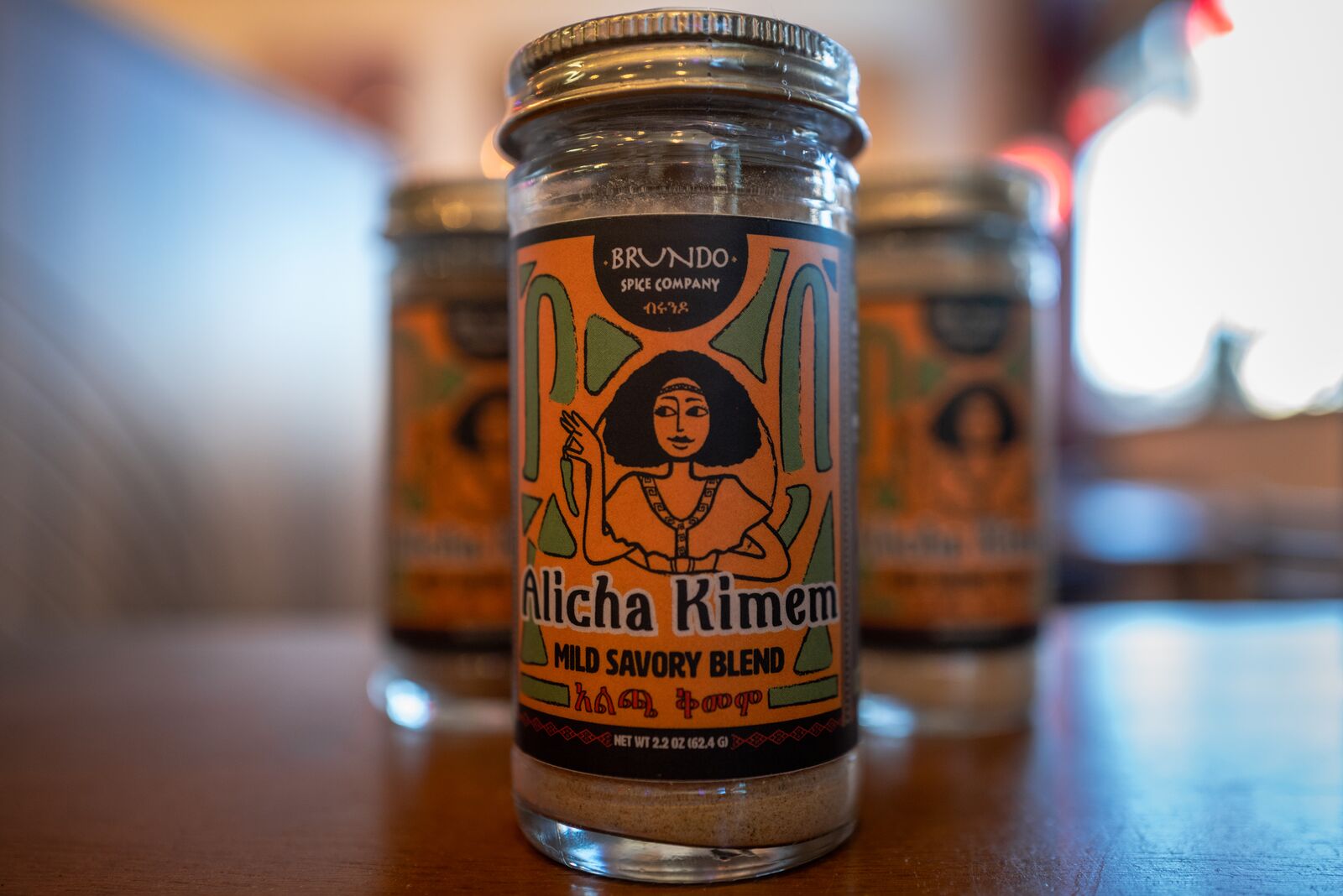
Cafe Colucci greets you with spice. Just beyond the front entrance, shelves hold bottles of Brundo Spice blends alongside large yellow sacks filled with spices and Ethiopian spice mixes. One is labeled ird, or wild turmeric, the spice responsible for atakilt’s characteristic yellow color. Nearby, a table displays a collection of whole spices behind a glass pane, including cloves, whose flavor is described on the table as “existing somewhere between savory and sweet.”
 Cafe Colucci uses spices and ingredients imported through its sister company, Brundo Spice Company. Credit: Richard H. Grant for East Bay Nosh
A little bit of Ethiopia is in each part of the vegan combo. The misser wot kulet, or broth, contains Brundo’s berbere spice blend, which brings out the heat. The kik alicha broth is built with ird and alicha kimen, a blend that brightens the color and flavor. The komen has tikur azmud, or nigella seeds, and korerima, or black cardamom. Buticha uses Ethiopian ground chickpeas called shimbra to create the smooth hummus. The spicy punch in azifa comes from senfatich, Ethiopian mustard seed. The injera, made from teff, an imported native Ethiopian grain, pulls the meal together.
Yeshiwas gets spices through Cafe Colucci’s sister enterprise, Brundo Spice Company, which imports them from Ethiopia. The spices are deployed in dishes at Cafe Colucci and sold online. Before Brundo, Yeshiwas would never see any African-made products on grocery store shelves. He wanted to change that.
“We really wanted to showcase the highest level of Ethiopian ingredients,” he said.
The spice company works with farmers in Modjo, Ethiopia, and provides them with resources to grow the highest quality crops. It works with farmers to secure lots in advance to provide the money they need to get through the planting and harvesting season.
But on April 2, 2025, Trump issued Executive Order 12457: “Except as otherwise provided in this order, all articles imported into the customs territory of the United States shall be, consistent with law, subject to an additional ad valorem rate of duty of 10 percent.”
Simply put, a blanket 10% tariff would be imposed on all countries, including Ethiopia, under the International Emergency Economic Powers Act (IEEPA). The tariffs went into effect three days later, but the impacts weren’t immediate. Yeshiwas had enough inventory to last about five months and, like many others, he waited it out, hoping the tariffs would be overturned. But the added costs didn’t go away, and the cost of importing continued to rise. The worst part, he said, wasn’t the higher prices but the chaos that ensued.
Interactive: The economics behind Cafe Colucci’s vegan combo
On desktop, hover over individual dishes on the platter to learn more about the forces driving up food prices. On mobile, click the dish names for more details.
Larger businesses would take up the warehouse space and clog up logistics. It was difficult to get their products delivered because the storage “was just getting booked out by people trying to send as much products to the U.S.,” said Yeshiwas.
“The world was on fire at that point.”
At the same time, Yeshiwas was determined to avoid shifting the cost burden onto the farmers and still “be able to empower folks in Ethiopia.”
At times, Yeshiwas couldn’t afford his own spices because the import costs soared too high. On top of tariffs, the price of Ethiopian spices rose in general during the past year. Berbere, for example, increased 5.5%.
“If we import from Ethiopia, even though the market economics of Ethiopia are much more affordable than the U.S., by the time we import it at the level which we like it, it might be more expensive than locally sourcing,” Yeshiwas said.
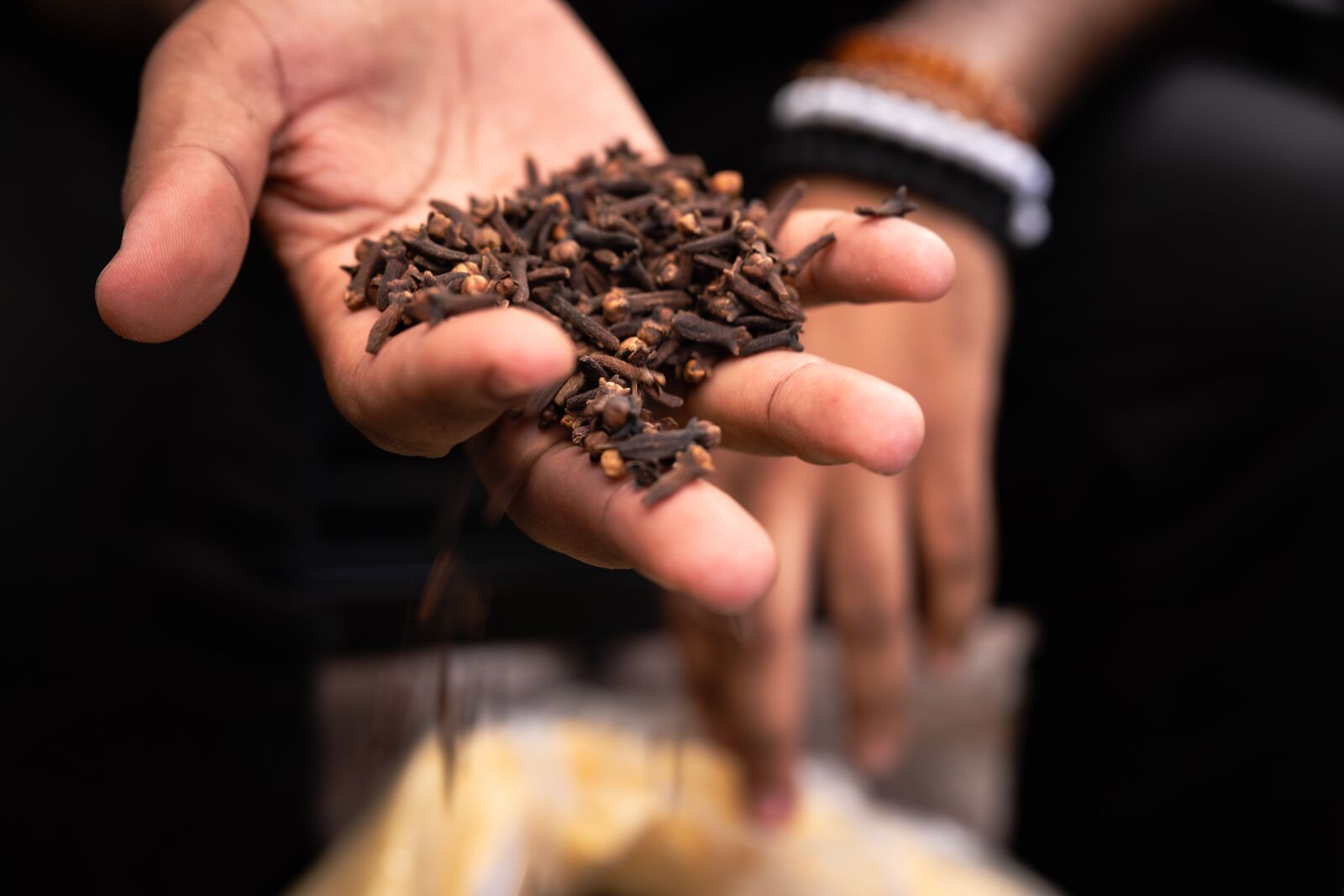 Yeshiwas holds some cloves imported from Ethiopia, which, like many countries, has been hit with higher tariffs under the Trump administration. Credit: Richard H. Grant for East Bay Nosh
It’s not just the imported food items that increased. The budget ballooned for silverware, plates, and to-go containers, much of which is imported from China, after the tariffs on China peaked at 125% in April 2025. Higher costs came from every corner, and restaurants around California were hit hard by the new reality, said Jot Condie, CEO of the California Restaurant Association.
“You see a lot of restaurants who are working with their food distributors and trying to figure out what food products can they purchase that are less impacted by tariffs,” Condie said.
According to Condie, restaurants started avoiding imports as much as possible and shifted to domestic sources. But for some restaurants that rely on ingredients imported from around the globe, that is impossible.
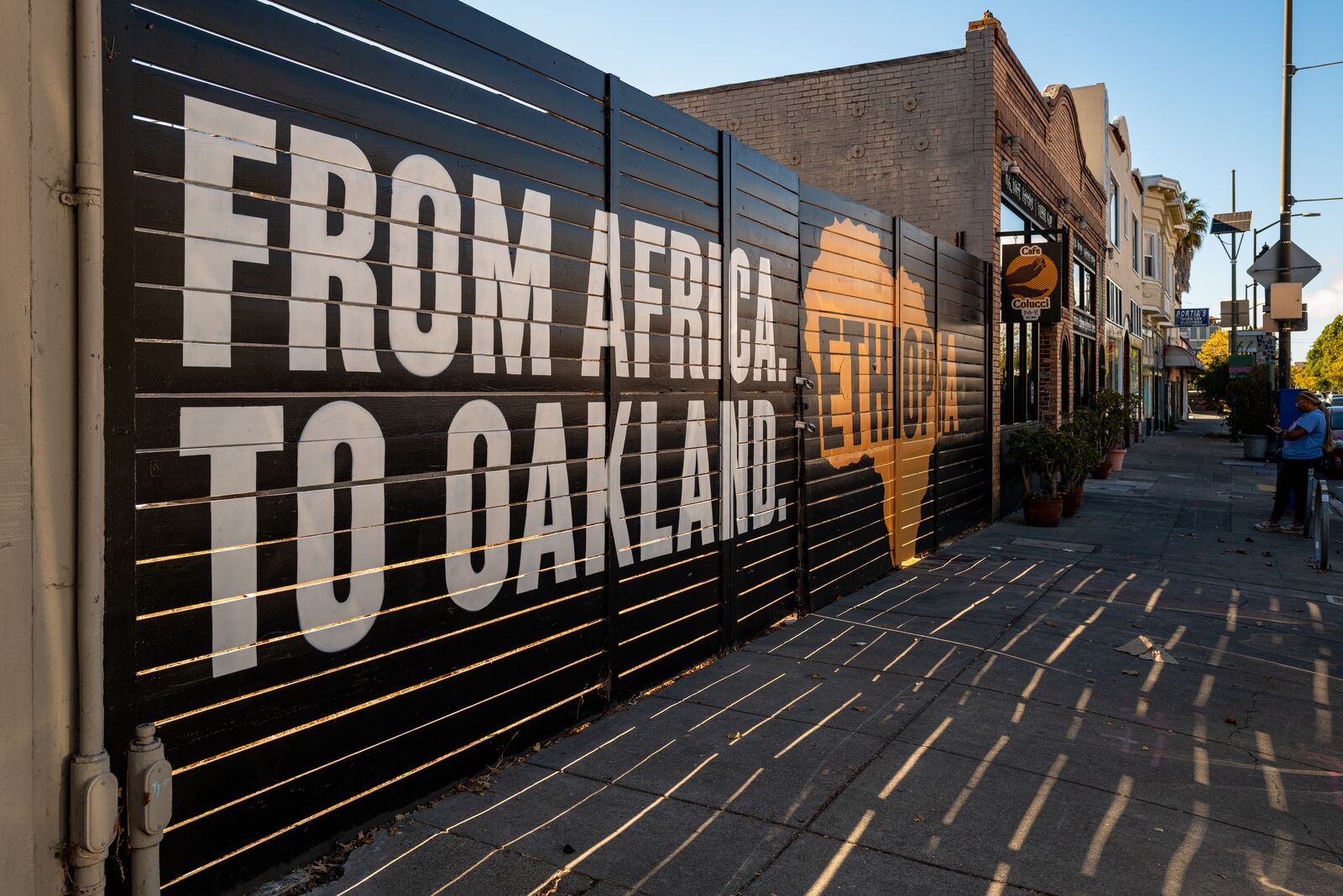 Importing ingredients from Ethiopia may not be the most cost effective, but part of the mission of Brundo Spice Company and Cafe Colucci is to support Ethiopian producers. Credit: Richard H. Grant for East Bay Nosh
In February 2026, the Supreme Court ruled the tariffs imposed under IEEPA unlawful. Businesses that faced unfair price increases could file for tariff refunds, though it was unclear when or if the money would be returned.
“By the time we increased prices to get the money back from the tariffs, it took so much time, and then now we’re waiting for this tariff refund,” said Yeshiwas, who filed in May and has yet to hear back.
The lentils
Misser wot and kik alicha have ingredients that Yeshiwas cannot source locally or import from Ethiopia. Misser wot is a spicy red lentil stew made with masoor dal. Kik Alicha is made with yellow split peas, matar dal. Yeshiwas purchases lentils from Milan International, an Indian grocery store three miles away from the restaurant.
The Parmar family opened the Berkeley store over 40 years ago.
Nine out of ten items in the store come from India, said Bhavish Parmar, the owners’ son. The products arrive in the Port of Oakland after traveling roughly 10,000 miles in 20 days across the Pacific Ocean. Truckers pick up the shipments and haul them to a facility in San Leandro. There, they are packaged into bulk bags and smaller consumer-sized portions and taken to the store on University Avenue.
The Parmar family faces many challenges with importing products, such as supply chain issues and FDA regulations. On top of that, tariffs create an unpredictable added cost.
India was hit with the same catch-all 10% tariff as other countries in April 2025, with an added 16% reciprocal, but the rate has fluctuated since. The 16% tariff was briefly increased to 25% in July of that year. In August, the tariff doubled to 50%. In February 2026, the tariff decreased to 18%, and in July 2026, the rate dropped to 10%. Now, a bill passed by the Senate in August and headed for the president’s signature after the House approved it on Sept. 16, introduces the possibility of a 100% tariff on India.
“We can’t eat that cost ourselves as much as we’d love to,” Parmar said. “Everyone we supply locally is just small mom-and-pops.”
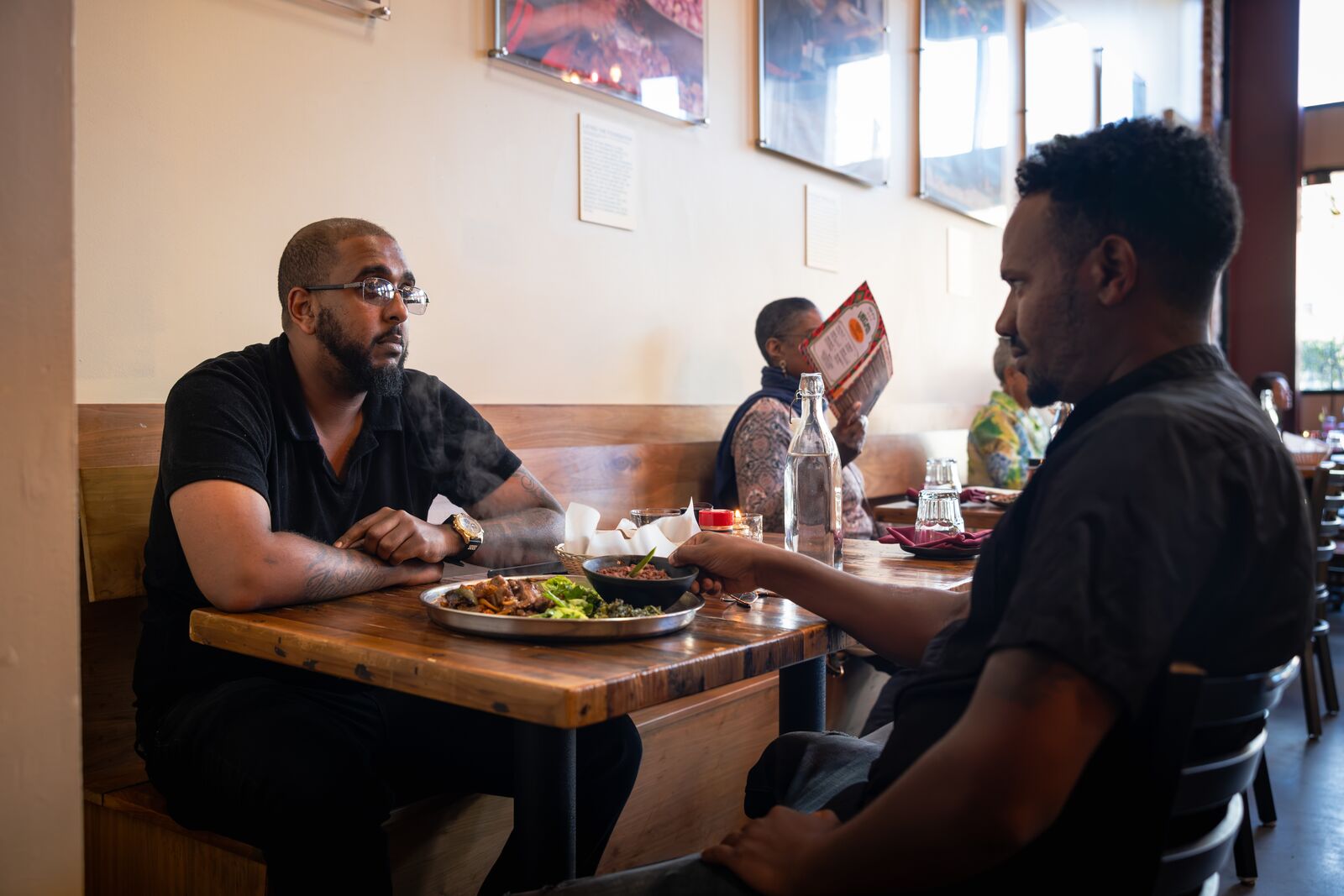 Cafe Colucci diners chat and share and a dish on a weekday evening. Yeshiwas said it’s important to maintain consistency with popular dishes like the vegan combo, because customers have developed expectations. Credit: Richard H. Grant for East Bay Nosh
Milan International’s relationships with numerous restaurants across the East Bay are the backbone of the business. The Parmars understand that everyone is financially strained right now, so they try not to increase prices too much.
“There are a lot of big box stores that they could go to, but they still come here because we have that relationship with our customers, which I really appreciate. Without them, obviously we wouldn’t still be here,” Parmar said.
Yeshiwas and Catalan share the sentiment. At every step of getting food on the table, they face economic challenges, yet both are determined to keep their prices affordable for customers without compromising on quality.
At his farm, Catalan has discussed raising prices or charging a delivery fee with his wife and mother.
“But we haven’t done it,” Catalan said. “We’re hoping that the prices don’t stay up like this.”
The produce
“We like to have the veggies really prominent,” Yeshiwas says.
All of the dishes in the vegan sampler contain vegetables. The broths of misser wot and kik alicha are made with tomatoes, onions and jalapeño. Gomen is collard greens cooked with Ethiopian spices. Atakilt is stewed cabbage, potatoes and carrots. Buticha is a hummus made with lemon, onions and jalapeño, and the azifa contains jalapeño and onion.
“We really like to have it very colorful, which is, I think, a very California thing,” Yeshiwas said, “We like to see red onions with a green lettuce and a red tomato and a very bright yellow lemon.”
Rudy Jimenez from Green Thumb Farms, which also provides produce for Cafe Colucci, likes to present his farmers market stands similarly. “I see my stand like a canvas, so I try to bring color to it,” Jimenez said. “Our parents always told us to not play with their food, and, for me, it’s always play with your food.”
Jimenez and his wife travel from Salinas to farmers markets in San Francisco five days a week. Like Catalan, he must travel hundreds of miles and wake up early in order to beat the traffic, spending hundreds of dollars a week on gas.
For the produce to get to Cafe Colucci, both of the farmers drop off orders at Mandela Partners’ food distribution center in West Oakland. Mandela Partners is a nonprofit organization that helps small-scale farmers sell their produce. The produce is distributed via CSA boxes and other programs, and sold to restaurants like Cafe Colucci.
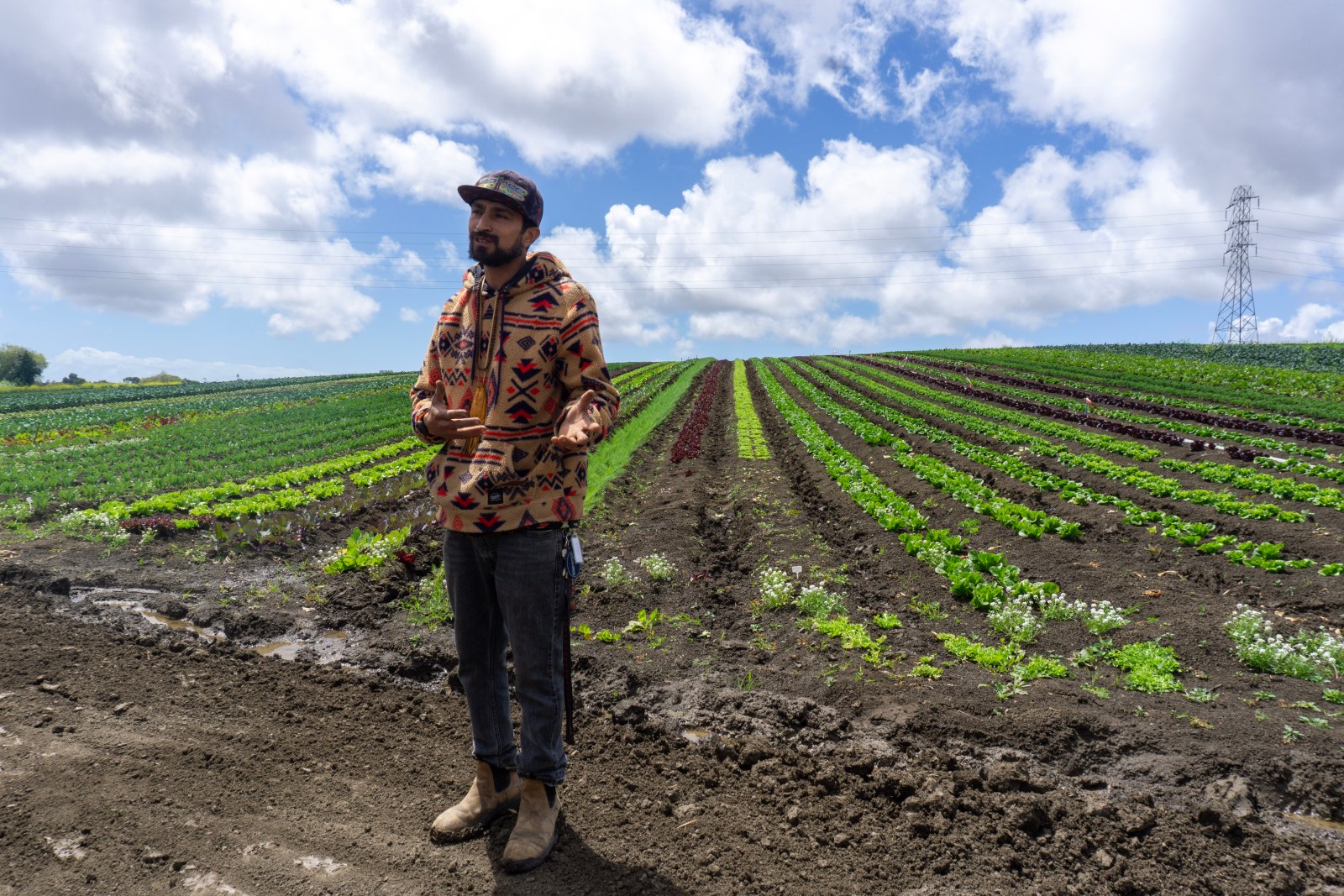 Rudy Jimenez of Green Thumb Farms drives hundreds of miles each week for deliveries and has seen gas prices rise by more than 30% in 2026. Credit: Courtesy of Mandela Partners
Some things will always be expensive for small farmers like Jimenez and Catalan. Richard Volpe, an agricultural economics researcher and professor at Cal Poly, San Luis Obispo, said structural issues, such as labor and transportation, and individual events can both cause pain points in the food supply chain.
“But right now, as we speak, we’re dealing with these tariffs that have been in place for a little over a year, [and] high energy prices,” Volpe said, “but of course, the Iran conflict is top of mind.”
Gas prices have increased more than 30% since the Iran conflict began in February and prices continue to climb.
The Iran conflict has also impacted the price of fertilizer, though Volpe said we won’t see the effects for a while because crops using the more costly fertilizer have not yet entered the market.
But it’s not just political factors affecting prices. California is facing droughts, high temperatures and below average snowmelt, Volpe said.
In 2023, some of Catalan’s land was flooded. The farm is situated near a creek, and a particularly heavy rain year and debris in the creek overwhelmed the levee, flooding his family’s land.
“It definitely held us back a little,” Catalan said. While some smaller crops were affected, many were able to recover. But the flooding damaged some of Catalan’s farming equipment in addition to his mother’s house, and the homes of neighbors.
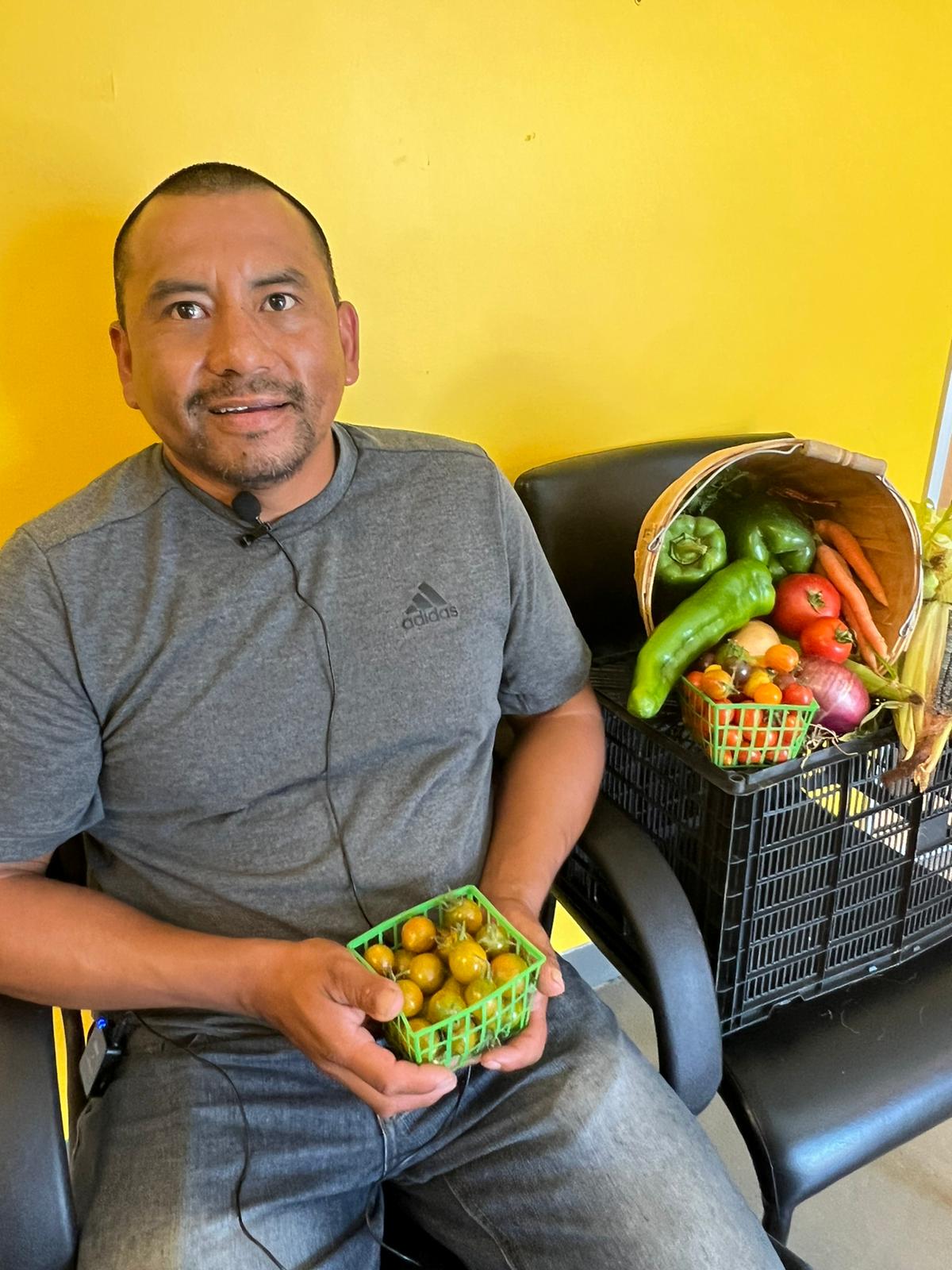 In addition to confronting higher gas prices and increasing expenses for fertilizer and other necessities, Juan Catalan has had to deal with flooding and other issue at Catalan Farm in Hollister. Credit: Courtesy of Mandela Partners
“The economic situation in the country didn’t cause the flooding, right? But it caused the farmer an economic situation,” said Yuro Chavez, a farmer sourcing manager with Mandela Partners.
Large-scale farms can weather the unpredictable costs more easily, but the accumulation of financial blows will take down a small farm faster. As California’s agriculture has become more consolidated, “the average farm size has gone up, the average number of farms in the market has gone down, but, agricultural production, while it has gotten more concentrated, has sort of been left in the dust,” said Volpe. This leaves small farmers at a disadvantage when navigating the supply chain.
All of these factors have impacted Yeshiwa’s bottom line at Cafe Colucci. Between June 2025 and June 2026, the cost of a 50-pound sack of yellow onions soared more than 115%, from $12.95 to $27.95. In one June 2025 order, Yeshiwas paid as little as $16.95 per case of green leaf lettuce; more recently, he paid $27.95 per case.
Yeshiwas and other consumers could turn to large wholesalers for their vegetables, but at the expense of the produce quality.
“I think that’s very important to look at food not just for the price but also for the flavor of what you’re paying and the nutrition and how it was grown,” said Jimenez.
The Vegan Combo
“There’s actually not even a word for veganism in Ethiopia; you just call it fasting food,” said Yeshiwas.
During the fasting period in Ethiopia, Yeshiwas said, everything moves more slowly. The fasting dish, the basis for Cafe Colucci’s vegan combo, has all of the food groups you need for a balanced meal.
“It’s really what sustained the population of Ethiopia for such a long time because it was nourishing,” Yeshiwas said. “You had greens, you had a lot of flavor, your palate’s not getting bored.”
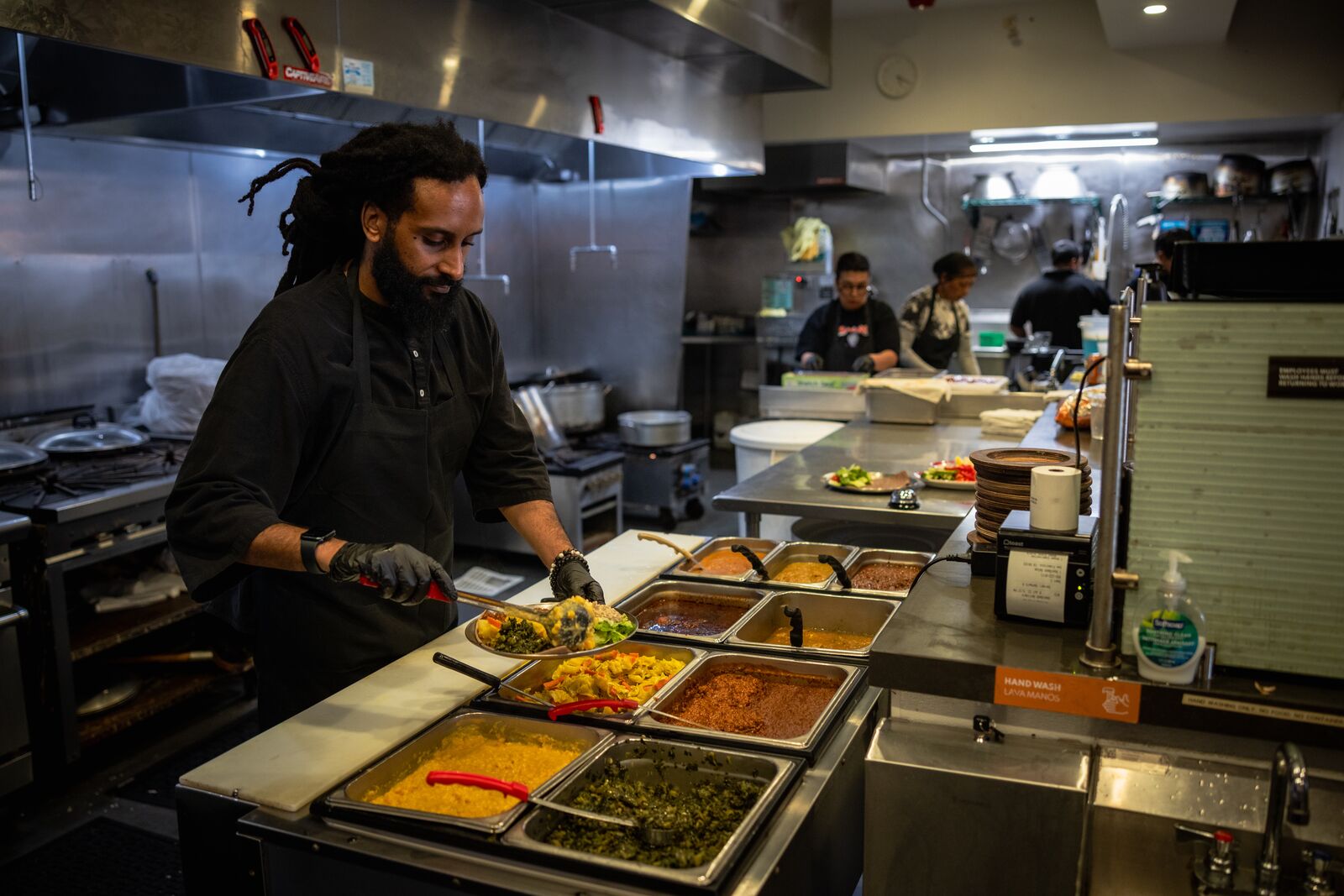 Yeshiwas works on a vegan combo in the kitchen at Cafe Colucci. He says the volatility has made it hard to adjust menu prices. Credit: Richard H. Grant for East Bay Nosh
With pressure from all sides, Yeshiwas must make difficult choices about how to source ingredients, and how to change menu prices and menu portions. Since the price fluctuations have been so unpredictable, Yeshiwas has struggled to restructure the menu.
“You might have one month where tomatoes are really expensive, and you kind of subsidize it by having other things that are a bit more affordable, but you kind of have to aggregate so prices remain the same,” he said.
To keep pace with climbing costs, Yeshiwas has raised the price of the vegan combo to $21, a 7% increase from January 2025.
Yeshiwas said using lesser quality or different ingredients are not options he is currently entertaining, as that would mean changing the dish completely.
“I don’t want to really change the DNA of something that’s been around for so long, and I think that people take a lot of solace in coming here and these things are just staying the same.”
When people come to Cafe Colucci and order the vegan combo, Yeshiwas wants them to think, “I know exactly what I’m getting. I remember that taste. I remember that flavor profile. I remember the spread.“
“*” indicates required fields