
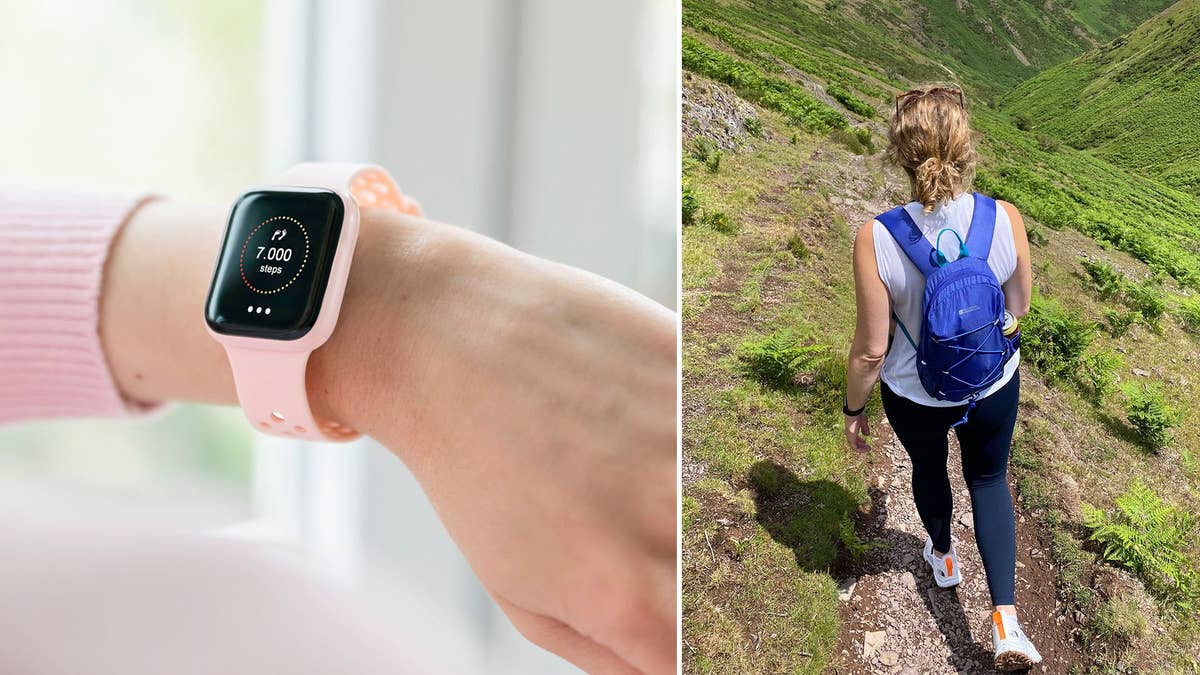
I first started tracking my steps when I was at school. My cereal of choice (Special K Red Berries, since you ask), came with a free pedometer that I’d clip onto my BHS trousers, and I’d gleefully report how many steps I’d done each day. My poor parents feigned interest each evening, and I went to bed pleased I’d hit my goal.
I later graduated to a FitBit tracker and have now been wearing my Apple Watch to diligently count my steps for the last five years. So, imagine my dismay when I learned last year that 10k was an arbitrary number, dreamed up by a pedometer brand in the 1960s. And to think, I’d been a slave to the number for decades!
Keen to reassure myself that I haven’t been wasting my time trying to hit a random target, I spoke to personal trainer Sarah Campus, who builds walking into all of her programmes for her clients. I wanted to get a professional’s take on how many steps we should take each day. I know there’s no harm in walking 10,000 steps, but is there any benefit to the number?
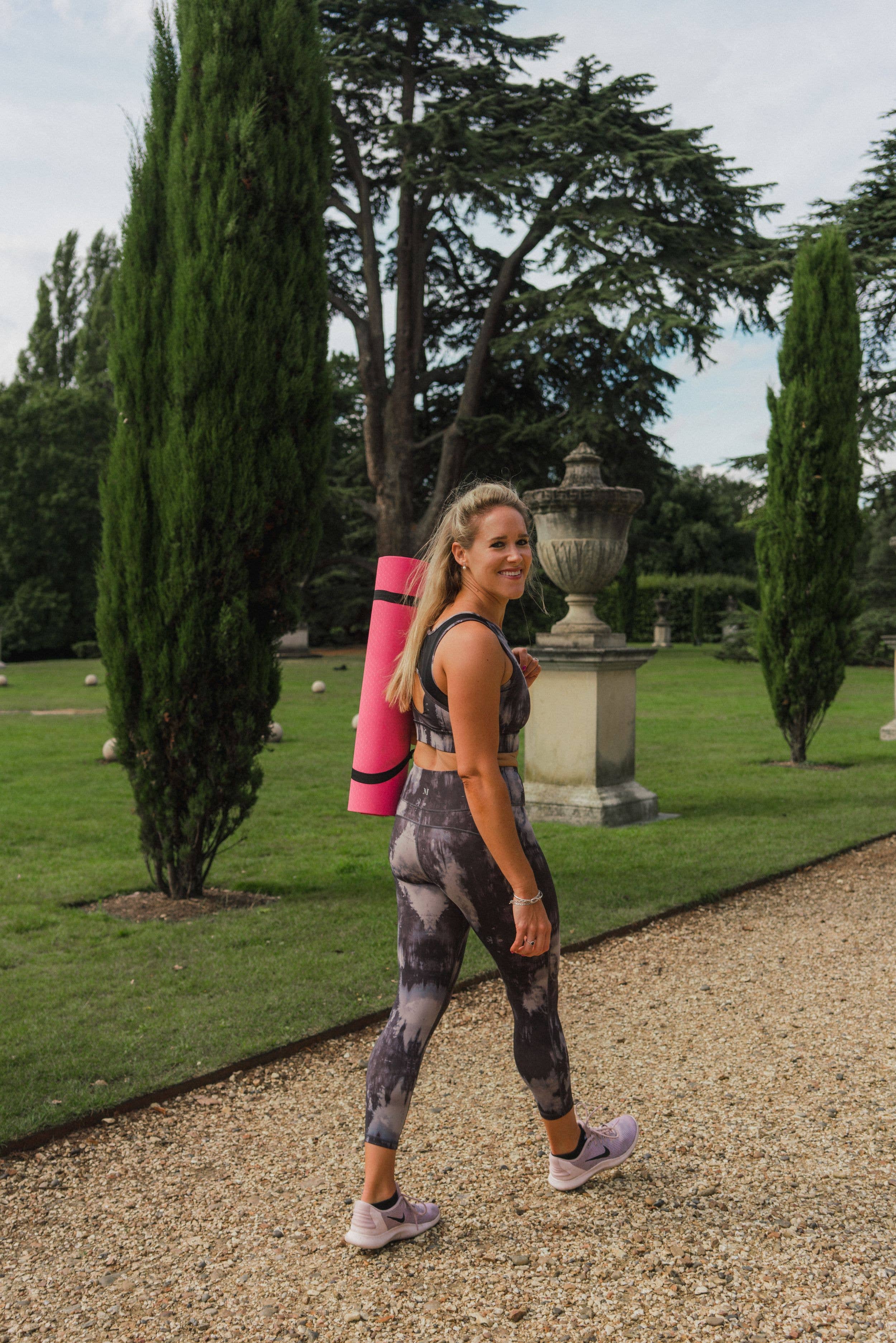 Sarah explains that walking needs to be powered up for weight loss
“I’d say 10,000 steps is quite a large amount, and instead I’d recommend 8,000 per day, if you’re building it into your everyday life.” Sarah begins, adding: “The most important thing about walking is consistency and to get an average of 30 minutes of movement per day, ideally five times a week.”
Walking for weight loss
After learning that 10k steps isn’t a real thing, I wondered if all that I’d heard about walking being good for weight loss was a myth, too. Sarah confirmed that walking can help you lose weight, but there’s a catch – you need to power up your walk into a weight training session.
“You can change how hard walking is by adding load,” she explains. “You could carry a backpack, or push a buggy or a Zimmer frame, for example – it really is for everyone.”
Explaining why weighted walking (loved by Meghan Markle, no less) helps with weight loss, Sarah says, “Adding weight increases the overall demand on your body. Carrying an extra load makes your muscles work harder, raises your heart rate more than normal walking, and increases calorie burn for the same amount of time.
 Meghan Markle pictured hiking with ankle weights
“It also slightly shifts the workout towards resistance training, which helps preserve or build muscle and longevity. This matters because muscle tissue uses more energy than fat even at rest, so over time, your baseline energy expenditure improves. In simple terms, weighted walking turns a low-intensity activity into something closer to a full-body workout, so you get more ‘return’ from the same 30 minutes.”
How to add weights to your walks
Sarah suggests starting by adding something light, such as 0.5kg weights – either around your wrist or ankles – or holding light hand weights, if you prefer. Bala does incredibly cute ankle weights.
 © InstagramAnkle weights power up our workouts
“Once you feel happy with the 0.5kg weights, you can gradually increase them.” Sarah elaborates, adding, “That main thing I encourage is to listen to your body.
“If you feel that 0.5kg is enough, leave it there, then when it starts to feel easy, go up to 1kg or 1.5kg. The more you do weighted walks consistently, the more your body can take, and you can increase the weight.
“I always encourage people to try and challenge themselves to get that little bit heavier. We want to add that strength and weight element because it will support bones as well as weight loss,” Sarah says.
She notes that her clients can often feel intimidated when they’re first introduced to weight training, but weighted walking is one of the most accessible ways of getting into strength training.
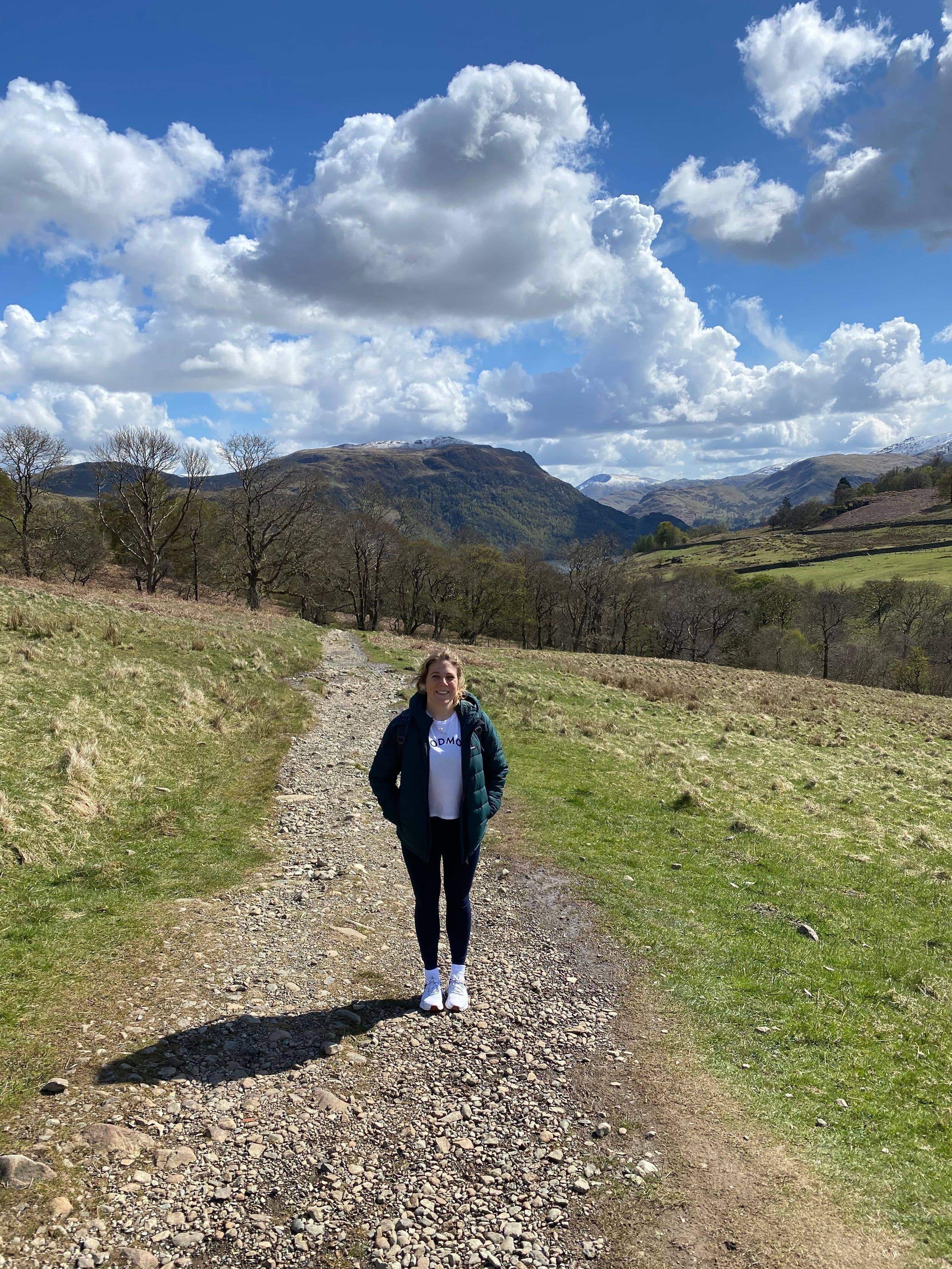 I love tracking my walks – but is it pointless?
How quickly will we lose weight by walking?
If you’ve added your ankle weights to your online basket and you’re wondering how quickly you’ll lose weight from walking, Sarah has some interesting insights.
“If someone is doing 30 minutes of weighted walking five times a week, they’ll usually start to feel a difference in fitness within two or three weeks. They will see signs of less breathlessness and better stamina.”
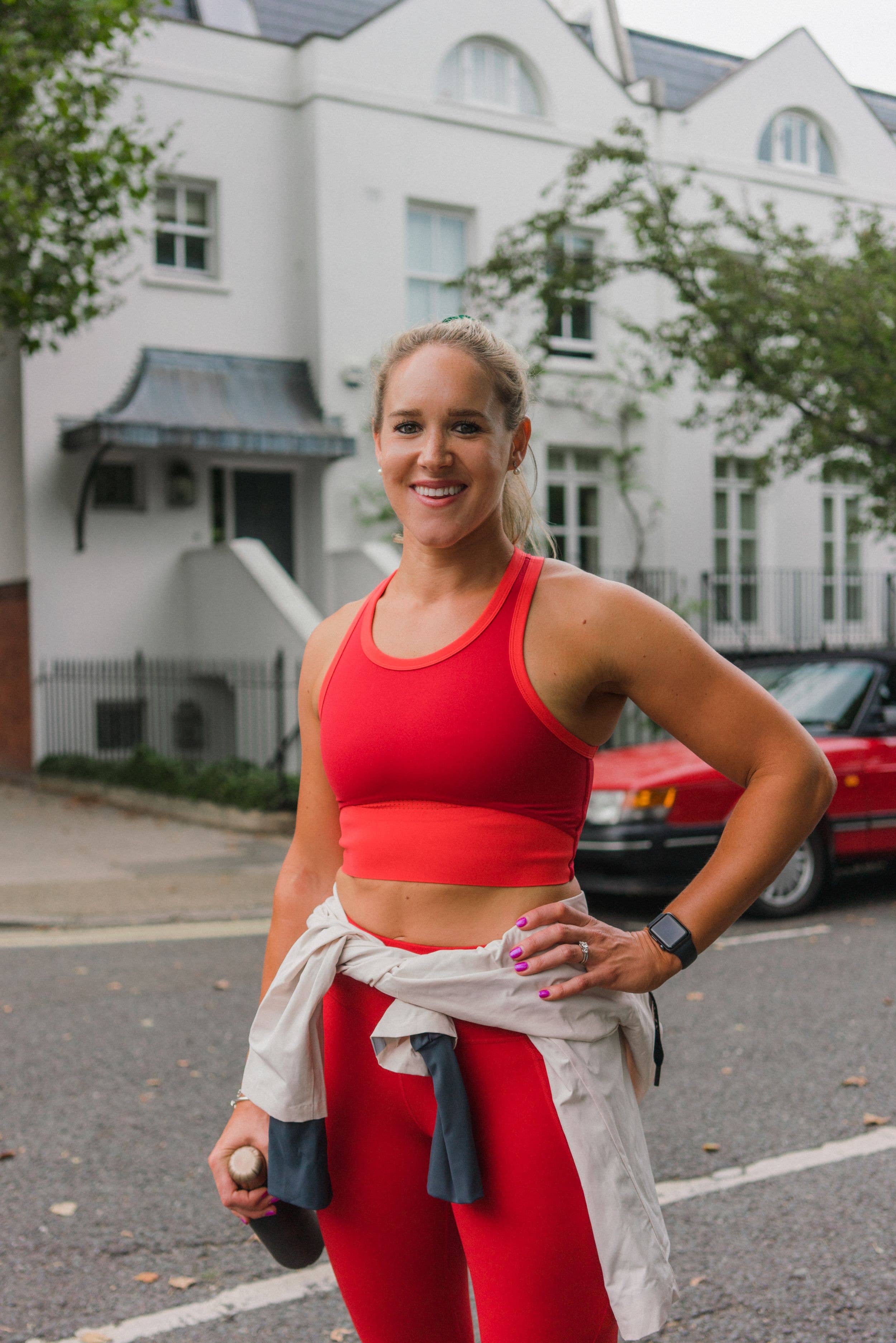 Sarah Campus builds walking into all of her clients’ workout programmes
She notes that visible or measurable changes can take a bit longer and vary with each individual. “This can take around four to six weeks for cardiovascular fitness and early strength gains (especially in legs and core).”
For noticeable changes in body weight or body composition, six to eight weeks is the norm, “assuming nutrition isn’t working against them.”
She adds that strength improvements come partly from muscles adapting to the extra load fairly quickly, even before they visibly grow.
With the weather just about warming up, I’ll see you in the park, ankles adorned with weights…