
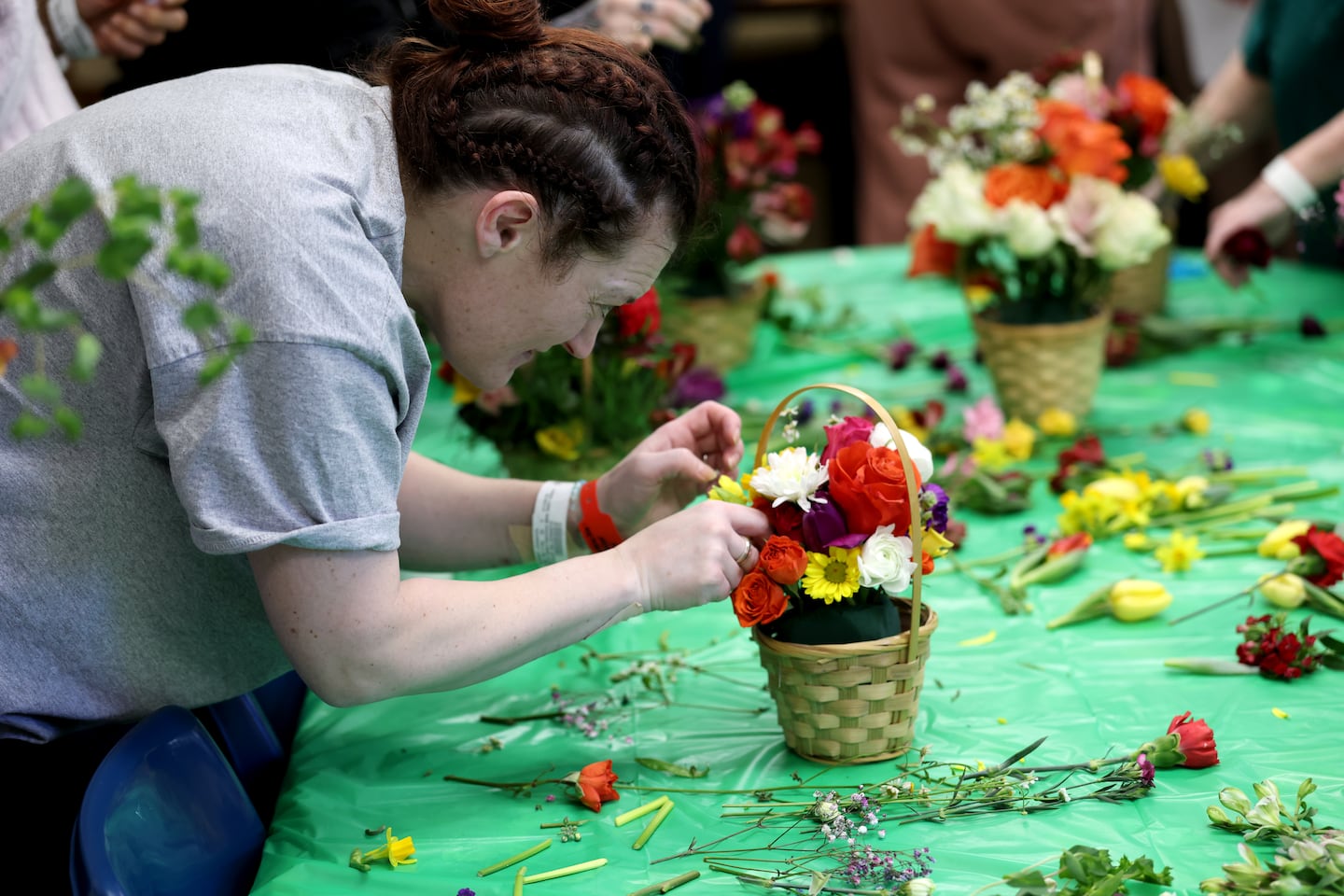
Today, about a half-dozen patients are busy assembling bouquets: a musician, an artist, an activist. All have full identities beyond the hospital; all have been touched by mental illness and crave an oasis.
Get Love Letters: The Newsletter
A weekly dispatch with all the best relationship content and commentary – plus exclusive content for fans of Love Letters, Dinner With Cupid, weddings, therapy talk, and more.
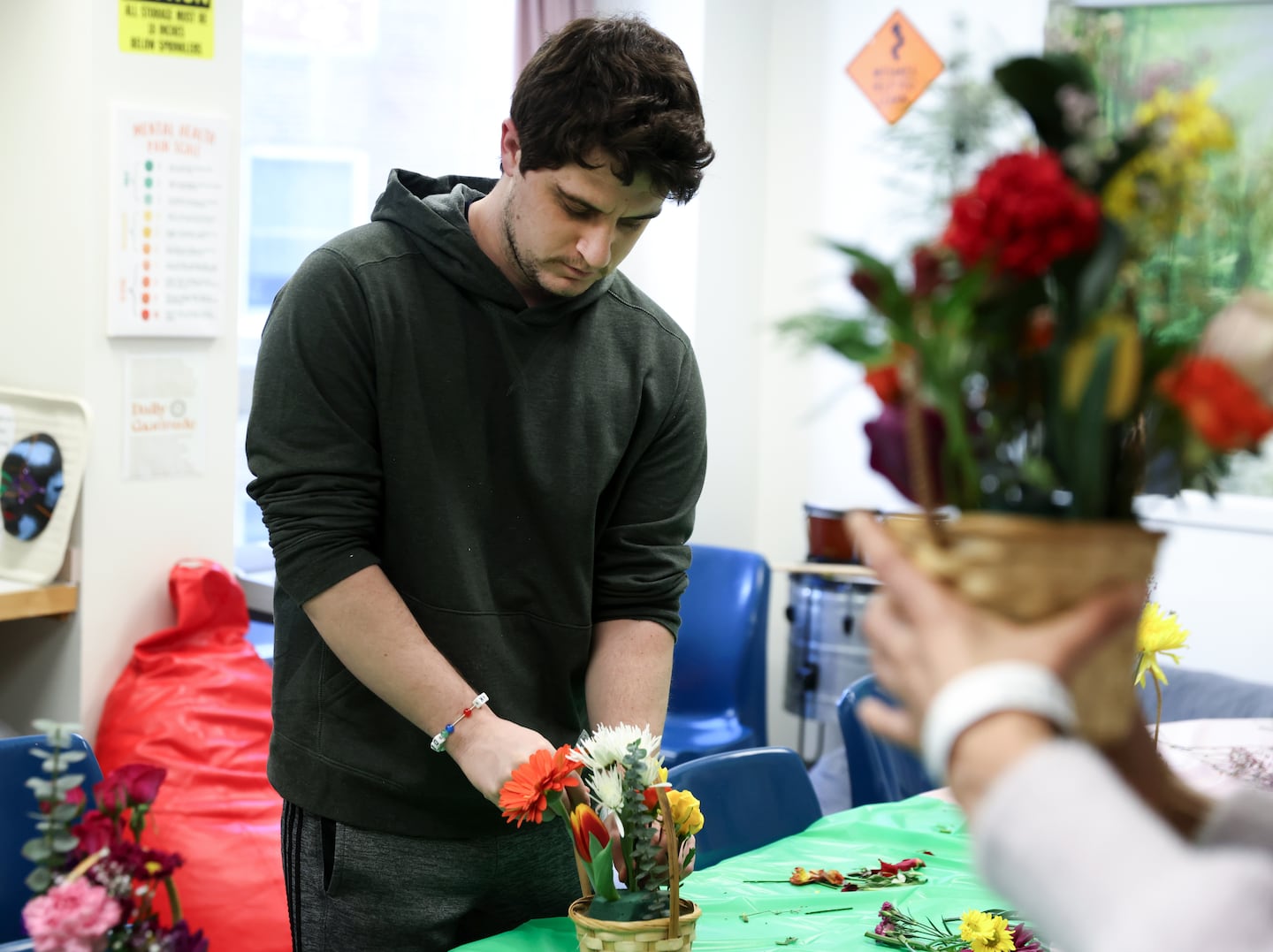 Sean builds his bouquet of flowers for his mother.Jonathan Wiggs/Globe Staff
William, 44, has bipolar disorder. He says his illness often leads to being pushed out of public spaces, like coffee shops. He loves to dance. He can’t easily do that at the hospital, but arranging flowers gives him a channel for self-expression.
“My thing is to create things, because I’m a creator,” he says, adding a white rose to his bouquet. “This bouquet is about setting good intentions. A new year, an intentional thing. Things are going to be good.”
Before arriving at the unit, patients are evaluated by a physician and psychiatric triage team before being admitted for round-the-clock care.
“They may have thoughts of wanting to hurt themselves or somebody else, or they just can’t function safely in the community,” says Steve Reider, the hospital’s director of behavioral health. “That might mean they’re not eating, sleeping, or attending to daily activities like showering because of their mental illness.”
Once admitted, patients meet daily with a physician or nurse practitioner and a social worker. Ultimately, they’re discharged back into the community, into partial hospitalization, or into longer-term residential treatment. The duality is striking: capable people flattened by unpredictable illness, temporarily confined and far from home.
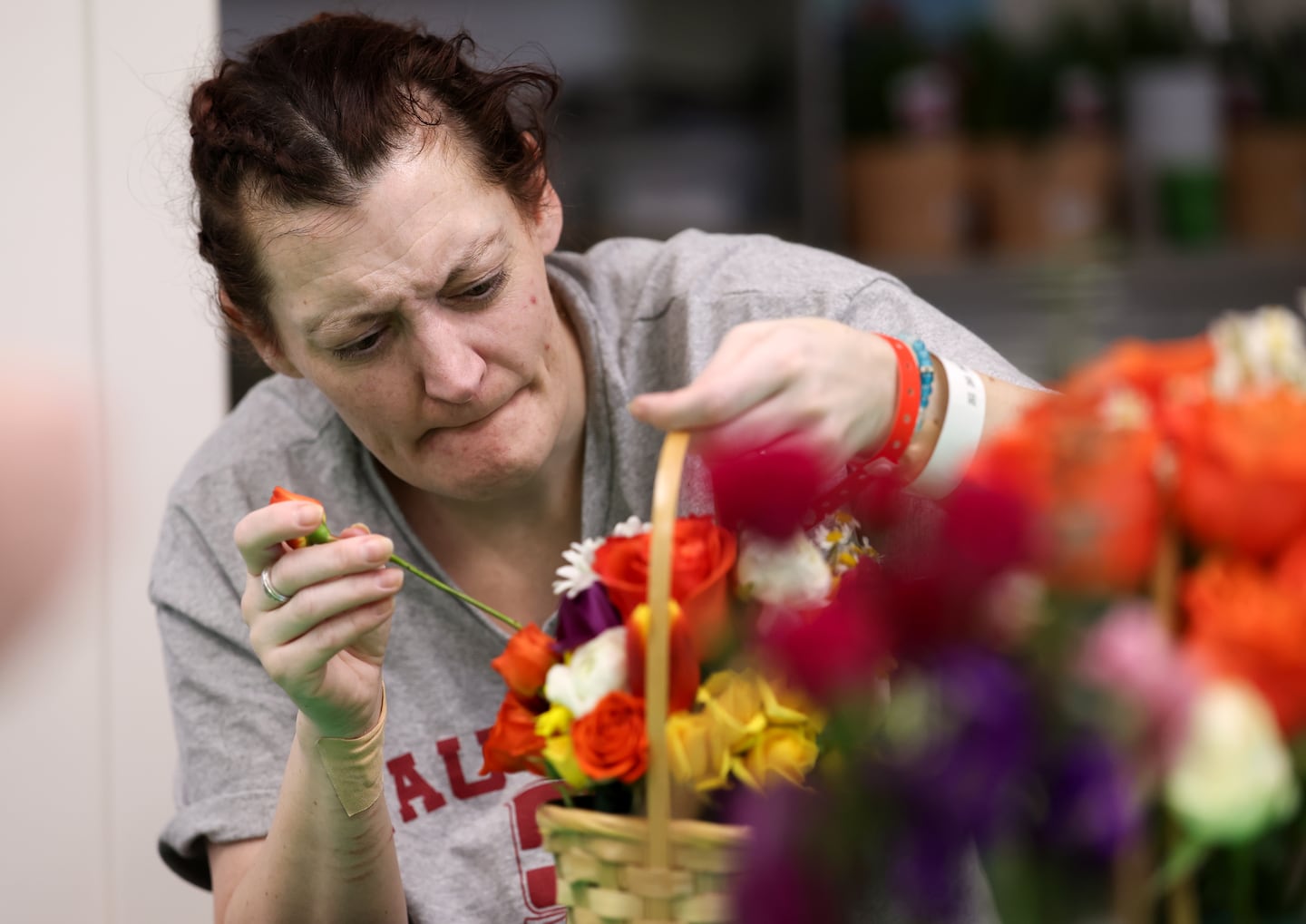 Jenni builds her bouquet of flowers at the Acton Garden Club Flower Day at Emerson Hospital.Jonathan Wiggs/Globe Staff
“When we partnered with the Garden Club, it was about bringing the benefit of flowers — and that quieter cultural element — to our patient population,” Reider says. “We want to decrease stress, anxiety, depression, and mood dysregulation. It’s a time to focus, to complete a task, and to walk away knowing you’ve created something. There’s a sense of purpose.”
Patients sometimes give their bouquets to visiting family members. Other times, they offer them to staff. And sometimes, they place them in their rooms as a reminder of brighter days ahead.
Jenni, 39, once studied art at college in Virginia. Now, she’s helping fellow patients assemble bouquets. Usually, she makes necklaces — birds are her favorite motif, a symbol of a partner who passed away — but today, flowers will do.
“I love anything creative; it helps me so much,” she says. “This is really fun, because you can kind of have a free-for-all. Do what you want. I’m just going with it, and I like how it’s coming out.”
She grins. She may give the bouquet to her grandmother, who has always been supportive, or to her daughters-in-law, with whom she’s remained close. Or she may keep it.
“I don’t know if they’ll hold up,” she says. “If they come for a visit, maybe they will. I’d love that. I’m actually going to save some of the petals in my journal.”
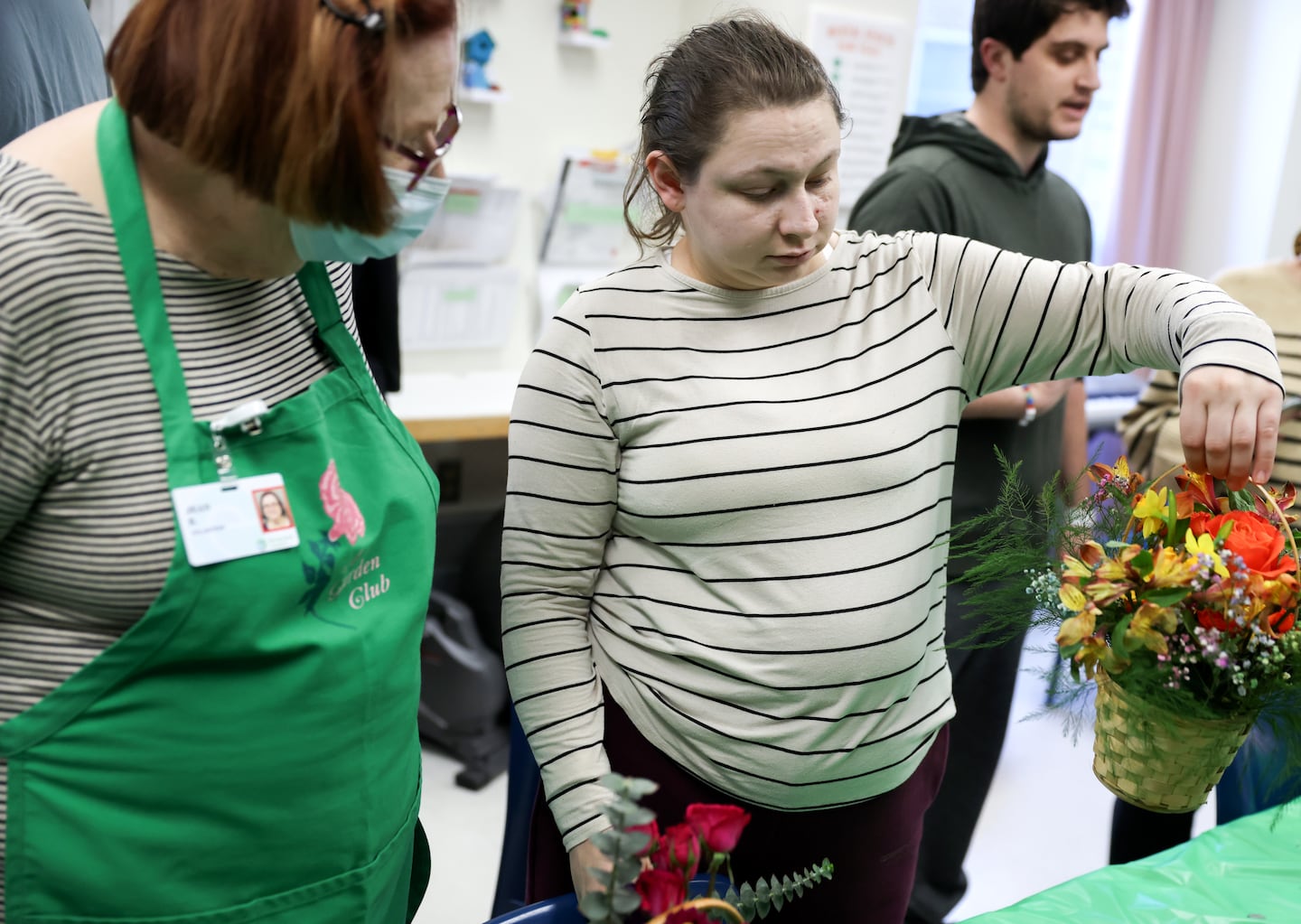 Acton Garden Club Flower Day Volunteer Jean Butler was at Emerson Hospital with Erica.Jonathan Wiggs/Globe Staff
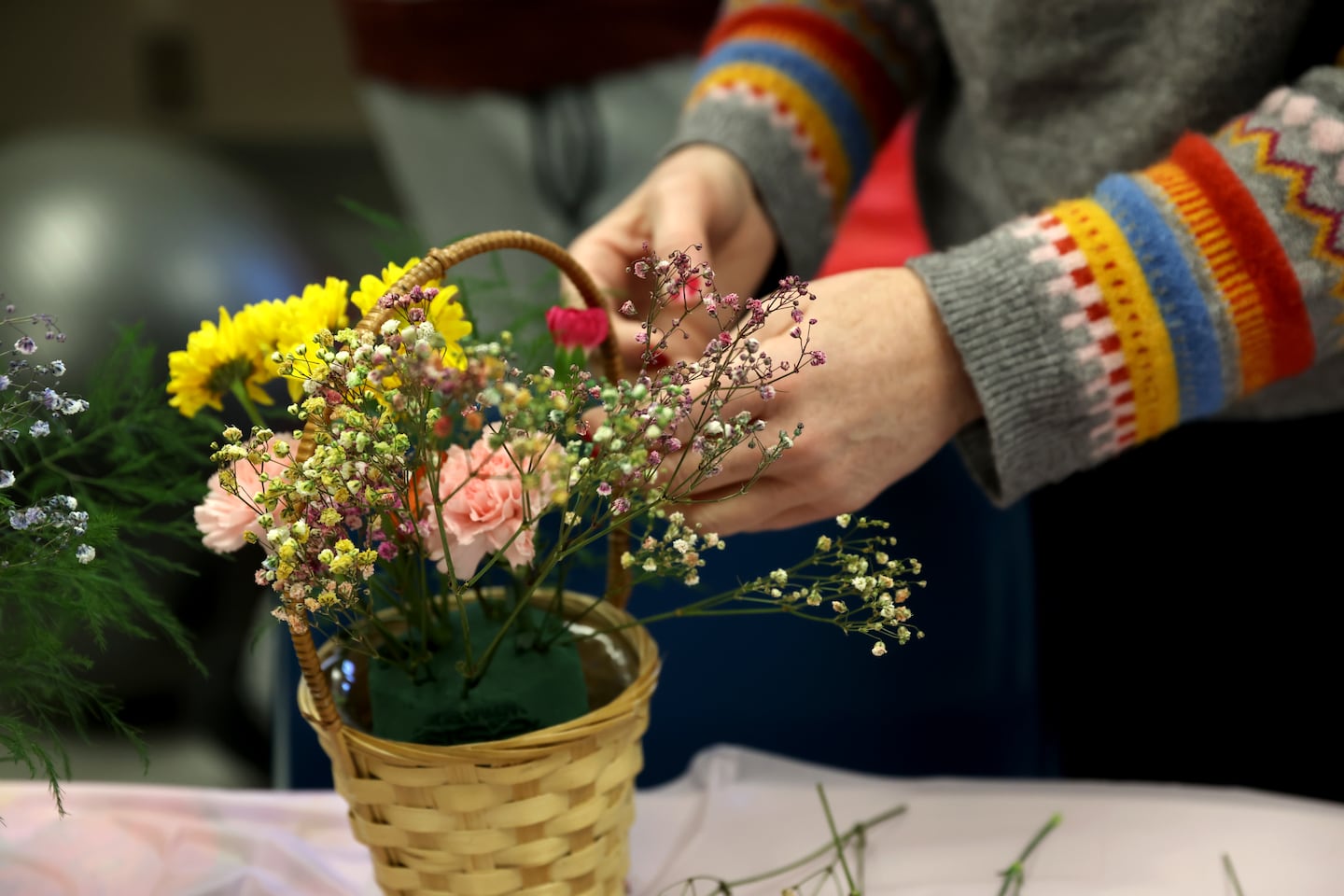 Colleen builds her bouquet of flowers at the Acton Garden Club Flower Day at Emerson Hospital.Jonathan Wiggs/Globe Staff
Erica, 27, has been hospitalized at Emerson before, sometimes for weeks. She has post-traumatic stress disorder, anxiety, depression, borderline personality disorder, and premenstrual dysphoric disorder.
“I specifically come to this unit because I use their [therapy] groups,” she says. “It’s the only unit I haven’t been afraid to come back to.”
Outside the hospital, she’s been an anti-bullying advocate and a long-time Girl Scout. Here, she’s drawn to the scent of eucalyptus and the brightness of flowers in a sterile environment.
“It brings a nice smell to your room. It makes you feel a little more awake,” she says. “We don’t get to go outside very often, so this brings nature inside. It’s nice sensory input if you’re having a hard time.”
She plans to give a bouquet of yellow roses to her mother; last session, she kept one for herself.
Sean, 24, is making a basket for his mom — roses, daisies, baby’s breath. He’s smiling this morning, but anxiety has untethered him. He’s been hospitalized for about a week after a stretch of relentless panic attacks.
“I just didn’t know what to do,” he says. “I couldn’t function. I felt like I was going crazy.”
Mornings are especially hard, he says, but he pushed himself down the hall for this session.
“There are no doctors here, no medications,” he says. “It’s just people sitting around a table, making art and having fun.”
G, 41, grew up in Scotland. The flowers remind him of heather and thistles back home.
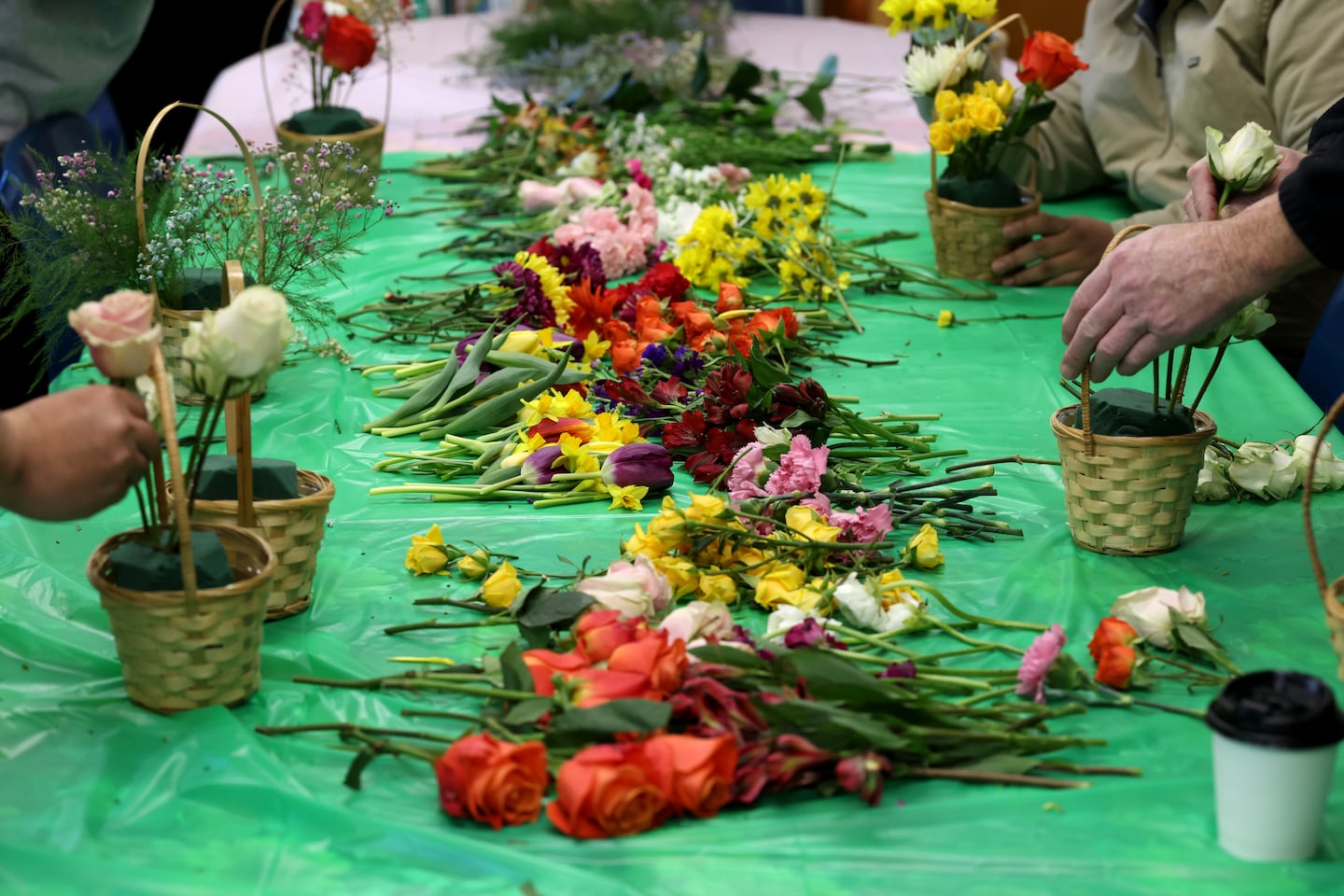 The Acton Garden Club has been having Flower Day for many years at Emerson Hospital. Flowers were donated by a local Trader Joe’s.Jonathan Wiggs/Globe Staff
“Rubbing them and smelling them is so therapeutic,” he says. “When you’re struggling with mental illness, you can become hypersensitive to sensory input. Activities like this bring us together.”
His mom should visit later that day.
“She might be the lucky recipient,” he says, holding his wicker basket. “But, for now, this reminds me that home is still there.”
He came to the United States for college and stayed. Life has been fragile, he says. He struggles with bipolar disorder, anxiety, and body dysmorphia, and he’s been unemployed for two years.
But here, he says, he sees bouquet-making as a literal and metaphorical act of assembling broken pieces into something whole.
The Acton Garden Club’s garden therapy program has reached more than 11,000 patients since starting in 1982. Flowers — carnations, chrysanthemums, daffodils, tulips, baby’s breath — are donated weekly by Trader Joe’s in Acton. What began as a twice-monthly program became a weekly event in 2018, by popular demand.
Each week, two Garden Club volunteers retrieve the donated flowers, assist patients during the workshop, and clean up afterward, under the supervision of an occupational therapist.
“I say this all the time, but watching the patients light up when we arrive with the flowers makes us smile, too,” says Jean Butler, one of the program’s longtime organizers. “I feel like my heart grows three sizes when I’m working with the patients.”
Colleen, 54, left her room specifically for the session. Outside these walls, she’s a musician. Here, she can channel her creativity in a different way.
“It’s something to literally get out of bed for,” she says. “When I knew it was time for this, I jumped up. It lifts my spirits. You have to make a little beauty.”
Across the table, Sean puts the finishing touches on his bouquet as Jenni watches, beaming.
“These activities really integrate people back into society. It takes courage to come out here and try to get better. It’s nice to see how many people go through similar things,” Sean says.
“You can never tell. Anxiety, OCD — it hides in the shadows.”
But in this room, there are glimmers of yellow and orange, petals reaching toward the winter sun.
Kara Baskin can be reached at kara.baskin@globe.com. Follow her @kcbaskin.