
 4 min readFor years, there has been some debate as to whether or not taking a collagen supplement can actually benefit your skin.Now, a new research review of more than 100 randomized controlled trials found that collagen supplementation can firm and hydrate skin from within. Dermatologists reveal the best candidates for collagen supplementation—and the best kind to look for.
There’s been a lot of discussion—and plenty of disagreement—about whether or not taking a collagen supplement will actually benefit your skin. Some users swear these pills are an anti-aging game-changer; others insist they’re snake oil.
Now, a new major research review—one of the most comprehensive papers on the topic to date—is shedding some light. And the news is good: The findings strongly suggest that collagen supplements can have a meaningful impact on your skin health—and may support your joints, too. Many dermatologists are celebrating the news, but study authors are cautiously optimistic because their research also uncovered that many claims around these pills are—shocker—overblown.
Meet the experts: Jose Francisco Lopez-Gil, PhD, study co-author and senior researcher at Universidad Espíritu Santo’s School of Medicine; Cindy Wassef, MD, a dermatologist at Premier Health Associates in Randolph, NJ; Joshua Zeichner, MD, director of cosmetic and clinical research at Mount Sinai Hospital
So, as you’re perusing the supplement aisle, it’s important to keep these findings in mind. Here’s what the research found, plus what doctors want you to keep in mind going forward.
What did the study find?
For the scientific review, which was published in the Aesthetic Surgery Journal Open Forum, researchers analyzed data from 16 systematic reviews and 113 randomized controlled trials that featured nearly 8,000 people around the world. Researchers looked at a bunch of different health metrics, from skin health measurements to oral health and, after crunching the data, the researchers found that oral collagen supplements were linked with better improvements in skin elasticity and hydration, with results multiplying the more people used the supplement. They also found that collagen supplements helped reduce symptoms of osteoarthritis like pain and stiffness and may have a positive impact on muscle mass and tendon structure.
The objective of the review was to shed some light on a topic marred by conflicted findings and few hard-and-fast determinations. “Collagen supplementation has become one of the most widely consumed dietary supplements globally, “ says Jose Francisco Lopez-Gil, PhD, study co-author and senior researcher at Universidad Espíritu Santo’s School of Medicine. “Despite this popularity, the scientific literature consisted of numerous individual meta-analyses across different health domains without a unified synthesis.” So, Lopez-Gil says he and his fellow researchers wanted to put the data all in one place.
How are collagen supplements helpful for skin?
Collagen is the main structural molecule in the skin that provides support and strength, explains Joshua Zeichner, MD, director of cosmetic and clinical research at Mount Sinai Hospital. But collagen production naturally slows with age and is damaged by environmental exposures like UV light, pollution, and high-sugar diets.
While collagen shows up in a lot of topical anti-aging products, Dr. Zeichner says it “likely does no more than act as a moisturizing ingredient” in this form. Its molecule is large, which can be tough to penetrate through the outer skin. Oral collagen is different: “When ingested, collagen is broken down by your GI tract into component peptide fragments,” he adds. “It is thought that these collagen breakdown products serve as a signal throughout the body to stimulate tissue regeneration.”
It’s believed that your body sees the collagen fragments as a sign of collagen breakdown and reacts by increasing collagen production, Dr. Zeichner explains. “Oral collagen, especially hydrolyzed collagen, can be absorbed and has been detected in blood as soon as one hour after ingestion,” adds Cindy Wassef, MD, a dermatologist at Premier Health Associates in Randolph, NJ. To be clear, hydrolyzed collagen means that the collagen itself has been broken down into small, more easily digestible chains of amino acids.
But Lopez-Gil cautions that collagen won’t cure all your skin woes. “Collagen did not significantly improve skin roughness in our analysis, even though that outcome was supported by high-certainty evidence,” he says. “The overall picture is one of improved firmness and hydration, which could be described as foundational dermal support rather than wrinkle elimination or correction of surface texture.”
3 Collagen Supplements Recommended by Experts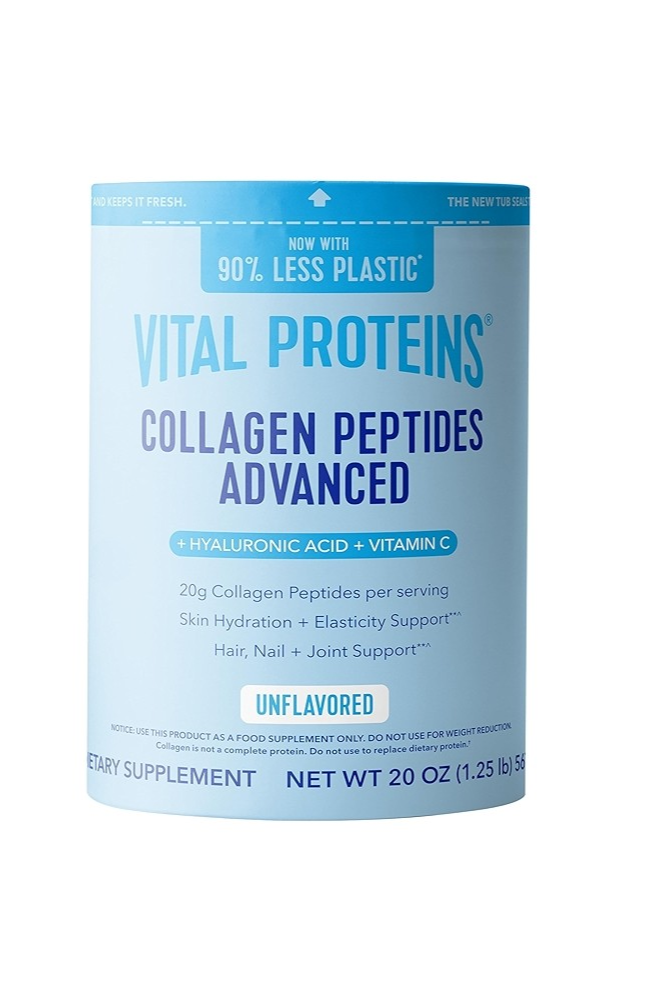 Open Gallery
 Who should consider a collagen supplement?
Dermatologists say plenty of people can benefit from taking collagen. “You should consider collagen supplements to help support natural aging and to help replenish some of the natural collagen our body is making less of over time,” Dr. Wassef says.
If you’re healthy, Dr. Zeichner says there’s “little downside” to taking a collagen supplement. “I tell my patients that results will take months of continuous use and will be modest,” he says. But he stresses that tossing back a collagen supplement isn’t the only thing you should be doing for your skin. “Collagen supplementation does not replace good skincare and sun protection,” he says.

Korin Miller is a freelance writer specializing in general wellness, sexual health and relationships, and lifestyle trends, with work appearing in Men’s Health, Women’s Health, Self, Glamour, and more. She has a master’s degree from American University, lives by the beach, and hopes to own a teacup pig and taco truck one day.

Brian Underwood is beauty director at Women’s Health, where he oversees content strategy for the brand across all platforms, including digital, print, and social. Underwood previously served as beauty and wellness director at Oprah Daily and O, The Oprah Magazine. During his tenure leading beauty content for the Oprah brand at Hearst, stories Underwood commissioned were awarded the Skin Cancer Foundation Media Award and a Fragrance Award for Editorial Excellence (his second). He was the launch Beauty Director of Dr. Oz THE GOOD LIFE, and has held additional editorial positions at Fitness, Organic Style, Good Housekeeping, Life & Style Weekly, and Woman’s Day and has written for Self, Shape, Seventeen, Redbook, Cosmopolitan, and many more. Underwood previously served on the Skin Cancer Foundation’s gala committee and as partnerships director of the Trans Beauty Clinic, a New York-based charitable organization that provided beauty services and workshops to the city’s trans community.