
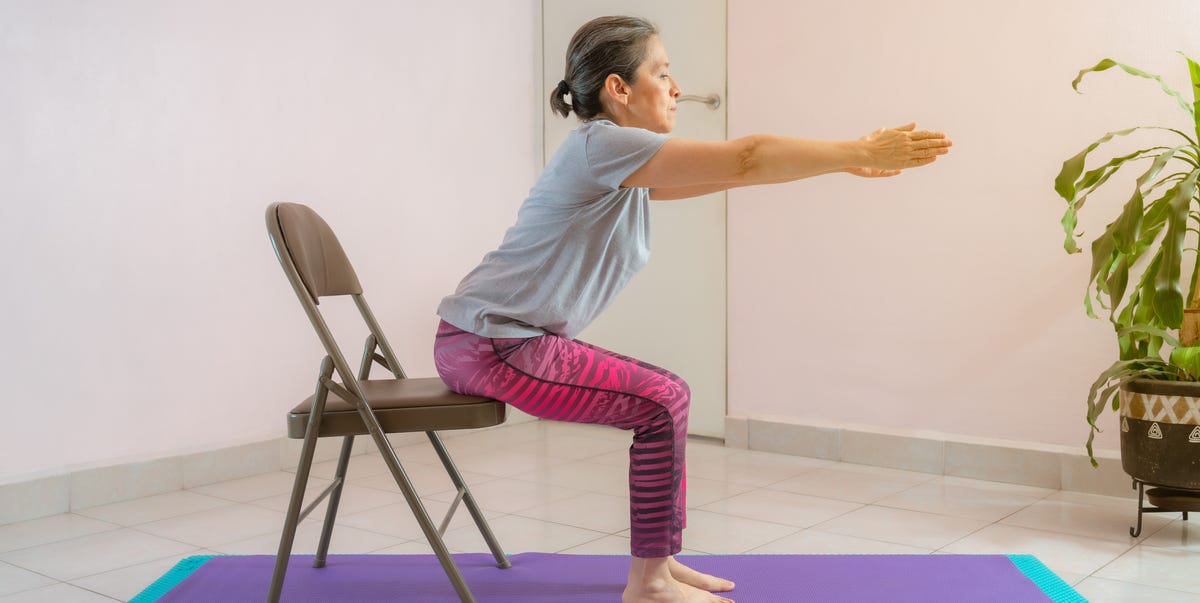
If you think fitness is limited to long, punishing sessions in the gym or hours spent pounding the pavements, think again. If you want to keep moving well as you age, it might be time to reconsider how you think about movement and what ‘counts’ as exercise – it will likely make it much easier to establish a sustainable routine. That’s the premise behind 65-year-old personal trainer and nutritionist Janet Osbourne’s approach to fitness.
Keen to get more people moving with lifelong strength and mobility at the forefront of their minds, Osbourne recently revealed to her followers the three exercises she never skips.
1. Calf raise (20 reps)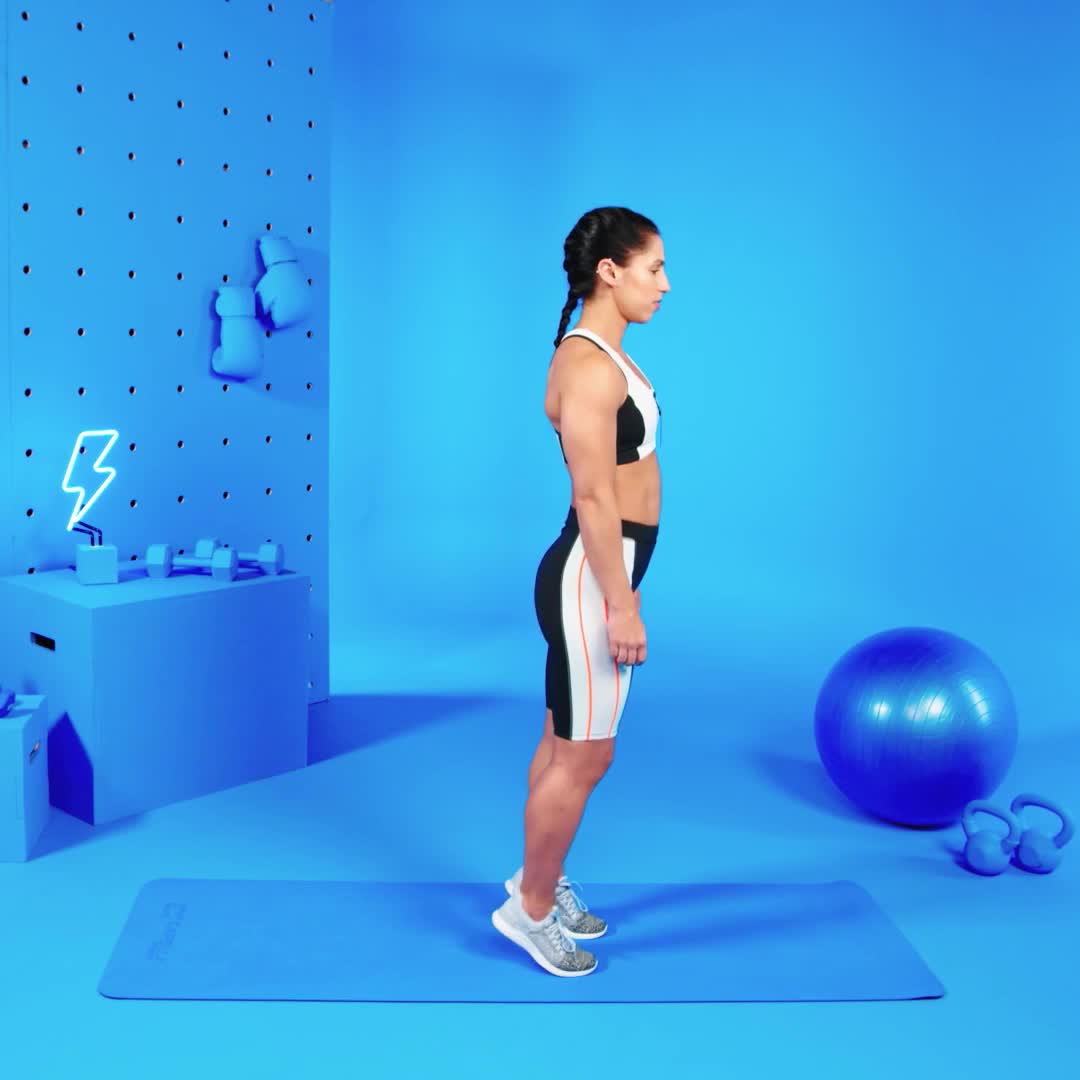
The first exercise Osbourne highlights is calf raises, which she says support balance, circulation and ankle strength. Indeed, the benefits of calf raises have been the subject of several scientific studies.
One paper published in the Journal of Applied Physiology found that performing bodyweight calf raises three times per week for eight weeks improved explosive ankle strength and neuromuscular activation in the calf muscles. Another study found that the exercise improved both balance and plantar-flexor strength – the power of your calf muscles to push your foot downwards – which is vital for walking, running and jumping.
2. Sit-to-stand (20 reps)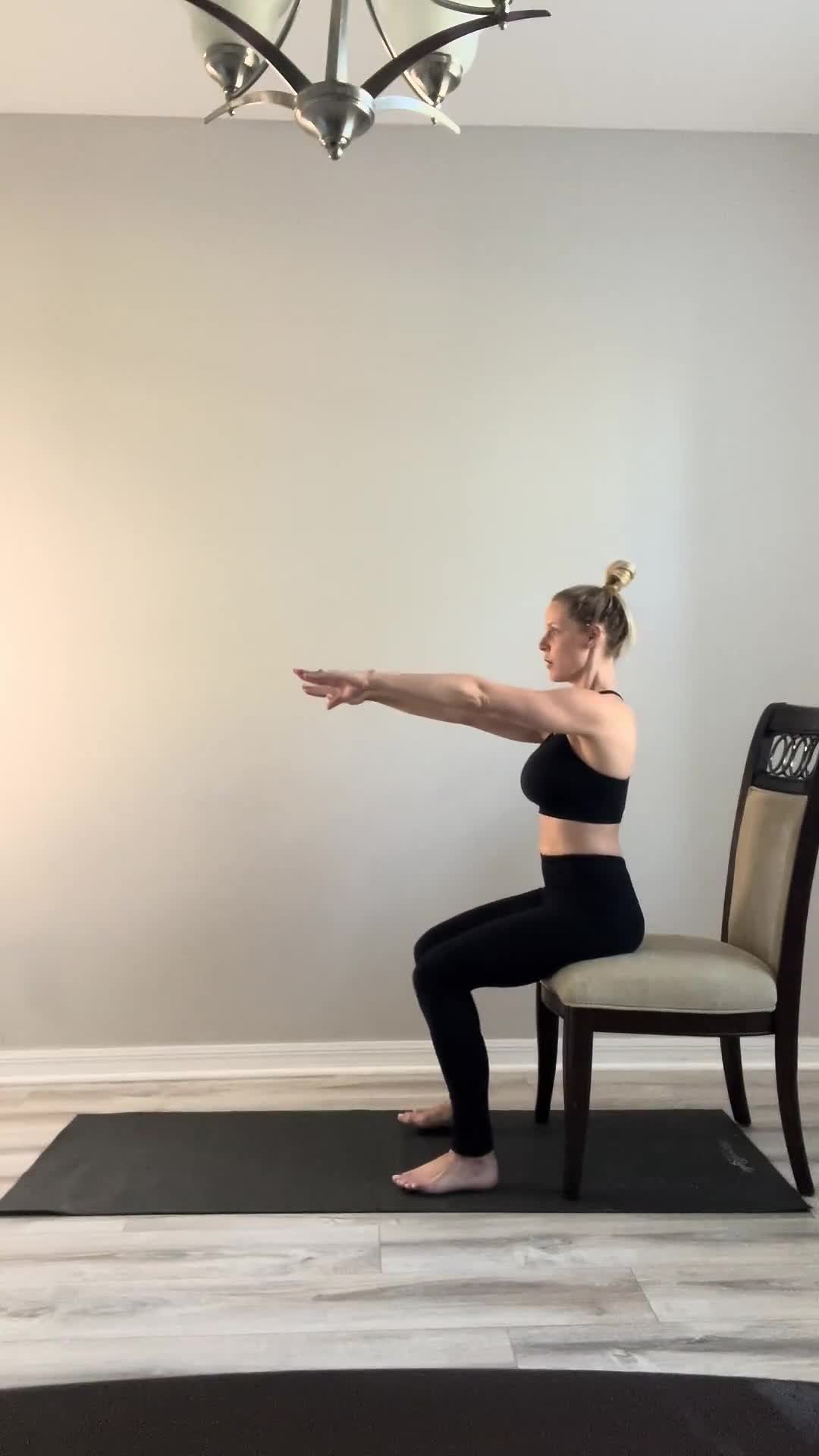
Osbourne calls the next exercise, sit-to-stands, ‘one of the most functional movements for everyday life.’ This move involves exactly what it sounds like: sitting down and getting up from a chair. If you can continue doing this with relative ease as you age, it makes it much easier to remain mobile and independent, increasing your chance of being able to get up if you were to fall.
You can progress the movement by going lower and sitting down and getting up from the floor (known as the sitting-rising test, which has been said to help predict longevity), but sitting and standing from a chair, as Osbourne does, is a great place to start.
And it’s never too late to start: one study published in Experimental Gerontology found that doing the sit-to-stand exercise improved the leg strength of frail older adults, and made sitting down and standing up easier.
3. Wall angel (10 reps) 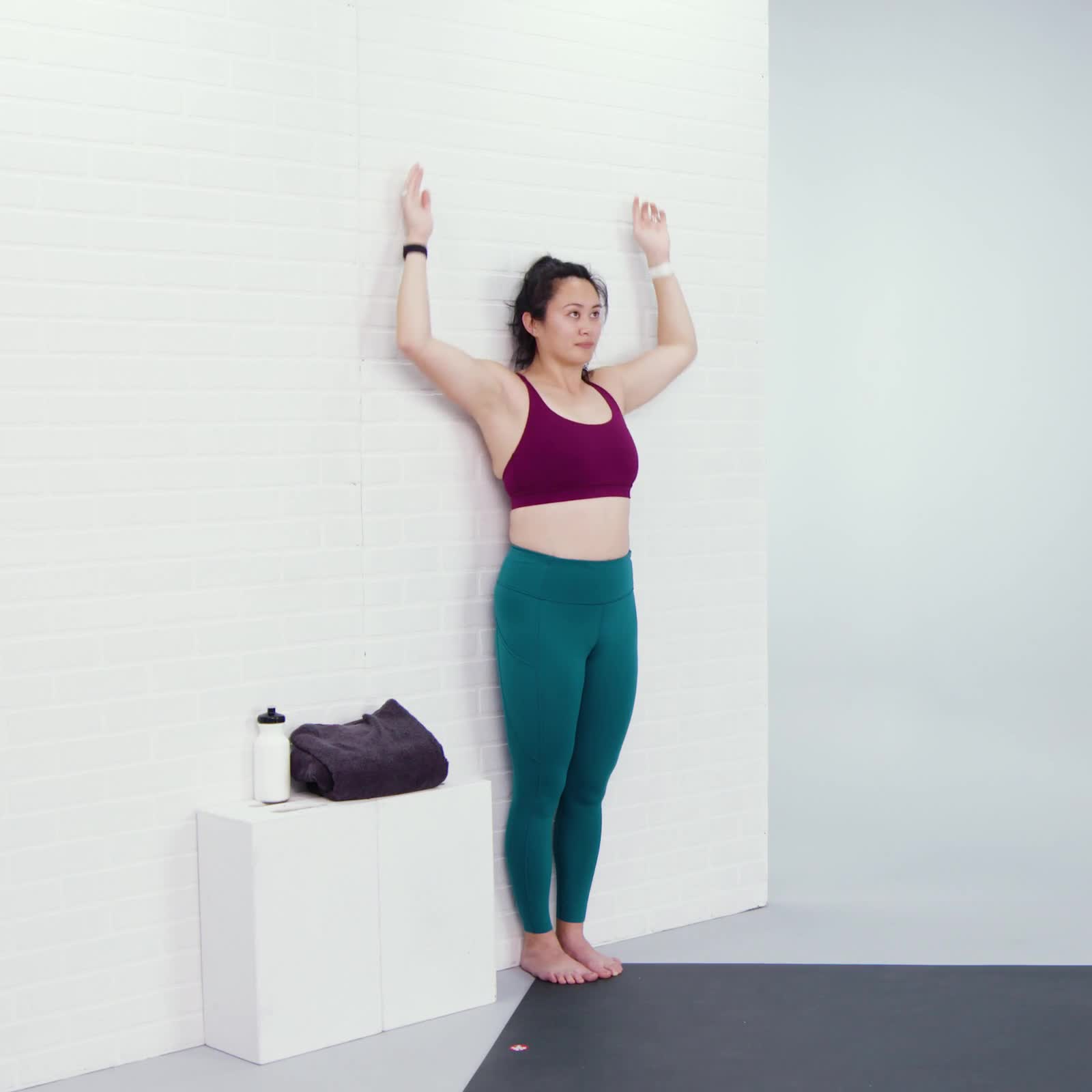
The third exercise that Osbourne would never skip is wall angels, which she says help correct rounded shoulders, improve spine mobility and relieve back and neck tension. This is particularly important if you’ve spent a decent chunk of time sitting down in front of a screen.
‘Wall angels counteract rounded shoulders and forward head posture – helpful for desk workers or anyone feeling tight and holding tension through their upper-back and neck,’ personal trainer Bella Poppy previously told WH. They also build strength and stability, she added – and by ‘strengthening the upper-back and rotator cuffs’, you help ‘protect your shoulders during pulling movements,’ which, again, are the foundation of everyday activities like pulling open doors and drawers.
These exercises may sound simple, but incorporating them into your daily routine can help future-proof your body.
Related Stories
Hannah Bradfield is a Senior Health and Fitness Writer for Women’s Health UK. An NCTJ-accredited journalist, Hannah graduated from Loughborough University with a BA in English and Sport Science and an MA in Media and Cultural Analysis. She has been covering sports, health and fitness for the last five years and has created content for outlets including BBC Sport, BBC Sounds, Runner’s World and Stylist. She especially enjoys interviewing those working within the community to improve access to sport, exercise and wellness. Hannah is a 2024 John Schofield Trust Fellow and was also named a 2022 Rising Star in Journalism by The Printing Charity. A keen runner, Hannah was firmly a sprinter growing up (also dabbling in long jump) but has since transitioned to longer-distance running. While 10K is her favoured race distance, she loves running or volunteering at parkrun every Saturday, followed, of course, by pastries. She’s always looking for fun new runs and races to do and brunch spots to try.