

A simple home-based exercise plan helped patients stay active during chemotherapy, reducing mental fatigue and showing potential to ease “chemo brain”, especially in those on shorter treatment cycles.
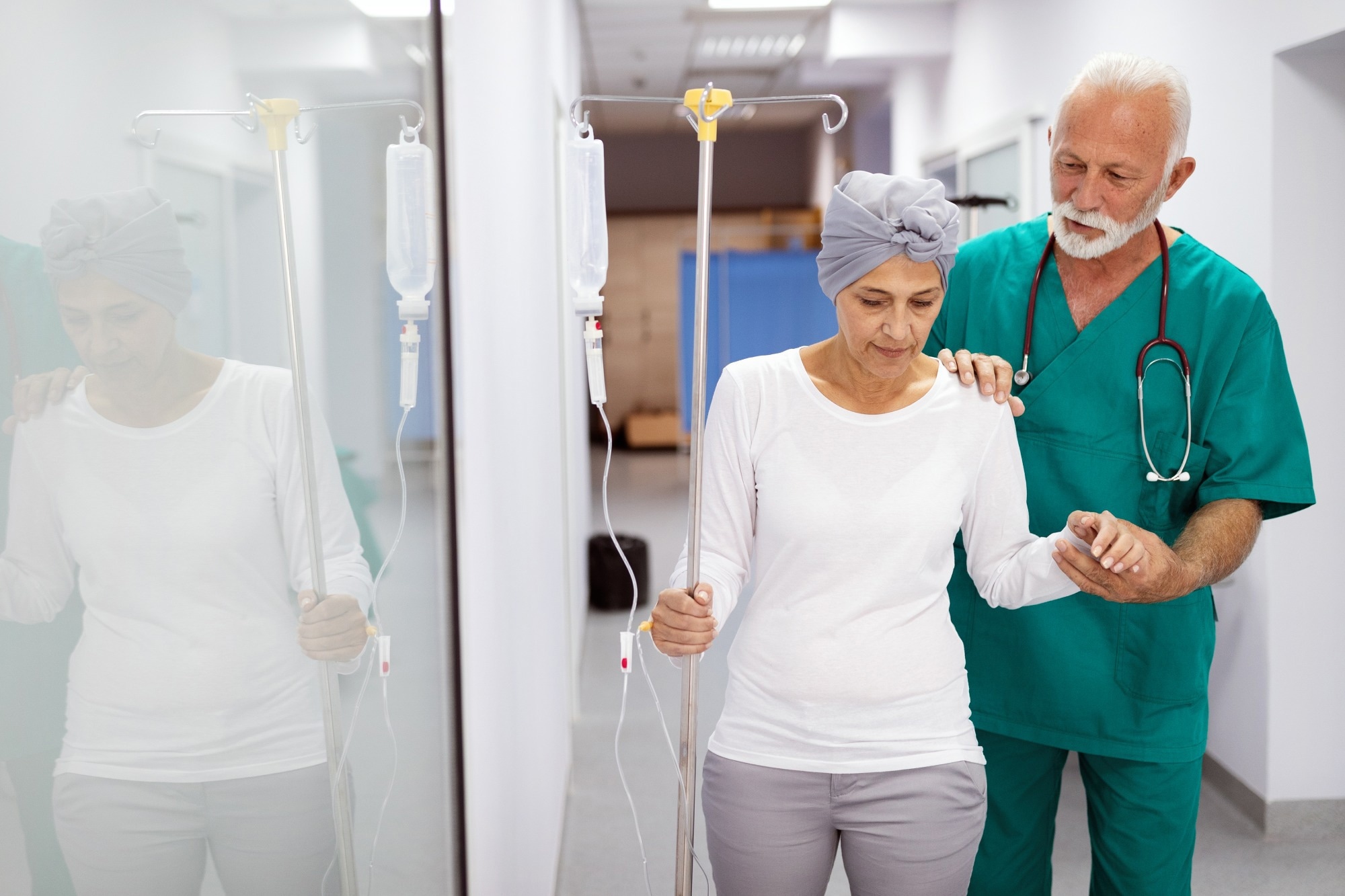 Study: Effects of Exercise on Cognitive Impairment in Patients Receiving Chemotherapy: A Multicenter Phase III Randomized Controlled Trial. Image credit: NDAB Creativity/Shutterstock.com
Cancer-related cognitive impairment occurs in up to 75 % of patients, often with mental fatigue. This severely reduces independence and the quality of life. A study published in the Journal of the National Comprehensive Cancer Network found that the EXCAP exercise program may reduce overall mental fatigue and lessen self-reported cognitive impairment, particularly in patients receiving chemotherapy every two weeks.
‘Chemo brain’ and fatigue
Cancer-related cognitive impairment (CRCI) may begin during cancer treatment or after it, any time during the subsequent ten years. The affected individual has symptoms including poor attention and verbal memory, reduced executive function, and slowed mental processing. Mental fatigue often occurs alongside. These create issues with activities of daily living (ADL), such as managing medication, managing money, shopping, traveling, housekeeping, and driving.
Chemotherapy inhibits physiologic anti-inflammatory responses, allowing the pro-inflammatory state to predominate. This can disrupt normal immunologic function, leading to immunodeficiency.
Exercise may help regulate the pro-inflammatory responses that predominate in patients on chemotherapy. During exercise, pro-inflammatory cytokines such as IFN-γ and IL-1β are initially released. This is followed by self-regulation through the release of anti-inflammatory signaling molecules, such as IL-10.
Exercise also causes IL-6 release from skeletal muscle cells. Though commonly considered a potent pro-inflammatory chemical signal, exercise-associated IL-6 acts as a myokine, an anti-inflammatory signaling molecule from muscle cells.
Previous work by these authors showed that the Exercise for Cancer Patients (EXCAP) intervention was associated with higher immunocompetence. The biochemical changes observed with EXCAP suggest that they accompany a better balance between inflammation and anti-inflammation. The current study seeks to extend this work through a randomized clinical trial (RCT).
Six-week walking and resistance plan
The researchers conducted a multicenter nationwide phase III RCT and examined the effectiveness of a tailored progressive exercise strategy for use at home in patients with CRCI and mental fatigue. They also assessed the associations between exercise, CRCI, and inflammation in cancer patients on chemotherapy.
EXCAP is a six-week home-based intervention that includes walking and resistance band exercises. It was designed by the first author in collaboration with certified exercise professionals from the University of Rochester Medical Center. Each participant was introduced to an individualized exercise plan by trained staff on the first day of chemotherapy.
The study included 687 patients randomized to receive EXCAP or usual care. They were assessed for exercise intensity and EXCAP adherence, using a daily exercise diary, pedometer, and a resistance exercise scale.
The researchers evaluated CRCI and mental fatigue before and after the intervention. Serum levels of five selected pro- and anti-inflammatory cytokines, the cytokine receptor sTNFR1, and the overall inflammatory response pattern were also measured and analyzed. In addition, participants recorded their thoughts about the exercise and the study.
EXCAP keeps activity above critical mortality thresholds
Dropout rates were comparable in the EXCAP and usual care groups. EXCAP participants maintained an average of about 4,351 steps (approximately two miles) per day after six weeks. In contrast, the usual care group reduced daily steps by 53 % (>1 mile) from the preintervention value of 4,076 steps per day.
Comparing the two groups, the EXCAP group eventually walked nearly 2,000 steps more each day than the usual care group, who had, on average, <2,000 steps per day overall, even with treatment. The authors underline the importance of this observation: “Walking <2,000 steps per day has been significantly associated with higher all-cause mortality.”
They also did resistance-band exercises three times a week for about 25 minutes per session at moderate intensity. In the usual care group, exercise was minimal, with a maximum of three sessions over the six-week study period.
Cognitive decline and mental fatigue
Overall, all participants showed cognitive decline and worsening mental fatigue during chemotherapy. However, for those on two-week chemotherapy, severity was significantly lower in the EXCAP group than in the usual care group. Similarly, no increase in mental fatigue was observed in the two-week chemotherapy EXCAP group, unlike in the usual care group.
These differences were obvious at the postintervention tests. In contrast, no significant differences were observed between groups in patients receiving longer courses of chemotherapy, and no overall significant improvement in total cognitive scores was observed across the full study population. The authors speculate that this may be because these patients are sicker or have other drug toxicities causing resistance to EXCAP-mediated differences.
Alternatively, patients might need more intensive or prolonged exercise to leave its impact on CRCI, or have genetic predispositions that reduce cardiometabolic responses to exercise.
Inflammation, CRCI and exercise
The researchers found that greater exercise was associated with higher FACT-Cog scores, indicating less cognitive impairment, and that a healthier inflammatory response pattern was also associated with better cognitive function, although these relationships were associative.
Almost all EXCAP participants said they enjoyed exercise more after the study, and would recommend the program to other patients on chemotherapy to reduce CRCI.
Strengths and limitations
This study has several limitations, including the absence of a behavioral placebo and the lack of objective assessments of cancer-related cognitive impairment and mental fatigue. The exercise intervention may also have been restricted to a relatively narrow range, while the sample, comprising mostly White females with breast cancer, limits the generalizability of the findings. Additionally, further research is needed to identify specific inflammatory signatures underlying CRCI and mental fatigue.
Home-based exercise offers practical support during chemotherapy
Individualized exercise programs could potentially help patients on chemotherapy maintain their walking and resistance band exercise at pre-chemotherapy levels. This is associated with reduced mental fatigue and may help lessen CRCI, particularly in patients receiving chemotherapy every two weeks. In addition, they help patients keep their daily step counts above thresholds previously associated with higher mortality from all causes.
This confirms the ability of exercise to help mitigate CRCI under certain treatment conditions, as reported earlier by these authors, and adds the observation that it also helps prevent worsening mental fatigue during chemotherapy. Importantly, the intervention was implemented by community-based oncology staff who were trained to administer EXCAP and follow up for adherence.