
 4 min read
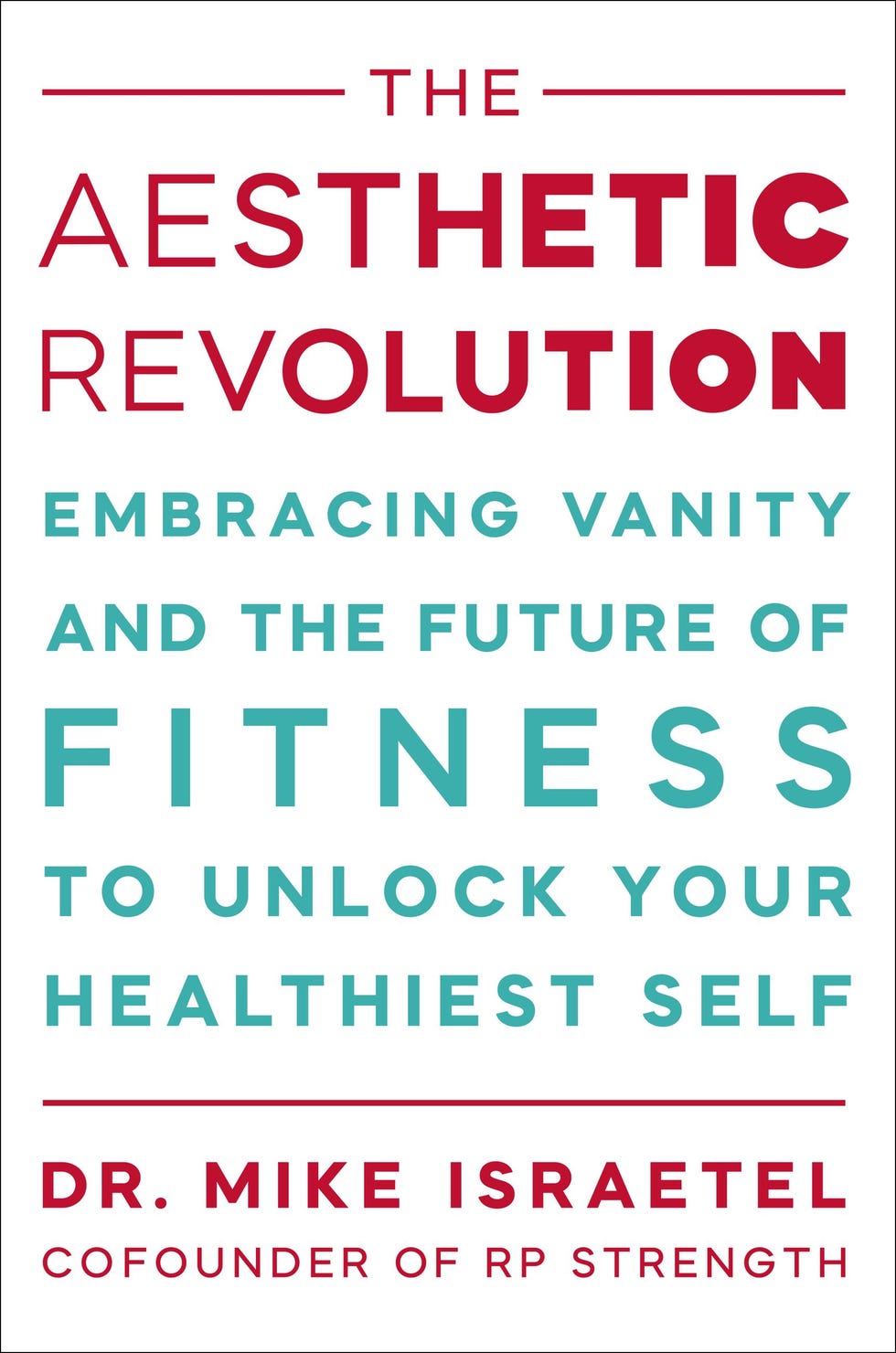
The following is an excerpt from The Aesthetic Revolution: Embracing Vanity and the Future of Fitness to Unlock Your Healthiest Self by Dr. Mike Israetel, the fitness personality and sports scientist behind Renaissance Periodization.
I NOTICED MY love handles before I even knew the term “love handles.” Back in high school, after my freshman year, I got absurdly lean—under one hundred pounds. I thought I’d finally unlocked the secret to looking shredded. Then I looked in the mirror . . . and there they were. Love handles. At under one hundred pounds. What kind of cosmic joke was that?
Years later, when I took a detour into powerlifting and ballooned up to 270 pounds at around 30 percent body fat, those same love handles evolved into their final form—absolute units. They didn’t just exist; they announced themselves. When I finally dieted down to under 10 percent, everything else on my body looked carved from granite—except for those soft, stubborn side shelves. It was as if my love handles had a separate fitness journey entirely, and their plan was to stay.
Even at a DEXA-confirmed 6 percent body fat—the kind of number where veins start showing up in weird places—they still lingered. Deflated, yes, but unmistakably there. And when I tried to push even leaner, my stress hormones pulled a prank of their own: They held water right under that loose skin, puffing it up again. The leaner I got, the worse my love handles looked. The irony was almost poetic . . . if it hadn’t been soul-crushing.
That cycle—dieting hard, losing motivation because my waist looked worse, then switching back to gaining—repeated more times than I care to admit. It wasn’t vanity at that point; it was frustration.
I’d transformed my entire physique through decades of lifting, but this one area refused to cooperate. After taking time off to earn my black belt in Brazilian jiu-jitsu and focus on my podcasting work, I finally made a decision that wasn’t about the stage or competition. I just wanted to live in a body that didn’t have a permanent reminder of my weight swings. So, I called Dr. Douglas Steinbrech—a top-tier cosmetic surgeon—and we mapped out a plan: 270 degrees of targeted liposuction and skin removal around my back and sides. Essentially, I asked him to delete the problem from my body.
The recovery? Rough. Five and a half weeks of open-wound healing, compression garments, and the weird mix of relief and regret that comes with major surgery. But four days after the operation, when I peeled off those compression wraps and stepped into the shower, I caught a glimpse of my reflection and froze. My waist looked . . . tiny.
Not just “a little better.” It looked like someone had photoshopped it.
For a moment, I felt pure, stunned disbelief.
Of course, the swelling hit soon after. My body ballooned with healing fluid, and that initial tight waist disappeared for months. But even now, seven months after surgery, as the water slowly fades, I can see the results taking shape. My love handles are gone. Gone, gone. My waist finally matches the rest of my physique—the physique I’ve spent most of my adult life building.
It feels surreal. Not just aesthetically, but emotionally. Every time I see my reflection now, it feels like a quiet victory—not over vanity, but over the long, strange war between effort and biology.
NOT EVERY AESTHETIC sticking point will have clear answers. Compare my experience with my love handles to another potentially sensitive body image issue: height. I’m five feet six, notably short for a guy, and while I’ve considered limb-lengthening surgery, it’s solidly placed on my “wait until the tech gets at least ten times better” list. Even as someone deeply invested in aesthetic optimization, the invasiveness and recovery burden of this surgery demands a very high threshold of certainty and readiness.
Let’s put this clearly: This is not a “pop in and walk out taller” kind of procedure. Current techniques typically require about a year and a half—yes, eighteen full months—to fully heal, recover, and regain normal function. During this extended recovery period, sporting activities are entirely off-limits, and even serious lifting may be paused for several months.
This isn’t just an inconvenience—it’s a fundamental consideration. Think of it as a marathon of patience and commitment. Given the invasive nature of the procedure, the rehabilitation involved, and the psychological strain it can entail, this surgery deserves tremendous thought.
Periodization here means acknowledging that this should ideally be the final stage of your aesthetic journey, once all other transformations—muscle building, fat loss, skin tightening, facial enhancements—have already been accomplished. Once you’ve achieved your overall body composition and physique goals, and you’re certain this is the missing piece, limb lengthening could indeed be a transformative and deeply satisfying choice. But, given the magnitude of the procedure, please take ample pause and carefully reflect. Make sure this is truly what you want, and that you are fully prepared for the physical, emotional, and temporal investments required to see it through.
Surgery isn’t for everyone, and only you and your doctor can make that call. But if you’ve done the work—if you’ve lost the fat, built the muscle, and still see remnants of the old you hanging on—it’s worth thinking about.
And honestly? If you’ve already poured years into transforming your body, your discipline, your life—why stop at almost? Sometimes finishing the journey means going the whole way.
Excerpted from The Aesthetic Revolution by Dr. Mike Israetel. Copyright © 2025 by Dr. Mike Israetel. Used by arrangement with Grand Central Publishing Group. All rights reserved.


Dr. Mike Israetel is Sport Physiologist, former professor of Exercise and Sport Science, and co-founder and chief content officer at RP Strength. He’s a competitive bodybuilder, a Jiu Jitsu Black Belt, and author of multiple books on diet and training. You can follow him @drmikeisraetel.