
From winter UVA levels to long-term sun-seeking habits, a large UK Biobank study explores how different patterns of light exposure may intersect with glucose regulation and metabolic health.
Study: Sunlight exposure is associated with lower blood glucose levels and type 2 diabetes. Image Credit: everydayplus / Shutterstock
Exposure to sunlight is associated with lower blood glucose levels and a lower likelihood of type 2 diabetes, according to a new study published in the journal Scientific Reports.
Background
Type 2 diabetes is a chronic metabolic condition in which the body either cannot produce sufficient insulin or cannot use it properly, leading to the accumulation of glucose in the blood (hyperglycemia). The condition is a major public health concern, with substantial impacts on morbidity, mortality, and healthcare expenditure.
Several observational studies have linked lower circulating vitamin D levels to a higher risk of type 2 diabetes. However, current randomized controlled trials generally do not establish low vitamin D as a causal factor or support vitamin D supplementation for preventing type 2 diabetes in the general population.
Vitamin D is primarily synthesized in the human skin following exposure to the sun’s ultraviolet B (UVB) radiation. Existing evidence suggests that exposure to UV radiation can activate nitric oxide stored in the skin, which in turn can reduce blood pressure through vasodilation. Animal studies have also linked UV exposure to reductions in metabolic syndrome markers and weight gain. These observations suggest that sunlight may confer cardiovascular and metabolic health benefits independent of vitamin D.
Given the potential health benefits of sunlight exposure, researchers at the University of Edinburgh, UK, and Karolinska Institute, Sweden, examined associations between acute and chronic sunlight exposures and blood glucose levels and type 2 diabetes, respectively.
Study design
The study used baseline assessment data of UK Biobank participants collected between 2006 and 2010. Daily mean UVA estimates were collected from the Japan Aerospace Exploration Agency to calculate 2-day and 7-day average UVA estimates for each participant. These estimates, which reflected ambient UVA at participants’ residential locations and served as proxies for short-term sunlight exposure, were analyzed for associations with participants’ blood glucose levels.
Participant-reported information on the frequency of solarium or sunlamp use each year was used as a proxy for chronic sunlight exposure. Based on solarium use frequency, participants were categorized as non-users, occasional users, or frequent users. Retrospective survival analyses, restricted to participants of White European ancestry, were performed to explore the associations between solarium use and type 2 diabetes diagnosis.
Key findings
The study analysis indicated an inverse association between ambient UVA exposure and blood glucose level. Specifically, the analysis revealed that higher average sunlight exposure during the 2-day period ending on the day of blood sampling is associated with lower blood glucose levels in winter, whereas higher average sunlight exposure during the corresponding 7-day period is associated with lower blood glucose levels in both winter and spring.
Regarding the effect of chronic sunlight exposure, the analysis revealed that occasional and frequent solarium users had 14% and 22% lower hazards of type 2 diabetes, respectively, as compared to non-users in the retrospective analysis. The median analytical observation period from age 20 to diabetes diagnosis or baseline assessment was 38 years. A significant linear trend in diabetes hazard across solarium-use categories was consistent with a dose-response relationship.
Further analysis revealed that more frequent solarium use was associated with model-predicted lower body mass index (BMI), lower blood glucose level, and higher vitamin D level, in a dose-dependent manner.
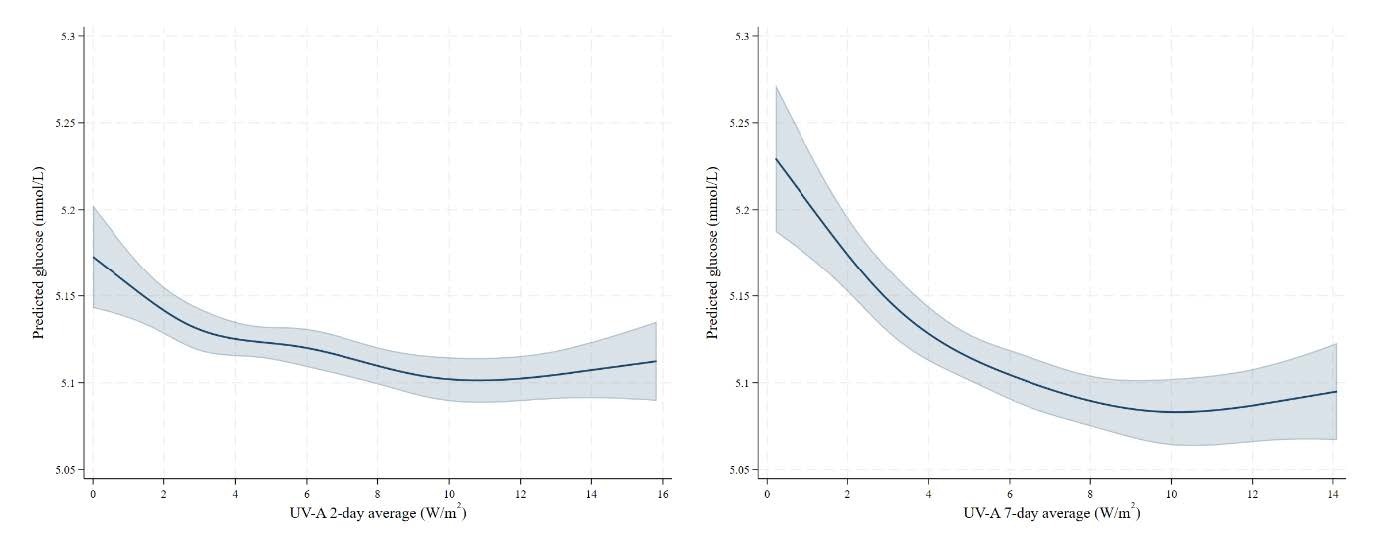
Associations between ambient ultraviolet A (UVA) radiation exposure and predicted glucose concentrations (mmol/L). The left panel shows the association between 2-day average UVA exposure and predicted glucose levels and the right panel shows the association for 7-day average UVA exposure.
Study significance
The study suggests that short-term exposure to sunlight was associated with modest reductions in blood glucose, which the authors considered potentially meaningful at the population level. Together, the acute and chronic analyses point to a possible role for sunlight exposure in metabolic health, although neither establishes causality.
Short-term sunlight exposure may influence blood glucose levels via nitric oxide, which previous research suggests peaks around 24 to 48 hours post-UV exposure. Nitric oxide may lower blood glucose levels by increasing blood flow, insulin secretion, and insulin sensitivity.
Notably, the strongest inverse association between sunlight exposure and blood glucose was observed in winter, when overall sunlight levels are low. Nonlinear analyses showed that glucose levels declined most steeply at low UVA exposures before plateauing at higher ambient UVA levels, which are more typical of sunnier months.
These findings suggest that a threshold of sunlight exposure may be needed to trigger short-term metabolic effects, beyond which additional exposure may provide little further benefit. In other seasons, when most days may already be sufficiently sunny, additional daily exposure may provide little further metabolic benefit.
The winter season in high-latitude regions like the UK is associated with lower levels of UVB radiation, which are insufficient for vitamin D production. This suggests that the observed association between short-term sunlight exposure and lower glucose levels may involve vitamin D-independent mechanisms.
The dose-dependent relationship observed between solarium use and type 2 diabetes hazard was associated with higher vitamin D levels and lower blood glucose levels. The frequency of solarium use was modest among study participants, which is unlikely to fully account for the substantial difference in vitamin D levels observed between users and non-users.
These findings suggest that solarium use may be associated with broader patterns of habitual sun exposure that jointly contribute to the observed metabolic associations.
The study has several limitations. Ambient UVA was an imperfect proxy for individual sunlight exposure, blood glucose was measured under non-standardized fasting conditions, and solarium use and diabetes history were self-reported. The chronic analysis was also retrospective, restricted to White European participants, and may remain susceptible to residual behavioral confounding despite statistical adjustment.
Overall, the study highlights potential metabolic health benefits associated with habitual sunlight exposure. However, the researchers cautioned that these findings do not directly support the use of solarium as an intervention to reduce the risk of type 2 diabetes. The paper also notes that sunlight exposure is a known risk factor for skin cancer, underscoring the need to identify safe sources and dose ranges. Solarium use may instead reflect broader sun-seeking behavior and habitual sunlight exposure.
Future research examining the optimal duration and dose of sunlight exposure may help inform interventions, public health policies, and guidelines related to sun exposure and metabolic health.
Journal reference:
Stevenson, A. C., Weller, R. B., Lindqvist, P., & Dibben, C. (2026). Sunlight exposure is associated with lower blood glucose levels and type 2 diabetes. Scientific Reports. DOI: 10.1038/s41598-026-66100-4, https://www.nature.com/articles/s41598-026-66100-4