
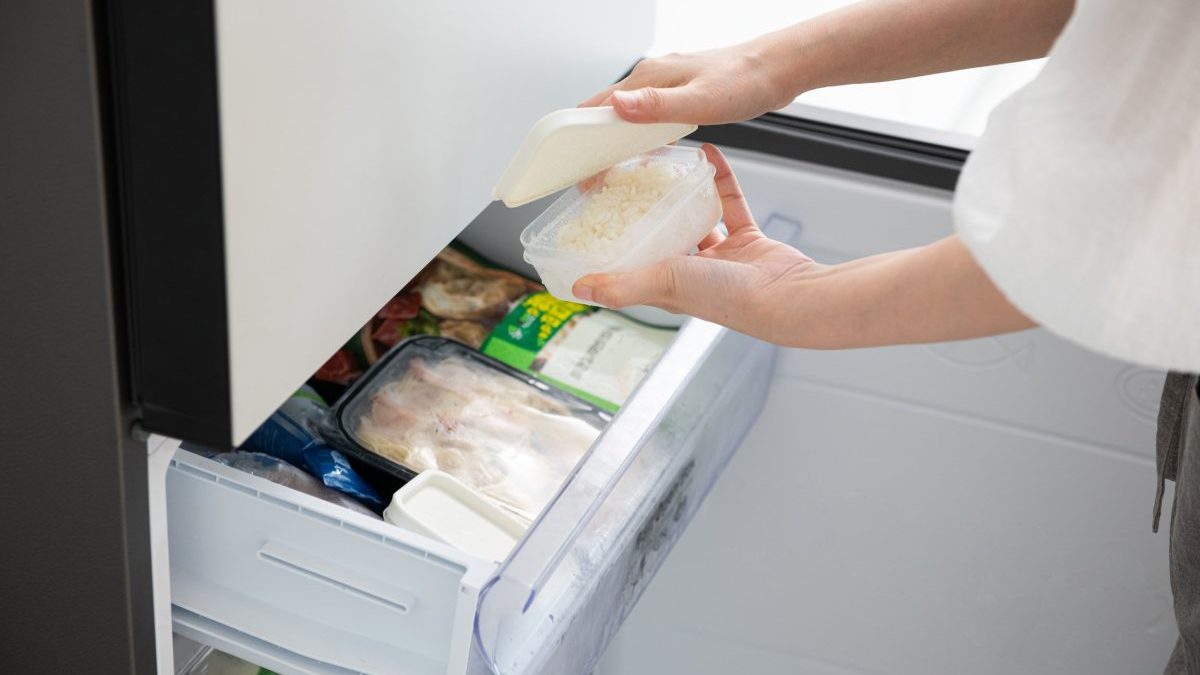
There is a big variety of items – from frozen fruit and veg to spices, fish fingers and batch-cooked bolognaise
Making use of your freezer is the key to cutting down on waste, better meal planning and ensuring you can cook from scratch most days. But in order to use it efficiently, you need to know what’s in there.
We asked registered dietitians, experts whose entire livelihoods are dedicated to translating the science behind food and nutrition, for the things they always have in the freezer and their most-used frozen food items. From frozen fruit and veg to spices, fish fingers and batch-cooked bolognaise, here’s what their busy family lives can’t do without.
New FeatureIn ShortQuick Stories. Same trusted journalism.
Edamame beans and peas
Convenient, cheap and often more nutritious than their fresh counterparts, frozen veg is a freezer staple for many for good reason. “Peas and sweetcorn are my essentials,” says Nichola Ludlam-Raine, specialist dietitian and author of How Not To Eat Ultra-Processed. “Frozen veg is frozen within hours of being picked, so it often contains more nutrients, such as vitamin C, than ‘fresh’ veg that has travelled far. They’re also so versatile, we throw them into everything – pasta, stir-fries, omelettes, or just have them as quick sides for the kids and us too.”
A solid crowd-pleaser, adds Priya Tew, a specialist dietitian in eating disorders and director of Dietitian UK: “Peas are great for increasing the protein of a meal, but we have these the most as they are ones the children will eat! So it means there is always a vegetable on the table that everyone eats.”
For specialist dietitian and British Dietetic Association (BDA) spokesperson Clare Thornton-Wood, her pick of the crop is frozen edamame, or soyabeans. “They’re a great source of fibre, I like to add them to casseroles and also use them to make an on-the-go snack sprinkled with a little soy sauce.”
 Nichola Ludlam-Raine keeps non-UPF pizza and oven chips in her freezer
Frozen fish pie mix
Buying a ready-made fish pie mix is cheaper than buying fresh or whole fish, points out Thornton-Wood. “I use a Jamie Oliver recipe where you just stir in veg and cheese – no sauce-making! I also use this mix to make homemade fish cakes relatively simply, flavoured with coriander and lime or capers. I use porridge oats to coat them to provide added fibre and betaglucan.”
Thin crust pizza that’s non UPF
“For us, this is a realistic, family favourite,” says Ludlam-Raine. “I always go for thin crust, or buy these plain Crosta Mollica pizza bases with tomato sauce (they have a short ingredients list and you can add your own cheese and toppings too). I’ll pair it with a big salad to balance things out. It’s a stress-free option for Friday nights or when we’re just not in the mood for cooking.”
Overripe bananas
Don’t just throw them out when they start to turn, even if you don’t have the time to do anything with them now, freeze them for when you do, suggests Thornton-Wood. “I absolutely hate wasting food, so I’ll always save these up and either make banana loaf when I have time or mix with oats, yoghurts and eggs to make a baked pudding that I serve with frozen berries for breakfast. You can chuck the overripe bananas in the freezer in their skins, then defrost in the microwave if you’re in a hurry or leave to defrost on a plate.”
Frozen berries
Next up on the shopping list, always, is frozen fruit. “Again, freezing locks in vitamins, and it’s far more economical (and less wasteful) than relying on fresh fruit that spoils quickly,” says Ludlam-Raine. “I’ll always have a shop-bought mix of strawberries, bananas and blueberries in my freezer – perfect for overnight oats, yoghurt bowls and smoothies.”
“Frozen berries are so much cheaper than fresh,” agrees Thornton-Wood. “They are full of fibre, vitamins and antioxidants. I use them to make crumbles and sauce for yoghurt and stir them into porridge.”
Oven chips
For busy weeks, “oven chips are quick and are a household favourite,” says Ludlam-Raine. “They’re not UPFs, I go for versions with simple ingredients – basically potatoes and oil – like these McCain Naked Oven Chips Straight Cut. We’ll often have them with fish, omelettes or alongside a big veggie-packed meal.”
Ginger
Soothing on the digestive system, with antioxidant and anti-inflammatory properties, ginger is a spice that Tew always has on hand to grate into curries and stir-fries. “I buy root ginger fresh and then freeze it with the skin on. Then when we need some, I grate it from frozen and put the rest back in the freezer.”
Homemade stock
Making your own is relatively simple and means you won’t have to rely on shop-bought stock cubes (which can contain high amounts of salt). It’s also a great way to put your post-roast chicken carcass to good use. “I use the chicken bones to make stock and freeze it for soups, casseroles and risotto. I cook the bones with bay leaves and vegetable peelings – either simmer in a saucepan for a couple of hours or I pressure cook it.”
Homemade cakes and flapjacks
An easy swap to reduce reliance on shop-bought sugary sweet treats, plus they taste far better homemade. “I batch bake cakes and flapjacks for the children’s lunchboxes. We bake fresh on Sundays but then get a freezer batch out mid-week,” says Tew. “Banana muffins, pumpkin and choc chip cakes are favourites. A handy tip for packing in a few extra veggies is to grate courgette into banana cakes and I use pumpkin puree in my muffins. My banana flapjack recipe is super simple, too: just 250g oats with 75g melted marg or butter combined with 2 tbsp honey, one cup raisins and 2 tsp cinnamon. Mix together with two mashed bananas and bake at Gas Mark 5/200C for 20 minutes.
Sourdough
Another one to bake fresh, then freeze. “I make sourdough once a week and freeze it in portions to take out for toast, as snacks for the family and to accompany soup,” says Thornton-Wood. “Sourdough is a fermented food and is good for gut health – I always add seeds, too, for additional fibre.”
And if you don’t have time to bake your own, freezing freshly bought sourdough can ensure it doesn’t go stale in your bread bin.
Leftovers
“My mantra is ‘cook once, eat twice,’” says Ludlam-Raine. “I freeze the extra portions of family meals that I make for busy evenings. Leftovers like curries, bolognese, soups and pasta dishes freeze brilliantly, and as a bonus, the chilling and reheating process increases resistant starch, which is great for gut health. It makes healthy choices easy when time is tight.”
Tew adopts a similar strategy for her family meal prep. “I usually always have a bolognaise mix in the freezer that I can quickly turn into a cottage pie or lasagne. My top tip for making it extra nutritious is to add lentils so you use less meat and add more plants and fibre,” she says. “I also often freeze portions of curry after we have friends for dinner, for the husband and I to have as a date night meal.”
Your next read

Omega 3 fish fingers
“These are a big hit in our house,” says Ludlam-Raine. “They’re an easy way to get oily fish into the week, especially for little ones. I serve them with peas and baked beans for a balanced, family-friendly meal that takes minutes on the hob and in the air-fryer.”
A packet of fish fingers is always in Thornton-Wood’s freezer too, “they’re my standby food for busy days. Yes, they technically count as ultra-processed food, but that doesn’t mean they cannot be eaten — it’s all about balance. They are a source of protein and often have added Omega-3. I use them for a quick dinner with some mashed potatoes and steamed veg (often from the freezer). I add a slice of lemon for added vitamin C and tomato ketchup, which provides lycopene.”