
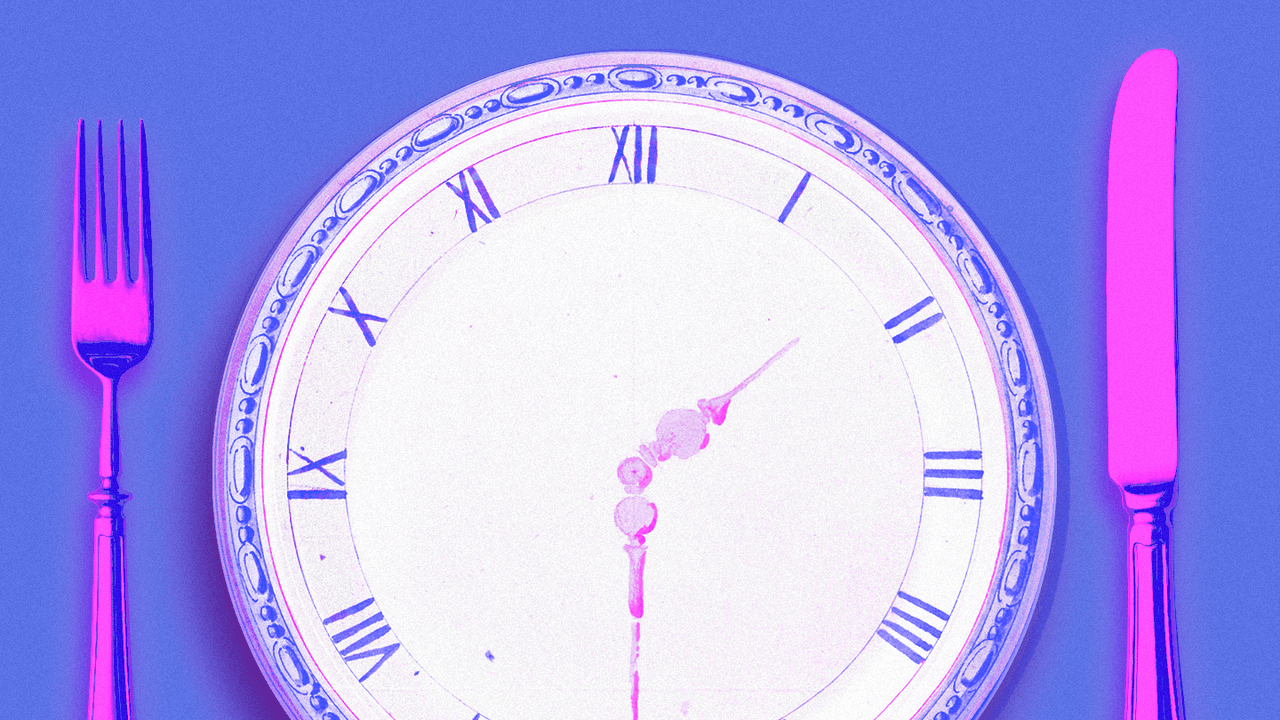
Every couple of years, like the very clockwork it depends on, intermittent fasting resurfaces as a dietary trend. “It’s really interesting that it has held this kind of unusual fascination as a trend for so many years, as it isn’t anything new from a clinical nutrition perspective,” says Stacie Stephenson, DC, CNS, board member of the American Nutrition Association.
To be fair, though, intermittent fasting is one of the more beneficial and universally useful nutrition strategies out there—just not for the reason most people think. “Do I consider intermittent fasting a weight loss diet? No, I don’t,” Dr. Stephenson says. “But I think it’s a really great tool.”
A tool for what, then, you might ask? Here’s everything you need to know.
What is intermittent fasting?
“Intermittent fasting is as simple as not eating for half the day,” says Dr. Stephenson. “For 12–14 hours of your day, you’re not consuming anything other than water. That is as simple as it is.”
Basically, with intermittent fasting, half or more of your day is spent in a fasted state, with a specific window designated for eating. When that window occurs, and how long it lasts, is up to you—nutritionists recommend up to 12 hours, but no fewer than eight—as long as you’re consistent.
“What became known as intermittent fasting was really the concept of a window in which you consume calories,” says Ashley Koff, RD, nutrition course director for UC Irvine’s Susan Samueli Integrative Health Institute’s Integrative and Functional Medicine Fellowship. “It came about as a way to double down on explaining to people that you should not be consuming calories all the time.”
How can intermittent fasting benefit your body?
First and foremost, intermittent fasting is intended not for weight loss, not for building muscle, but as a way to restore some law and order to your body’s core processes.
“The reason that fasting has gotten so much attention is that, in the industrialized era, and certainly with access to food becoming available 24 hours a day, we’ve really blurred the boundaries of when we’re consuming calories,” says Koff. “We’re not really meant to be consuming calories when our body is in its recovery mode, doing its cleanup work and resting. And so the concept was to give yourself guardrails: This is the time when I start eating, and this is the time when I stop eating. And that’s what became intermittent fasting.”
“It’s helpful for one simple reason, which probably sounds really boring, which is it rests your digestive system,” says Dr. Stephenson. But that’s a lot more important than it sounds. As simple as it may seem, taking control of when you eat—and, more importantly, when you don’t—is an upstream intervention with implications that cascade all throughout your body. It’s like flicking a single domino that sets a dozen Rube Goldberg machines into motion.
“Resting your digestive system reduces total body inflammation, which leads to better health and provides you with longevity,” Dr. Stephenson says. “And when I say longevity, I don’t mean living to 120. I mean more healthful living—being fit, not being ill, having energy, balanced hormones, balanced insulin, and stable blood glucose.”
Can intermittent fasting help you lose weight?
Anytime a nutrition trend blows up on social media, people assume it’s supposed to help you lose weight. So it’s worth emphasizing, for those in the back, that intermittent fasting is not a weight-loss diet. “I’d say the biggest reason that people turn to intermittent fasting is for weight loss,” says Dr. Stephenson. “It sounds like an easy fix. ‘Oh, I just don’t eat for 12 hours, and then I eat my normal diet—that’s led to the weight gain—in the other 12.’ That’s really faulty reasoning.” Ultimately, weight loss comes down to calories in and calories out. The timing of when you eat those calories has little to no bearing on that equation.