
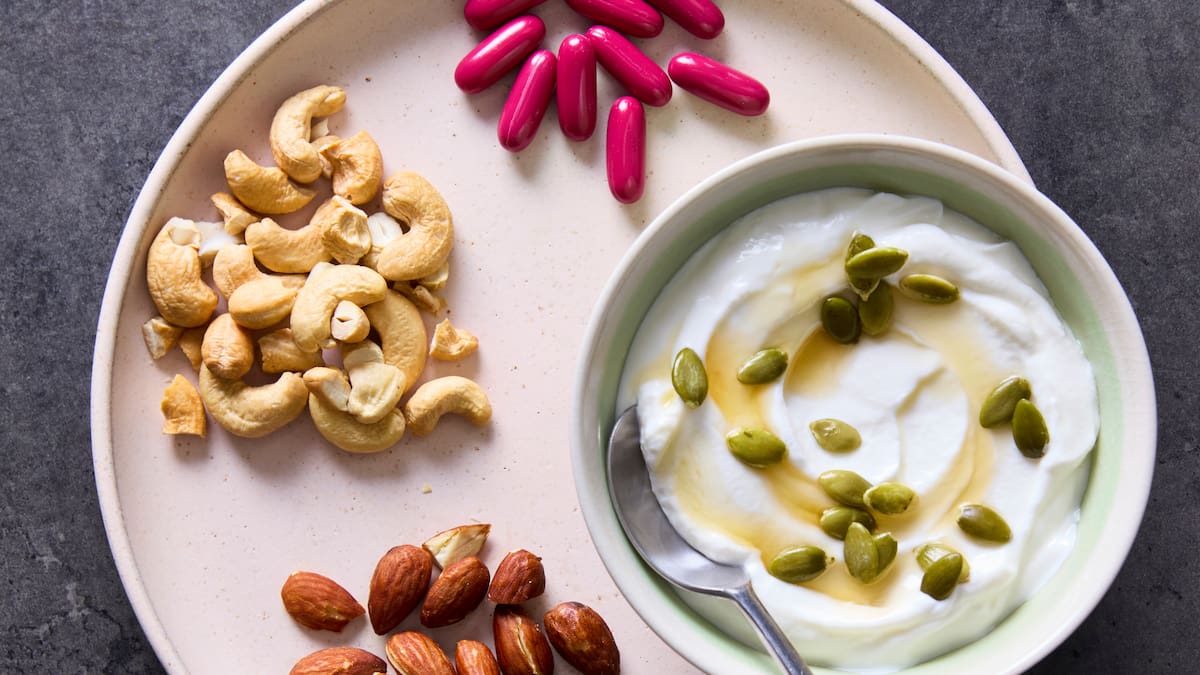
Yet despite its well-documented benefits, researchers have found that nearly half of Americans consume less magnesium than the recommended amounts.
For most people, there’s an easy solution, and it doesn’t require taking supplements.
“Does the average American need to take a magnesium supplement?” said Doerfler. “In short, no. We need to increase the amount of produce and plants in our diet.”
How much magnesium do you need?
Health authorities recommend slightly different amounts of magnesium depending on your age and sex.
Women who are 19 to 30 years old should aim to consume 310 milligrams of magnesium daily (350mg if they’re pregnant), and 320mg if they are 31 or older. For men, the recommendation is that they consume 400mg if they’re 19 to 30 years old, and 420mg if they’re 31 or older.
In the United States, severe magnesium deficiencies are rare. They typically occur as a result of an underlying medical condition, like kidney disease, Crohn’s disease or another metabolic or gastrointestinal disorder. These conditions can make it harder for the body to absorb and hold onto magnesium, said Doerfler.
If you’re otherwise healthy but consuming less magnesium than the recommended amounts, your body can find ways to compensate. Your kidneys, for example, may limit how much magnesium they excrete from your body.
“The body has a lot of really clever ways to try to recycle magnesium better, hold onto it better, and get other nutrients involved,” said Doerfler. “But even if you don’t have a deficiency, if you have a poor dietary intake of magnesium, you can still be at increased risk of cardiovascular disease, insulin resistance and high blood pressure.”
Doerfler said that when people ask her whether they should take magnesium supplements, she always tells them to look at what they’re eating first. That’s because you can get plenty of magnesium simply by eating a few daily servings of the right plant foods.
Here are some top dietary sources of magnesium, according to the US National Institutes of Health and the Department of Agriculture.
Best dietary sources of magnesium
Pumpkin seeds, 1 ounce (28 grams)
Amount of magnesium: 156 milligrams
Daily value: 26%
Chia seeds, 28g
Amount of magnesium: 111mg
Daily value: 26%
Almonds (dry roasted), 28g
Amount of magnesium: 80mg
Daily value: 19%
Spinach, boiled, ½ cup
Amount of magnesium: 78mg
Daily value: 19%
Cashews (dry roasted), 28g
Amount of magnesium: 74mg
Daily value: 18%
Peanuts (roasted), ¼ cup
Amount of magnesium: 63mg
Daily value: 15%
Shredded wheat cereal (2 biscuits)
Amount of magnesium: 61mg
Daily value: 15%
Soymilk (plain or vanilla), 1 cup
Amount of magnesium: 61mg
Daily value: 15%
Black beans, cooked, ½ cup
Amount of magnesium: 60mg
Daily value: 14%