
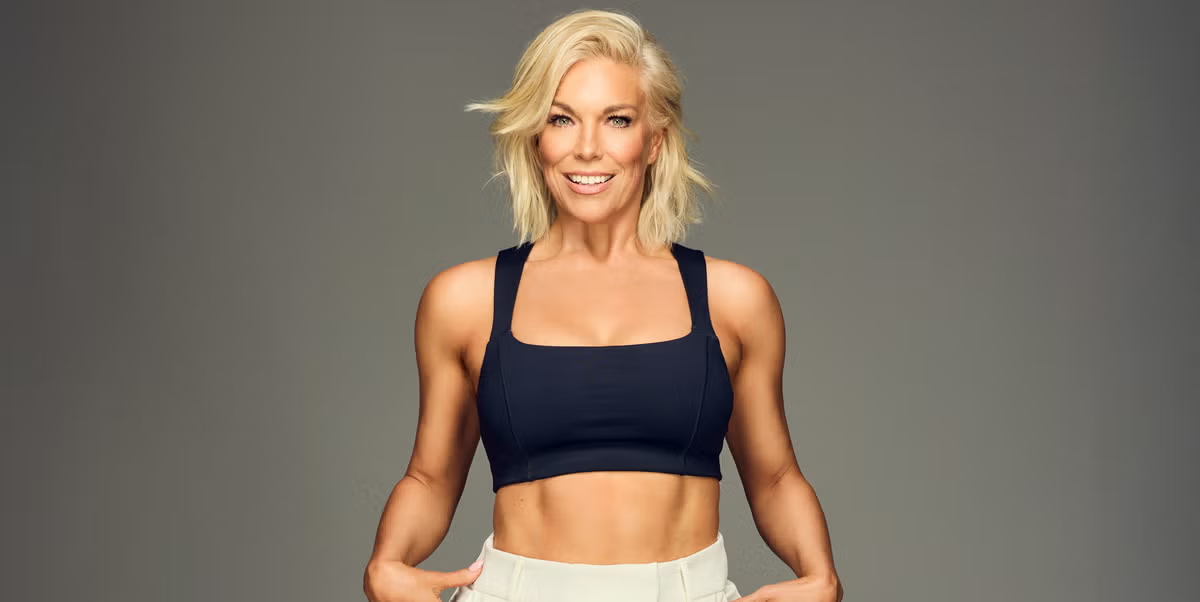
Hannah Waddingham’s approach to fitness is refreshingly realistic. The Women’s Health cover star says she’s never been a regular gym-goer, nor has she ever chased punishing workout trends. Instead, she focuses on consistency and making fitness fit naturally into her everyday life.
‘I’d be lying if I said I did a lot,’ she says in her Women’s Health cover interview. ‘Just calisthenics [with] my own bodyweight and some light weights for 20 minutes in the morning. But I’ve always said to my friends: activate your muscles – every day. People are very lovely; they talk about my arms. I just keep them activated.
‘And never underestimate the value of doing squats the whole time you’re brushing your teeth.’
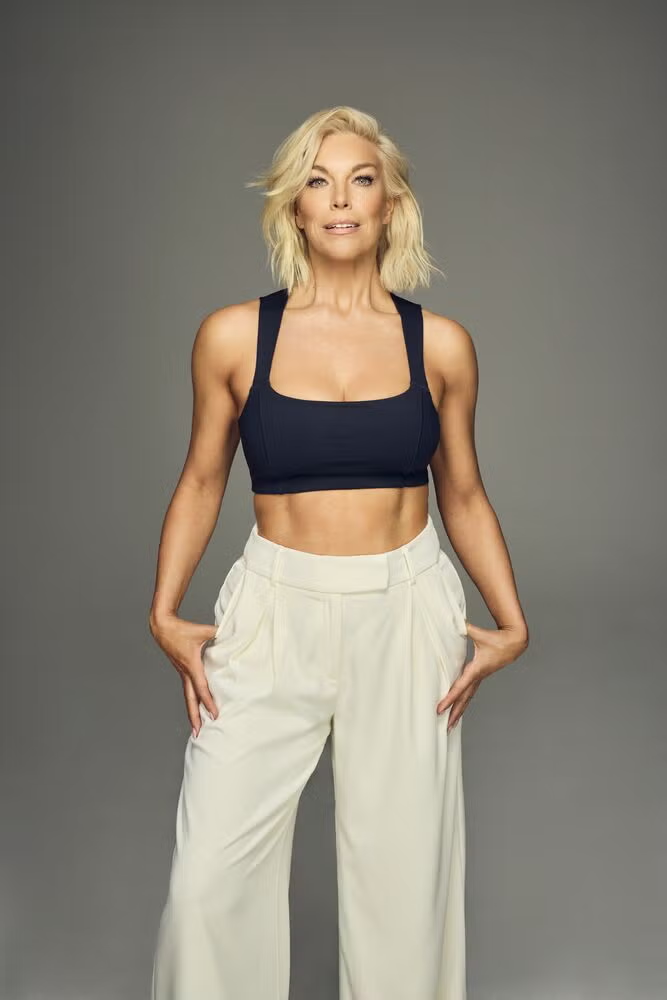
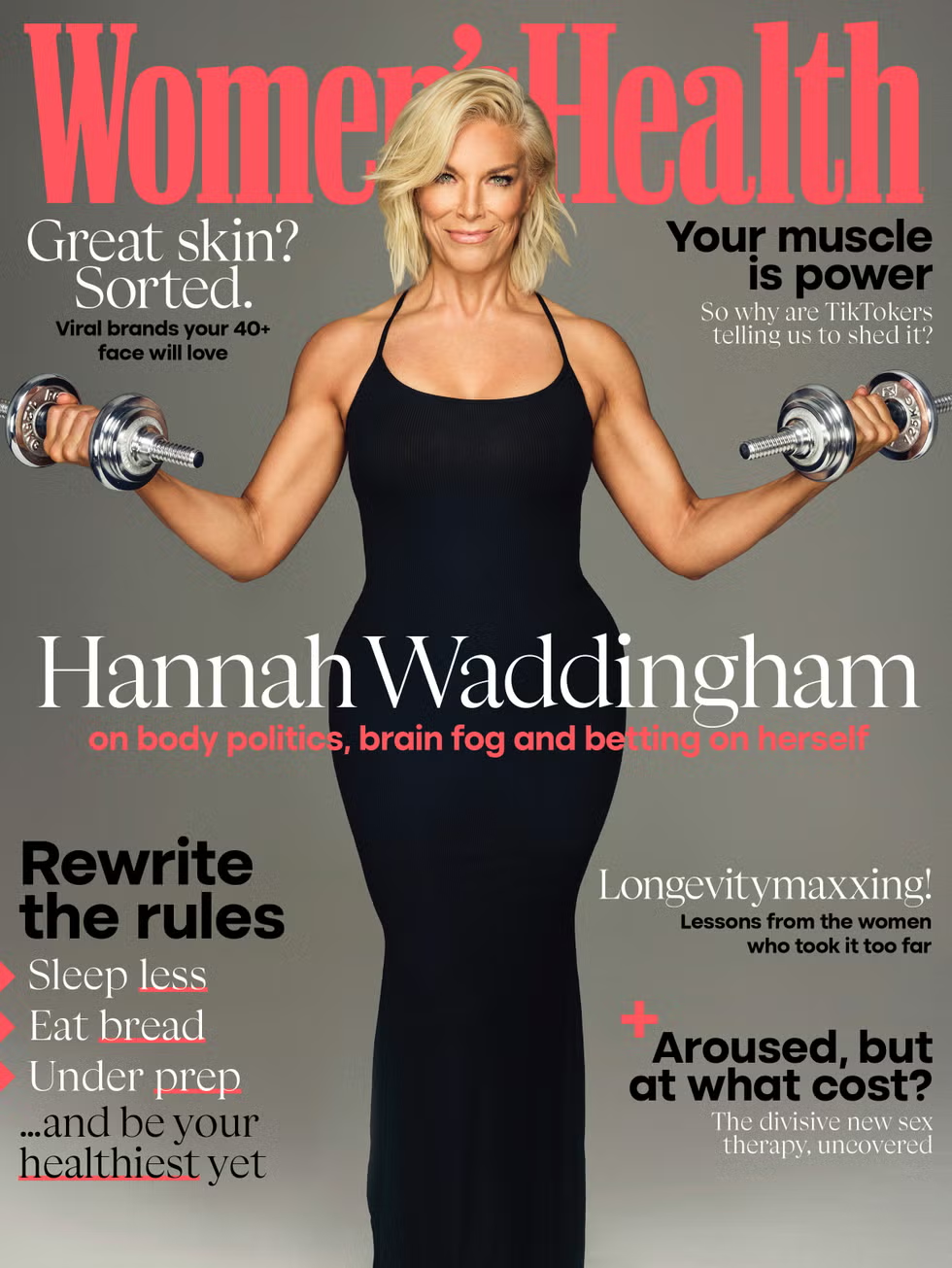
Hannah Waddingham fronts the June issue of Women’s Health UK
Calisthenics refers to using your own bodyweight as resistance, with exercises like push-ups and pull-ups, while weight training relies on external resistance from dumbbells, barbells or machines. Both are proven to counter age- and menopause-related muscle and bone loss, which Hannah embraces as natural changes that come with ageing.
Beyond those intentional workouts, ‘keeping activated’ essentially refers to consistent, low-intensity movement outside of formal exercise. That might mean walking instead of sitting for long periods, taking the stairs over the lift, carrying shopping rather than using a trolley, or doing short bursts of movement – like Hannah’s squats while brushing her teeth. It’s about brief, regular muscular engagement and limiting sedentary time.
And it works – a 2021 review found that higher levels of daily physical activity (not necessarily intentional workouts) were associated with better muscle strength and power in older adults. Other research shows that this kind of movement is a game-changer for maintaining mobility, preserving muscle function, improving circulation and metabolism, and supporting healthy ageing – all of which are especially relevant during perimenopause, when muscle and bone loss become more common.
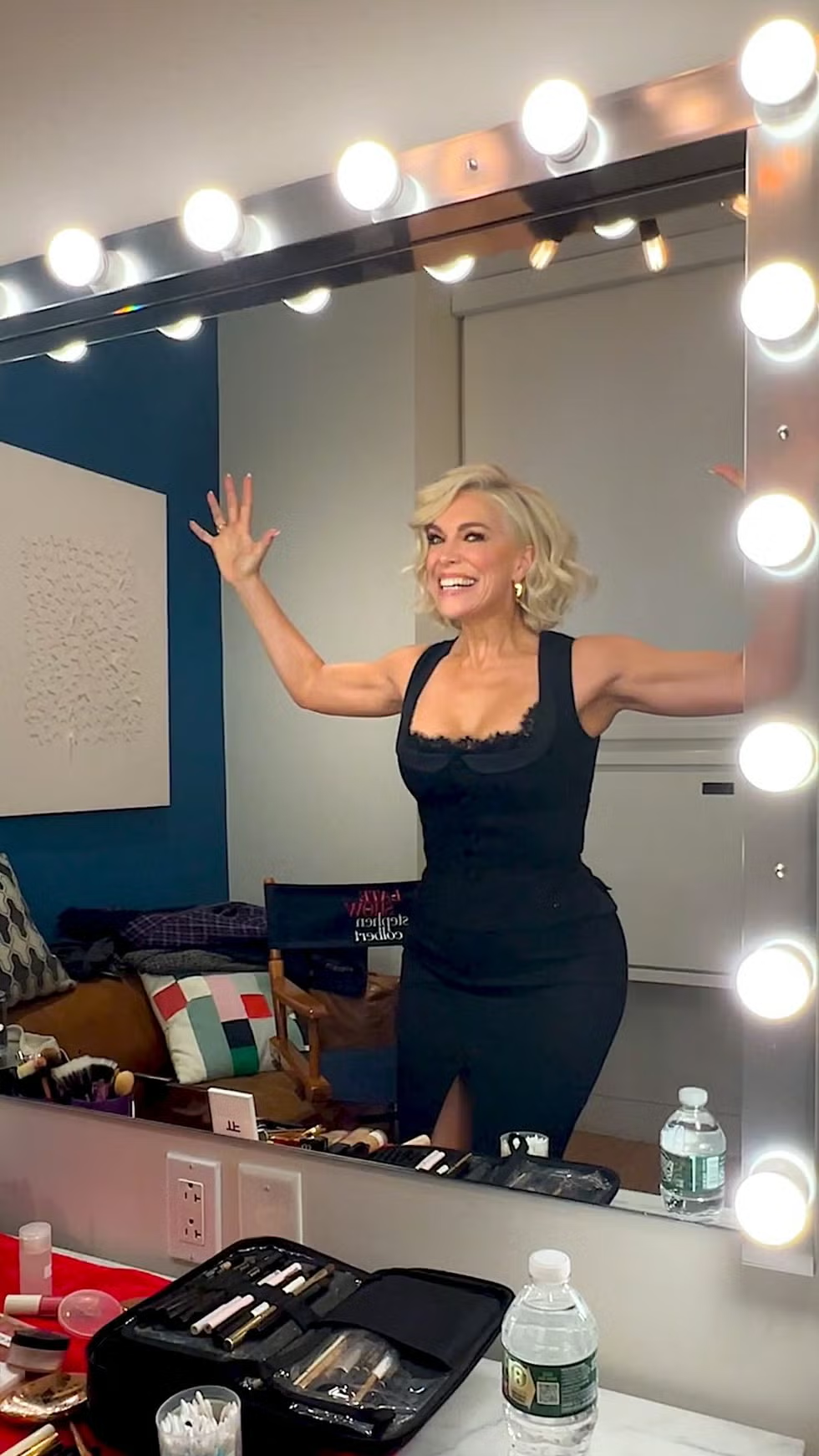 Instagram
Hannah says she builds arm strength by keeping ‘activated’
It all adds up, and if finding the time for formal workouts within your busy schedule feels impossible, short exercise snacks and micro movements are even more valuable, since consistency is essential. Daily movement (yes, even the much shorter, non-formal kind) will outweigh sporadic workouts at the gym.
Hannah’s final words of advice for anyone in the thick of menopausal changes right now? ‘I would say seize who you are and love every second of your changes. It’s what I’m trying to do. Is it easy? No. Is it going to happen regardless? Yes. So take your own reins. Be the master of your own reins.’
As Women’s Health UK’s fitness director and a qualified Pilates and yoga instructor, Bridie Wilkins has been passionately reporting on exercise, health and nutrition since the start of her decade-long career in journalism.
After earning a first-class degree in journalism and NCTJ accreditation, she secured her first role at Look Magazine, where she launched the magazine’s health and fitness column, Look Fit, before going on to become Health and Fitness writer at HELLO!
Since, she has written for Stylist, Glamour, Cosmopolitan, Marie Claire, Elle, The Metro, Runner’s World and Red. Today, she oversees all fitness content across Women’s Health online and in print, spearheading leading cross-platform franchises, such as ‘Fit At Any Age’, which showcases the women proving that age is no barrier to exercise.
She has also represented the brand on BBC Radio London, plus various podcasts and Substacks – all with the aim to encourage more women to exercise and show them how. Outside of work, find her trying the latest Pilates studio, testing her VO2 max for fun (TY, Oura), or posting workouts on Instagram.