An estimated half of women over the age of 50 will experience an osteoporosis-related fracture during their lifetime. The good news is that, as awareness around bone health grows, so has the conversation around impact training and jumping exercises, as bones adapt and strengthen in response to the forces placed upon them.
However, many people haven’t jumped in years – or even decades. As a physical therapist with more than a decade of experience helping adults over 50 stay strong, steady and independent, Clare Owens wants to emphasise that there is a big difference between knowing jumping may benefit bone health and knowing where to start.
‘Telling someone with osteopenia or osteoporosis to simply “go jump” without considering their current strength, balance, mobility and confidence can feel overwhelming and may increase the risk of injury,’ she explains to WH.
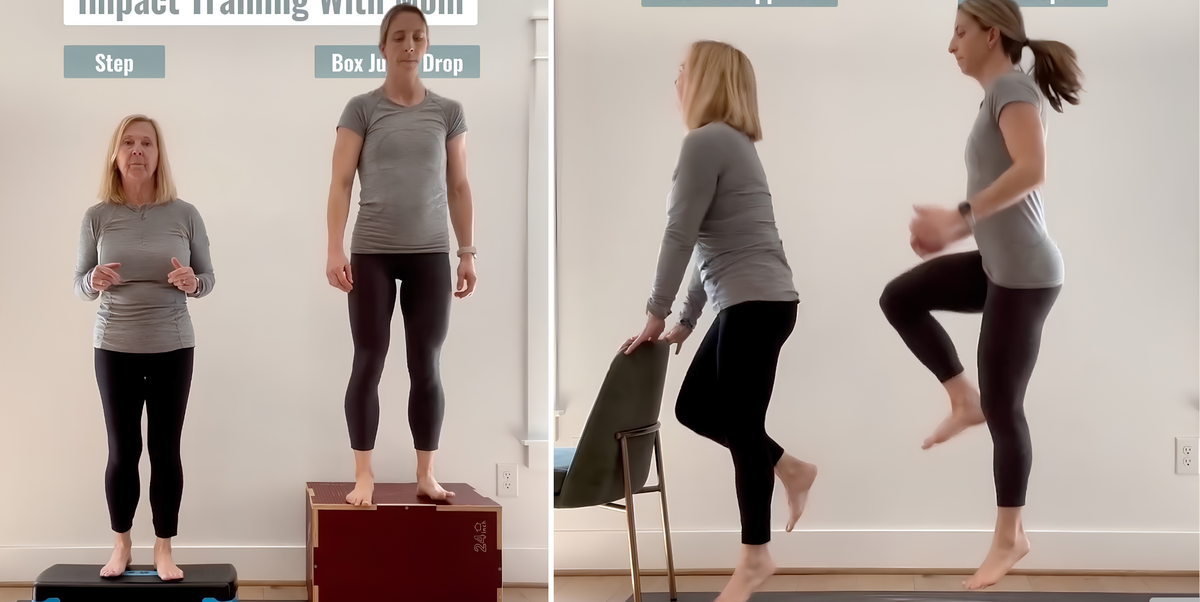
‘That’s why I recruited my mum, who has osteopenia, to demonstrate some exercises. They aren’t lesser versions – they’re entry points,’ she continues. ‘The goal isn’t to perform the biggest or most impressive jumps right away, but to introduce impact gradually in a way that matches your current abilities while building strength, confidence and coordination over time.’
The five exercise pairs below show how impact training can be scaled to different ability levels.
‘They also introduce variety in direction, height and landing strategy – something bones appear to respond well to,’ Owens says.
If you’re new to impact training, start where you are, progress gradually and remember that consistency matters more than intensity on day one.
5 impact-training exercises – and how to modify them1. Single-leg hop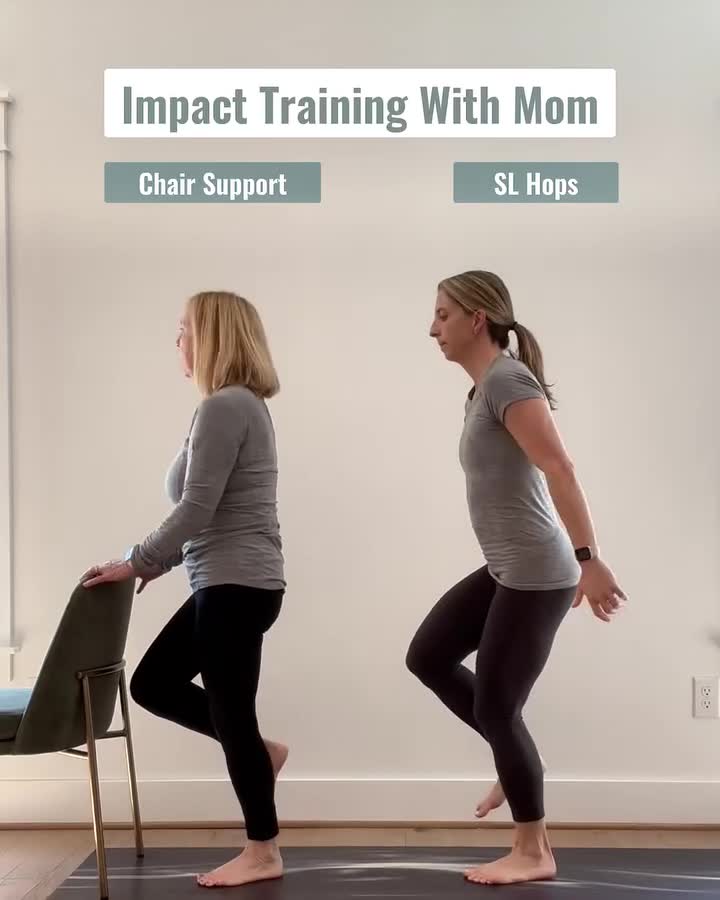
Single-leg hops can help introduce impact while challenging balance, coordination, and lower-body power, says Owens.
How to do it:
Stand tall on one leg and perform small, quick hops in place.Land softly through the ball of your foot before allowing your heel to touch down.Keep your knee aligned over the middle of your foot and maintain an upright posture throughout.
Modification:
If hopping without support feels challenging, lightly hold onto a chair or countertop. ‘The support allows the upper body to assist, reducing the amount of force and balance required from the standing leg alone while still creating the impact that bones respond to,’ Owens explains. ‘As your confidence, strength, and balance improve, gradually reduce how much assistance you use.’
2. Lateral skater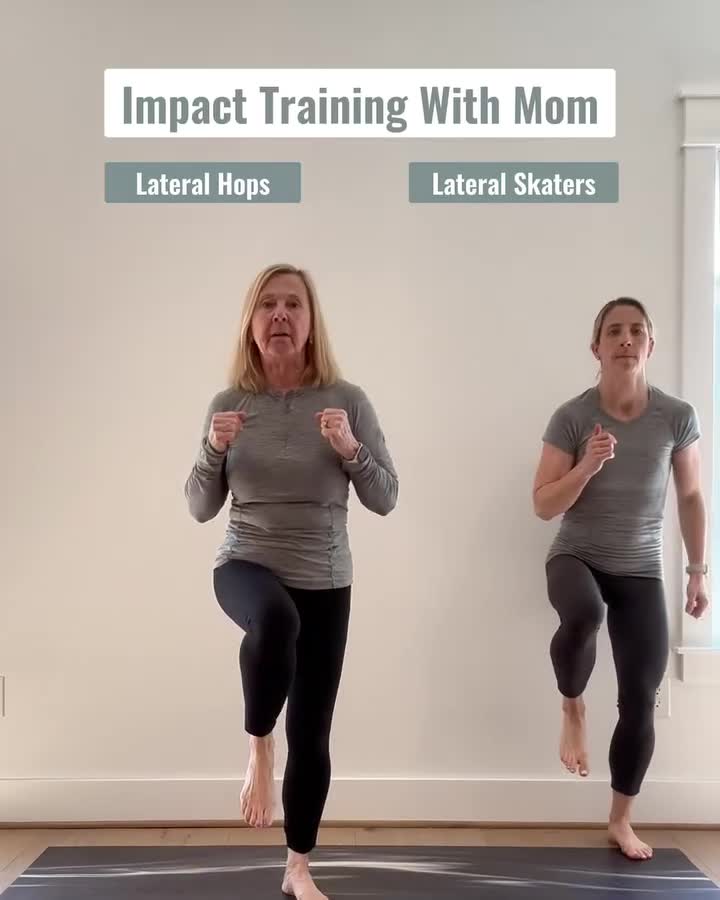
Lateral skaters introduce side-to-side impact, helping challenge balance, coordination, and the body’s ability to absorb force in different directions.
How to do it:
Begin standing on one leg and push off to travel sideways, landing softly on the opposite leg while allowing the trailing leg to move behind you for balance. Absorb the landing through your hip and knee before pushing back in the other direction.
Modification:
‘If you’re new to impact training, reduce the distance traveled and focus on small, controlled side-to-side hops,’ Owens explains. ‘The goal isn’t to jump as far as possible, but to develop confidence with lateral movement and landing mechanics.’ As your strength, balance, and coordination improve, gradually increase the distance to create a greater challenge.
3. Jump squat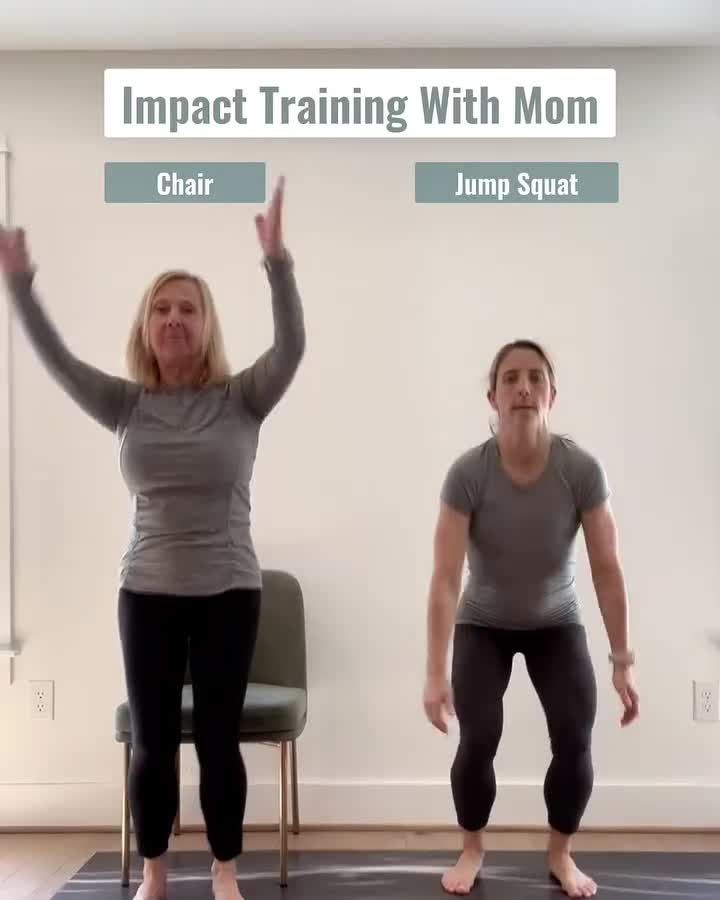
Jump squats help introduce vertical impact while challenging lower-body strength and power – the ability to generate force quickly.
How to do it:
Stand with your feet about hip-width apart and lower into a shallow squat by pushing your hips back. Then, explosively push through the floor to jump upward. Land softly with bent knees before resetting for the next repetition.
Modification:
If a jump squat feels intimidating, start from a chair. As Owens advises: ‘Sit toward the front edge with your feet flat on the floor, then stand up powerfully, rising onto your toes or performing a small hop if comfortable.’ The chair provides a stable starting point and a clear target when lowering back down, helping build confidence while still introducing impact and power.
4. Tuck jump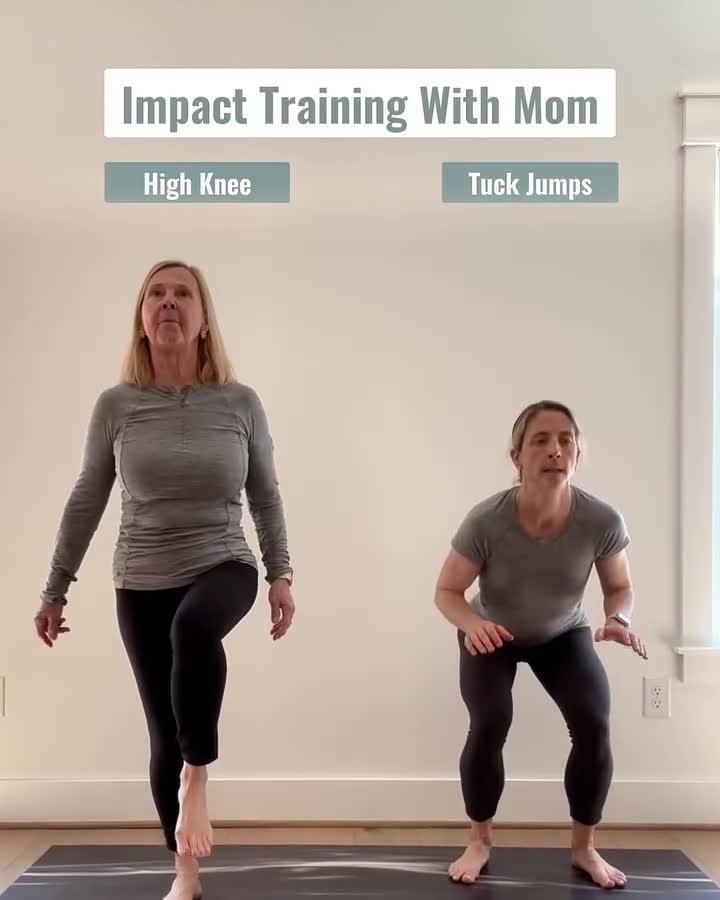
Tuck jumps challenge lower-body power, coordination, and the ability to quickly generate and absorb force.
How to do it:
Stand with your feet hip-width apart and knees slightly bent. Jump upward and bring your knees toward your chest as you leave the ground. Land softly with bent knees and reset before the next repetition, maintaining good alignment through your hips, knees, and feet.
Modification:
If getting both feet off the ground at the same time feels challenging, start with high knees. Quickly alternate lifting one knee toward hip height while landing on the opposite foot. You can even begin with a marching movement if needed. High knees introduce impact in a more accessible way while helping build the confidence, coordination, and power needed for more demanding jumping exercises.
5. Box drop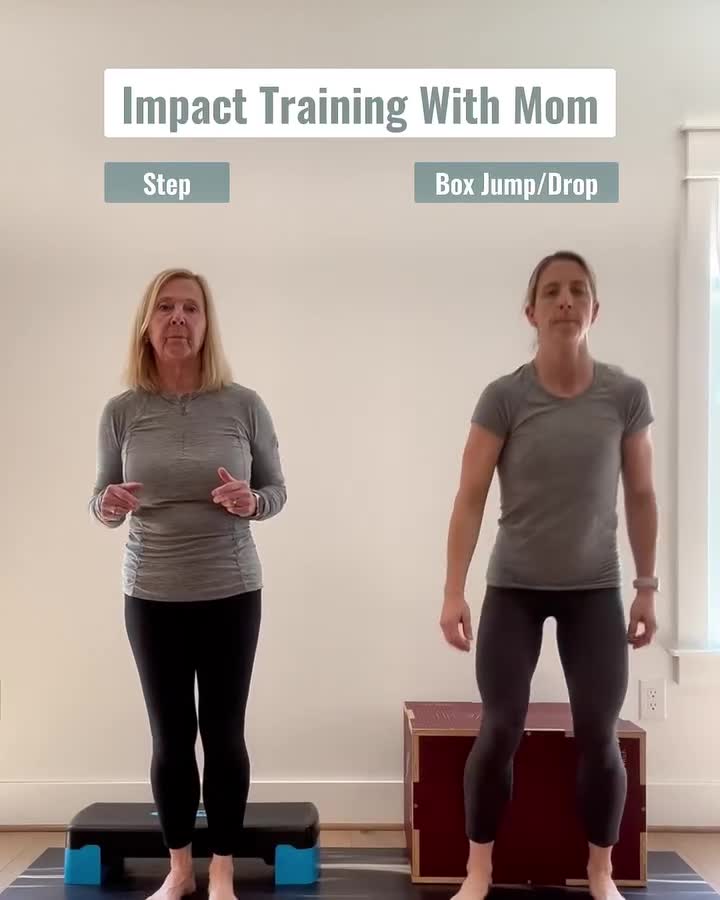
Box drops help introduce impact without requiring you to jump first, allowing you to focus on absorbing force through a controlled landing rather than generating the force through a jump.
How to do it:
Stand on a box or step and step off the edge, landing softly on both feet with your knees and hips bending naturally to absorb the impact. Focus on a quiet, controlled landing and maintaining good posture throughout the movement.
Modification:
If you’re new to impact training, start with a lower step height and focus on landing with both feet at the same time. The goal is to expose the body gradually to impact while practicing safe, controlled landings. ‘Beginning with a lower height allows you to build confidence, coordination, and landing control before progressing to a higher box or adding a jump after the landing,’ Owens explains.
One of our most frequently asked questions here at Women’s Health? How to build muscle and burn fat at the same time. So, we asked superstar trainer Oyinda Okunowo exactly how to do it. In this 4-week plan – created exclusively for Women’s Health COLLECTIVE members – you’ll get the workouts and nutrition guidance needed to help you on your way to better body composition. Tap the link below to unlock 14 days of free access to Oyinda’s plan and start training today.