Jo Whiley has opened up about the realities of strength training in her 60s, revealing how arthritis and the physical changes that come with ageing have forced her to rethink the way she exercises.
Speaking to menopausal strength coach Kate Oakley on a recent episode of the Dig It podcast, the former Women’s Health cover star admitted she’s found it difficult to accept that some movements no longer come as easily as they once did.
‘I find it very, very frustrating, the things that I can’t do,’ the DJ and presenter said. ‘There’s just something in my head that doesn’t want to accept that I’m not capable of doing things that I used to.’
But rather than giving up, Whiley has learnt to adapt her training – a strategy Oakley says is one of the keys to staying strong, independent and active through midlife and beyond.
‘We need to be strength training in midlife [to] work on our bone density and our muscle mass, which is declining from perimenopause onwards,’ said Oakley, founder of the Your Future Fit training platform.
‘We need to be thinking about our future selves if we want to continue living the life we want in our 70s, our 80s and beyond. If we strength train now in midlife, the benefits are huge. It’s not just about future-proofing your body; it’s also about getting the most out of today.’
How Jo Whiley strength trains at 611. She adapts exercises instead of avoiding them
Jo said she’s learnt to modify exercises to work around arthritis and other age-related changes rather than abandoning strength training altogether.
‘[Over] the past decade [my body has] really changed. I’ve got arthritis… and I find it hard to hold dumbbells now because I cannot bend my fingers. I can’t hold on to things,’ she revealed.
She also explained that she’d struggle with the chest press Oakley demonstrated.
‘I can’t move my shoulder in that direction because of my spur that’s grown and my rotator cuff would not allow me to do that.’
Grip
Thankfully, adapting exercises has become second nature with the help of her long-time personal trainer.
‘I see this amazing guy called Adam at David Lloyd who I’ve seen for years. He’s known my body throughout the past decade. He’s constantly telling me different angles to hold things and different ways to grip. So I can vouch that there are ways that you can adapt your routine. There are different ways around it.’
Oakley added that while strength training won’t cure arthritis, it can help support the joints.
‘It’s not going to make the arthritis go away… but as you build strength in the muscles, it’s going to support the joints.’
She also stressed the importance of following a programme that’s tailored to your body.
‘Find a routine where you can really focus on technique… is key to keeping it safe. Something that’s slow and controlled so then you can really listen to your body.’
Lunge
Oakley also explained how exercises such as lunges can be modified for people dealing with mobility issues or joint pain.
‘I would say…not to judge where [you’re] at compared with other people. Don’t worry about how low you’re going in a lunge, but… have the back of a chair to one side, and you can put a hand on the chair, just bodyweight.
‘So, as you’re doing a lunge, use that chair to help you get back up again. Then, as you get stronger, reduce the pressure on the chair – a little bit like stabilisers on a bike. You’ll gradually rely on them less and less.’
She added that wall sits can also help ‘build up the strength in those thighs, those quad muscles, which will support the knees.’
Squat
Oakley also pointed out that anatomy can affect how easily people perform certain movements.
Squatting, she says, is ‘absolutely top of the list’ because it mimics one of the most important movements we perform as we age – getting in and out of a chair.
‘However, a lot of women will say, “Yeah, but I can’t squat. I watch all these people get right down low and I can’t do it.” But sometimes it’s actually about your ankle mobility or the length of your femur.
‘It’s not that you’re doing anything wrong or that your body’s weird. You just need to find the right squat for you.’
Her recommendation? Raise your heels onto a pair of dumbbells or a stack of sturdy books to make the movement more comfortable.
2. She now prioritises strength over aesthetics
Jo admitted one of the biggest differences she’s noticed as she’s got older is how quickly muscle disappears when she stops training.
‘One thing I noticed as well is muscle wastage happens so much quicker the older you get,’ she said.
‘I used to go to the gym all the time, felt really great. Then over the past six months or so, I haven’t had as much time and I’ve looked and gone, “Oh my God, that didn’t used to be there.”‘
Oakley encouraged her to focus less on appearance and more on what strength allows her body to do.
‘While the aesthetics might be nice, the key is the strength. When I’m in my 70s and 80s, I won’t be giving two hoots about any definition. I just want to be able to play with my grandkids.’
She also reminded listeners that genetics plays a significant role in how muscle looks.
3. She focuses on what her body can do today
Oakley reassured Jo when she admitted she’d struggled to accept that her body no longer moves exactly as it once did.
Instead of comparing herself with her younger self, Oakley encouraged her to celebrate what her body is capable of now.
‘At the end of a workout… I’ll have a moment of gratitude for what my body’s just been able to do… because it’s not a given.’
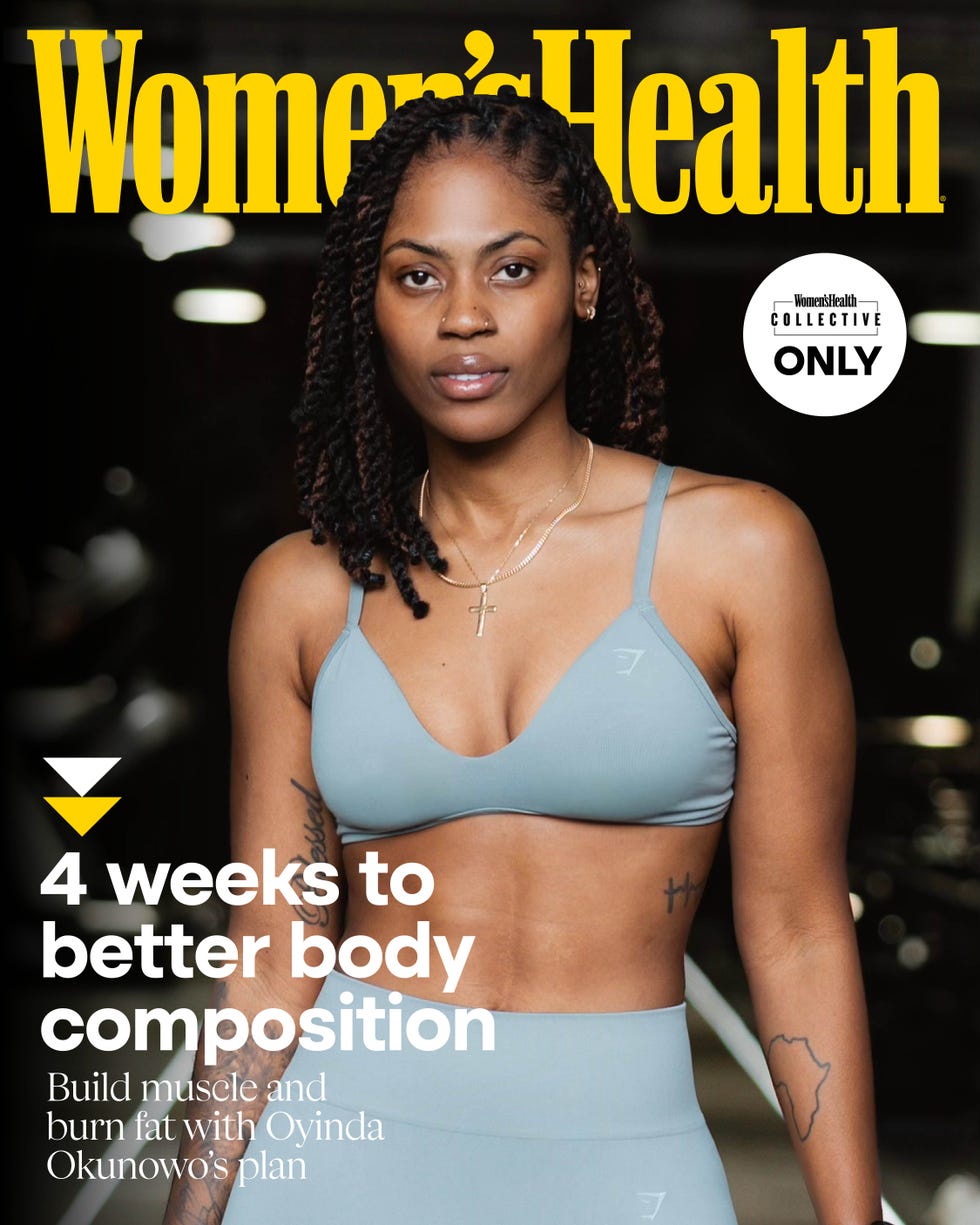
One of our most frequently asked questions here at Women’s Health? How to build muscle and burn fat at the same time. So, we asked superstar trainer Oyinda Okunowo exactly how to do it. In this 4-week plan – created exclusively for Women’s Health COLLECTIVE members – you’ll get the workouts and nutrition guidance needed to help you on your way to better body composition. Tap the link below to unlock 14 days of free access to Oyinda’s plan and start training today.