
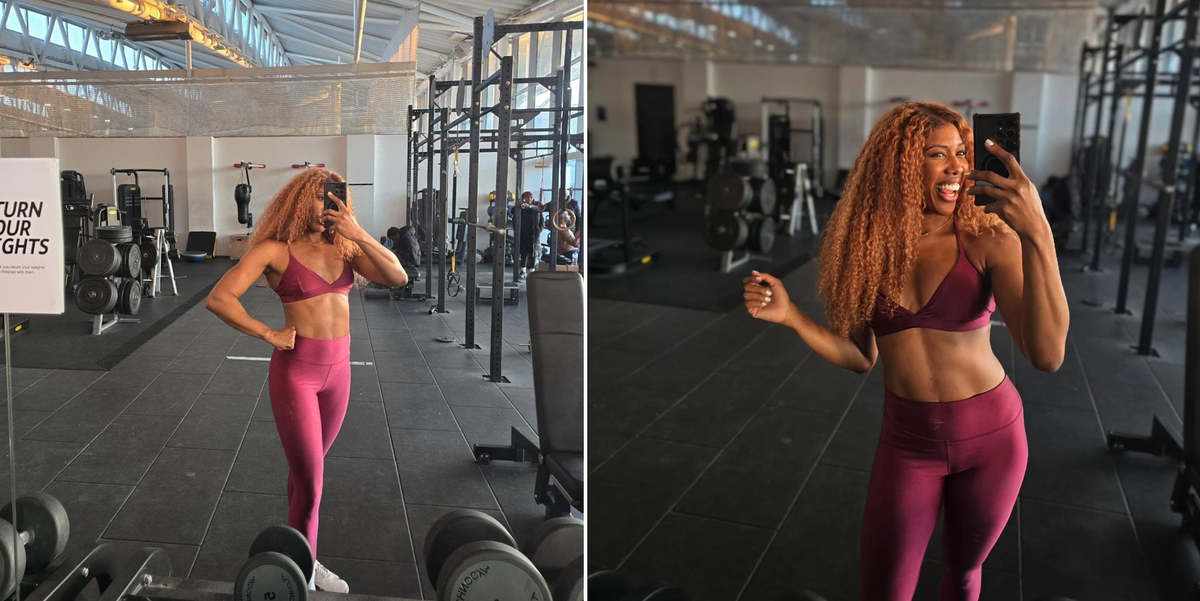
If you’re a fan of Gladiators or Strictly Come Dancing, you’ll no doubt have come across the multi-skilled Montell Douglas (or Fire, if you’re going by her Gladiators alter ego). She made history by becoming the first British woman to compete for Team GB in different sports at both the Summer and Winter Olympics (athletics and bobsleigh).
Now, Montell is expanding her sporting repertoire even further by training and competing in Olympic weightlifting – which, while ‘often viewed as a highly specialised sport, the foundations of the programme are incredibly transferable to women’s health and longevity’, her strength and conditioning coach Paraskevi Solomou tells WH.
‘A huge part of my coaching philosophy is ensuring that strength training enhances life outside of the gym, too,’ says Solomou.
Below, she pinpoints the five movements Montell uses to not only be able to lift heavier weights, but also to build ‘a body that remains strong, capable, athletic and injury-resilient long term’.
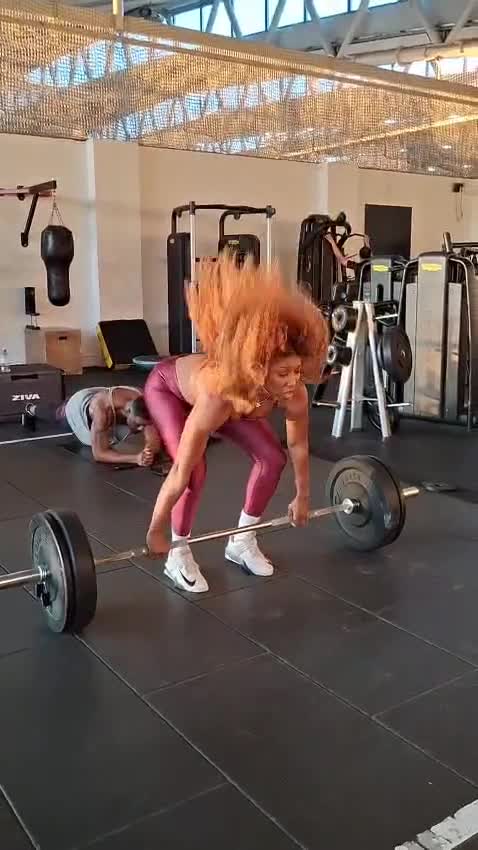
Solomou’s coaching philosophy with Montell and others she trains prioritises functional strength
The exercises1. Clean pull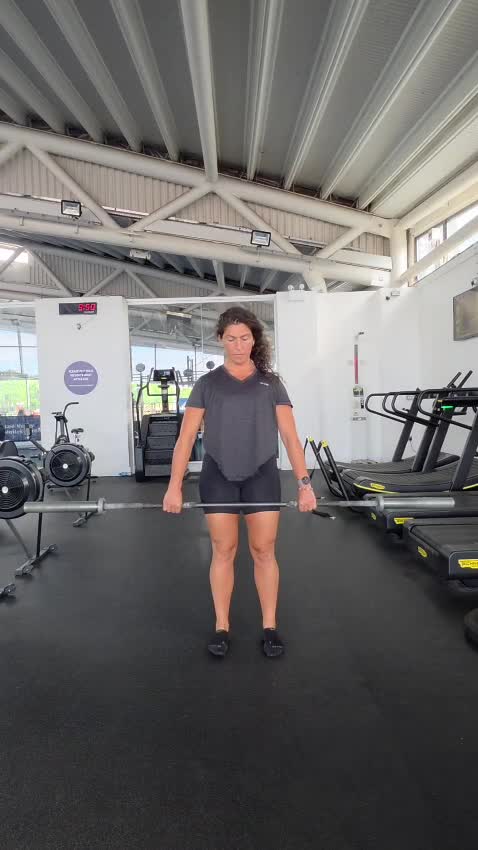
Why: ‘Clean pulls are a key exercise within Montell’s programme because they help develop explosive power, posterior chain strength and efficient force production without the fatigue of catching the barbell.
‘They’re highly effective for improving athletic performance, lower-body strength and coordination, while also reinforcing strong lifting mechanics. For women specifically, powerful hip extension and posterior chain development are incredibly important for long-term strength, posture and reducing injury risk.’
Typical programming: 3-5 sets of 2-5 reps depending on training phase
Solomou’s cues:
Push through the floor Keep the bar close to the body Stay patient through the first pull Finish tall through the hips
Regression options:
Progression options:
Full clean Clean pull with pauses or tempo variations 2. Front squat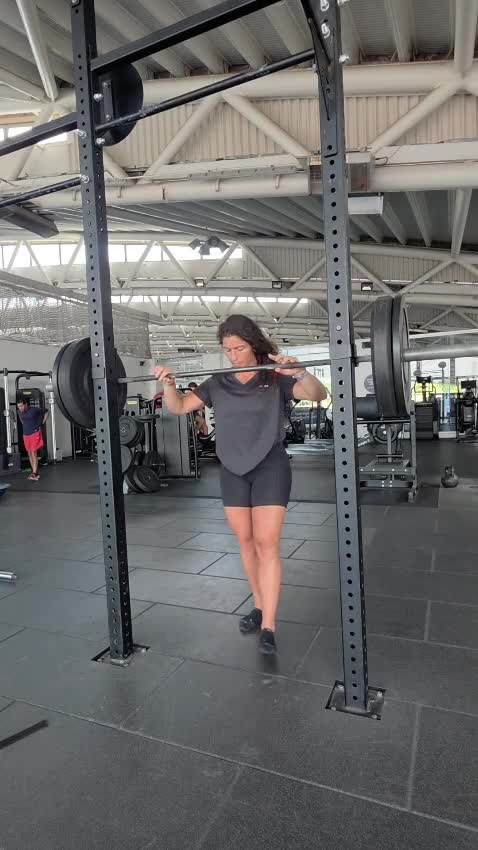
Why: ‘Front squats feature heavily in Olympic weightlifting training because they build leg strength, trunk stability and posture under load.
‘I use them with Montell not only to improve performance in the clean, but because they’re one of the most effective movements for developing functional lower-body strength and movement control.
‘The upright posture required in a front squat encourages thoracic mobility, core engagement and good movement mechanics, which can transfer into everyday movement quality and long-term joint health.’
Typical programming: 3-6 sets of 2-6 reps depending on training focus
Solomou’s cues:
Elbows high Brace through the core Sit between the hips Drive evenly through the feet
Regression options:
Progression options:
3. Romanian deadlift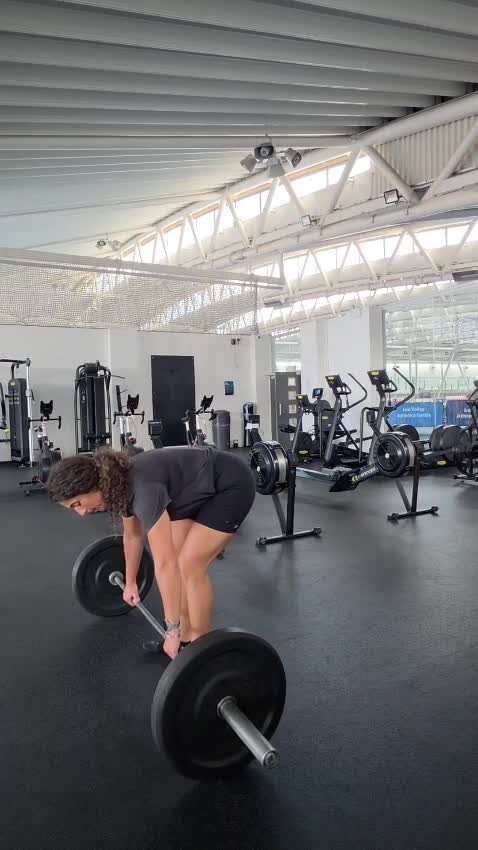
Why: ‘Romanian deadlifts are one of my favourite exercises for developing posterior chain strength, hamstring resilience and overall movement quality.
‘For women especially, strong glutes and hamstrings are essential for performance, posture, pelvic stability and injury prevention.
‘Within Montell’s programme, RDLs support Olympic lifting mechanics, while also helping maintain tissue robustness during high training volumes.’
Typical programming: 3-5 sets of 5-8 reps
Solomou’s cues:
Soft bend in the knees Push the hips back Maintain tension through the lats Keep the spine long and neutral
Regression options:
Progression options:
Single-leg RDL Snatch-grip RDL Tempo eccentric variations4. Split squat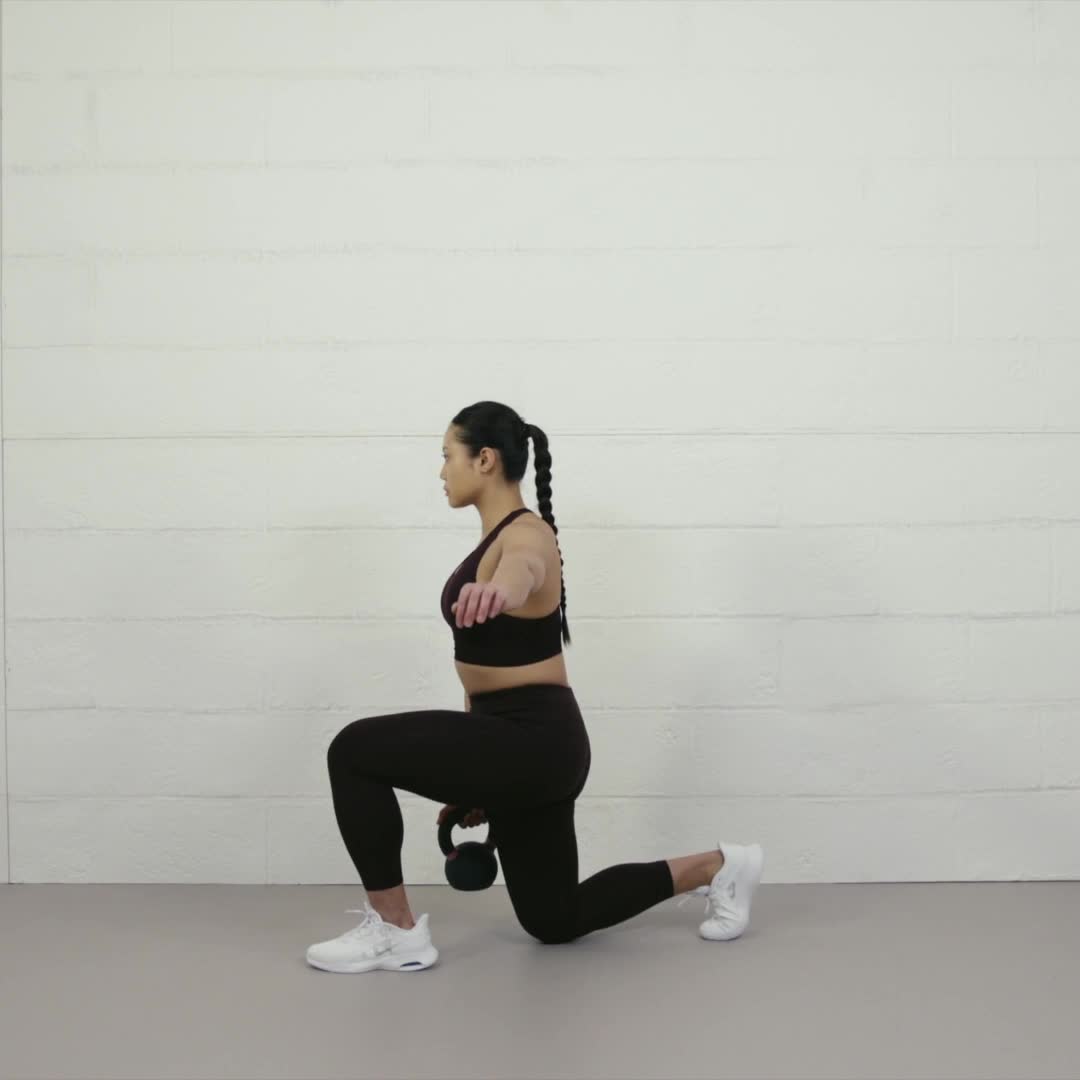
Why: ‘Single-leg work is incredibly important within both athletic development and women’s health-focused training.
‘Split squats help improve balance, hip stability, coordination and unilateral strength, while also addressing asymmetries that can build over time.
‘I use these frequently within Montell’s programme to improve movement efficiency and support lower-body resilience without excessive spinal loading.’
Typical programming: 2-4 sets of 6-10 reps each side
Solomou’s cues:
Stay tall through the torso Control the lowering phase Keep pressure through the front foot Maintain hip stability
Regression options:
Assisted split squat Static hold variations
Progression options:
5. Loaded carries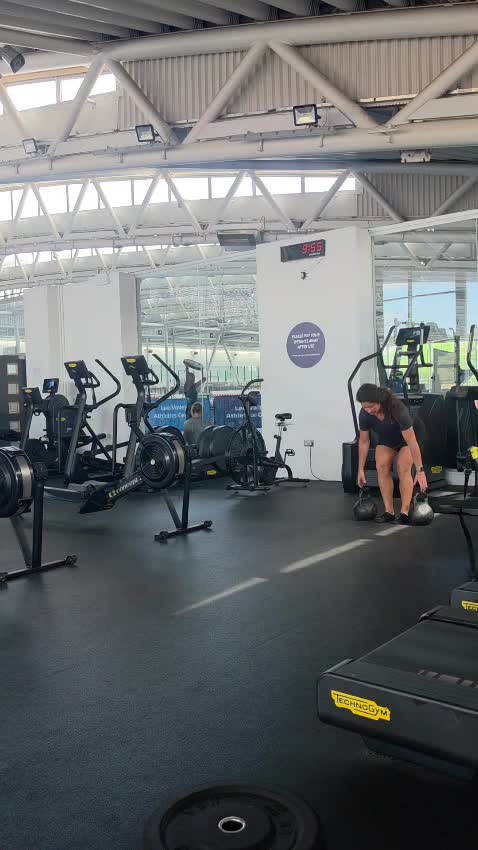
Why: ‘Loaded carries are one of the simplest but most effective tools for developing core strength, grip strength, posture and full-body stability.
‘They also translate extremely well into real-life movement patterns and injury resilience.
‘With Montell, carries help reinforce trunk control and stability under fatigue – both essential qualities for Olympic weightlifting and long-term athletic health.’
Typical programming: 20-40 metres for multiple rounds depending on training goals
Solomou’s cues:
Stay tall Ribs stacked over pelvis Controlled breathing Walk with intent and posture
Regression options:
Progression options:
Overhead carries Uneven loading Longer-distance carries
To avoid injury (and make the most of the movements), it’s crucial to master your technique first and foremost, which is why working with a certified trainer is always recommended in the first instance.
But, ‘importantly, Olympic weightlifting is highly scalable’, says Solomou. ‘Movements can be adapted using lighter loads, dumbbells, kettlebells or simplified progressions, making elements of the training accessible well beyond elite sport.’
‘One of the biggest misconceptions around strength training for women is that it needs to be extreme to be effective,’ she adds.
‘In reality, intelligent, progressive strength training when coached correctly can improve confidence, movement quality, bone health, resilience, athletic performance and overall wellbeing at every stage of life.’
One of our most frequently asked questions here at Women’s Health? How to build muscle and burn fat at the same time. So, we asked superstar trainer Oyinda Okunowo exactly how to do it. In this 4-week plan – created exclusively for Women’s Health COLLECTIVE members – you’ll get the workouts and nutrition guidance needed to help you on your way to better body composition. Tap the link below to unlock 14 days of free access to Oyinda’s plan and start training today.
Hannah Bradfield is a Senior Health and Fitness Writer for Women’s Health UK. An NCTJ-accredited journalist, Hannah graduated from Loughborough University with a BA in English and Sport Science and an MA in Media and Cultural Analysis. She has been covering sports, health and fitness for the last five years and has created content for outlets including BBC Sport, BBC Sounds, Runner’s World and Stylist. She especially enjoys interviewing those working within the community to improve access to sport, exercise and wellness. Hannah is a 2024 John Schofield Trust Fellow and was also named a 2022 Rising Star in Journalism by The Printing Charity. A keen runner, Hannah was firmly a sprinter growing up (also dabbling in long jump) but has since transitioned to longer-distance running. While 10K is her favoured race distance, she loves running or volunteering at parkrun every Saturday, followed, of course, by pastries. She’s always looking for fun new runs and races to do and brunch spots to try.