
Perimenopause is a total body experience with symptoms that impact both the mental and the physical. But although it’s a natural transition, many women find themselves caught off guard when it starts and struggle to swim against the tide of brain fog, joint aches, irregular periods and more. This is why it’s key to find the best strategies—both lifestyle practices and treatments—that work for each woman to feel closer to her best self during this major hormonal shift.
For many women, this includes strength training, which a trove of research has found can help prevent loss of protective bone and muscle mass that happens when hormones change. And while it’s important to find a consistent workout routine that works for you, Peloton instructor Rebecca Kennedy has an important reminder to share: adequate recovery is just as—if not more—important than actually getting into the gym or onto the Pilates mat.
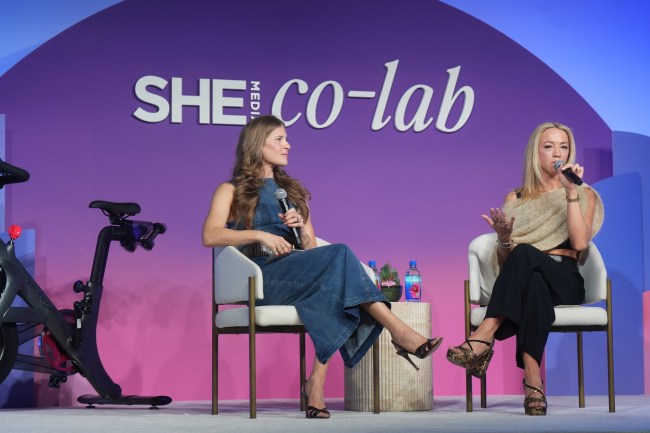
Kennedy detailed how continuing to show up, including by slotting in lots of recovery activities, can help women navigate the curveballs perimenopause throws their way at the 2026 SHE Media Co-Lab @ SXSW during a panel alongside Peloton’s nutritionist, Dr. Jamie Schehr.
The panel, which was sponsored by the brand and titled “Persistence, Grace, and the Leaderboard: Finding Your Power in Perimenopause,” was all about how women can reclaim their power during perimenopause and how exercise can be a key tool.
According to Kennedy, part of staying consistent with strength training involves being flexible and listening to what your body needs.
“There’s going to be a moment where you’re realizing, ‘I need more recovery in my workouts. I need more recovery in between my workouts. I need more sleep. I need to take off a little bit of intensity and replace it with a little bit more low impact or low intensity workouts. I might even want to sprinkle in some de-load weeks or lighter lifting weeks and cycle through that,’” she shared. “You get to work with your body and that is the coolest thing… it’s never you against you, and you get to still do the same things, you just shift around what it is that it looks like and how much you’re doing.”
Kennedy knows the importance of this firsthand. She shared that she suffered an injury in 2020 that left her bedridden for several months. “It really messed with my head because I’m a mover, and I thrive in that… up until that point, I really lived on the edge and didn’t slow down very much,” she said. “I had a huge ‘Aha’ moment where I was like, ‘Oh, rest is actually not a reward, it’s a necessity.’”
Recovery happens both inside the gym and out; it includes allowing adequate rest time in between exercises and taking breaks in the week to rest and soothe muscles to avoid overwork and injury.
“I will repeat that until I’m blue in the face in my classes because even during your set—say you’re deadlifting 40 pound dumbbells—20 seconds recovery and you’re going on again is not going to actually be helpful,” explained Kennedy. “You have to understand the purpose of what you’re doing and why you’re doing it.”
But recovery is actually more involved than just physical injury prevention. Ultimately, Schehr said the best way to handle recovery is for women to take a look at the areas where they need support and to put those reinforcements in place.
“I think recovery is [asking yourself], ‘What is it that you need?’” she said. “When I think of recovery, I think of it as taking a chance to do less, but that doesn’t mean do nothing.”
For example, part of recovery could involve taking extra time out of the day to stock the refrigerator with pre-made meals to avoid lunch and dinners composed of random snacks. It could even be as simple as making sure you’re drinking enough water.
“Ask yourself, ‘What is that one area that I really want to be just more consistent with first and what is the one thing I can do in that space every single day so I can turn around next week or in two weeks or in three weeks and say, do I feel any different? Did I notice a change?’” suggested Schehr. “That’s how I think of recovery.”