
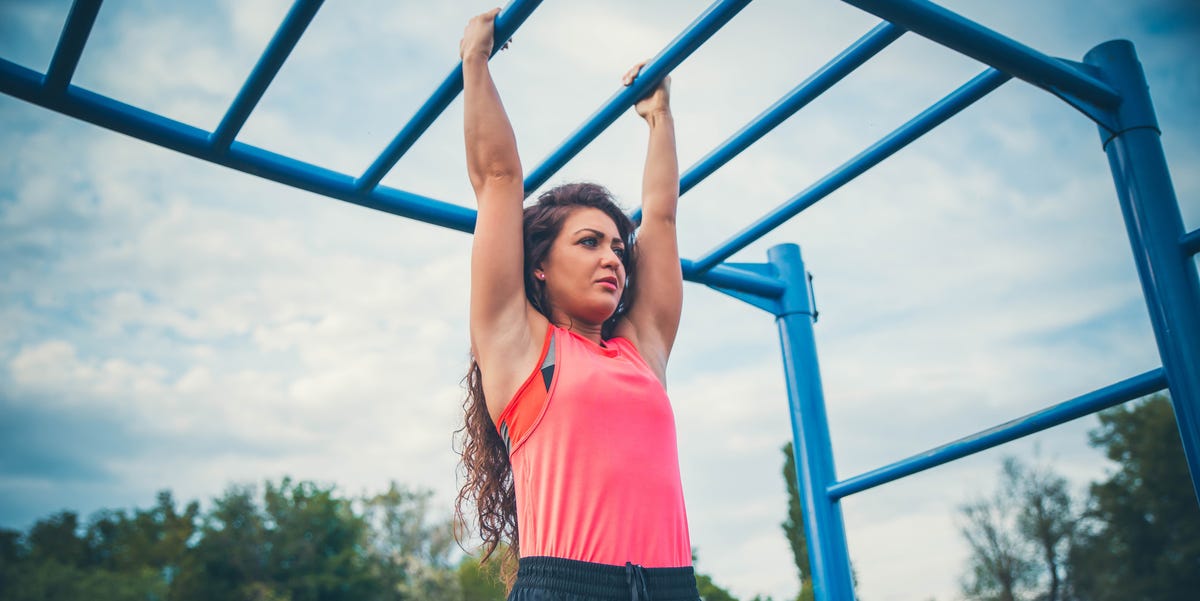
We already know that maintaining muscle mass and strength is important for healthy ageing. But new research has highlighted just how significant strength may be when it comes to longevity.
Even after accounting for physical activity levels, cardiovascular fitness and inflammation, a major new study found that greater strength was linked to a longer life.
What did the study find?
Tracking more than 5,000 women aged 63-99 over eight years, researchers found that those with stronger grip strength and faster sit-to-stand times were more likely to live longer.
Grip strength and chair stands are commonly used in healthcare settings to assess strength in older adults. For the chair stand test, participants completed five unassisted sit-to-stand movements as quickly as possible. Grip strength was measured using a hand dynamometer – a handheld device that records how forcefully someone can squeeze it, usually in kilograms.
In this study, every additional 7kg recorded on the grip strength test was associated with a 12% lower risk of death.
What does this mean for us?
In an accompanying report, the study’s lead author Michael LaMonte, PhD, a research professor of epidemiology and environmental health, said this is the largest study to date examining the link between muscle strength and longevity in women over 60.
While aerobic exercise remains important for healthy ageing, LaMonte said the findings strengthen the case for muscle-strengthening exercise playing a bigger role in public health guidance.
Importantly, the researchers found that even women who didn’t meet current physical activity guidelines still benefited from having greater muscle strength.
And, he noted, improving strength doesn’t necessarily require a gym membership. ‘Even using soup cans or books as a form of resistance provides stimulus to skeletal muscles and could be used by individuals for whom other options are not feasible,’ he said.
Related StoryThe bottom line
Although the study was large-scale, it was observational – meaning it identified a link rather than proving direct cause and effect.
Still, it adds to a growing body of evidence showing that maintaining and improving muscle strength with age can have wide-ranging health benefits.
How to improve your grip strength and chair stand performance
‘Chair stands and grip strength are both important indicators of healthy ageing in women, especially during midlife and post-menopause, when we naturally begin to lose muscle mass and strength,’ says menopause and strength coach Alice Jordan.
‘Being able to repeatedly move from sitting to standing without assistance is a strong sign of good lower-body strength, balance and mobility – all of which are essential for maintaining independence and reducing fall risk as we age.’
‘Lower grip strength has also been linked with reduced mobility, frailty and poorer long-term health outcomes, which is why strength training becomes so important for women as they get older,’ she adds.
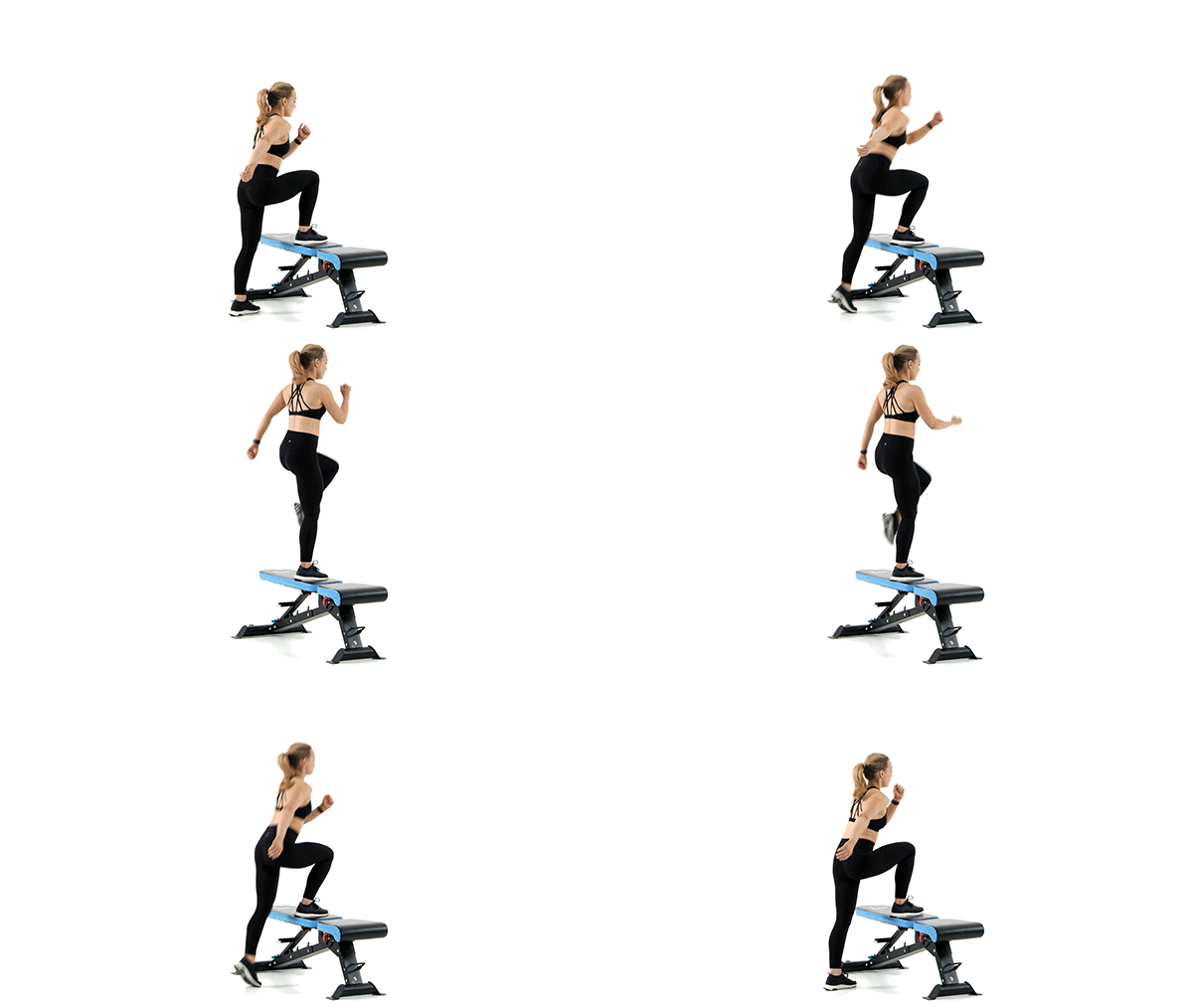
To improve chair stand ability, Jordan recommends:
rebecca jacobs
Sit-to-stands from a chair (unsurprisingly)Step-upsGlute bridgesResistance band squatsTempo squats, which involve slowing the movement to increase time under tension
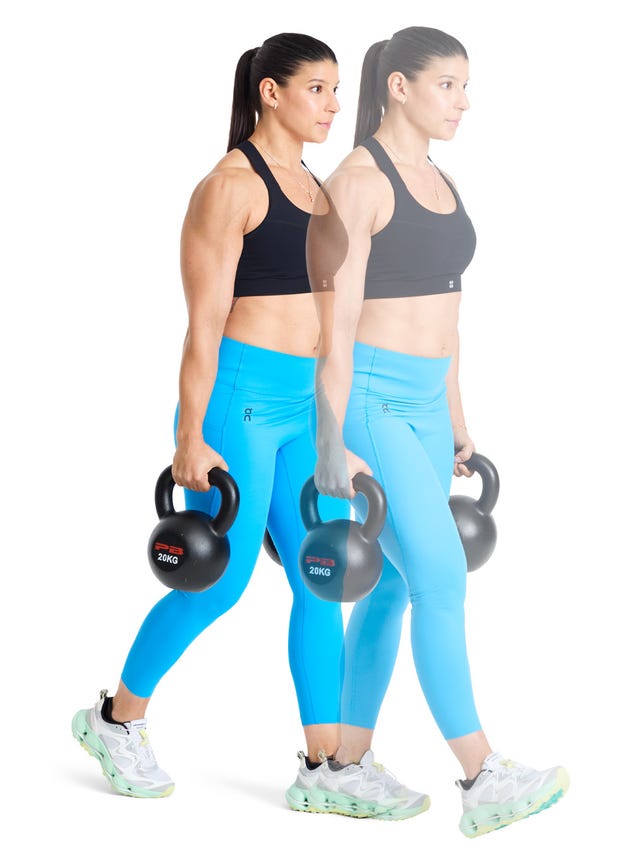
To improve grip strength, she suggests:
Justin Steele for Women’s Health
Having a strong core is about far more than sporting a six-pack. Build functional mid-section strength – while also improving your power, posture, coordination and balance – with WH COLLECTIVE coach Izy George’s 4-week core challenge. Download the Women’s Health UK app to access the full training plan today.
 Related Stories
Hannah Bradfield is a Senior Health and Fitness Writer for Women’s Health UK. An NCTJ-accredited journalist, Hannah graduated from Loughborough University with a BA in English and Sport Science and an MA in Media and Cultural Analysis. She has been covering sports, health and fitness for the last five years and has created content for outlets including BBC Sport, BBC Sounds, Runner’s World and Stylist. She especially enjoys interviewing those working within the community to improve access to sport, exercise and wellness. Hannah is a 2024 John Schofield Trust Fellow and was also named a 2022 Rising Star in Journalism by The Printing Charity. A keen runner, Hannah was firmly a sprinter growing up (also dabbling in long jump) but has since transitioned to longer-distance running. While 10K is her favoured race distance, she loves running or volunteering at parkrun every Saturday, followed, of course, by pastries. She’s always looking for fun new runs and races to do and brunch spots to try.