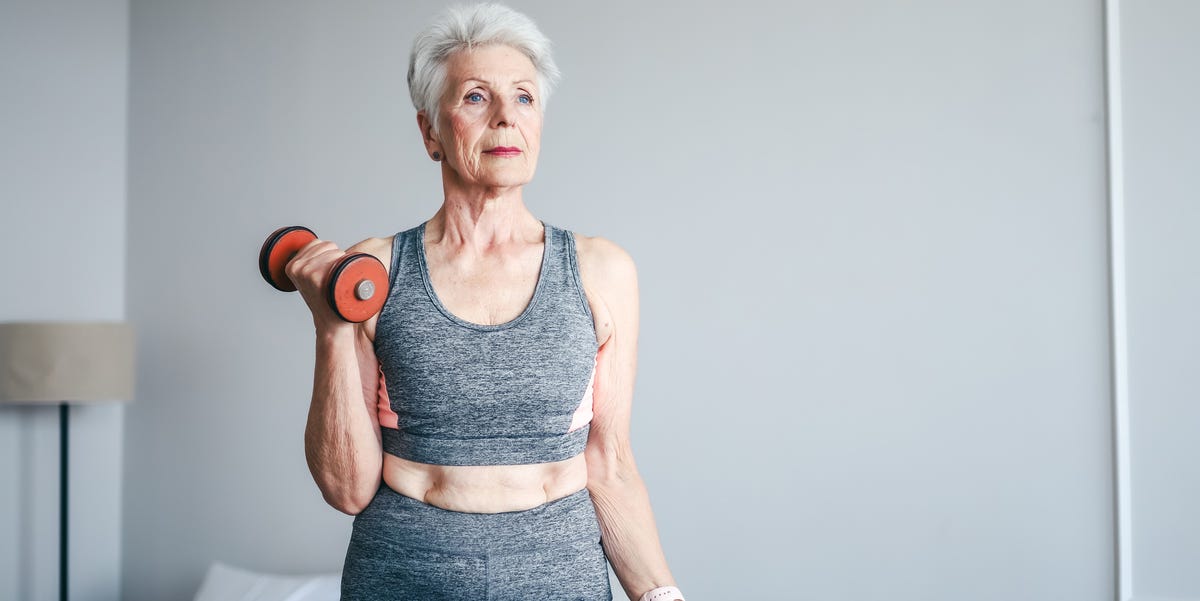
At 72, Pam is one of the strongest clients at Balance and Body Restoration Physical Therapy and Massage in Dublin, California.
Just four years ago, however, her life looked very different.
‘She walked into our clinic in real pain – chronic back pain, and shoulder pain so severe she couldn’t reach into her own cupboard for a cup,’ the clinic shared in a recent Instagram post.
‘She had zero experience lifting weights. She just wanted her life back.’
Today, Pam confidently performs exercises including deadlifts, overhead presses and kettlebell swings in a single training session.
A chart showing Pam’s latest femoral neck T-score – which compares hip bone density with that of a healthy young adult, and where osteoporosis is defined as a score below -2.5 – showed her improving from -2.7 in 2024 to -2.3 in 2026.
‘Her bone density has improved so much her scans moved her from osteoporosis back into osteopenia,’ the clinic noted.
But the progress didn’t happen overnight.
‘The first year wasn’t glamorous. It was learning how to brace, hinge, breathe under load – building the foundations,’ the clinic explained.
Over the following two years, Pam experienced what the clinic described as ‘explosive gains’ simply by staying consistent.
‘More than the numbers though – Pam’s body feels good 1785541456. She has little to no pain day to day. She carries her own groceries and suitcases. She has the energy to keep up with her grandkids,’ they added.
8 strength exercises Pam used to reverse her osteoporosis1. Double kettlebell deadlift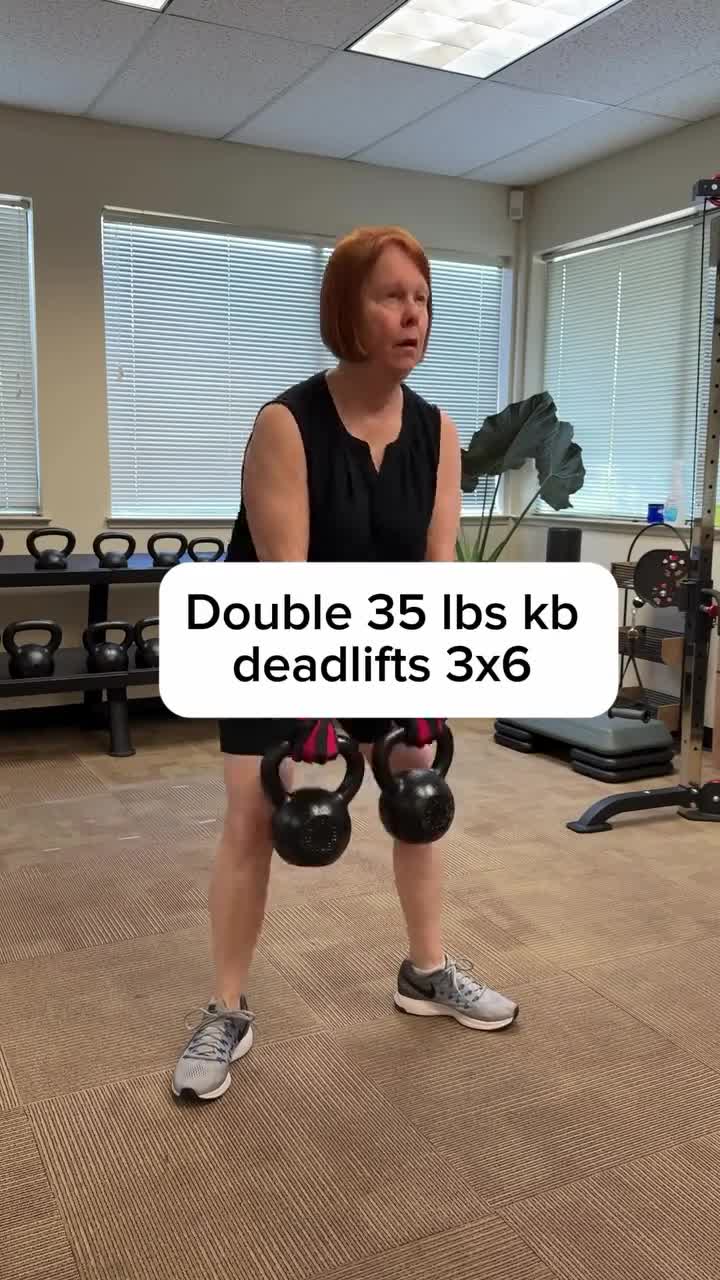
Pam uses 2 x 35lb (15.9kg) kettlebells
Perform: 3 x 6 reps
Place two kettlebells on the floor between your feet and stand with your feet hip-width apart. Hinge at your hips, bend your knees slightly and grip a kettlebell in each hand with an overhand grip, keeping your chest lifted and your back flat.Drive through your heels to stand, extending your hips and knees at the same time. Squeeze your glutes at the top without leaning back.Lower the kettlebells back to the floor with control by hinging at your hips and bending your knees, maintaining a neutral spine throughout.
Hip-hinge movements like the deadlift load the femur (thigh bone) and spine, making them particularly beneficial for bone health, the clinic explains.
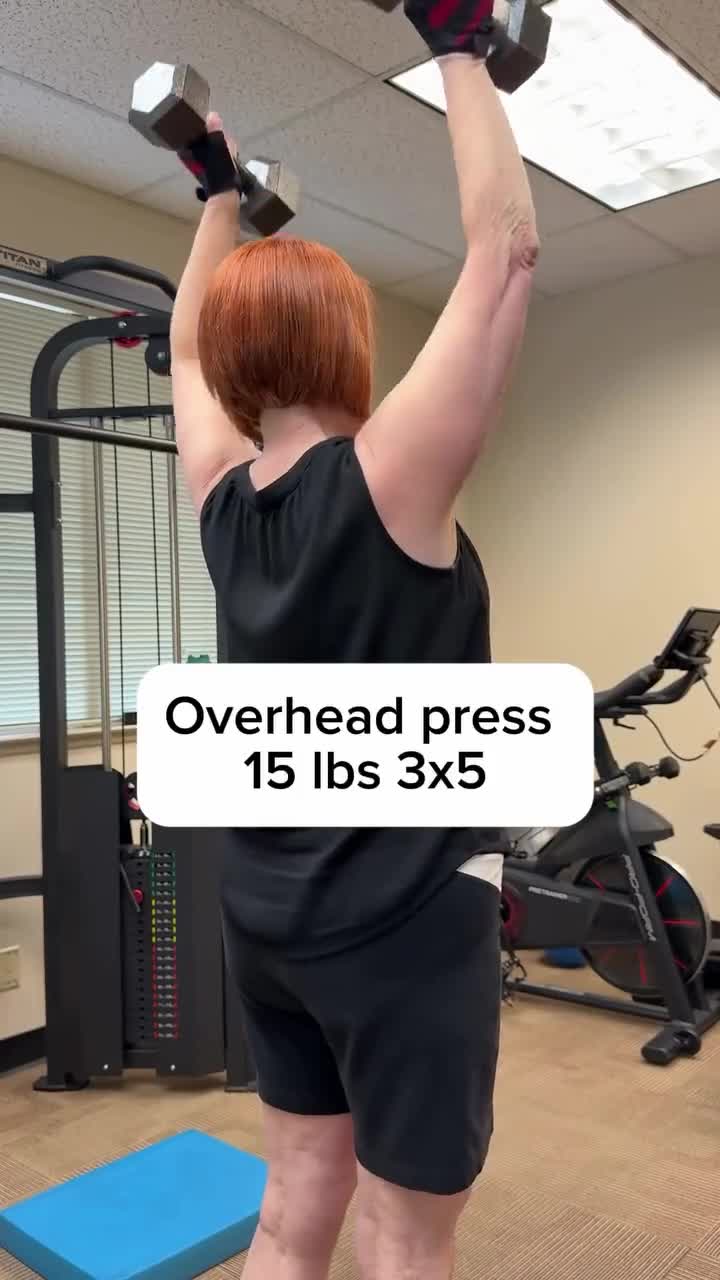
Pam is using 2 x 15lb (6.8kg) dumbbells
Perform: 3 x 5 reps
Stand with your feet hip-width apart, holding a dumbbell at each shoulder with your palms facing each other and your elbows about 45 degrees from your body.Brace your core, then press the dumbbells overhead until your arms are fully extended, keeping your wrists stacked over your elbows.
Keep your torso upright and avoid arching your back or using your legs to generate momentum.Lower the dumbbells back to shoulder height with control.
Pressing weights overhead places load through the spine while strengthening the shoulders and upper back, the clinic explains.
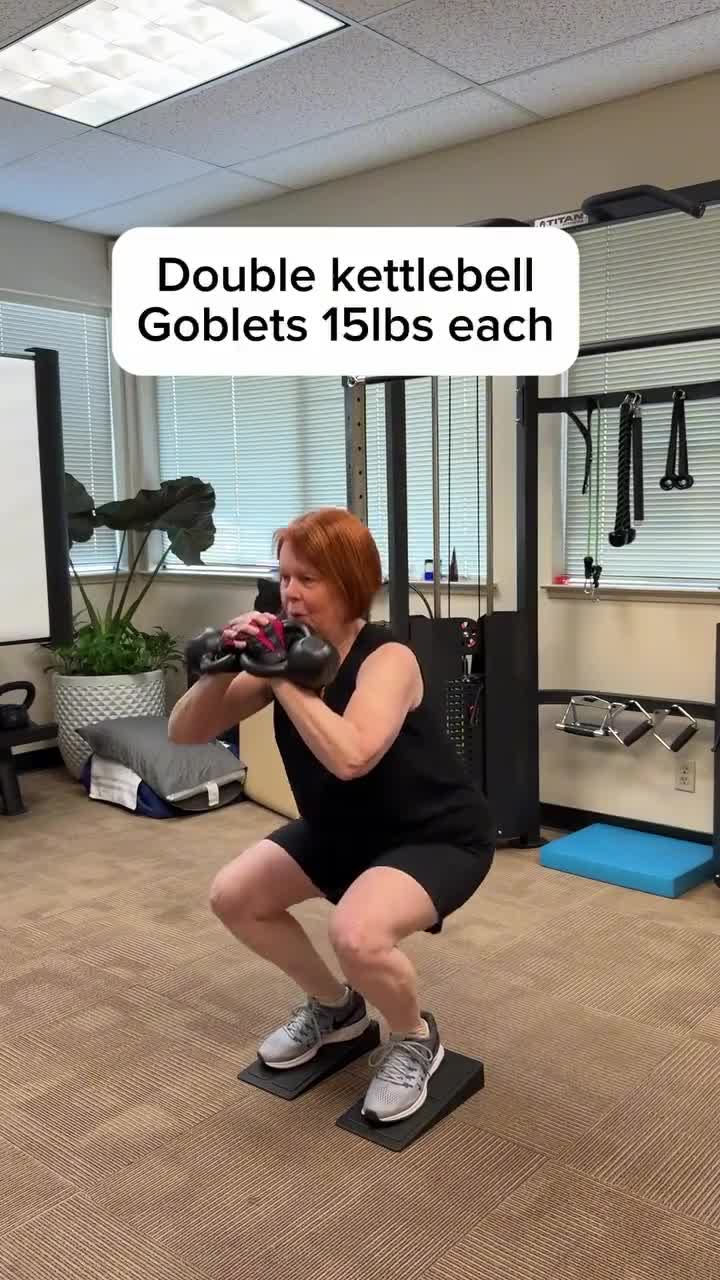
Pam is using 2 x 15lb (6.8kg) kettlebells
Perform: 3 x 6 reps
Stand with your feet hip-width apart and your toes turned slightly out. Hold a kettlebell in each hand in the front rack position, resting the bells on your forearms with your elbows tucked close to your body.Brace your core, keep your chest lifted and lower into a squat by pushing your hips back and bending your knees. Keep your weight evenly distributed through your heels and midfoot.Lower until your thighs are parallel to the floor, or slightly below, keeping your knees tracking in line with your toes.Pause briefly, then drive through your heels to stand, extending your hips and knees while maintaining the front rack position.
According to the clinic, ‘deep squats maximally load your femur (thigh bone) and spine’.
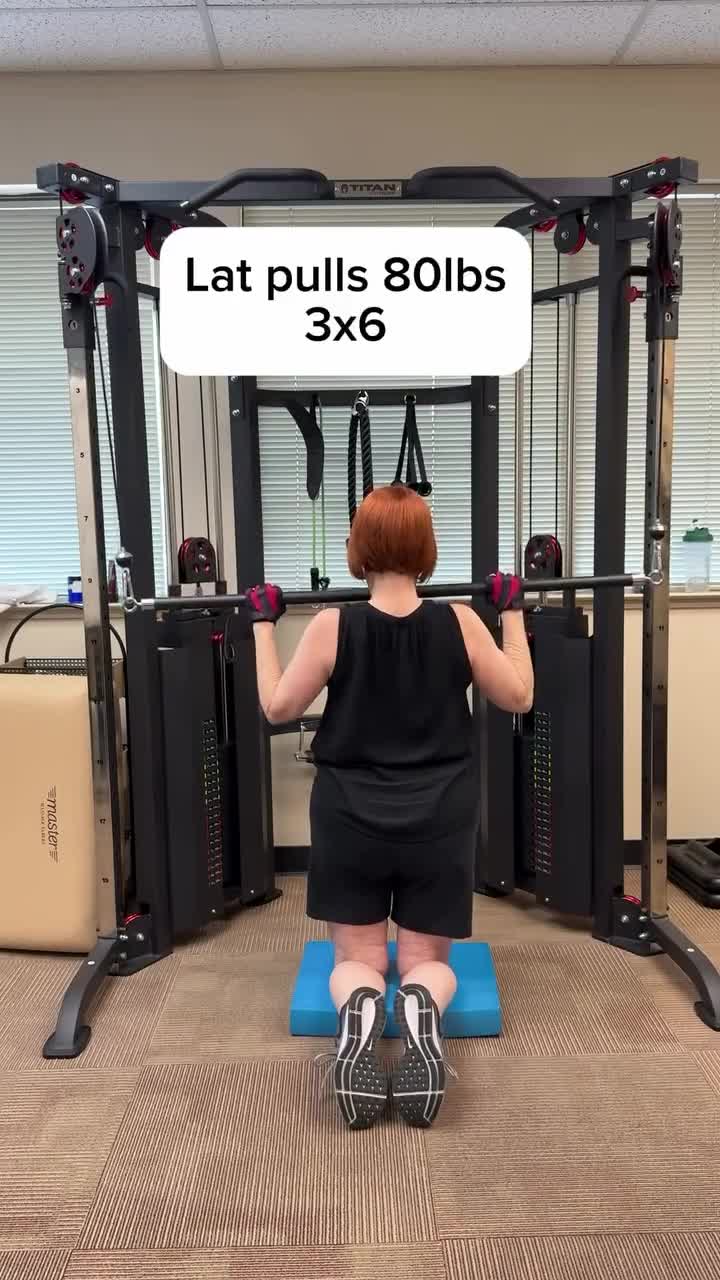
Pam is using 80lbs (36.3kg)
Perform: 3 x 6 reps
Set the weight using the selector pin, then kneel tall in front of the machine and grip the handle. Lean back slightly from your hips to align your body with the cable.Begin with your arms fully extended and your core braced. Pull the handle towards your upper chest with control, avoiding excessive swinging or leaning back.Pause briefly at the bottom, squeezing your lats, then slowly extend your arms to return to the starting position.
This exercise strengthens the lats – the large back muscles that connect your shoulders to your spine – helping to build a stronger back.
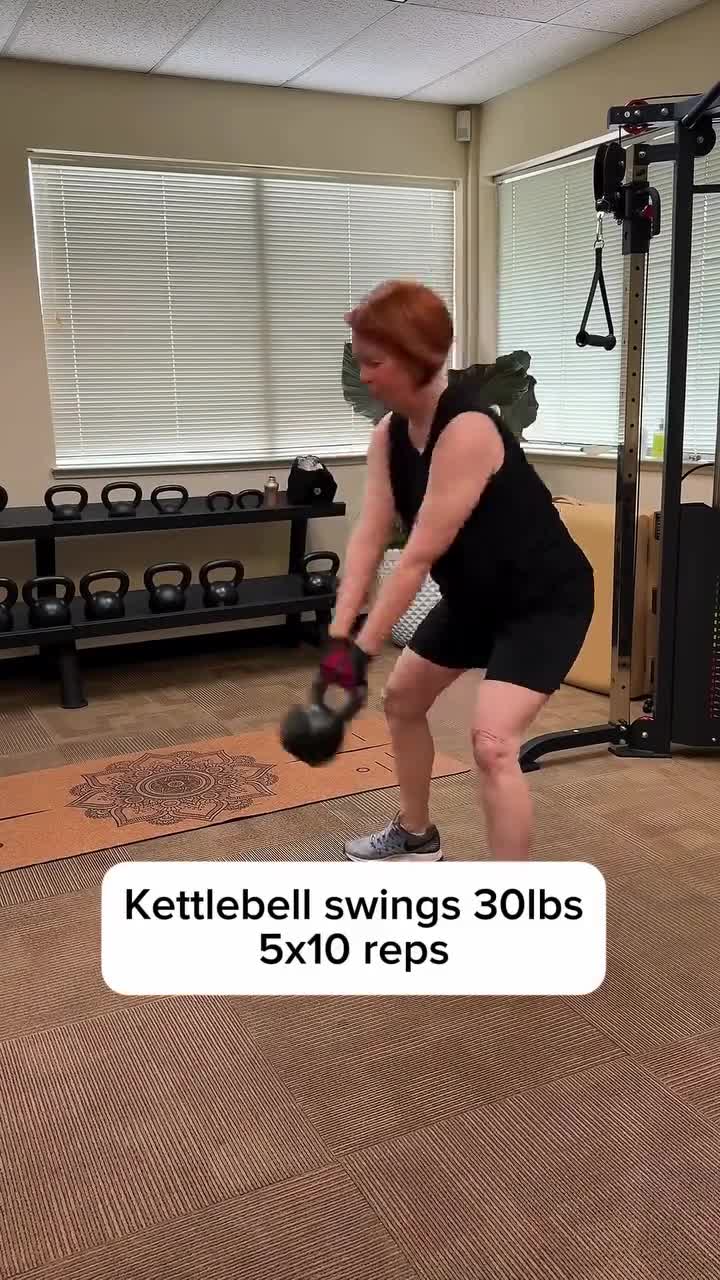
Pam is using 30lbs (13.6kg)
Perform: 5 x 10 reps
Stand with your feet about hip-width apart. Place a kettlebell on the floor approximately one foot in front of you.Hinge at your hips and bend your knees to grasp the handle with both hands. Keep your weight in your heels and maintain a neutral spine. Slightly tip the kettlebell toward you so the front edge lifts off the floor.Swing (‘hike’) the kettlebell back between your legs, keeping it close to your body.As the kettlebell begins to swing forward, drive through your heels and explosively extend your hips. Use the power from your hips to propel the kettlebell forward until it reaches about shoulder height. Look straight ahead or slightly downward in front of you.At the top of the swing, stand fully upright with your knees extended, glutes contracted, and core engaged. Your arms should remain straight. Let the kettlebell ‘float’ momentarily at the top of the movement.As the kettlebell begins to fall, hinge at your hips and allow it to swing back between your legs, preparing for the next repetition.
‘Weight plus acceleration leads to greater force, which generates stronger signals for bone growth,’ adds the clinic.
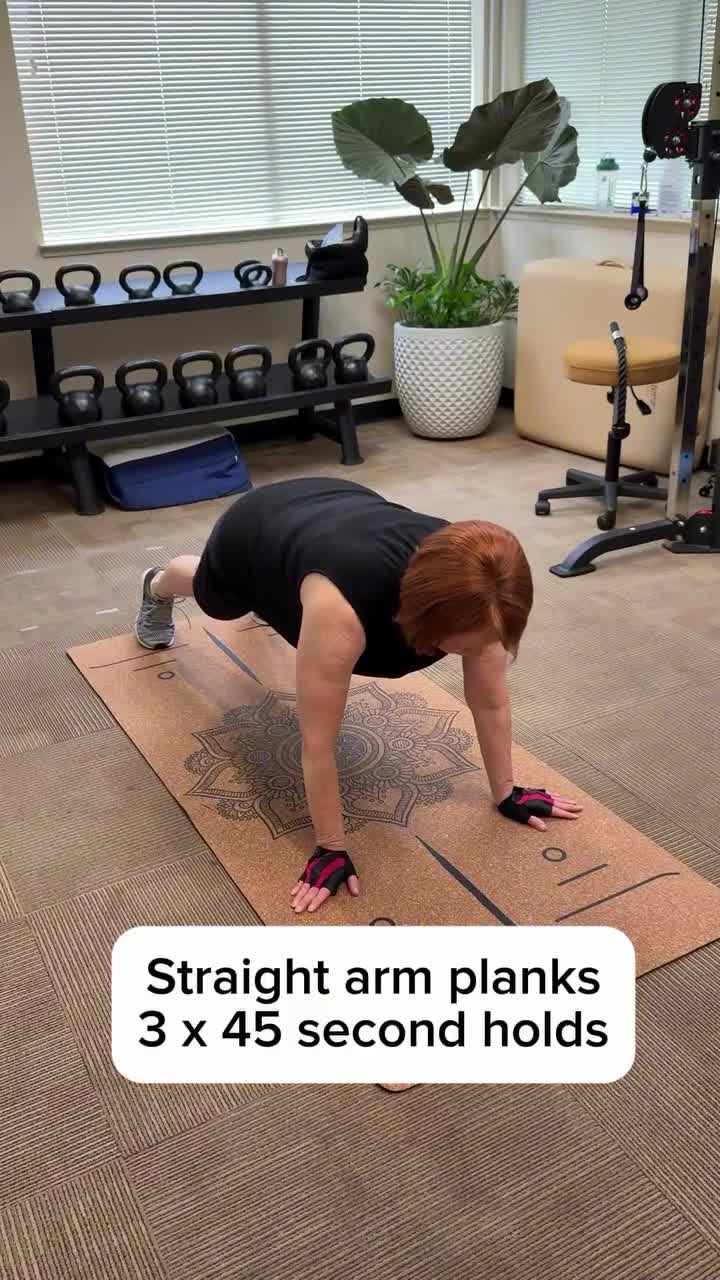
Perform: 3 x 45 second holds
Start on your hands and knees, with hands stacked directly beneath your shoulders. Step your feet back one at a time until your body forms a straight line from your head to your heels. Widen your stance for more stability or bring your feet closer together to increase the challenge.Brace your core, squeeze your quads and glutes and avoid letting your hips sag or lift too high.
These improve shoulder and core stability and supplement all of Pam’s heavier lifts with essential baseline stability.
7. Step plyos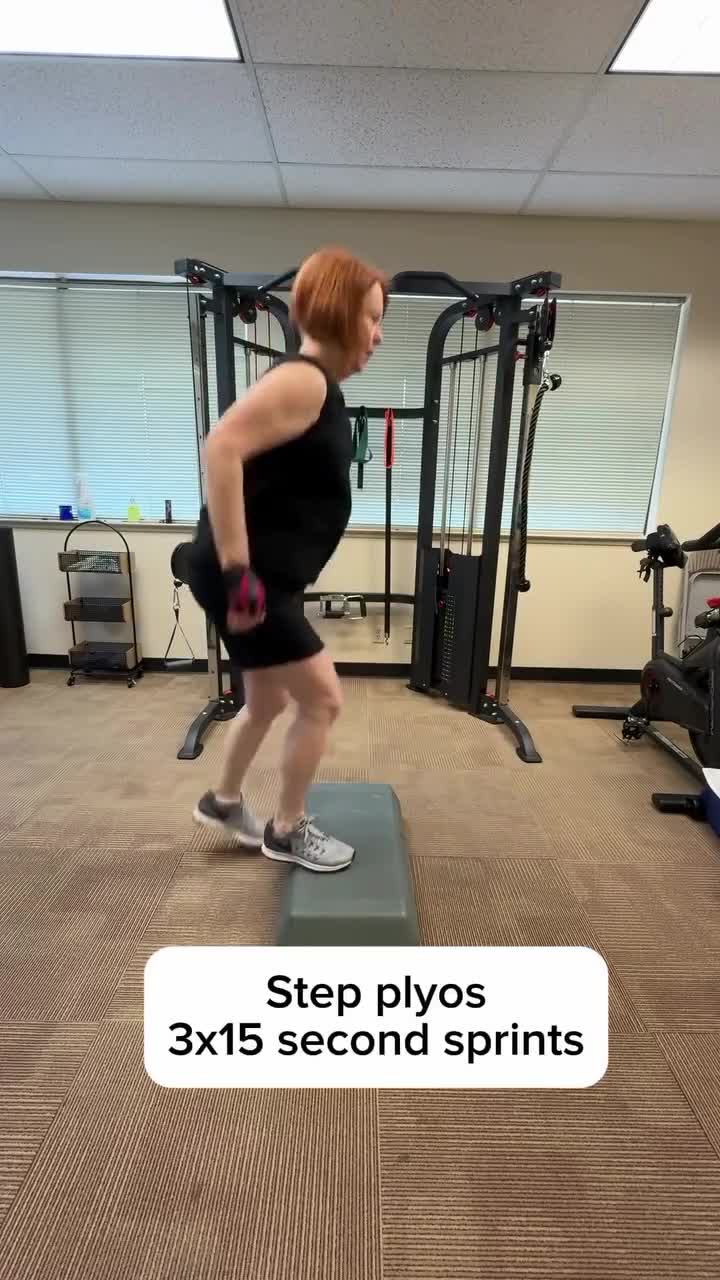
Perform: 3 x 15 seconds
Stand facing a low box or bench with your feet hip-width apart.Place your left foot on the box, then drive explosively through your right foot to jump into the air.Switch your feet mid-air so you land with your right foot on the box and your left foot on the floor.Continue alternating sides with each jump.
Impact exercises stimulate bone formation. ‘The plyos also challenge balance, footwork and coordination, which are all essential for fall prevention,’ the centre explains.
8. Farmer’s carries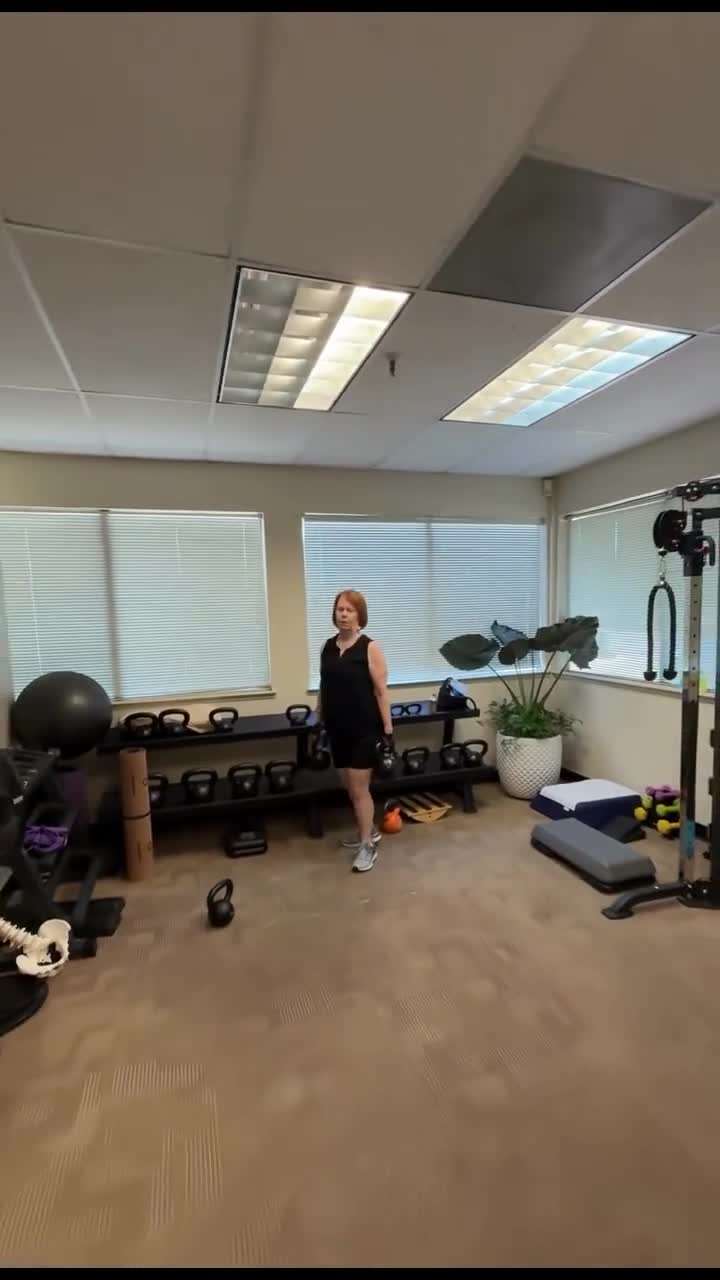
Pam is using 2 x 45lb (20.4kg) kettlebells
Perform: 3 x 15-20 seconds
Stand with your feet hip-width apart, with a kettlebell on the floor outside each ankle. Hinge at your hips and bend your knees to grip the handles, keeping your back flat and your core braced.Drive through your heels to stand tall, then pull your shoulders down and back while maintaining a strong grip.Walk forwards with small, controlled steps, keeping your torso upright throughout. To change direction, set the kettlebells down, turn around, then pick them up again before continuing.
Carrying heavy weights places an axial load through the spine, challenging your core and postural muscles. ‘The movement also improves posture, core and overall back strength,’ the clinic adds.
One of our most frequently asked questions here at Women’s Health? How to build muscle and burn fat at the same time. So, we asked superstar trainer Oyinda Okunowo exactly how to do it. In this 4-week plan – created exclusively for Women’s Health COLLECTIVE members – you’ll get the workouts and nutrition guidance needed to help you on your way to better body composition. Tap the link below to unlock 14 days of free access to Oyinda’s plan and start training today.