
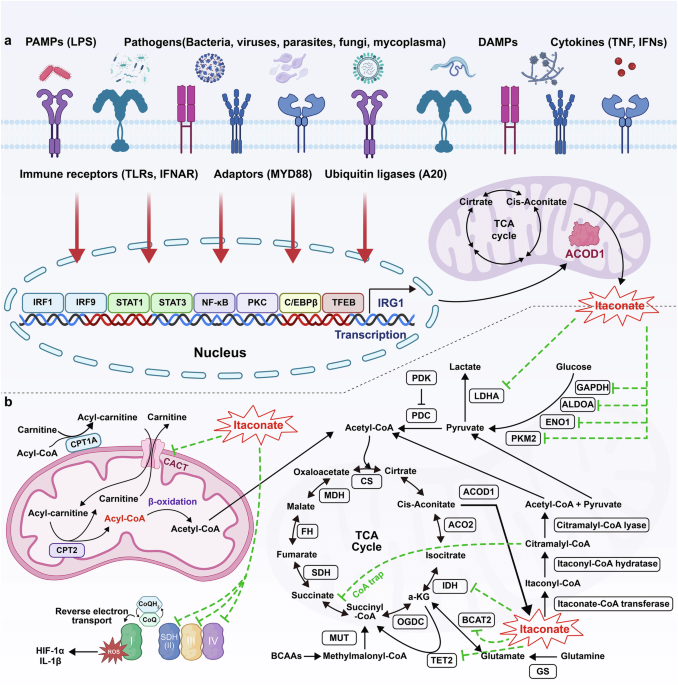
Wu, R. et al. ACOD1 in immunometabolism and disease. Cell Mol. Immunol. 17, 822–833 (2020).
Luan, H. H. & Medzhitov, R. Food fight: role of itaconate and other metabolites in antimicrobial defense. Cell Metab. 24, 379–387 (2016).
Chen, R. et al. Pattern recognition receptors: function, regulation and therapeutic potential. Signal Transduct. Target. Ther. 10, 216 (2025).
Hu, T. et al. Metabolic regulation of the immune system in health and diseases: mechanisms and interventions. Signal Transduct. Target Ther. 9, 268 (2024).
Liu, Y. et al. Pyroptosis in health and disease: mechanisms, regulation and clinical perspective. Signal Transduct. Target Ther. 9, 245 (2024).
Nadhan, R. et al. Decoding lysophosphatidic acid signaling in physiology and disease: mapping the multimodal and multinodal signaling networks. Signal Transduct. Target Ther. 10, 337 (2025).
Zhang, F. et al. Neutrophil diversity and function in health and disease. Signal Transduct. Target Ther. 9, 343 (2024).
Hooftman, A. & O’Neill, L. A. J. The immunomodulatory potential of the metabolite itaconate. Trends Immunol. 40, 687–698 (2019).
Zasłona, Z. & O’Neill, L. A. J. Cytokine-like roles for metabolites in immunity. Mol. Cell 78, 814–823 (2020).
Ryan, D. G. & O’Neill, L. A. J. Krebs cycle reborn in macrophage immunometabolism. Annu. Rev. Immunol. 38, 289–313 (2020).
Wu, X., Song, Y., Yuan, Z. & Wu, S. Preclinical insights into the potential of itaconate and its derivatives for liver disease therapy. Metabolism 165, 156152 (2025).
Yang, W., Wang, Y., Tao, K. & Li, R. Metabolite itaconate in host immunoregulation and defense. Cell Mol. Biol. Lett. 28, 100 (2023).
Murphy, M. P. & O’Neill, L. A. J. Krebs cycle reimagined: the emerging roles of succinate and itaconate as signal transducers. Cell 174, 780–784 (2018).
McGettrick, A. F., Bourner, L. A., Dorsey, F. C. & O’Neill, L. A. J. Metabolic messengers: itaconate. Nat. Metab. 6, 1661–1667 (2024).
Ryan, D. G. et al. Coupling Krebs cycle metabolites to signalling in immunity and cancer. Nat. Metab. 1, 16–33 (2019).
O’Neill, L. A. J. & Artyomov, M. N. Itaconate: the poster child of metabolic reprogramming in macrophage function. Nat. Rev. Immunol. 19, 273–281 (2019).
Peace, C. G. & O’Neill, L. A. The role of itaconate in host defense and inflammation. J. Clin. Investig. 132, (2022).
Shi, X. et al. The signaling pathways and therapeutic potential of itaconate to alleviate inflammation and oxidative stress in inflammatory diseases. Redox Biol. 58, 102553 (2022).
Kong, X. et al. The anti-inflammatory effects of itaconate and its derivatives in neurological disorders. Cytokine Growth Factor Rev. 78, 37–49 (2024).
He, R. et al. The role and therapeutic potential of itaconate in lung disease. Cell Mol. Biol. Lett. 29, 129 (2024).
Yuk, J. M., Park, E. J., Kim, I. S. & Jo, E. K. Itaconate family-based host-directed therapeutics for infections. Front. Immunol. 14, 1203756 (2023).
Lohia, G. K. & Riquelme, S. A. Pathogen adaptation to lung metabolites. Curr. Opin. Microbiol. 85, 102608 (2025).
Ye, D. et al. Itaconate in host inflammation and defense. Trends Endocrinol. Metab. 35, 586–606 (2024).
Liu, Y. et al. Itaconate: a key regulator of immune responses and potential therapeutic target for autoimmune and inflammatory diseases. Autoimmun. Rev. 24, 103885 (2025).
Liu, Z. & Wang, C. Dissecting S-itaconation at host-pathogen interactions with chemical proteomics tools. Curr. Opin. Microbiol 83, 102579 (2025).
Luo, Y. et al. Metabolic regulation of inflammation: exploring the potential benefits of itaconate in autoimmune disorders. Immunology 174, 189–202 (2025).
Liu, R. et al. Itaconate: A promising precursor for treatment of neuroinflammation-associated depression. Biomed. Pharmacother. 167, 115521 (2023).
Day, E. A. & O’Neill, L. A. J. Protein targeting by the itaconate family in immunity and inflammation. Biochem. J. 479, 2499–2510 (2022).
Peace, C. G., O’Carroll, S. M. & O’Neill, L. A. J. Fumarate hydratase as a metabolic regulator of immunity. Trends Cell Biol. 34, 442–450 (2024).
Erlich, J. R. et al. Targeting evolutionary conserved oxidative stress and immunometabolic pathways for the treatment of respiratory infectious diseases. Antioxid. Redox Signal 32, 993–1013 (2020).
Cordes, T., Michelucci, A. & Hiller, K. Itaconic acid: the surprising role of an industrial compound as a mammalian antimicrobial metabolite. Annu. Rev. Nutr. 35, 451–473 (2015).
Birajdar, M. S., Joo, H., Koh, W. G. & Park, H. Natural bio-based monomers for biomedical applications: a review. Biomater. Res. 25, 8 (2021).
Li, H. et al. Mechanisms and therapeutic potential of pharmacological agents targeting inflammasomes. Biomed. Pharmacother. 189, 118164 (2025).
Strelko, C. L. et al. Itaconic acid is a mammalian metabolite induced during macrophage activation. J. Am. Chem. Soc. 133, 16386–16389 (2011).
Tallam, A. et al. Gene regulatory network inference of Immunoresponsive Gene 1 (IRG1) identifies Interferon Regulatory Factor 1 (IRF1) as its transcriptional regulator in mammalian macrophages. PLoS One 11, e0149050 (2016).
Li, Y. et al. The IRG1-Itaconate axis: a regulatory hub for immunity and metabolism in macrophages. Int. Rev. Immunol. 42, 364–378 (2023).
Gidon, A. et al. The tumor necrosis factor alpha and interleukin 6 auto-paracrine signaling loop controls mycobacterium avium infection via induction of IRF1/IRG1 in human primary macrophages. mBio 12, e0212121 (2021).
Wang, Z. et al. Cancer cell-intrinsic biosynthesis of itaconate promotes tumor immunogenicity. EMBO J. 43, 5530–5547 (2024).
Huang, J. et al. Macrophage scavenger receptor A1 antagonizes abdominal aortic aneurysm via upregulating IRG1. Biochem. Pharm. 213, 115631 (2023).
Schuster, E. M. et al. TFEB induces mitochondrial itaconate synthesis to suppress bacterial growth in macrophages. Nat. Metab. 4, 856–866 (2022).
Chen, X. et al. Glutamine limits NLRP3 inflammasome activation and pyroptosis in macrophages by sustaining the IRG1/itaconate axis. FEBS J. (2025).
Chen, B. et al. Itaconic acid ameliorates necrotizing enterocolitis through the TFEB-mediated autophagy-lysosomal pathway. Free Radic. Biol. Med. 226, 251–265 (2025).
Chen, C. et al. Itaconate uptake via SLC13A3 improves hepatic antibacterial innate immunity. Dev. Cell 59, 2807–2817.e2808 (2024).
Wei, X. et al. Myeloid beta-arrestin 2 depletion attenuates metabolic dysfunction-associated steatohepatitis via the metabolic reprogramming of macrophages. Cell Metab. 36, 2281–2297.e2287 (2024).
Lei, I. et al. Metabolic reprogramming by immune-responsive gene 1 up-regulation improves donor heart preservation and function. Sci. Transl. Med. 15, eade3782 (2023).
Yamaguchi, A. et al. Skeletal myotube-derived extracellular vesicles enhance itaconate production and attenuate inflammatory responses of macrophages. Front. Immunol. 14, 1099799 (2023).
Wen, Y. & Liang, Z. Enhanced itaconic acid secretion from macrophages mediates the protection of mesenchymal stem cell-derived exosomes on lipopolysaccharide-induced acute lung injury mice. Biol. Direct. 19, 138 (2024).
An, L. et al. Quercetin induces itaconic acid-mediated M1/M2 alveolar macrophages polarization in respiratory syncytial virus infection. Phytomedicine 130, 155761 (2024).
Xiang, Y. et al. Dihydrotanshinone I attenuates diet-induced nonalcoholic fatty liver disease via up-regulation of IRG1. Phytother. Res. 39, 1531–1548 (2025).
Chen, S. et al. Pharmacological upregulation of macrophage-derived itaconic acid by pubescenoside C attenuated myocardial ischemia-reperfusion injury. J. Adv. Res. 74, 571–587 (2025).
Tie, H. et al. LXA4 protected mice from renal ischemia/reperfusion injury by promoting IRG1/Nrf2 and IRAK-M-TRAF6 signal pathways. Clin. Immunol. 261, 110167 (2024).
Wu, R. et al. Aconitate decarboxylase 1 is a mediator of polymicrobial sepsis. Sci. Transl. Med. 14, eabo2028 (2022).
Chen, F. et al. Crystal structure of cis-aconitate decarboxylase reveals the impact of naturally occurring human mutations on itaconate synthesis. Proc. Natl. Acad. Sci. USA 116, 20644–20654 (2019).
Mills, E. L. et al. Itaconate is an anti-inflammatory metabolite that activates Nrf2 via alkylation of KEAP1. Nature 556, 113–117 (2018).
Chen, C. et al. ABCG2 is an itaconate exporter that limits antibacterial innate immunity by alleviating TFEB-dependent lysosomal biogenesis. Cell Metab. 36, 498–510.e411 (2024).
He, W. et al. Mesaconate is synthesized from itaconate and exerts immunomodulatory effects in macrophages. Nat. Metab. 4, 524–533 (2022).
Lang, R. & Siddique, M. Control of immune cell signaling by the immuno-metabolite itaconate. Front. Immunol. 15, 1352165 (2024).
Pålsson-McDermott, E. M. & O’Neill, L. A. J. Gang of 3: How the Krebs cycle-linked metabolites itaconate, succinate, and fumarate regulate macrophages and inflammation. Cell Metab. 37, 1049–1059 (2025).
Chen, F. et al. Citraconate inhibits ACOD1 (IRG1) catalysis, reduces interferon responses and oxidative stress, and modulates inflammation and cell metabolism. Nat. Metab. 4, 534–546 (2022).
Swain, A. et al. Comparative evaluation of itaconate and its derivatives reveals divergent inflammasome and type I interferon regulation in macrophages. Nat. Metab. 2, 594–602 (2020).
Watermann, P., Kalsi, G. K., Dringen, R. & Arend, C. Differential effects of itaconate and its esters on the glutathione and glucose metabolism of cultured primary rat astrocytes. Neurochem Res 50, 24 (2024).
Sangineto, M. et al. Krebs cycle derivatives, dimethyl fumarate and itaconate, control metabolic reprogramming in inflammatory human microglia cell line. Mitochondrion 79, 101966 (2024).
Shen, H. et al. The human knockout gene CLYBL connects itaconate to vitamin B(12). Cell 171, 771–782.e711 (2017).
Sasikaran, J. et al. Bacterial itaconate degradation promotes pathogenicity. Nat. Chem. Biol. 10, 371–377 (2014).
Gonner, L., Cassens, E. A., König, S. & Berg, I. A. Pseudomonadal itaconate degradation gene cluster encodes enzymes for methylsuccinate utilization. Commun. Biol. 8, 1099 (2025).
Pramanik, A. & Datta, S. Structural and functional insights of itaconyl-CoA hydratase from Pseudomonas aeruginosa highlight a novel N-terminal hotdog fold. FEBS Lett. 598, 1387–1401 (2024).
Huang, Q. et al. Structural and functional characterization of itaconyl-CoA hydratase and citramalyl-CoA lyase involved in itaconate metabolism of Pseudomonas aeruginosa. Structure 32, 941–952.e943 (2024).
Zhu, X. et al. Stimulating pyruvate dehydrogenase complex reduces itaconate levels and enhances TCA cycle anabolic bioenergetics in acutely inflamed monocytes. J. Leukoc. Biol. 107, 467–484 (2020).
Ku, H. C., Shen, T. C. & Cheng, C. F. The potential of using itaconate as treatment for inflammation-related heart diseases. Tzu Chi Med. J. 34, 113–118 (2022).
Qin, W. et al. S-glycosylation-based cysteine profiling reveals regulation of glycolysis by itaconate. Nat. Chem. Biol. 15, 983–991 (2019).
Liao, S. T. et al. 4-Octyl itaconate inhibits aerobic glycolysis by targeting GAPDH to exert anti-inflammatory effects. Nat. Commun. 10, 5091 (2019).
Yang, W. et al. 4-Octyl itaconate inhibits aerobic glycolysis by targeting GAPDH to promote cuproptosis in colorectal cancer. Biomed. Pharmacother. 159, 114301 (2023).
Liu, D. et al. Discovery of itaconate-mediated lysine acylation. J. Am. Chem. Soc. 145, 12673–12681 (2023).
Wu, J. et al. 4-OI Protects MIN6 cells from oxidative stress injury by reducing LDHA-mediated ROS generation. Biomolecules 12, (2022).
Hayashi, K. et al. Antitumor effect of dimethyl itaconate on thymic carcinoma by targeting LDHA-mTOR axis. Life Sci. 282, 119847 (2021).
Meng, Y. et al. Thermal proteome profiling of itaconate interactome in macrophages. Chem. Sci. 16, 13838–13846 (2025).
Fan, Y. et al. Itaconate transporter SLC13A3 confers immunotherapy resistance via alkylation-mediated stabilization of PD-L1. Cell Metab. 37, 514–526.e515 (2025).
Lin, M. et al. Homocysitaconate controls inflammation through reshaping methionine metabolism and N-homocysteinylation. Cell Metab. 37, 1980–1997.e1988 (2025).
Liu, H. et al. Acod1 promotes PAD4 ubiquitination via UBR5 alkylation to modulate NETosis and exert protective effects in sepsis. Adv. Sci. 12, e11652 (2025).
Wang, H. C., Li, Y. C. & Hung, M. C. Itaconate targets the ERK2 signal to suppress estrogen receptor-positive breast cancer cell growth. Am. J. Cancer Res. 15, 1133–1147 (2025).
Yin, S. et al. Itaconate facilitates viral infection via alkylating GDI2 and retaining Rab GTPase on the membrane. Signal Transduct. Target Ther. 9, 371 (2024).
Wei, C. et al. Itaconate protects ferroptotic neurons by alkylating GPx4 post stroke. Cell Death Differ. 31, 983–998 (2024).
Luo, Z. et al. Targeted macrophage phagocytosis by IRG1/itaconate axis improves the prognosis of intracerebral hemorrhagic stroke and peritonitis. EBioMedicine 101, 104993 (2024).
Gong, W. et al. 4-Octyl itaconate blocks GSDMB-mediated pyroptosis and restricts inflammation by inactivating granzyme A. Cell Prolif. 57, e13711 (2024).
Bourner, L. A. et al. Endogenously produced itaconate negatively regulates innate-driven cytokine production and drives global ubiquitination in human macrophages. Cell Rep. 43, 114570 (2024).
Li, W. et al. 4-octyl itaconate as a metabolite derivative inhibits inflammation via alkylation of STING. Cell Rep. 42, 112145 (2023).
Su, C. et al. 4-Octyl itaconate restricts STING activation by blocking its palmitoylation. Cell Rep. 42, 113040 (2023).
Giangregorio, N. et al. Inhibition of the mitochondrial carnitine/acylcarnitine carrier by itaconate through irreversible binding to cysteine 136: possible pathophysiological implications. Biomolecules 13, (2023).
Ribó-Molina, P. et al. 4-Octyl itaconate reduces influenza A replication by targeting the nuclear export protein CRM1. J. Virol. 97, e0132523 (2023).
Runtsch, M. C. et al. Itaconate and itaconate derivatives target JAK1 to suppress alternative activation of macrophages. Cell Metab. 34, 487–501.e488 (2022).
Chen, L. L. et al. Itaconate inhibits TET DNA dioxygenases to dampen inflammatory responses. Nat. Cell Biol. 24, 353–363 (2022).
Zhang, Z. et al. Itaconate is a lysosomal inducer that promotes antibacterial innate immunity. Mol. Cell 82, 2844–2857.e2810 (2022).
Bambouskova, M. et al. Itaconate confers tolerance to late NLRP3 inflammasome activation. Cell Rep. 34, 108756 (2021).
Kwai, B. X. C. et al. Itaconate is a covalent inhibitor of the Mycobacterium tuberculosis isocitrate lyase. RSC Med. Chem. 12, 57–61 (2021).
Hooftman, A. et al. The immunomodulatory metabolite itaconate modifies NLRP3 and inhibits inflammasome activation. Cell Metab. 32, 468–478.e467 (2020).
Liu, H. et al. Four-octyl itaconate activates Keap1-Nrf2 signaling to protect neuronal cells from hydrogen peroxide. Cell Commun. Signal 16, 81 (2018).
Heinz, A. et al. Itaconate controls its own synthesis via feedback-inhibition of reverse TCA cycle activity at IDH2. Biochim. Biophys. Acta Mol. Basis Dis. 1868, 166530 (2022).
Cordes, T. & Metallo, C. M. Itaconate alters succinate and coenzyme A metabolism via inhibition of mitochondrial complex II and methylmalonyl-CoA mutase. Metabolites 11, (2021).
Cordes, T. et al. Immunoresponsive gene 1 and itaconate inhibit succinate dehydrogenase to modulate intracellular succinate levels. J. Biol. Chem. 291, 14274–14284 (2016).
Lampropoulou, V. et al. Itaconate links inhibition of succinate dehydrogenase with macrophage metabolic remodeling and regulation of inflammation. Cell Metab. 24, 158–166 (2016).
Wang, H. C. et al. IRG1/Itaconate induces metabolic reprogramming to suppress ER-positive breast cancer cell growth. Am. J. Cancer Res 13, 1067–1081 (2023).
Németh, B. et al. Abolition of mitochondrial substrate-level phosphorylation by itaconic acid produced by LPS-induced Irg1 expression in cells of murine macrophage lineage. FASEB J. 30, 286–300 (2016).
Belosludtsev, K. N. et al. Itaconic acid impairs the mitochondrial function by the inhibition of complexes II and IV and induction of the permeability transition pore opening in rat liver mitochondria. Biochimie 176, 150–157 (2020).
Zhang, X. et al. Tumor-associated macrophage-derived itaconic acid contributes to nasopharyngeal carcinoma progression by promoting immune escape via TET2. Cell Commun. Signal 22, 413 (2024).
Rong, K. et al. Inflammatory macrophage-derived itaconate inhibits DNA demethylase TET2 to prevent excessive osteoclast activation in rheumatoid arthritis. Bone Res. 13, 60 (2025).
Zhang, J. X. et al. Xianglian pill alleviates ulcerative colitis by inhibiting M1 macrophage polarization via modulation of energy metabolite itaconate. Phytomedicine 135, 156179 (2024).
Wang, Y. Z. et al. Dissection of immunotherapeutic predictive versus prognostic transcriptional programs identifies SLC22A5-centric carnitine metabolism-driven resistance to anti-PD-(L)1 treatment in non-small cell lung cancer. Drug Resist. Updat. 84, 101313 (2025).
Zhang, J. & Gu, J. Metabolic basis of fatty acid oxidation and immunotherapy resistance with clinical perspectives. Drug Resist. Updat. 84, 101317 (2025).
Bambouskova, M. et al. Electrophilic properties of itaconate and derivatives regulate the IκBζ-ATF3 inflammatory axis. Nature 556, 501–504 (2018).
Yang, W. et al. Immune Response Gene-1 [IRG1]/itaconate protect against multi-organ injury via inhibiting gasdermin D-mediated pyroptosis and inflammatory response. Inflammopharmacology 32, 419–432 (2024).
Shen, S. et al. Immune-response gene 1 deficiency aggravates inflammation-triggered cardiac dysfunction by inducing M1 macrophage polarization and aggravating Ly6C(high) monocyte recruitment. Biol. Direct. 19, 86 (2024).
Qiu, J. H. et al. Deficiency of IRG1/itaconate aggravates endotoxemia-induced acute lung injury by inhibiting autophagy in mice. Exp. Anim. 72, 164–172 (2023).
Xu, L. et al. 4-Octyl itaconate attenuates LPS-induced acute kidney injury by activating Nrf2 and inhibiting STAT3 signaling. Mol. Med. 29, 58 (2023).
He, R. et al. Itaconate inhibits ferroptosis of macrophage via Nrf2 pathways against sepsis-induced acute lung injury. Cell Death Discov. 8, 43 (2022).
Xin, Y., Zou, L. & Lang, S. 4-Octyl itaconate (4-OI) attenuates lipopolysaccharide-induced acute lung injury by suppressing PI3K/Akt/NF-κB signaling pathways in mice. Exp. Ther. Med. 21, 141 (2021).
Li, R. et al. 4-Octyl itaconate alleviates endothelial cell inflammation and barrier dysfunction in LPS-induced sepsis via modulating TLR4/MAPK/NF-κB signaling : 4-Octyl itaconate alleviates endothelial dysfunction. Mol. Med. 31, 240 (2025).
Darvish Khadem, M. et al. Dimethyl itaconate reprograms neurotoxic to neuroprotective primary astrocytes through the regulation of NLRP3 inflammasome and NRF2/HO-1 pathways. Mol. Cell Neurosci. 122, 103758 (2022).
Unni, S. et al. Structural insights into the multiple binding modes of Dimethyl Fumarate (DMF) and its analogs to the Kelch domain of Keap1. FEBS J. 288, 1599–1613 (2021).
Diskin, C. et al. 4-Octyl itaconate and dimethyl fumarate induce secretion of the anti-inflammatory protein annexin A1 via NRF2. J. Immunol. 211, 1032–1041 (2023).
Sun, D. S. & Chang, H. H. Emerging role of the itaconate-mediated rescue of cellular metabolic stress. Tzu Chi Med. J. 34, 134–138 (2022).
Zhou, P. et al. IRG1/itaconate alleviates acute liver injury in septic mice by suppressing NLRP3 expression and its mediated macrophage pyroptosis via regulation of the Nrf2 pathway. Int. Immunopharmacol. 135, 112277 (2024).
Wu, X. et al. The volume regulated anion channel VRAC regulates NLRP3 inflammasome by modulating itaconate efflux and mitochondria function. Pharm. Res. 198, 107016 (2023).
Wang, Y., Zhou, M., Jiang, R. Y. & Zhu, C. L. Pharmacological inhibition of STING-mediated GPX4 autophagic degradation by 4-octyl itaconate ameliorates sepsis-induced acute kidney injury. Apoptosis 30, 1410–1423 (2025).
Burczyk, G., Cichon, I. & Kolaczkowska, E. Itaconate Suppresses Formation of Neutrophil Extracellular Traps (NETs): involvement of hypoxia-inducible factor 1α (Hif-1α) and heme oxygenase (HO-1). Front. Immunol. 13, 864638 (2022).
Ji, J. et al. IRG1/ACOD1 promotes neutrophil reverse migration and alleviates local inflammation. J. Leukoc. Biol. 116, 854–863 (2024).
Hou, K. et al. Microbiota in health and diseases. Signal Transduct. Target Ther. 7, 135 (2022).
Michelucci, A. et al. Immune-responsive gene 1 protein links metabolism to immunity by catalyzing itaconic acid production. Proc. Natl. Acad. Sci. USA 110, 7820–7825 (2013).
Nair, S. et al. Irg1 expression in myeloid cells prevents immunopathology during M. tuberculosis infection. J. Exp. Med. 215, 1035–1045 (2018).
Bomfim, C. C. B. et al. Mycobacterium tuberculosis Induces Irg1 in Murine Macrophages by a Pathway Involving Both TLR-2 and STING/IFNAR Signaling and Requiring Bacterial Phagocytosis. Front Cell Infect. Microbiol 12, 862582 (2022).
Krebs, A. S. et al. Human iPSC-derived alveolar macrophages reveal macrophage subtype functions of itaconate in M. tuberculosis defense. JCI Insight. 11, e198342 (2026).
Ruetz, M. et al. Itaconyl-CoA forms a stable biradical in methylmalonyl-CoA mutase and derails its activity and repair. Science 366, 589–593 (2019).
Priya, M. et al. Itaconate mechanism of action and dissimilation in Mycobacterium tuberculosis. Proc. Natl. Acad. Sci. USA 122, e2423114122 (2025).
Daniel, J., Oh, T. J., Lee, C. M. & Kolattukudy, P. E. AccD6, a member of the Fas II locus, is a functional carboxyltransferase subunit of the acyl-coenzyme A carboxylase in Mycobacterium tuberculosis. J. Bacteriol. 189, 911–917 (2007).
Wang, H. et al. An essential bifunctional enzyme in Mycobacterium tuberculosis for itaconate dissimilation and leucine catabolism. Proc. Natl. Acad. Sci. USA 116, 15907–15913 (2019).
Abhimanyu et al. TCA metabolism regulates DNA hypermethylation in LPS and Mycobacterium tuberculosis-induced immune tolerance. Proc. Natl. Acad. Sci. USA 121, e2404841121 (2024).
Breen, P., Zimbric, M. & Caverly, L. J. Itaconic acid inhibits nontuberculous mycobacterial growth in pH dependent manner while 4-octyl-itaconic acid enhances THP-1 clearance of nontuberculous mycobacteria in vitro. PLoS One 19, e0303516 (2024).
Kim, Y. J. et al. Dimethyl itaconate is effective in host-directed antimicrobial responses against mycobacterial infections through multifaceted innate immune pathways. Cell Biosci. 13, 49 (2023).
Chen, M. et al. Itaconate is an effector of a Rab GTPase cell-autonomous host defense pathway against Salmonella. Science 369, 450–455 (2020).
Liu, Z., Liu, D. & Wang, C. In situ chemoproteomic profiling reveals itaconate inhibits de novo purine biosynthesis in pathogens. Cell Rep. 43, 114737 (2024).
Zhu, X. et al. Itaconic acid exerts anti-inflammatory and antibacterial effects via promoting pentose phosphate pathway to produce ROS. Sci. Rep. 11, 18173 (2021).
Hersch, S. J. & Navarre, W. W. The Salmonella LysR family regulator RipR activates the SPI-13-encoded itaconate degradation cluster. Infect. Immun. 88, (2020).
Ki, N. et al. Isocitrate binds to the itaconic acid-responsive LysR-type transcriptional regulator RipR in Salmonella pathogenesis. J. Biol. Chem. 298, 102562 (2022).
Hammerer, F. et al. Small Molecule restores itaconate sensitivity in Salmonella enterica: a potential new approach to treating bacterial infections. Chembiochem 17, 1513–1517 (2016).
Naujoks, J. et al. IFNs modify the proteome of legionella-containing vacuoles and restrict infection Via IRG1-derived itaconic acid. PLoS Pathog. 12, e1005408 (2016).
Price, J. V. et al. IRG1 and inducible nitric oxide synthase act redundantly with other interferon-gamma-induced factors to restrict intracellular replication of Legionella pneumophila. mBio. 10, (2019).
Kohl, L. et al. Macrophages inhibit Coxiella burnetii by the ACOD1-itaconate pathway for containment of Q fever. EMBO Mol. Med. 15, e15931 (2023).
Siddique, M. et al. Divergent effects of itaconate isomers on Coxiella burnetii growth in macrophages and in axenic culture. Front. Immunol. 15, 1427457 (2024).
Demars, A. et al. Aconitate decarboxylase 1 participates in the control of pulmonary Brucella infection in mice. PLoS Pathog. 17, e1009887 (2021).
Lacey, C. A. et al. MyD88-dependent glucose restriction and itaconate production control Brucella infection. Infect. Immun. 89, e0015621 (2021).
Jessop, F. et al. Interferon gamma reprograms host mitochondrial metabolism through inhibition of complex II To control intracellular bacterial replication. Infect. Immun. 88, (2020).
Roberts, L. M. et al. Itaconate indirectly influences expansion of effector T cells following vaccination with Francisella tularensis live vaccine strain. Cell Immunol. 373, 104485 (2022).
Tomlinson, K. L. et al. Staphylococcus aureus induces an itaconate-dominated immunometabolic response that drives biofilm formation. Nat. Commun. 12, 1399 (2021).
Loi, V. V. et al. Staphylococcus aureus adapts to the immunometabolite itaconic acid by inducing acid and oxidative stress responses, including S-bacillithiolations and S-itaconations. Free Radic. Biol. Med. 208, 859–876 (2023).
Ferreira, A. V. et al. Dimethyl itaconate induces long-term innate immune responses and confers protection against infection. Cell Rep. 42, 112658 (2023).
Zhao, R. et al. Itaconate induces tolerance of Staphylococcus aureus to aminoglycoside antibiotics. Front. Microbiol 15, 1450085 (2024).
Chen, Y. T. et al. Regulation of airway fumarate by host and pathogen promotes Staphylococcus aureus pneumonia. Nat. Commun. 16, 7050 (2025).
Tomlinson, K. L. et al. Staphylococcus aureus stimulates neutrophil itaconate production that suppresses the oxidative burst. Cell Rep. 42, 112064 (2023).
Forde, A. J. et al. Metabolic rewiring tunes dermal macrophages in staphylococcal skin infection. Sci. Immunol. 8, eadg3517 (2023).
Singh, S. et al. Integrative metabolomics and transcriptomics identifies itaconate as an adjunct therapy to treat ocular bacterial infection. Cell Rep. Med. 2, 100277 (2021).
Zeng, Y. R. et al. The immunometabolite itaconate stimulates OXGR1 to promote mucociliary clearance during the pulmonary innate immune response. J. Clin. Investig. 133, (2023).
McBride, M. A. et al. Immunoresponsive gene 1 facilitates TLR4 agonist-induced augmentation of innate antimicrobial immunity. J. Leukoc. Biol. 117, (2025).
Ho, D. K. et al. Itaconic acid increases the efficacy of tobramycin against Pseudomonas aeruginosa Biofilms. Pharmaceutics. 12, (2020).
Gao, N. et al. Hyperglycemia-suppressed Acod1 expression contributes to innate immune deficiency in Pseudomonas aeruginosa Keratitis. Invest Ophthalmol. Vis. Sci. 66, 51 (2025).
Riquelme, S. A. et al. CFTR-PTEN-dependent mitochondrial metabolic dysfunction promotes Pseudomonas aeruginosa airway infection. Sci. Transl. Med. 11, (2019).
Runtsch, M. C. & O’Neill, L. A. J. Pseudomonas persists by feeding off itaconate. Cell Metab. 31, 1045–1047 (2020).
Riquelme, S. A. et al. Pseudomonas aeruginosa utilizes host-derived itaconate to redirect its metabolism to promote biofilm formation. Cell Metab. 31, 1091–1106.e1096 (2020).
Tomlinson, K. L. et al. Ketogenesis promotes tolerance to Pseudomonas aeruginosa pulmonary infection. Cell Metab. 35, 1767–1781.e1766 (2023).
Chen, Y. T. et al. A host-pathogen metabolic synchrony that facilitates disease tolerance. Nat. Commun. 16, 3729 (2025).
Li, S. et al. Acetylation of CspC controls the las quorum-sensing system through translational regulation of rsaL in Pseudomonas aeruginosa. mBio 13, e0054722 (2022).
O’Callaghan, A. A. et al. Intestinal metabolites influence macrophage phagocytosis and clearance of bacterial infection. Front Cell Infect. Microbiol 11, 622491 (2021).
He, Y. et al. Dimethyl itaconate alleviates escherichia coli-induced endometritis through the guanosine-CXCL14 axis via increasing the abundance of norank_f_Muribaculaceae. Adv. Sci 12, e2414792 (2025).
Han, P. et al. Metabolomics reveals immunomodulation as a possible mechanism for the antibiotic effect of Persicaria capitata (Buch.-Ham. ex D. Don) H. Gross. Metabolomics 14, 91 (2018).
Zhang, T., Hasegawa, Y. & Waldor, M. K. Enteric bacterial infection stimulates remodelling of bile metabolites to promote intestinal homeostasis. Nat. Microbiol. 9, 3376–3390 (2024).
Nguyen, T. V. et al. Itaconic acid inhibits growth of a pathogenic marine Vibrio strain: a metabolomics approach. Sci. Rep. 9, 5937 (2019).
Zhan, Z. et al. Overabundance of Veillonella parvula promotes intestinal inflammation by activating macrophages via LPS-TLR4 pathway. Cell Death Discov. 8, 251 (2022).
Li, Y. et al. Itaconate inhibits SYK through alkylation and suppresses inflammation against hvKP-induced intestinal dysbiosis. Cell Mol. Life Sci. 80, 337 (2023).
Sohail, A. et al. Itaconate and derivatives reduce interferon responses and inflammation in influenza A virus infection. PLoS Pathog. 18, e1010219 (2022).
Sethy, B. et al. Design, synthesis, and biological evaluation of itaconic acid derivatives as potential anti-influenza agents. J. Med. Chem. 62, 2390–2403 (2019).
Ryan, T. A. J. et al. Dimethyl fumarate and 4-octyl itaconate are anticoagulants that suppress Tissue Factor in macrophages via inhibition of Type I Interferon. Nat. Commun. 14, 3513 (2023).
Liu, Y. et al. A urinary proteomic landscape of COVID-19 progression identifies signaling pathways and therapeutic options. Sci. China Life Sci. 65, 1866–1880 (2022).
Cui, S. et al. Integration of metabolomics methodologies for the development of predictive models for mortality risk in elderly patients with severe COVID-19. BMC Infect. Dis. 25, 10 (2025).
Daniels, B. P. et al. The Nucleotide Sensor ZBP1 and Kinase RIPK3 Induce the Enzyme IRG1 to Promote an Antiviral Metabolic State in Neurons. Immunity 50, 64–76.e64 (2019).
Cui, B. C. et al. Suppression of HIV-TAT and cocaine-induced neurotoxicity and inflammation by cell penetrable itaconate esters. J. Neurovirol. 30, 337–352 (2024).
Ren, K. et al. Suppression of IRG-1 reduces inflammatory cell infiltration and lung injury in respiratory syncytial virus infection by reducing production of reactive oxygen species. J. Virol. 90, 7313–7322 (2016).
Liu, Y. et al. N (6)-methyladenosine RNA modification-mediated cellular metabolism rewiring inhibits viral replication. Science 365, 1171–1176 (2019).
Yue, Y. X. et al. 4-Octyl itaconate inhibits poly(I:C)-induced interferon-β secretion in mouse bone marrow-derived macrophages partially by activating Nrf2. Heliyon 9, e23001 (2023).
Gu, L. et al. Dimethyl itaconate protects against fungal keratitis by activating the Nrf2/HO-1 signaling pathway. Immunol. Cell Biol. 98, 229–241 (2020).
Márquez, S. et al. Tricarboxylic acid cycle activity and remodeling of glycerophosphocholine lipids support cytokine induction in response to fungal patterns. Cell Rep. 27, 525–536.e524 (2019).
Wu, Y. et al. Dimethyl itaconate ameliorates the deficits of goal-directed behavior in Toxoplasma gondii-infected mice. PLoS Negl. Trop. Dis. 17, e0011350 (2023).
He, Y. et al. A metabolite attenuates neuroinflammation, synaptic loss and cognitive deficits induced by chronic infection of Toxoplasma gondii. Front. Immunol. 13, 1043572 (2022).
Prenen, F. et al. Itaconate has limited protective effects in experimental malaria models. Eur. J. Immunol. 55, e202451595 (2025).
Ramalho, T. et al. Itaconate impairs immune control of Plasmodium by enhancing mtDNA-mediated PD-L1 expression in monocyte-derived dendritic cells. Cell Metab. 36, 484–497.e486 (2024).
Kihel, A. et al. Itaconate: a nexus metabolite fueling leishmania survival through lipid metabolism modulation. Microorganisms 13, (2025).
Wang, C. et al. Suppressing neutrophil itaconate production attenuates Mycoplasma pneumoniae pneumonia. PLoS Pathog. 20, e1012614 (2024).
Frieler, R. A. et al. Aconitate decarboxylase 1 regulates glucose homeostasis and obesity in mice. Obesity 30, 1818–1830 (2022).
Muñoz, V. R. et al. Portal vein-enriched metabolites as intermediate regulators of the gut microbiome in insulin resistance. Cell Metab. 37, 2048–2065.e2046 (2025).
Yu, Z. et al. Itaconate alleviates diet-induced obesity via activation of brown adipocyte thermogenesis. Cell Rep. 43, 114142 (2024).
Sakai, A., Kusumoto, A., Kiso, Y. & Furuya, E. Itaconate reduces visceral fat by inhibiting fructose 2,6-bisphosphate synthesis in rat liver. Nutrition 20, 997–1002 (2004).
Park, S. Y. et al. Dimethyl itaconate attenuates palmitate-induced insulin resistance in skeletal muscle cells through the AMPK/FGF21/PPARδ-mediated suppression of inflammation. Life Sci. 287, 120129 (2021).
Zhu, L. et al. Acod1/itaconate activates Nrf2 in pulmonary microvascular endothelial cells to protect against the obesity-induced pulmonary microvascular endotheliopathy. Respir. Res. 25, 205 (2024).
Drougard, A. et al. An acute microglial metabolic response controls metabolism and improves memory. Elife. 12, (2024).
Pan, W. et al. Dimethyl itaconate ameliorates cognitive impairment induced by a high-fat diet via the gut-brain axis in mice. Microbiome 11, 30 (2023).
Eberhart, T. et al. ACOD1 deficiency offers protection in a mouse model of diet-induced obesity by maintaining a healthy gut microbiota. Cell Death Dis. 15, 105 (2024).
He, S. et al. 4-Octyl itaconate attenuates glycemic deterioration by regulating macrophage polarization in mouse models of type 1 diabetes. Mol. Med. 29, 31 (2023).
Shao, M. et al. 4-Octyl itaconate attenuates renal tubular injury in db/db mice by activating Nrf2 and promoting PGC-1α-mediated mitochondrial biogenesis. Ren. Fail 46, 2403653 (2024).
Zou, X. et al. 4-octyl itaconate inhibits high glucose induced renal tubular epithelial cell fibrosis through TGF-β-ROS pathway. J. Recept Signal Transduct. Res. 44, 27–34 (2024).
Tang, C. et al. Activation of Keap1-Nrf2 signaling by 4-octyl itaconate protects human umbilical vein endothelial cells from high glucose. Biochem Biophys. Res. Commun. 508, 921–927 (2019).
El-Derany, M. O. et al. Itaconate potentiates hepatic gluconeogenesis through NRF2 induction. PLoS One 20, e0322946 (2025).
Zhang, X. et al. Immune response gene 1 deficiency aggravates high-fat diet-induced nonalcoholic fatty liver disease via promotion of redox-sensitive AKT suppression. Biochim. Biophys. Acta Mol. Basis Dis. 1869, 166656 (2023).
Weiss, J. M. et al. Itaconic acid underpins hepatocyte lipid metabolism in non-alcoholic fatty liver disease in male mice. Nat. Metab. 5, 981–995 (2023).
Cyr, Y. et al. The IRG1-itaconate axis protects from cholesterol-induced inflammation and atherosclerosis. Proc. Natl. Acad. Sci. USA 121, e2400675121 (2024).
Song, J. et al. Itaconate suppresses atherosclerosis by activating a Nrf2-dependent antiinflammatory response in macrophages in mice. J. Clin. Invest. 134, (2023).
Haase, L. et al. Modulation of the ACOD1/itaconate pathway differentially affects atherosclerosis severity across genetic models and sexes. J. Clin. Invest. 135, (2025).
Harber, K. J. et al. Targeting the ACOD1-itaconate axis stabilizes atherosclerotic plaques. Redox Biol. 70, 103054 (2024).
Song, H. et al. Itaconate prevents abdominal aortic aneurysm formation through inhibiting inflammation via activation of Nrf2. EBioMedicine 57, 102832 (2020).
Li, X. et al. Anti-inflammatory cytokines IL-35 and IL-10 block atherogenic lysophosphatidylcholine-induced, mitochondrial ROS-mediated innate immune activation, but spare innate immune memory signature in endothelial cells. Redox Biol. 28, 101373 (2020).
Dong, Q. et al. 4-Octyl itaconate inhibits vascular calcification partially via modulation of HMOX-1 signaling. Eur. J. Pharm. 985, 177122 (2024).
Marcero, J. R. et al. The immunometabolite itaconate inhibits heme synthesis and remodels cellular metabolism in erythroid precursors. Blood Adv. 5, 4831–4841 (2021).
Burch, J. S. et al. Glutamine via α-ketoglutarate dehydrogenase provides succinyl-CoA for heme synthesis during erythropoiesis. Blood 132, 987–998 (2018).
Liang, J. Y. et al. Itaconate inhibits corticosterone-induced necroptosis and neuroinflammation via up-regulating menin in HT22 cells. J. Physiol. Biochem. 80, 393–405 (2024).
Liu, N. et al. Itaconate restrains acute proinflammatory activation of microglia after traumatic brain injury in mice. Sci. Transl. Med. 17, eadn2635 (2025).
Ni, L. et al. Immune-responsive gene 1/itaconate activates nuclear factor erythroid 2-related factor 2 in microglia to protect against spinal cord injury in mice. Cell Death Dis. 13, 140 (2022).
Qian, Z. et al. ACOD1, rather than itaconate, facilitates p62-mediated activation of Nrf2 in microglia post spinal cord contusion. Clin. Transl. Med. 14, e1661 (2024).
Deng, J. et al. Immune-responsive gene 1/itaconate pathway inhibits microglia activation to alleviate traumatic optic neuropathy in mice. Int. Immunopharmacol. 149, 114199 (2025).
Ghotbeddin, Z. et al. Neonatal febrile seizures: Dimethyl itaconate’s role in behavioral recovery and glutathione enzyme modulation in adult rats. PLoS One 20, e0318430 (2025).
Zhang, L. et al. 4-octyl itaconate alleviates cisplatin-induced ferroptosis possibly via activating the NRF2/HO-1 signalling pathway. J. Cell Mol. Med. 28, e18207 (2024).
Abbaszadeh, M., Ghotbeddin, Z., Tabandeh, M. R. & Rahimi, K. The impact of dimethyl itaconate on c-Fos expression in the spinal cord in experimental pain models. Neurosci. Lett. 828, 137741 (2024).
Lin, J. et al. Dimethyl itaconate attenuates CFA-induced inflammatory pain via the NLRP3/ IL-1β signaling pathway. Front. Pharm. 13, 938979 (2022).
Sun, Q. et al. IRG1/itaconate increases IL-10 release to alleviate mechanical and thermal hypersensitivity in mice after nerve injury. Front. Immunol. 13, 1012442 (2022).
Ren, J. et al. Dimethyl itaconate inhibits neuroinflammation to alleviate chronic pain in mice. Neurochem. Int. 154, 105296 (2022).
Rahimi, K., Abbaszadeh, M., Bakhtazad, S. & Ghotbeddin, Z. Effects of dimethyl itaconate on expressions of NGFI-A and NGFI-B and inflammatory cytokines in the spinal cord in the formalin test. Brain Commun. 6, fcae397 (2024).
Azari, N., Rezaee, M., Dayer, D. & Tabandeh, M. R. Dimethyl itaconate modulates neuroprotective effect on primary rat astrocytes under inflammatory condition by regulating the expression of neurotrophic factors and TrkA/B-P75 receptors. Neurol. Res. 46, 1137–1148 (2024).
Ohm, M. et al. The potential therapeutic role of itaconate and mesaconate on the detrimental effects of LPS-induced neuroinflammation in the brain. J. Neuroinflamm. 21, 207 (2024).
Wang, X., Kong, W., Yang, R. & Yang, C. 4-octyl itaconate ameliorates ventilator-induced lung injury. Arch. Biochem. Biophys. 752, 109853 (2024).
Liu, C. et al. Itaconic acid regulation of TFEB-mediated autophagy flux alleviates hyperoxia-induced bronchopulmonary dysplasia. Redox Biol. 72, 103115 (2024).
Titz, B. et al. Multi-omics systems toxicology study of mouse lung assessing the effects of aerosols from two heat-not-burn tobacco products and cigarette smoke. Comput. Struct. Biotechnol. J. 18, 1056–1073 (2020).
Hu, Z. et al. OTUB1-SLC7A11 axis mediates 4-octyl itaconate protection against acetaminophen-induced ferroptotic liver injury. Antioxidants. 14, (2025).
Hu, Z. et al. 4-octyl itaconate protects against oxidative stress-induced liver injury by activating the Nrf2/Sirt3 pathway through AKT and ERK1/2 phosphorylation. Biochem. Pharm. 220, 115992 (2024).
Li, R. et al. 4-OI attenuates carbon tetrachloride-induced hepatic injury via regulating oxidative stress and the inflammatory response. Front. Pharm. 12, 651444 (2021).
Ni, S. T. et al. Anti-necroptotic effects of itaconate and its derivatives. Inflammation 47, 285–306 (2024).
Lu, S. et al. 4-octyl itaconate attenuates acute pancreatitis and associated lung injury by suppressing ferroptosis in mice. Inflammation (2025).
Wu, L. et al. Itaconic acid alleviates perfluorooctanoic acid-induced oxidative stress and intestinal damage by regulating the Keap1/Nrf2/Ho-1 pathway and reshaping the gut microbiota. Int. J. Mol. Sci. 25, (2024).
Wang, F. et al. Analysis of serum metabolism in premature infants before and after feeding using GC-MS and the relationship with necrotizing enterocolitis. Biomed. Chromatogr. 37, e5505 (2023).
Huangfu, S. et al. Itaconate suppresses neonatal intestinal inflammation via metabolic reprogramming of M1 macrophage. Clin. Transl. Med. 15, e70419 (2025).
Zheng, Y. et al. Four-octyl itaconate activates Nrf2 cascade to protect osteoblasts from hydrogen peroxide-induced oxidative injury. Cell Death Dis. 11, 772 (2020).
Du, Y. et al. 4-Octyl itaconate promotes alveolar ridge preservation following tooth extraction. Odontology 112, 1069–1079 (2024).
Crossley, J. L. et al. Itaconate-producing neutrophils regulate local and systemic inflammation following trauma. JCI Insight. 8, (2023).
Maassen, S. et al. Itaconate promotes a wound resolving phenotype in pro-inflammatory macrophages. Redox Biol. 59, 102591 (2023).
Lina, I. A. et al. Identifying phenotypically distinct fibroblast subsets in type 2 diabetes-associated iatrogenic laryngotracheal stenosis. Otolaryngol. Head. Neck Surg. 166, 712–719 (2022).
Chausse, B., Lewen, A., Poschet, G. & Kann, O. Selective inhibition of mitochondrial respiratory complexes controls the transition of microglia into a neurotoxic phenotype in situ. Brain Behav. Immun. 88, 802–814 (2020).
Wang, G. et al. Itaconate promotes mitophagy to inhibit neuronal ferroptosis after subarachnoid hemorrhage. Apoptosis 30, 991–1004 (2025).
Kuo, P. C. et al. Immunoresponsive gene 1 modulates the severity of brain injury in cerebral ischaemia. Brain Commun. 3, fcab187 (2021).
Cordes, T. et al. Itaconate modulates tricarboxylic acid and redox metabolism to mitigate reperfusion injury. Mol. Metab. 32, 122–135 (2020).
Zhang, D. et al. A likely protective effect of dimethyl itaconate on cerebral ischemia/reperfusion injury. Int Immunopharmacol. 77, 105924 (2019).
Yang, Y. et al. Protecting effects of 4-octyl itaconate on neonatal hypoxic-ischemic encephalopathy via Nrf2 pathway in astrocytes. J. Neuroinflamm. 21, 132 (2024).
Nazarizadeh, S., Ghotbeddin, Z., Ghafouri, S. & Sarkaki, A. The protective effect of DMI on hippocampus EEG, behavioral and biochemical parameters in hypoxia-induced seizure on neonatal period. PLoS One 19, e0309240 (2024).
Duan, X. et al. IRG1 prevents excessive inflammatory responses and cardiac dysfunction after myocardial injury. Biochem. Pharm. 213, 115614 (2023).
Gong, S. et al. TREM2 macrophage promotes cardiac repair in myocardial infarction by reprogramming metabolism via SLC25A53. Cell Death Differ. 31, 239–253 (2024).
Yang, J. et al. 4-Octyl itaconate alleviates myocardial ischemia-reperfusion injury through promoting angiogenesis via ERK signaling activation. Adv. Sci. 12, e2411554 (2025).
Yi, Z. et al. Immune-responsive gene 1/Itaconate activates nuclear factor erythroid 2-related factor 2 in hepatocytes to protect against liver ischemia-reperfusion injury. Hepatology 72, 1394–1411 (2020).
Zhang, H. et al. Pre-operative exercise therapy triggers anti-inflammatory trained immunity of Kupffer cells through metabolic reprogramming. Nat. Metab. 3, 843–858 (2021).
Zhang, T. et al. Itaconate facilitates methane-induced Nrf2 pathway activation for mitigating liver ischemia and reperfusion injury. Iliver 4, 100144 (2025).
Fan, K. et al. Negative regulation of pro-apoptotic AMPK/JNK pathway by itaconate in mice with fulminant liver injury. Cell Death Dis. 14, 486 (2023).
Zhu, D. et al. Irg1-itaconate axis protects against acute kidney injury via activation of Nrf2. Am. J. Transl. Res. 13, 1155–1169 (2021).
Li, X. K. et al. 4-Octyl itaconate alleviates renal ischemia reperfusion injury by ameliorating endoplasmic reticulum stress via Nrf2 pathway. Exp. Biol. Med. 248, 2408–2420 (2023).
Shan, M. et al. Itaconate promotes inflammatory responses in tissue-resident alveolar macrophages and exacerbates acute lung injury. Cell Metab. 37, 1750–1765.e1757 (2025).
Gao, X. et al. Activation of Nrf2 pathway by 4-Octyl itaconate enhances donor lung function in cold preservation settings. Respir. Res. 26, 69 (2025).
Wu, Y. T. et al. 4-octyl itaconate ameliorates alveolar macrophage pyroptosis against ARDS via rescuing mitochondrial dysfunction and suppressing the cGAS/STING pathway. Int. Immunopharmacol. 118, 110104 (2023).
Ganta, V. C. et al. A MicroRNA93-interferon regulatory factor-9-immunoresponsive gene-1-itaconic acid pathway modulates M2-like macrophage polarization to revascularize ischemic muscle. Circulation 135, 2403–2425 (2017).
Luo, G. et al. Itaconic acid induces angiogenesis and suppresses apoptosis via Nrf2/autophagy to prolong the survival of multi-territory perforator flaps. Heliyon 9, e17909 (2023).
Liu, S. et al. Dimethyl itaconate: An effective antioxidant for promoting angiogenesis under oxidative stress. Talanta 293, 128024 (2025).
Kong, X. et al. Itaconate alleviates anesthesia/surgery-induced cognitive impairment by activating a Nrf2-dependent anti-neuroinflammation and neurogenesis via gut-brain axis. J. Neuroinflamm. 21, 104 (2024).
Liu, Y. et al. Inhibition of Alzheimer’s disease by 4-octyl itaconate revealed by RNA-seq transcriptome analysis. Eur. J. Pharm. 968, 176432 (2024).
Xiong, J. et al. Dimethyl itaconate reduces cognitive impairment and neuroinflammation in APPswe/PS1ΔE9 transgenic mouse model of Alzheimer’s disease. Neuromol. Med. 25, 179–192 (2023).
Zhou, G. J. et al. Itaconate alleviates β(2)-microglobulin-induced cognitive impairment by enhancing the hippocampal amino-β-carboxymuconate-semialdehyde-decarboxylase/picolinic acid pathway. Biochem. Pharm. 202, 115137 (2022).
Xia, N. et al. Microglia-dependent neuroprotective effects of 4-octyl itaconate against rotenone-and MPP+-induced neurotoxicity in Parkinson’s disease. Sci. Rep. 13, 15539 (2023).
Sun, G. et al. Itaconate attenuates neuroinflammation and exerts dopamine neuroprotection in Parkinson’s disease through inhibiting NLRP3 inflammasome. Brain Sci. 12, (2022).
Ni, L. et al. Itaconate attenuates osteoarthritis by inhibiting STING/NF-κB axis in chondrocytes and promoting M2 polarization in macrophages. Biochem. Pharm. 198, 114935 (2022).
Pan, X. et al. Four-octyl itaconate improves osteoarthritis by enhancing autophagy in chondrocytes via PI3K/AKT/mTOR signalling pathway inhibition. Commun. Biol. 5, 641 (2022).
Pan, X. et al. 4-Octyl itaconate protects chondrocytes against IL-1β-induced oxidative stress and ferroptosis by inhibiting GPX4 methylation in osteoarthritis. Int. Immunopharmacol. 137, 112531 (2024).
Zhang, Q. et al. 4-octyl Itaconate inhibits lipopolysaccharide (LPS)-induced osteoarthritis via activating Nrf2 signalling pathway. J. Cell Mol. Med. 26, 1515–1529 (2022).
Cai, L. et al. Deficiency of immune-responsive gene 1 exacerbates interleukin-1beta-elicited the inflammatory response of chondrocytes via enhancing the activation of NLRP3 inflammasome. Int. Immunopharmacol. 114, 109456 (2023).
Tang, Y. Z. et al. 4-Octyl itaconate inhibits synovitis in the mouse model of post-traumatic osteoarthritis and alleviates pain. Chin. J. Traumatol. 28, 50–61 (2025).
Huang, B. et al. Activation of Nrf2 signaling by 4-octyl itaconate attenuates the cartilaginous endplate degeneration by inhibiting E3 ubiquitin ligase ZNF598. Osteoarthr. Cartil. 31, 213–227 (2023).
Kieler, M. et al. Itaconate is a metabolic regulator of bone formation in homeostasis and arthritis. Ann. Rheum. Dis. 83, 1465–1479 (2024).
Li, Y. et al. 4-Octyl Itaconate attenuates postmenopausal osteoporosis by inhibiting ferroptosis and enhancing osteogenesis via the Nrf2 pathway. Inflammation (2025).
Wang, F. et al. The absence of IRG1 exacerbates bone loss in a mouse model of ovariectomy-induced osteoporosis by increasing osteoclastogenesis through the potentiation of NLRP3 inflammasome activation. Int. Immunopharmacol. 148, 114099 (2025).
Wang, Y. et al. Aging relevant metabolite itaconate inhibits inflammatory bone loss. Front Endocrinol. 13, 885879 (2022).
An, Y. et al. Hydrogen activates ACOD1-itaconate pathway to ameliorate steroid-associated osteonecrosis. Biomaterials 323, 123428 (2025).
Sun, X. et al. Octyl itaconate inhibits osteoclastogenesis by suppressing Hrd1 and activating Nrf2 signaling. FASEB J. 33, 12929–12940 (2019).
Peng, X. et al. 4-Octyl itaconate suppresses the osteogenic response in aortic valvular interstitial cells via the Nrf2 pathway and alleviates aortic stenosis in mice with direct wire injury. Free Radic. Biol. Med. 188, 404–418 (2022).
Yang, C. et al. The experimental study on the effect of the NRF2 activator dimethyl itaconate on hypoxia-induced scleral fibroblasts. Zhonghua Yan Ke Za Zhi 61, 609–617 (2025).
Marchese, P. et al. A novel high-throughput screening platform identifies itaconate derivatives from marine penicillium antarcticum as inhibitors of mesenchymal stem cell differentiation. Mar. Drugs 18, (2020).
Wu, Y. X. et al. 4-OI ameliorates bleomycin-induced pulmonary fibrosis by activating Nrf2 and suppressing macrophage-mediated epithelial-mesenchymal transition. Inflamm. Res. 72, 1133–1145 (2023).
Han, Y. Y. et al. Protective effect of dimethyl itaconate against fibroblast-myofibroblast differentiation during pulmonary fibrosis by inhibiting TXNIP. J. Cell Physiol. 236, 7734–7744 (2021).
Ogger, P. P. et al. Itaconate controls the severity of pulmonary fibrosis. Sci. Immunol. 5, (2020).
Fan, K. et al. Immune response gene 1 deficiency impairs Nrf2 activation and aggravates liver fibrosis in mice. Biochem. Biophys. Res. Commun. 607, 103–109 (2022).
Zhou, P. et al. IRG1/Itaconate inhibits hepatic stellate cells ferroptosis and attenuates TAA-induced liver fibrosis by regulating SLC39A14 expression. Int. Immunopharmacol. 146, 113945 (2025).
Tian, F. et al. 4-Octyl itaconate protects against renal fibrosis via inhibiting TGF-β/Smad pathway, autophagy and reducing generation of reactive oxygen species. Eur. J. Pharm. 873, 172989 (2020).
Ke, Q. et al. SGLT2 inhibitor counteracts NLRP3 inflammasome via tubular metabolite itaconate in fibrosis kidney. FASEB J. 36, e22078 (2022).
Chen, Y. et al. 4-octyl itaconate improves the viability of D66H cells by regulating the KEAP1-NRF2-GCLC/HO-1 pathway. J. Cell Mol. Med. 27, 962–975 (2023).
Yu, B. Y., Ngo, H. H., Choi, W. J. & Keum, Y. S. Dimethyl itaconate inhibits melanogenesis in B16F10 cells. Antioxidants. 12, (2023).
Jang, S., Chi, W. J. & Kim, S. Y. Dimethyl itaconate reduces α-MSH-induced pigmentation via modulation of AKT and p38 MAPK signaling pathways in B16F10 mouse melanoma cells. Molecules. 27, (2022).
You, M. et al. 4-Octyl itaconate inhibits inflammation to attenuate psoriasis as an agonist of oxeiptosis. Int. Immunopharmacol. 124, 110915 (2023).
Hosseinkhani, F., Hosseinifar, S. & Tabandeh, M. R. Dimethyl itaconate mitigates histological distortions, inflammation, and oxidative stress in the rat model of polycystic ovary syndrome. J. Steroid Biochem. Mol. Biol. 243, 106546 (2024).
Yang, L. et al. Rescuing fertility: Itaconic acid prevents ovarian damage through NRF2-mediated pyroptosis pathways in diminished ovarian reserve models. Cell Signal 131, 111766 (2025).
Xin, L. et al. Four-Octyl itaconate ameliorates periodontal destruction via Nrf2-dependent antioxidant system. Int. J. Oral. Sci. 14, 27 (2022).
Wang, Y. et al. Dimethyl itaconate inhibits antigen-specific Th17 cell responses and autoimmune inflammation via modulating NRF2/STAT3 signaling. FASEB J. 38, e23607 (2024).
Jiang, Q. et al. Itaconate ameliorates experimental autoimmune uveitis by modulating Teff/Treg Cell imbalance via the DNAJA1/CDC45 Axis. Investig. Ophthalmol. Vis. Sci. 65, 23 (2024).
Aso, K. et al. Itaconate ameliorates autoimmunity by modulating T cell imbalance via metabolic and epigenetic reprogramming. Nat. Commun. 14, 984 (2023).
Li, F. et al. Itaconate and its derivatives ameliorate autoimmunity by suppressing Th17 cells via regulating mitophagy. Cell Commun. Signal 24, 117 (2026).
Wang, Q. et al. 4-Octyl itaconate inhibits proinflammatory cytokine production in Behcet’s uveitis and experimental autoimmune uveitis. Inflammation 47, 909–920 (2024).
Kuo, P. C. et al. Dimethyl itaconate, an itaconate derivative, exhibits immunomodulatory effects on neuroinflammation in experimental autoimmune encephalomyelitis. J. Neuroinflamm. 17, 138 (2020).
Zhao, N. et al. 4-Octyl itaconate attenuates neuroinflammation in experimental autoimmune encephalomyelitis via regulating microglia. Inflammation 48, 151–164 (2025).
Li, T. et al. 4-Octyl itaconate inhibits inflammation via the NLRP3 pathway in neuromyelitis optica spectrum disorders. Ann. Clin. Transl. Neurol. 11, 1732–1749 (2024).
Zhang, Q. et al. Itaconate attenuates autoimmune hepatitis via PI3K/AKT/mTOR pathway-mediated inhibition of dendritic cell maturation and autophagy. Heliyon 9, e17551 (2023).
Yang, W. et al. Hepatoprotective role of 4-octyl itaconate in concanavalin A-induced autoimmune hepatitis. Mediat. Inflamm. 2022, 5766434 (2022).
Yang, W. et al. Immune-responsive gene 1 protects against liver injury caused by concanavalin A via the activation Nrf2/HO-1 pathway and inhibition of ROS activation pathways. Free Radic. Biol. Med. 182, 108–118 (2022).
Zhang, T. et al. Tripterygium wilfordii protects against an animal model of autoimmune hepatitis. J. Ethnopharmacol. 309, 116365 (2023).
Zeng, L. et al. IRG1/itaconate enhances efferocytosis by activating Nrf2-TIM4 signaling pathway to alleviate con A induced autoimmune liver injury. Cell Commun. Signal 23, 63 (2025).
Zhou, P. et al. IRG1/Itaconate inhibits proliferation and promotes apoptosis of CD69(+)CD103(+)CD8(+) tissue-resident memory T cells in autoimmune hepatitis by regulating the JAK3/STAT3/P53 signalling pathway. Apoptosis 29, 1738–1756 (2024).
Li, Y. et al. Itaconate inhibits CD103 + T RM cells and alleviates hepatobiliary injury in mouse models of primary sclerosing cholangitis. Hepatology 79, 25–38 (2024).
Kim, H. W. et al. Aconitate decarboxylase 1 deficiency exacerbates mouse colitis induced by dextran sodium sulfate. Int. J. Mol. Sci. 23 (2022).
Wang, Y. et al. 4-Octyl itaconate alleviates dextran sulfate sodium-induced ulcerative colitis in mice via activating the KEAP1-NRF2 pathway. Inflammopharmacology 32, 2555–2574 (2024).
Yang, W. et al. Protective effects of IRG1/itaconate on acute colitis through the inhibition of gasdermins-mediated pyroptosis and inflammation response. Genes Dis. 10, 1552–1563 (2023).
Li, W. et al. Alleviating pyroptosis of intestinal epithelial cells to restore mucosal integrity in ulcerative colitis by targeting delivery of 4-octyl-itaconate. ACS Nano 18, 16658–16673 (2024).
Zhang, Y. et al. M-CSF protects against ulcerative colitis via aconitate: mendelian randomization and experimental evidence. J. Inflamm. Res 18, 10313–10329 (2025).
Tada, M. et al. Itaconate reduces proliferation and migration of fibroblast-like synoviocytes and ameliorates arthritis models. Clin. Immunol. 264, 110255 (2024).
Kachler, K. et al. Acod1-mediated inhibition of aerobic glycolysis suppresses osteoclast differentiation and attenuates bone erosion in arthritis. Ann. Rheum. Dis. 83, 1691–1706 (2024).
Daly, R. et al. Changes in plasma itaconate elevation in early rheumatoid arthritis patients elucidates disease activity associated macrophage activation. Metabolites. 10, (2020).
Michopoulos, F. et al. Targeted metabolic profiling of the Tg197 mouse model reveals itaconic acid as a marker of rheumatoid arthritis. J. Proteome Res 15, 4579–4590 (2016).
Henry, ÓC. & O’Neill, L. A. J. Metabolic reprogramming in stromal and immune cells in rheumatoid arthritis and osteoarthritis: therapeutic possibilities. Eur. J. Immunol. 55, e202451381 (2025).
Papathanassiu, A. E. et al. BCAT1 controls metabolic reprogramming in activated human macrophages and is associated with inflammatory diseases. Nat. Commun. 8, 16040 (2017).
Rajendiran, A. et al. NRF2/itaconate axis regulates metabolism and inflammatory properties of T cells in children with JIA. Antioxidants. 11, (2022).
Blanco, L. P. et al. Modulation of the itaconate pathway attenuates murine lupus. Arthritis Rheumatol. 74, 1971–1983 (2022).
Tang, C. et al. 4-Octyl itaconate activates Nrf2 signaling to inhibit pro-inflammatory cytokine production in peripheral blood mononuclear cells of systemic Lupus erythematosus patients. Cell Physiol. Biochem. 51, 979–990 (2018).
Li, Y., Liang, L., Deng, X. & Zhong, L. Lipidomic and metabolomic profiling reveals novel candidate biomarkers in active systemic lupus erythematosus. Int. J. Clin. Exp. Pathol. 12, 857–866 (2019).
Patiño-Martinez, E. et al. The aconitate decarboxylase 1/itaconate pathway modulates immune dysregulation and associates with cardiovascular disease markers and disease activity in systemic lupus erythematosus. J. Immunol. 213, 419–434 (2024).
Auger, J. P. et al. Metabolic rewiring promotes anti-inflammatory effects of glucocorticoids. Nature 629, 184–192 (2024).
Henderson, J. et al. The cell-permeable derivative of the immunoregulatory metabolite itaconate, 4-octyl itaconate, is anti-fibrotic in systemic sclerosis. Cells 10, (2021).
Henderson, J. et al. Metabolic reprogramming of glycolysis and glutamine metabolism are key events in myofibroblast transition in systemic sclerosis pathogenesis. J. Cell Mol. Med. 24, 14026–14038 (2020).
Liu, Q. et al. Itaconate derivative 4-OI inhibits M1 macrophage polarization and restores its impaired function in immune thrombocytopenia through metabolic reprogramming. Chin. Med. J. 138, 2006–2015 (2025).
Pereira, M. et al. Acute iron deprivation reprograms human macrophage metabolism and reduces inflammation in vivo. Cell Rep. 28, 498–511.e495 (2019).
Beier, U. H. et al. Tissue metabolic profiling shows that saccharopine accumulates during renal ischemic-reperfusion injury, while kynurenine and itaconate accumulate in renal allograft rejection. Metabolomics 16, 65 (2020).
Li, Y. et al. Itaconate suppresses house dust mite-induced allergic airways disease and Th2 cell differentiation. Mucosal Immunol. 17, 1174–1183 (2024).
Xie, Q. M. et al. Itaconate suppresses the activation of mitochondrial NLRP3 inflammasome and oxidative stress in allergic airway inflammation. Antioxidants 12, (2023).
Yin, M. et al. 4-Octyl itaconate alleviates airway eosinophilic inflammation by suppressing chemokines and Eosinophil development. J. Immunol. 212, 13–23 (2024).
Zhao, X. et al. 4-Octyl itaconate alleviates experimental autoimmune prostatitis by inhibiting the NLRP3 inflammasome-induced pyroptosis through activating Nrf2/HO-1 pathway. Prostate 84, 329–341 (2024).
Molina-Lopez, C., Hurtado-Navarro, L., O’Neill, L. A. J. & Pelegrin, P. 4-octyl itaconate reduces human NLRP3 inflammasome constitutive activation with the cryopyrin-associated periodic syndrome p.R262W, p.D305N and p.T350M variants. Cell Mol. Life Sci. 82, 209 (2025).
Olagnier, D. et al. Nrf2 negatively regulates STING indicating a link between antiviral sensing and metabolic reprogramming. Nat. Commun. 9, 3506 (2018).
Waqas, S. F. et al. ISG15 deficiency features a complex cellular phenotype that responds to treatment with itaconate and derivatives. Clin. Transl. Med. 12, e931 (2022).
Gu, J. et al. The role of histone H1.2 in pancreatic cancer metastasis and chemoresistance. Drug Resist. Updat. 73, 101027 (2024).
Chai, Q. Q. et al. Engineering nanoplatforms of bacterial outer membrane vesicles to overcome cancer therapy resistance. Drug Resist. Updat. 83, 101277 (2025).
Ding, W. et al. Metabolic reprogramming of tumor-associated macrophages via adenosine-A(2A)R signaling drives cross-resistance in non-small cell lung cancer. Drug Resist. Updat. 82, 101272 (2025).
Zhang, X. et al. The multifaceted contributions of cancer-associated fibroblasts to drug resistance in primary and metastatic tumors. Drug Resist. Updat. 82, 101273 (2025).
Zhang, Z. et al. Polyphenol nanocomplex modulates lactate metabolic reprogramming and elicits immune responses to enhance cancer therapeutic effect. Drug Resist. Updat. 73, 101060 (2024).
Liu, K. et al. Induction of autophagy-dependent ferroptosis to eliminate drug-tolerant human retinoblastoma cells. Cell Death Dis. 13, 521 (2022).
Qu, C. et al. Itaconic acid induces ferroptosis by activating ferritinophagy. Biochem. Biophys. Res. Commun. 583, 56–62 (2021).
Hayashi, Y. et al. 4-Octyl Itaconate attenuates cell proliferation by cellular senescence via glutathione metabolism disorders and mitochondrial dysfunction in melanoma. Antioxid. Redox Signal 42, 547–565 (2025).
Gautam, A. K. et al. Preclinical evaluation of dimethyl itaconate against hepatocellular carcinoma via activation of the e/iNOS-mediated NF-κB-dependent apoptotic pathway. Front Pharm. 12, 823285 (2021).
Sana, I. et al. Dimethyl itaconate selectively targets inflammatory and metabolic pathways in chronic lymphocytic leukemia. Eur. J. Immunol. 53, e2350418 (2023).
Zhan, Z. et al. OI inhibits development of ovarian cancer by blocking crosstalk between cancer cells and macrophages via HIF-1α pathway. Biochem Biophys. Res. Commun. 606, 142–148 (2022).
Liu, Y. et al. STING-IRG1 inhibits liver metastasis of colorectal cancer by regulating the polarization of tumor-associated macrophages. iScience 26, 107376 (2023).
Zhou, M. et al. IRG1 restrains M2 macrophage polarization and suppresses intrahepatic cholangiocarcinoma progression via the CCL18/STAT3 pathway. Cancer Sci. 115, 777–790 (2024).
Beielstein, A. C. et al. Macrophages are activated toward phagocytic lymphoma cell clearance by pentose phosphate pathway inhibition. Cell Rep. Med. 5, 101830 (2024).
Weiss, J. M. et al. Itaconic acid mediates crosstalk between macrophage metabolism and peritoneal tumors. J. Clin. Investig. 128, 3794–3805 (2018).
Scheurlen, K. M. et al. Itaconate and obesity-related hormones promote tumor progression – new insights on metabolic dysfunction in early-onset colon cancer. Front. Immunol. 16, 1572985 (2025).
Gu, X. et al. Itaconate promotes hepatocellular carcinoma progression by epigenetic induction of CD8(+) T-cell exhaustion. Nat. Commun. 14, 8154 (2023).
Chen, Y. J. et al. Targeting IRG1 reverses the immunosuppressive function of tumor-associated macrophages and enhances cancer immunotherapy. Sci. Adv. 9, eadg0654 (2023).
Yang, X. et al. Macrophage-derived itaconate suppresses dendritic cell function to promote acquired resistance to anti-PD-1 immunotherapy. Cancer Res. 85, 1842–1856 (2025).
Zhao, Y. et al. Neutrophils resist ferroptosis and promote breast cancer metastasis through aconitate decarboxylase 1. Cell Metab. 35, 1688–1703.e1610 (2023).
Zhao, H. et al. Myeloid-derived itaconate suppresses cytotoxic CD8(+) T cells and promotes tumour growth. Nat. Metab. 4, 1660–1673 (2022).
Lin, H. et al. Itaconate transporter SLC13A3 impairs tumor immunity via endowing ferroptosis resistance. Cancer Cell 42, 2032–2044.e2036 (2024).
Waqas, F. H., Chen, C. & Pessler, F. Aconitate decarboxylase (ACOD1) has found a disease. Trends Endocrinol. Metab. 35, 561–562 (2024).
Huang, Y. et al. Nrf2 inhibition increases sensitivity to chemotherapy of colorectal cancer by promoting ferroptosis and pyroptosis. Sci. Rep. 13, 14359 (2023).
Wang, X. et al. Metabolic Reprogramming via ACOD1 depletion enhances function of human induced pluripotent stem cell-derived CAR-macrophages in solid tumors. Nat. Commun. 14, 5778 (2023).
Zhang, J. et al. The role of the aging process and related factor EMP1 in promoting progression of resectable pancreatic cancer. Genes Dis. 12, 101490 (2025).
Gu, J. et al. Artificial intelligence in tumor drug resistance: mechanisms and treatment prospects. Intell. Oncol. 1, 73–88 (2025).
Gu, J. et al. Hsa-miR-3178/RhoB/PI3K/Akt, a novel signaling pathway regulates ABC transporters to reverse gemcitabine resistance in pancreatic cancer. Mol. Cancer 21, 112 (2022).
Diaz-Diaz, S. et al. Heterogeneity of SOS response expression in clinical isolates of Escherichia coli influences adaptation to antimicrobial stress. Drug Resist. Updat. 75, 101087 (2024).
Dong, S. et al. Resistance to immunotherapy in non-small cell lung cancer: unraveling causes, developing effective strategies, and exploring potential breakthroughs. Drug Resist. Updat. 81, 101215 (2025).
Du, Z. et al. Molecular mechanisms of acquired resistance to EGFR tyrosine kinase inhibitors in non-small cell lung cancer. Drug Resist. Updat. 82, 101266 (2025).
Jiang, M. et al. EMT and cancer stem cells: drivers of therapy resistance and promising therapeutic targets. Drug Resist. Updat. 83, 101276 (2025).
Li, T. et al. BCL7A inhibits the progression and drug-resistance in acute myeloid leukemia. Drug Resist. Updat. 76, 101120 (2024).
Niu, X. et al. Cancer plasticity in therapy resistance: Mechanisms and novel strategies. Drug Resist. Updat. 76, 101114 (2024).
Wei, J. R. et al. Overcoming cancer therapy resistance: From drug innovation to therapeutics. Drug Resist. Updat. 81, 101229 (2025).
Wu, G. Y. et al. Drug resistance in breast cancer: Mechanisms and strategies for management. Drug Resist. Updat. 83, 101288 (2025).
Liu, S. et al. Drug-induced tolerant persisters in tumor: mechanism, vulnerability and perspective implication for clinical treatment. Mol. Cancer 24, 150 (2025).
Liu, Z. et al. Biological and pharmacological roles of m(6)A modifications in cancer drug resistance. Mol. Cancer 21, 220 (2022).
Li, S. et al. Overcoming multi-drug resistance in SCLC: a synergistic approach with venetoclax and hydroxychloroquine targeting the lncRNA LYPLAL1-DT/BCL2/BECN1 pathway. Mol. Cancer 23, 243 (2024).
Lin, Z. et al. Metabolic reprogramming promotes apoptosis resistance in acute lymphoblastic leukemia through CASP3 lactylation. Mol. Cancer 24, 204 (2025).
Ling, L. et al. M6A-Methylated circRAPGEF5 drives lung adenocarcinoma progression and metastasis via IGF2BP2/NUP160-mediated autophagy suppression. Mol. Cancer 24, 192 (2025).
Wang, X. et al. Targeting PERP promotes anti-tumor immunity in HNSCC by regulating tumor immune microenvironment and metabolic homeostasis. Mol. Cancer 24, 168 (2025).
Zhao, F. Y. et al. Decoding the ubiquitin network: molecular mechanisms and therapeutic vulnerabilities for precision radio-sensitization in cancer. Mol. Cancer 24, 233 (2025).
Liu, P., Zhou, Y., Zeng, S. & Chen, X. Comprehensive bioinformatic analysis reveals an autophagy-related gene signature for predicting outcome, immune status, and drug sensitivity in hepatocellular carcinoma. Recent Pat. Anticancer Drug Discov. 20, 397–414 (2024).
Yang, J. et al. Identification of immune infiltration-related molecular features in ovarian cancer patients and experimental validation of immune response molecular mechanisms through integrated WGCNA, Machine Learning, and Single-cell sequencing analysis. Recent Pat. Anticancer Drug Discov. 20, 710–726 (2024).
Zhang, Y., Sun, X., Guan, Y. & Sun, Y. Exosome-derived cargos in immune microenvironment in esophageal carcinoma: a mini-review. Recent Pat. Anticancer Drug Discov. 20, 137–144 (2025).
Zheng, C., Guo, H., Mo, Y. & Liu, G. Integrating bioinformatics and drug sensitivity analyses to identify molecular characteristics associated with targeting necroptosis in breast cancer and their clinical prognostic significance. Recent Pat. Anticancer Drug Discov. 19, 681–694 (2024).
Tsanov, K. M. et al. SMAD4 induces opposite effects on metastatic growth from pancreatic tumors depending on the organ of residence. Nat. Cancer 6, 1839–1856 (2025).
Becher, B., Derfuss, T. & Liblau, R. Targeting cytokine networks in neuroinflammatory diseases. Nat. Rev. Drug Discov. 23, 862–879 (2024).
Glorieux, C., Liu, S., Trachootham, D. & Huang, P. Targeting ROS in cancer: rationale and strategies. Nat. Rev. Drug Discov. 23, 583–606 (2024).
Trefny, M. P., Kroemer, G., Zitvogel, L. & Kobold, S. Metabolites as agents and targets for cancer immunotherapy. Nat. Rev. Drug Discov. 24, 764–784 (2025).
Yuan, X. et al. Targeting hypoxia-inducible factors: therapeutic opportunities and challenges. Nat. Rev. Drug Discov. 23, 175–200 (2024).
Zhang, D. D. Thirty years of NRF2: advances and therapeutic challenges. Nat. Rev. Drug Discov. 24, 421–444 (2025).
Barreira-Silva, P., Lian, Y., Kaufmann, S. H. E. & Moura-Alves, P. The role of the AHR in host-pathogen interactions. Nat. Rev. Immunol. 25, 178–194 (2025).
Canè, S., Geiger, R. & Bronte, V. The roles of arginases and arginine in immunity. Nat. Rev. Immunol. 25, 266–284 (2025).
De Martino, M., Rathmell, J. C., Galluzzi, L. & Vanpouille-Box, C. Cancer cell metabolism and antitumour immunity. Nat. Rev. Immunol. 24, 654–669 (2024).
Mann, E. R., Lam, Y. K. & Uhlig, H. H. Short-chain fatty acids: linking diet, the microbiome and immunity. Nat. Rev. Immunol. 24, 577–595 (2024).
Mirchandani, A. S., Sanchez-Garcia, M. A. & Walmsley, S. R. How oxygenation shapes immune responses: emerging roles for physioxia and pathological hypoxia. Nat. Rev. Immunol. 25, 161–177 (2025).
Zhang, Z. & Zhang, C. Regulation of cGAS-STING signalling and its diversity of cellular outcomes. Nat. Rev. Immunol. 25, 425–444 (2025).
Lee, C. B. et al. Discovery of orally available prodrugs of itaconate and derivatives. J. Med. Chem. 68, 3433–3444 (2025).
Camelo, S. Repurposing dimethyl fumarate targeting Nrf2 to slow down the growth of areas of geographic atrophy. Int. J. Mol. Sci. 26, 6112 (2025).
Tsai, J. et al. Topical SCD-153, a 4-methyl itaconate prodrug, for the treatment of alopecia areata. PNAS Nexus 2, pgac297 (2023).
Abruzzo, A. et al. Surfactants from itaconic acid: toxicity to HaCaT keratinocytes in vitro, micellar solubilization, and skin permeation enhancement of hydrocortisone. Int. J. Pharm. 524, 9–15 (2017).
Krause, B. M. et al. ItaCORMs: conjugation with a CO-releasing unit greatly enhances the anti-inflammatory activity of itaconates. RSC Med. Chem. 12, 2053–2059 (2021).
Paprocka, R. et al. Antibacterial and central nervous system activity of (4,5-DIARYL-4H-1,2,4-TRIAZOL-3-YL)methacrylic acid derivatives. Acta Pol. Pharm. 74, 289–292 (2017).
Perković, I. et al. Itaconic acid hybrids as potential anticancer agents. Mol. Divers. 26, 1–14 (2022).
Ma, L. et al. Development of molecularly imprinted polymers to block quorum sensing and inhibit bacterial biofilm formation. ACS Appl. Mater. Interfaces 10, 18450–18457 (2018).
Cavaleiro, E. et al. Novel linear polymers able to inhibit bacterial quorum sensing. Macromol. Biosci. 15, 647–656 (2015).
Chen, X. et al. Mitochondria-targeted supramolecular coordination container encapsulated with exogenous itaconate for synergistic therapy of joint inflammation. Theranostics 12, 3251–3272 (2022).
Yuan, Y. S. et al. Reprogramming mitochondrial metabolism to enhance macrophages polarization by ROS-responsive nanoparticles for osteoarthritis. Biomaterials 322, 123395 (2025).
Zheng, T. et al. Injured myocardium-targeted theranostic nanoplatform for multi-dimensional immune-inflammation regulation in acute myocardial infarction. Adv. Sci. 12, e2414740 (2025).
Nakkala, J. R. et al. Dimethyl itaconate-loaded nanofibers rewrite macrophage polarization, reduce inflammation, and enhance repair of myocardic infarction. Small 17, e2006992 (2021).
Liao, X. et al. Acid-triggered cascaded responsive supramolecular peptide alleviates myocardial ischemia‒reperfusion injury by restoring redox homeostasis and protecting mitochondrial function. Adv. Health. Mater. 14, e2404319 (2025).
Hong, N. E. et al. Nanoparticle-based itaconate treatment recapitulates low-cholesterol/low-fat diet-induced atherosclerotic plaque resolution. Cell Rep. 43, 114911 (2024).
Hong, N. E. et al. Itaconate alleviates cholesterol burden via ABCA1 stabilization and cholesterol efflux. Atherosclerosis 408, 120445 (2025).
Liu, Y. et al. Nanoparticles with reprogramming of mitochondrial respiratory chain complex and epigenetic modifications functions for osteoporosis treatment. Biomaterials 324, 123468 (2026).
Peng, C. et al. Charge-reversal nanoassembly for rheumatoid arthritis therapy via cell-free DNA scavenging and microenvironment reprogramming. Biomaterials 325, 123591 (2026).
Ghanbarzadeh, S., Arami, S., Pourmoazzen, Z. & Khorrami, A. Improvement of the antiproliferative effect of rapamycin on tumor cell lines by poly (monomethylitaconate)-based pH-sensitive, plasma stable liposomes. Colloids Surf. B Biointerfaces 115, 323–330 (2014).
Huang, L. et al. Direct surface grafting of mesoporous silica nanoparticles with phospholipid choline-containing copolymers through chain transfer free radical polymerization and their controlled drug delivery. J. Colloid Interface Sci. 508, 396–404 (2017).
Sun, Y. et al. Synthesis and characterization of pH-sensitive poly(itaconic acid)-poly(ethylene glycol)-folate-poly(l-histidine) micelles for enhancing tumor therapy and tunable drug release. J. Colloid Interface Sci. 458, 119–129 (2015).
Dong, K. et al. Amplification of oxidative stress in MCF-7 cells by a novel pH-responsive amphiphilic micellar system enhances anticancer therapy. Mol. Pharm. 16, 689–700 (2019).
Poorgholy, N. et al. Intelligent anticancer drug delivery performances of two poly(N-isopropylacrylamide)-based magnetite nanohydrogels. Drug Dev. Ind. Pharm. 44, 1254–1261 (2018).
Kumari, S. et al. Synthesis and characterization of temperature- and pH-responsive PIA-b-PNIPAM@Fe(3)O(4) nanocomposites. Nanomaterials 15, 1041 (2025).
Mahmoodzadeh, F., Jannat, B. & Ghorbani, M. Chitosan-based nanomicelle as a novel platform for targeted delivery of methotrexate. Int. J. Biol. Macromol. 126, 517–524 (2019).
Dellali, K. Z. et al. Assessment of physicochemical and in vivo biological properties of polymeric nanocapsules based on chitosan and poly(N-vinyl pyrrolidone-alt-itaconic anhydride). Polymers 14, 1811 (2022).
Chen, Z. et al. Reprogramming tumor-associated macrophages and blocking PD-L1 via engineered outer membrane vesicles to enhance T cell infiltration and cytotoxic functions. J. Nanobiotechnol. 23, 514 (2025).
Nekipelov, K. et al. A novel series of synthetic heparin-mimetics-itaconic acid-containing copolymers for targeting tumor cell coagulability and metastasis. Macromol. Biosci. 25, e2400633 (2025).
Qiu, C. et al. Reprogramming glucose metabolism of macrophage for acute liver failure therapy with itaconate lipo-nanodrug. Adv. Health. Mater. 14, e2500019 (2025).
Zhuang, J. et al. A self-assembled metabolic regulator reprograms macrophages to combat cytokine storm and boost sepsis immunotherapy. Reserach 8, 0663 (2025).
Vuong, M. D. L. et al. Degradation of polymer-drug conjugate nanoparticles based on lactic and itaconic acid. Int. J. Mol. Sci. 23, 14461 (2022).
Omar, S. M., Maziad, N. A. & El-Tantawy, N. M. Design of isoniazid smart nanogel by gamma radiation-induced template polymerization for biomedical application. Pharm. Res. 34, 1872–1885 (2017).
Omar, S. M., Maziad, N. A. & El-Tantawy, N. M. Pulmonary delivery of isoniazid in nanogel-loaded chitosan hybrid microparticles for inhalation. J. Aerosol Med. Pulm. Drug Deliv. 32, 78–87 (2019).
Moussa, A. K., Abd El-Rahman, H. A., Mohamed, R. R. & Hanna, D. H. Hyaluronic acid-based pH-sensitive nanogel: synthesis, characterization, and assessment for acyclovir delivery in vitro and in vivo. Biomacromolecules 26, 341–362 (2025).
Liu, Y. et al. Nanotherapeutics-mediated tolerogenic induction for enabling adeno-associated virus vector gene therapy re-administration by overcoming anti-drug antibodies. Mater. Horiz. 12, 6751–6764 (2025).
Woodworth, K. E. et al. Development of itaconate polymers microparticles for intracellular regulation of pro-inflammatory macrophage activation. Adv. Health. Mater. 14, e2405257 (2025).
Cicuéndez, M. et al. Macrophage inflammatory and metabolic responses to graphene-based nanomaterials differing in size and functionalization. Colloids Surf. B Biointerfaces 186, 110709 (2020).
Milašinović, N. et al. Stimuli-sensitive hydrogel based on N-isopropylacrylamide and itaconic acid for entrapment and controlled release of Candida rugosa lipase under mild conditions. Biomed. Res. Int. 2014, 364930 (2014).
Chaudhary, H. K. et al. Microcrystalline cellulose and itaconic acid pH sensitive semi-interpenetrating network hydrogel for oral insulin delivery. Int. J. Biol. Macromol. 282, 136804 (2024).
Mudassir, J., Darwis, Y., Muhamad, S. & Khan, A. A. Self-assembled insulin and nanogels polyelectrolyte complex (Ins/NGs-PEC) for oral insulin delivery: characterization, lyophilization and in-vivo evaluation. Int. J. Nanomed. 14, 4895–4909 (2019).
Koetting, M. C. et al. pH-responsive and enzymatically-responsive hydrogel microparticles for the oral delivery of therapeutic proteins: Effects of protein size, crosslinking density, and hydrogel degradation on protein delivery. J. Control Release 221, 18–25 (2016).
Demirdirek, B. & Uhrich, K. E. Novel salicylic acid-based chemically crosslinked pH-sensitive hydrogels as potential drug delivery systems. Int. J. Pharm. 528, 406–415 (2017).
Rashid, Z. et al. Preparation and evaluation of ph responsive poly(2-hydroxyethyl methacrylate-co-itaconic acid) microgels for controlled drug delivery. Acta Pol. Pharm. 73, 1045–1055 (2016).
Shahzad, M. K. et al. Relative bioavailability of risedronate sodium administered in superabsorbent copolymer particles versus oral solution to normal healthy rabbits. Acta Pol. Pharm. 73, 1267–1274 (2016).
Fallon, M. et al. Synthesis and characterisation of novel temperature and pH sensitive physically cross-linked poly (N-vinylcaprolactam-co-itaconic acid) hydrogels for drug delivery. Gels 5, (2019).
Hu, X. et al. Redox/pH dual stimuli-responsive degradable Salecan-g-SS-poly(IA-co-HEMA) hydrogel for release of doxorubicin. Carbohydr. Polym. 155, 242–251 (2017).
Fathi, M. et al. Dual thermo-and pH-sensitive injectable hydrogels of chitosan/(poly(N-isopropylacrylamide-co-itaconic acid)) for doxorubicin delivery in breast cancer. Int. J. Biol. Macromol. 128, 957–964 (2019).
Chiriac, A. P. et al. Hybrid gels by conjugation of hyaluronic acid with poly(itaconic anhydride-co-3,9-divinyl-2,4,8,10-tetraoxaspiro (5.5)undecane) copolymers. Int. J. Biol. Macromol. 98, 407–418 (2017).
Nita, L. E. et al. Multifunctional nanogels with dual temperature and pH responsiveness. Int J. Pharm. 515, 165–175 (2016).
Nita, L. E. et al. Multifunctional hybrid 3D network based on hyaluronic acid and a copolymer containing pendant spiroacetal moieties. Int. J. Biol. Macromol. 125, 191–202 (2019).
Ma, J., Li, T., Luo, M. & Lei, B. Single-component self-healing antibacterial anti-inflammatory intracellular-antioxidative poly(itaconic acid-pluronic) hydrogel for rapid repair of MRSA-impaired wound. ACS Appl. Mater. Interfaces 15, 33413–33424 (2023).
Ding, Q. et al. Multifunctional hydrogel loaded with 4-octyl itaconate exerts antibacterial, antioxidant and angiogenic properties for diabetic wound repair. Biomater. Adv. 139, 212979 (2022).
Ding, Q. et al. Bioinspired multifunctional black phosphorus hydrogel with antibacterial and antioxidant properties: a stepwise countermeasure for diabetic skin wound healing. Adv. Health. Mater. 11, e2102791 (2022).
He, J. et al. Anti-inflammatory and anti-oxidative electrospun nanofiber membrane promotes diabetic wound healing via macrophage modulation. J. Nanobiotechnol. 22, 116 (2024).
Wan, Y. et al. Multifunctional hydrogel loaded with 4-octyl itaconate and exosomes to induce bone regeneration for diabetic infected bone defect via Keap1-Nrf2 pathway. Mater. Today Bio 31, 101588 (2025).
Moussa, A. K., Abd El-Rahman, H. A., Mohamed, R. R. & Hanna, D. H. Multifunctional plasticized hyaluronic-acid-based nanogel dressing for accelerating diabetic and nondiabetic wounds. Biomacromolecules 26, 3495–3513 (2025).
Liu, H. et al. Bioinspired 3D-printed NIR-responsive MXene-based multifunctional eutectogel microneedles for personalized infected wound healing. Adv. Health. Mater. 14, e2501344 (2025).
Bao, R. et al. Fabrication of injectable alginate hydrogels with sustained release of 4-octyl itaconate for articular anti-inflammatory. Biomed. Mater. Eng. 35, 475–485 (2024).
Xiao, H. et al. Injectable hydrogel loaded with 4-octyl itaconate enhances cartilage regeneration by regulating macrophage polarization. Biomater. Sci. 11, 2445–2460 (2023).
Yu, H. et al. Intracellular delivery of itaconate by metal-organic framework-anchored hydrogel microspheres for osteoarthritis therapy. Pharmaceutics. 15, 724 (2023).
Zha, K. et al. Regulation of metabolic microenvironment with a nanocomposite hydrogel for improved bone fracture healing. Bioact. Mater. 37, 424–438 (2024).
Zhou, S. et al. Injectable hydrogel of chitosan-octyl itaconate conjugate modulates inflammatory response. ACS Biomater. Sci. Eng. 10, 4823–4838 (2024).
Muduli, S. et al. Proliferation and osteogenic differentiation of amniotic fluid-derived stem cells. J. Mater. Chem. B 5, 5345–5354 (2017).
Calles, J. A. et al. Preliminary characterization of dexamethasone-loaded cross-linked hyaluronic acid films for topical ocular therapy. Int. J. Pharm. 509, 237–243 (2016).
Gupta, V. K. et al. Antioxidant activity and controlled drug delivery potential of tragacanth gum-cl- poly (lactic acid-co-itaconic acid) hydrogel. Int. J. Biol. Macromol. 107, 2534–2543 (2018).
Sood, S. et al. Controlled release of antibiotic amoxicillin drug using carboxymethyl cellulose-cl-poly(lactic acid-co-itaconic acid) hydrogel. Int. J. Biol. Macromol. 101, 612–620 (2017).
Pathania, D. et al. Novel nanohydrogel based on itaconic acid grafted tragacanth gum for controlled release of ampicillin. Carbohydr. Polym. 196, 262–271 (2018).
Calles, J. A. et al. Hyaluronan-itaconic acid-glutaraldehyde films for biomedical applications: preliminary studies. Sci. Pharm. 84, 61–72 (2016).
Sun, K. et al. Fabrication of dual-sensitive keratin-based polymer hydrogels and their controllable release behaviors. J. Biomater. Sci. Polym. Ed. 27, 1926–1940 (2016).
Wang, K. et al. Preliminary assessment of the safety evaluation of novel pH-sensitive hydrogel. Eur. J. Pharm. Biopharm. 82, 332–339 (2012).
Schneider-Chaabane, A. et al. Stimulus-responsive polyzwitterionic surfaces made from itaconic acid: self-triggered antimicrobial activity, protein repellency, and cell compatibility. ACS Appl. Mater. Interfaces 12, 21242–21253 (2020).
Qian, H. L. et al. Spongy skin as a robust strategy to deliver 4-octyl itaconate for conducting dual-regulation against in-stent restenosis. Biomaterials 296, 122069 (2023).
Gao, Y. et al. Anti-inflammatory itaconate-loaded, cell-adhesive peptide-conjugated artificial small diameter vascular grafts for blood vessel regeneration. Acta Biomater. (2025).
Davenport Huyer, L. et al. One-pot synthesis of unsaturated polyester bioelastomer with controllable material curing for microscale designs. Adv. Health. Mater. 8, e1900245 (2019).
Bannerman, D. et al. Itaconate and citrate releasing polymer attenuates foreign body response in biofabricated cardiac patches. Mater. Today Bio 24, 100917 (2024).
Qian, H. et al. Pressure-driven microinjection (PMI) of porous-coated balloon for ultrafast endoluminal drug delivery across biological barriers. Sci. Adv. 11, eadv1182 (2025).
Pedram, P. et al. Synthesis and characterization of a dental cement based on bioactive glass/zinc oxide modified with organic resin as a novel pulp capping agent. Biomed. Mater. 18, (2023).
Amiryaghoubi, N., Noroozi Pesyan, N., Fathi, M. & Omidi, Y. Injectable thermosensitive hybrid hydrogel containing graphene oxide and chitosan as dental pulp stem cells scaffold for bone tissue engineering. Int. J. Biol. Macromol. 162, 1338–1357 (2020).
Huyer, L. D. et al. Macrophage immunomodulation through new polymers that recapitulate functional effects of itaconate as a power house of innate immunity. Adv. Funct. Mater. 31, 2003341 (2021).