
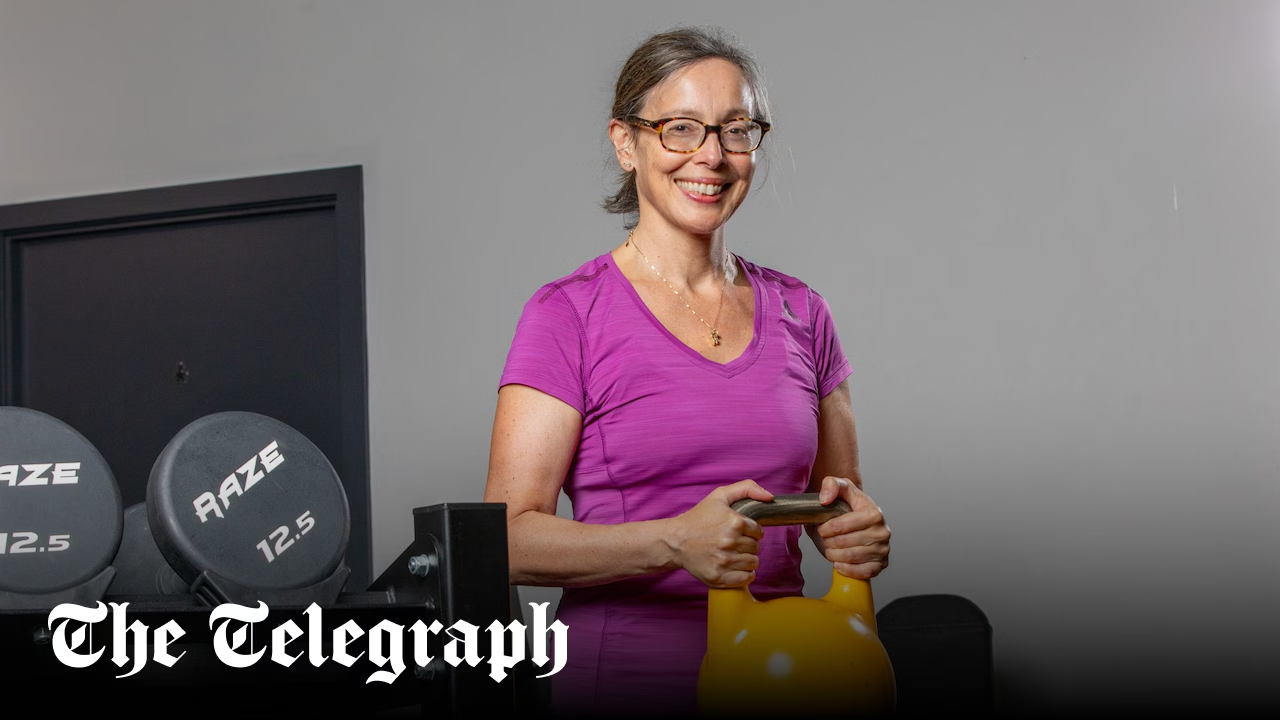
I’m bounding across the gym, springing as far as I can with every great leap. Then I’m dashing up and down, sprinting as fast as I can. Why am I flinging myself around the room at 57, as if my life depends on it? Because, in a way, it does. I want to reduce my risk of a fall in my 80s.
Most of us know that we should strength train to ward off age-related muscle loss. Yet there is another physical ability that drains away with the years, and it’s even more critical than muscle strength in preventing falls and fractures in later life – power. Power requires strength but relates to how fast you can move.
It’s crucial because the faster you can right yourself if you trip over the cat, the less likely you are to fall flat and crack a hip. Jon Roberts, technical director at Evolution Longevity clubs, says: “Power’s all about speed of reaction.” He adds: “With falls, as you lose your balance – how quickly can you react to that loss of balance? That’s what prevents falls.”
Power is the reason why, in midlife, my fitness regime includes not just slow, controlled muscle-building exercises, like deadlifts, but also speedy, springy movements that require sudden bursts of force.
“The difference between a strength exercise versus a power exercise is that for power, you’re using less weight, but using speed as your added resistance,” says Roberts.
Jumping in midlife could prevent a broken hip
I learnt the critical importance of power two years ago, at 55, when a private bone scan at Evolution revealed I had osteoporosis. Two years on, my power moves – part of three-times-weekly targeted strength training sessions with an Evolution PT – have significantly increased my bone density. “Power creates torsion on the bones,” says Jon Roberts. “Powerful movement puts a force on the bones which can help strengthen them.”
But along with stronger bones, I can now sprint for the bus with a solid chance of staying upright if I trip. Sarcopenia makes headlines, yet evidence shows that motor power capacity reduces faster with age than muscle strength, and that this loss of power is more strongly associated with reduced function and age-related decline.