
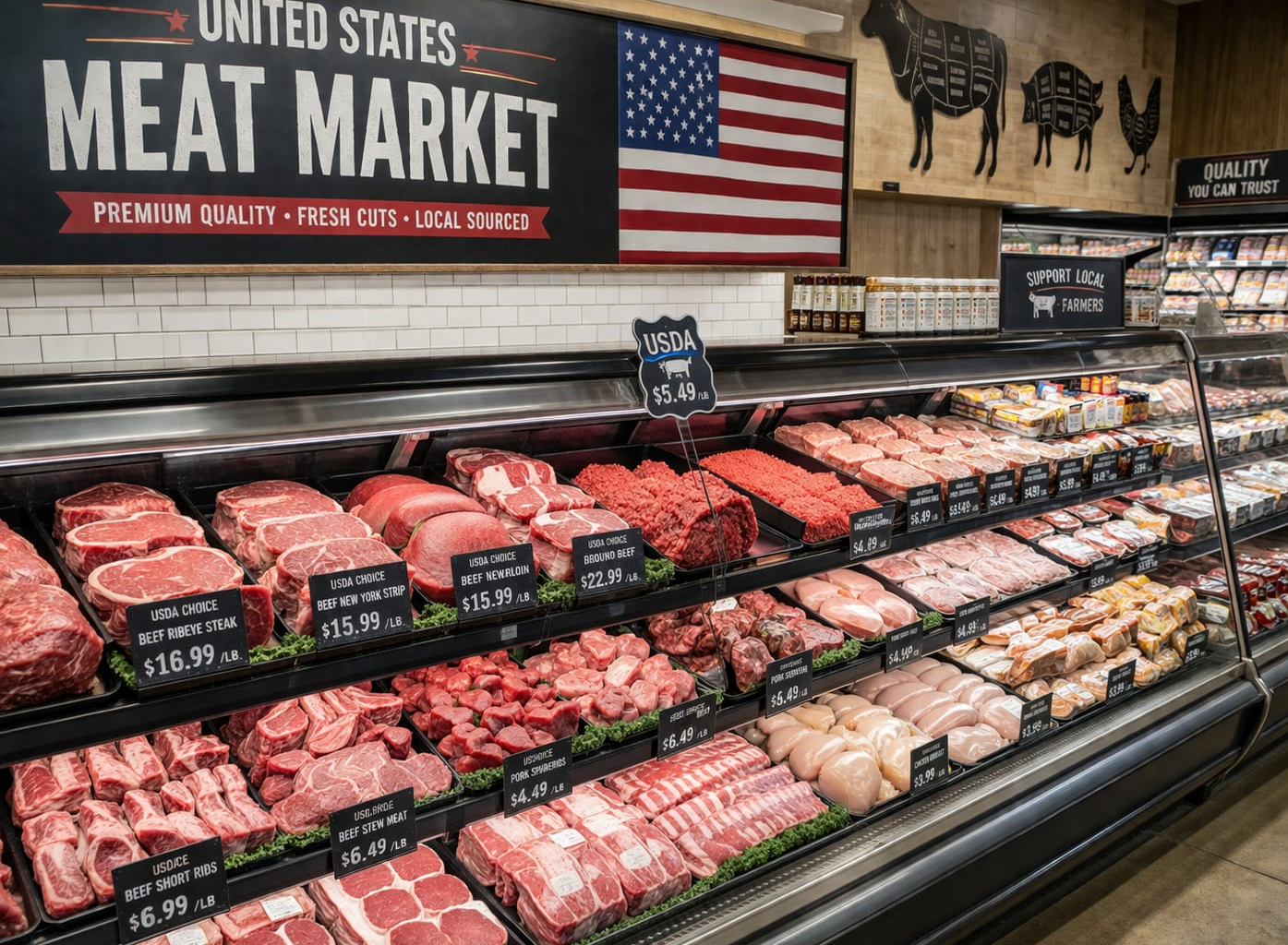
The United States Meat Market continues to be one of the most important and most productive segments of the food industry and is anticipated to be on a steady growth path due to protein demand‚ changing retail formats‚ and innovation in producing value-added products․
Meat Consumption: A Core Part of the American Diet
Meat has historically been a source of food and income for Americans‚ consumed in households and foodservice operations‚ from burgers and grilled steak to chicken-based dishes and processed meats․ American meat consumption is diverse and resilient to economic volatility․
Despite changes in dietary patterns‚ protein consumption has remained on the rise due to the role of protein in sustaining muscle‚ providing energy‚ and inducing satiety․
Key Growth Drivers
1․ Strong Protein Demand
With American meat consumption high‚ and rising health and fitness consciousness in the United States‚ there is a high demand for high protein diets in America․
2․ Premiumization of Meat Products
With increasing demand for organic‚ grass-fed‚ antibiotic-free‚ and ethically and sustainably produced meats‚ the production and consumption of meat can be more sensitive to environmental and social issues․
3․ Retail infrastructure expansion
Supermarkets‚ hypermarkets and warehouse clubs still account for a major portion of meat sales‚ but other channels such as butcher shops and online delivery are growing․
4․ Growth of Foodservice Industry
Restaurants‚ fast food and food delivery chains are important for consumption‚ especially of beef‚ chicken and other processed meat products․
United States Meat Market Segmentation Overview
The U․S․ meat industry is generally divided into:
Type: Raw meat and processed meat Products: Beef‚ pork‚ chicken‚ mutton‚ and others Distribution: supermarkets‚ hypermarkets‚ online and foodservice
Raw meat dominates the meat market‚ with pork and chicken being the most widely consumed due to their low cost and versatility․
Current Trends on the Market
The Era of Convenience Foods
Pre-marinated‚ ready-to-cook and packaged meat products are becoming more popular with busy urban consumers․
Online meat subscription services and DTC supply chains are expanding rapidly‚ helped by consolidations in logistics and improvements in cold-chain technologies․
Environmental sustainability and ethical farming
Consumers are increasingly concerned with the source of their food‚ animal welfare‚ and environmentally sustainable production․
Growth of the Processed Meat Industry
Healthier sausages‚ deli meats‚ and ready meals are becoming available with clean-label ingredients in the coming years․
Regional Insights
The Southern United States‚ with its barbecue culture and growing population‚ consumes more meat than other regions․ The Midwest remains a major meat-producing region․ Cities in the Northeast and West consume huge amounts of premium and organic meat․
Competitive Landscape
The production and distribution of products is highly concentrated․ Large meat processors‚ large branded food companies and large scale integrated food companies dominate beef‚ pork and poultry production and processing in individual countries․
Future Outlook
Innovation‚ sustainability and convenience will be key in the future growth of the United States Meat Market․ Consumption is expected to remain strong‚ but theretail market will trend towards premium quality‚ traceability‚ and the development of digital retail channels․
By 2034‚ the market is expected to become larger‚ more transparent‚ healthier‚ and more technologically integrated compared to today’s market․
Final Thoughts
The United States meat industry continues to be a major food source‚ but also the cultural and economic basis for much of the country‚ and with steadily sustained consumption‚ changing tastes and preferences‚ and continuing innovation‚ perhaps the most stable component of the food economy․