
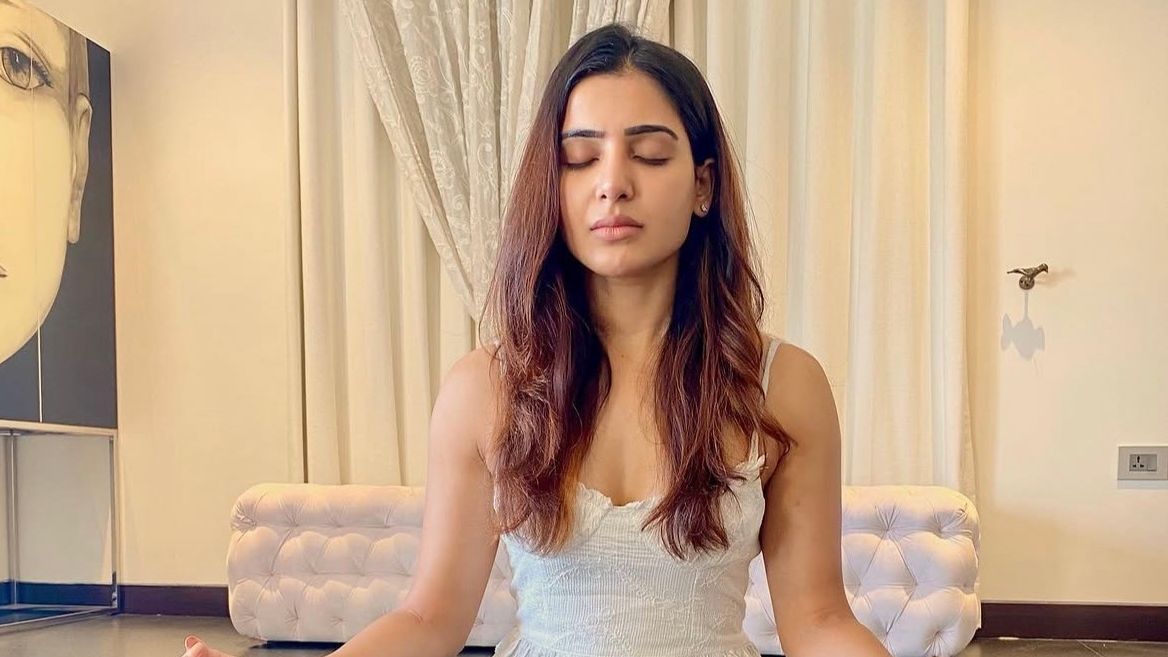
Your overflowing email inbox, testing commute and the mental checklist running in the background while you’re answering emails, replying to texts or deciding what to make for dinner; pile these small pressures together, day after day, and the body can begin to run on edge without you realising it.
“Stress isn’t only triggered by major life crises,” says Kamakshi Sabharwal, clinical psychologist at Maarga Mind Care. “Daily hassles such as tight work deadlines, constant digital connectivity, household responsibilities, financial pressures and even minor conflicts accumulate and cause continuous stress.” Over time, this can affect everything from concentration and sleep to the way we breathe, often making the breath quicker and shallower.
Unlike many of the body’s automatic processes, breathing is something we can consciously influence, making it a useful tool for managing everyday stress. Slow, intentional breathing can support the body’s relaxation response. Sabharwal points out it works better as a daily practice, not just something you turn to when things get overwhelming: “Breathing isn’t a magic wand, it’s a skill. Just like any skill, it requires practice.”
How does stress affect your breathing?
When the brain perceives stress, it activates the body’s fight-or-flight response, releasing hormones such as cortisol and adrenaline. Heart rate can rise, muscles can tense and breathing may become quicker and shallower. “Instead of breathing slowly from the diaphragm, under chronic stress people can have shallow, rapid chest breathing,” explains Sabharwal.
Can breathing exercises help reduce stress?
Slow, controlled breathing can help influence the body’s stress response. Research has linked slow breathing with changes in heart rate, blood pressure and heart-rate variability, suggesting that it can support the body’s relaxation response. Yoga therapist Gaurangi Shrivastava says, “Many people notice a sense of calm within a few minutes of conscious breathing, but consistency matters more than using breathwork only when stress peaks.”
What are the best breathing exercises for stress?
A quick breathing exercise for everyday stress
Chanchal Jaising, yoga instructor at TEGO Fit, recommends simple belly breathing. Place one palm on your belly and the other over your heart. Inhale gently through the nose, allowing the belly to expand into your palm, then exhale and let it soften. “It can become that little nervous system reset we all need in the middle of an ordinary day,” she says.
Keep the breath smooth rather than exaggerated; if you’re lifting your shoulders or forcing the inhale, ease back.
A breathing technique for moments of overwhelm
Jaising recommends slowing the breath and allowing the exhale to become longer. Try inhaling gently for four counts and exhaling for six for around five minutes. If the counts feel uncomfortable, shorten them. “The ratio isn’t the goal — a smooth, relaxed breath is,” she says.
A breathing exercise for work-related stress
For work-related stress, Shrivastava recommends ujjayi pranayama, a slow breathing technique traditionally practised in yoga. Sit comfortably, take a slow, deep breath in through the nose, allowing the abdomen to expand, then exhale slowly while gently drawing it back in. The breath is kept slow and controlled, with a soft, steady sound created at the back of the throat. The practice can be done during a short break at work to help bring the mind back to the present.
A breathing technique for winding down before bed
Shrivastava recommends chandra bhedan pranayama or left-nostril breathing, for difficulty falling asleep. Close the right nostril, inhale through the left and exhale through the same nostril. Practise for five to 10 minutes before bed. The technique comes from yogic tradition, where left-nostril breathing is associated with calming and cooling qualities.
A five-minute breathing exercise to practise every day
If you have only five minutes, Shrivastava recommends anulom vilom or alternate-nostril breathing. Close the right nostril and inhale through the left; close the left, release the right and exhale. Then inhale through the right, close it and exhale through the left. Continue gently for five minutes.
How often should you practise breathing exercises?
Both yoga experts recommend beginning with five to 10 minutes a day, ideally at a consistent time. Jaising suggests practising when you’re relatively calm rather than waiting until you’re overwhelmed, so the technique feels familiar when you need it.
What are the common mistakes when practising breathing exercises?
“Trying too hard” is one of the most common mistakes Jaising sees. Beginners often assume a deeper breath is better and take exaggerated, forceful inhales. Instead, breathing should feel quiet, smooth and unforced.
Shrivastava also urges caution before attempting advanced techniques like breath retention. Holding the breath for too long can cause dizziness or discomfort, so beginners should learn such practices with appropriate guidance.
When are breathing exercises not enough for stress?
Breathwork can help manage everyday stress, but it isn’t a substitute for professional mental-health care. Sabharwal says people experiencing severe anxiety, panic disorder, depression, trauma-related symptoms or other significant psychological difficulties may need support such as psychotherapy or medication.
Also read:
7 yoga poses that can help lower stress and regulate cortisol levels
The surprisingly gentle yoga pose that helps lower stress hormones