
There’s more: NAD can also have an effect on “managing stress, immune function and regulating your body’s internal clock, or circadian rhythms,” says Mandavia. “It also helps control how genes are expressed, which can impact overall health and longevity.”
Can you take a NAD supplement?
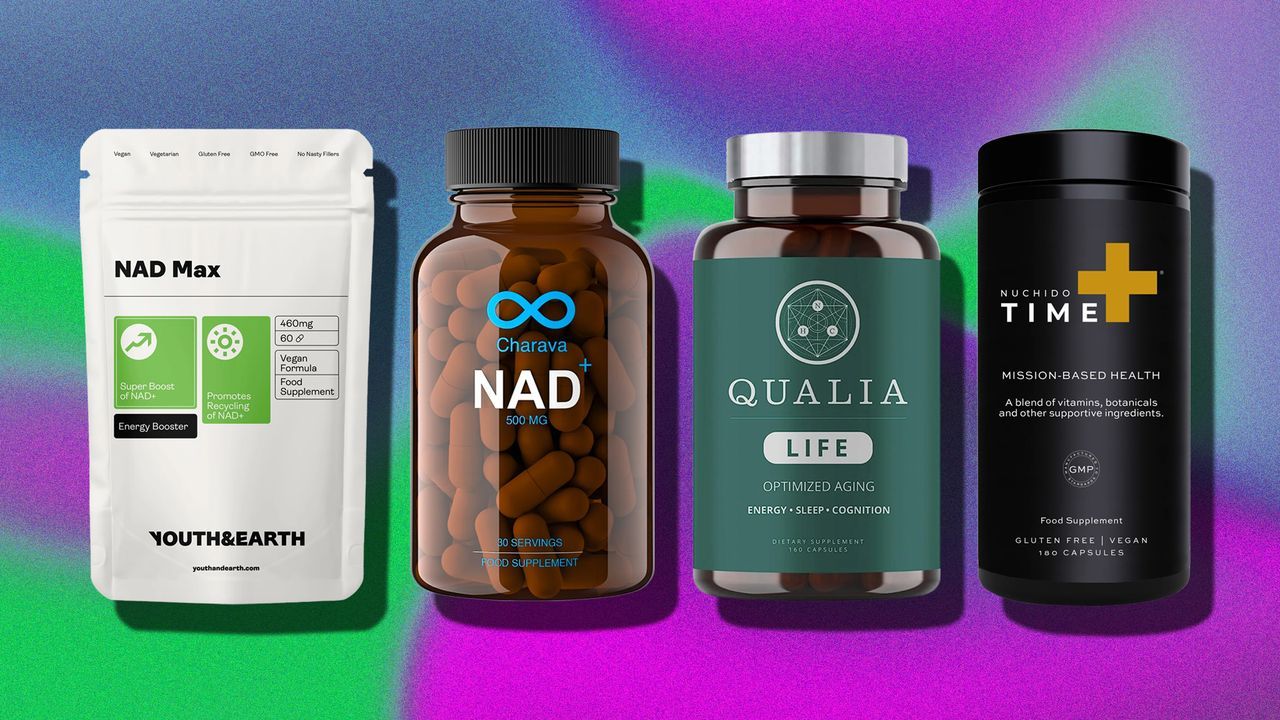
Here’s where it gets a tiny bit more complicated. NAD supplements can be delivered in both an oral form (usually as a tablet, but also a powder) as well as an intravenous or intramuscular injection. The benefits of correct supplement taking should include higher energy levels, boosted metabolism, better stress management and improved sleep, among other things.
But health professionals have differing opinions on what is the most effective, if effective at all, way to take NAD.
Dr. Harpal Bains, a longevity doctor and the medical director at Harpal Clinic (which offers NAD+ IV drips), says IV is more effective than oral supplements, as “NAD+ supplements in oral form are unstable and have poor bioavailability, as it has to bypass your gut acid and enzymes to reach your cells. When taken by injection or intravenously, bioavailability is much better and most people can feel its effects straight away, especially with intravenous NAD+ infusions.”
Mandavia’s opinion is that there is not enough evidence to support the effectiveness of NAD intravenous injections, saying: “There is currently a paucity of evidence to support NAD injections or intravenous infusions. This may be because NAD is an unstable molecule that does not survive long in a solution. Furthermore, NAD+ itself does not easily cross the cell membrane due to its large and charged structure. However, cells can take up precursors of NAD+, such as nicotinamide or nicotinic acid, which can then be converted into NAD+ inside the cell.” Those precursors are usually what are found within supplements.
“There is very little evidence on the effectiveness of injections,” says Mandavia. “Oral supplementation of precursors has been shown to increase blood levels of NAD+ and this is thought to confirm the increased production of NAD+ in the cells. However, we do not yet know what impact this has on cellular function.”