
 4 min read
Interior designer Miles Redd can rattle off his client’s favorite fabrics the way a child recites ice cream flavors: “Beautiful embroideries; pale, soft, and simple textures; anything watercolor-like,” he begins. “She loves an old-school American quilt motif, a good batik, and nothing shiny, ever—mostly linens. And there’s one certain blue—we call it the ‘family blue’ [a serene, watery shade]—that she picks again and again. This is a woman with a real specificity about what she likes and what she doesn’t.”
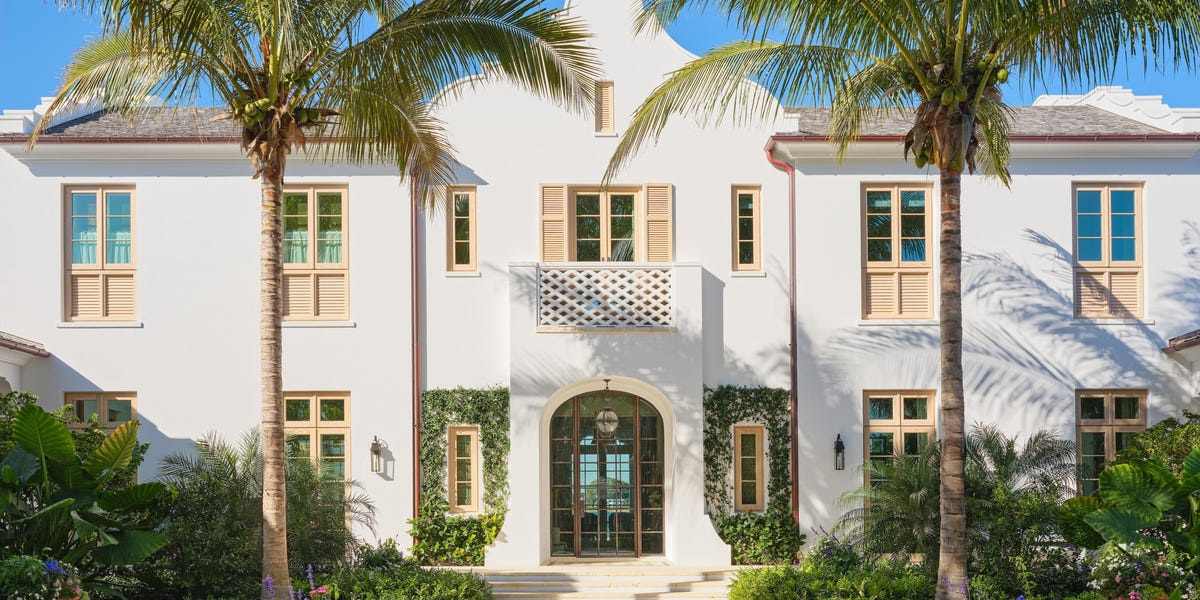
For her family’s new Palm Beach–area residence, the homeowner knew she wanted to try something different with the architecture. Always keen to take note of house styles on her frequent walks and runs, she, along with her husband, landed on Cape Dutch, an elegant, if lesser-seen, stucco structure notable for its Flemish gabled fronts. The style is native to South Africa and prevalent in the Caribbean, and increasingly in northern climes.
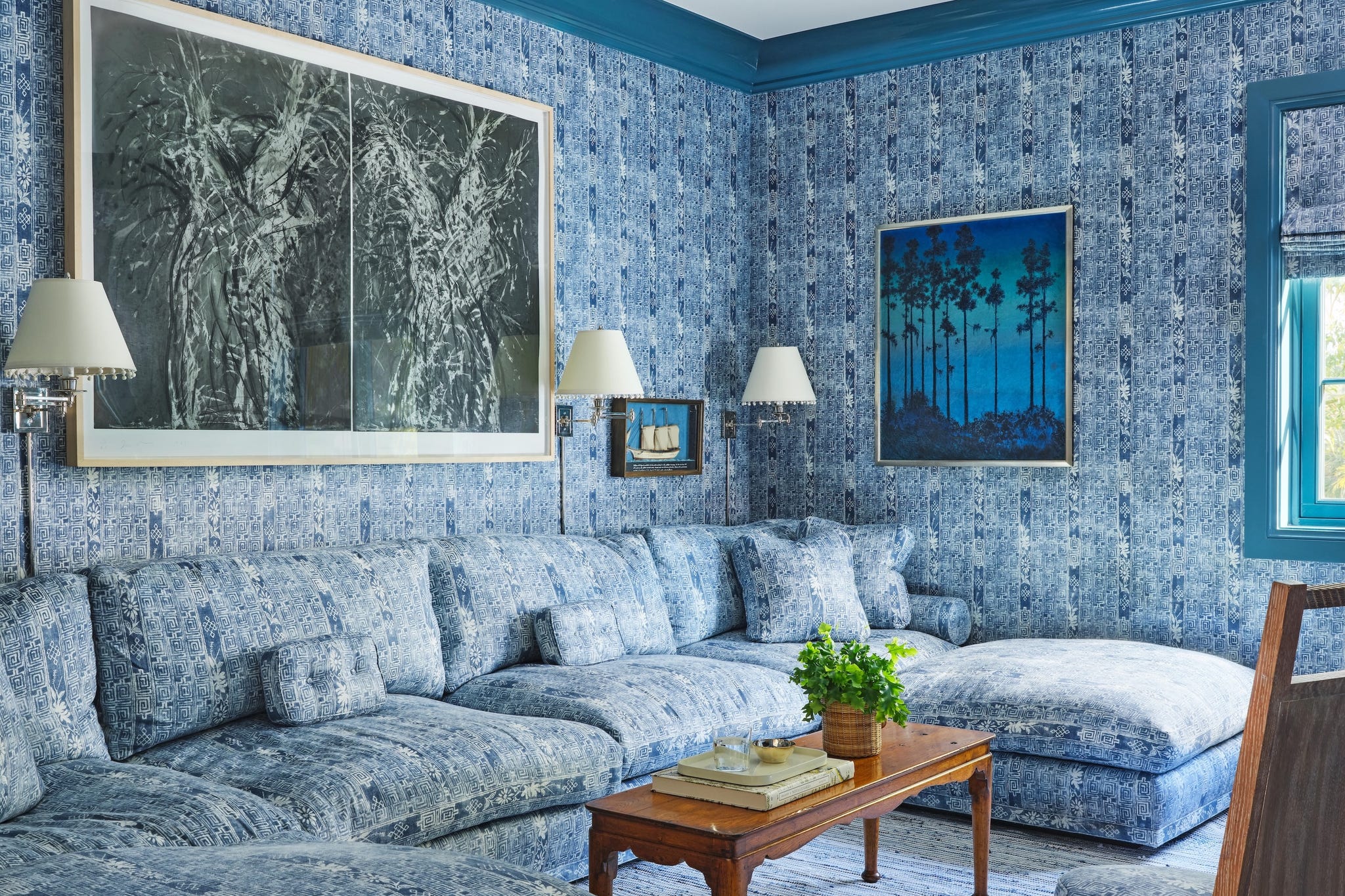 Carmel Brantley for VERANDA; © 2026 Wayne Thiebaud Foundation / Artists Rights Society (ARS), New York; ARS artwork by Jim Dine.
She called on local architect Rustem “Rusty” Kupi. He was excited to stretch beyond the Anglo-Caribbean and British Colonial vernaculars his firm is known for and create something in the Cape Dutch style. The idea was to keep the house’s lines true to tradition, Kupi explains, but finesse them to better suit South Florida’s climate.
That meant including deeper overhangs and covered walkways to create shade outside, and larger apertures to capture light and views inside. “We go to the history books to make sure the bones are correct, that the proportions are classical,” says Kupi, who worked alongside his daughter Alexandra Kupi Bocking. “Then you can play with it a little, make some architectural changes, pick interesting finishes, and enjoy the decoration—and you’ll know that you’ve built something that’ll be in style for hundreds of years.”
And play they did. There’s a looseness to the home’s decoration that exudes the confidence of people who’ve done this before. (The family has teamed up with Redd and partner David Kaihoi for previous homes.) No element telegraphs this aplomb more than the art. Prints hang near canvases, photography near botanicals. Small works crown grand mirrors; there are canvases on scenic wallpapers, prints on embroidered walls. “There’s nothing in storage,” the homeowner says. “We hung it all!”
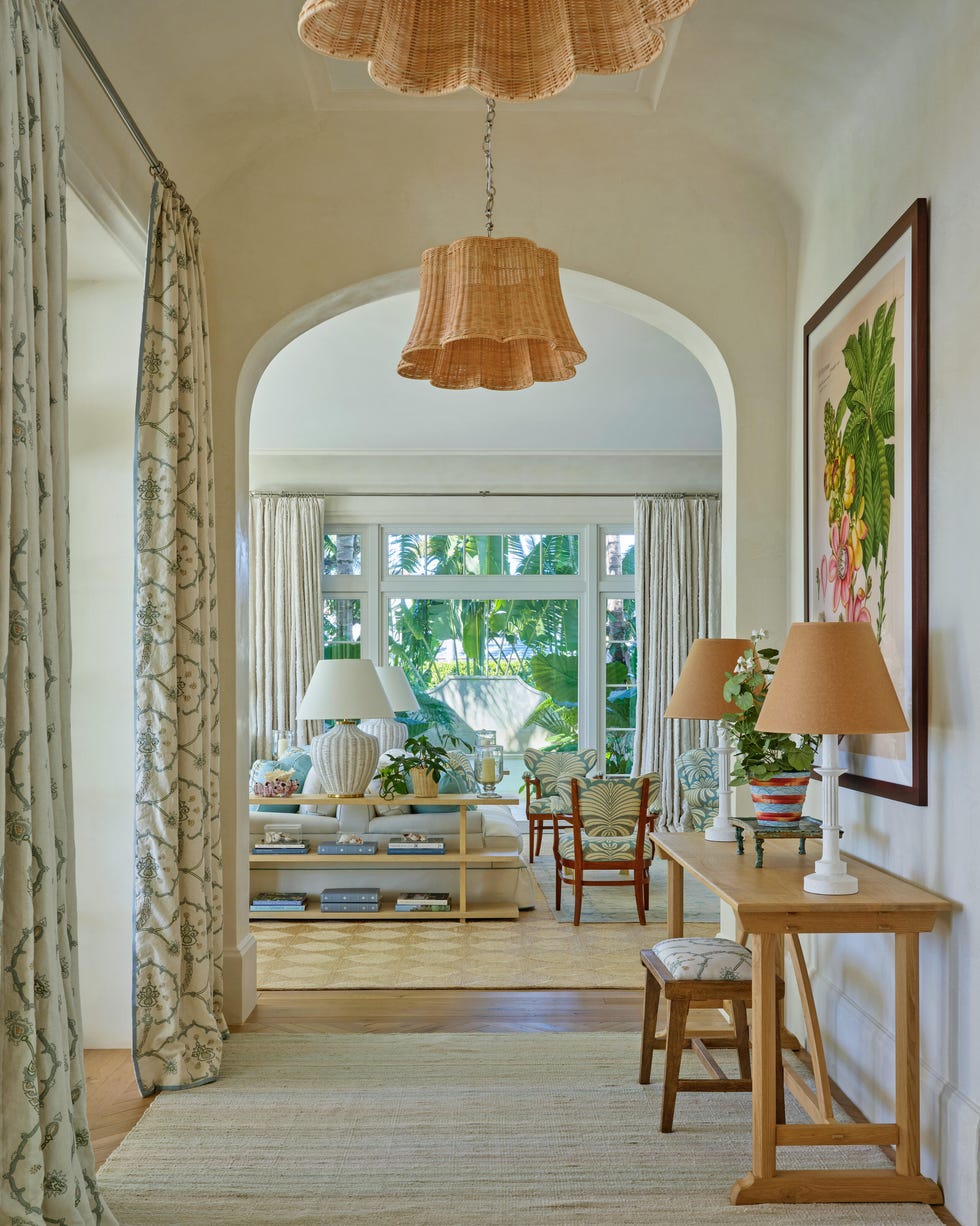 Carmel Brantley for VERANDAA hand-finished plaster hallway (Agustin Hurtado) is a luminous central thoroughfare.
The method isn’t hierarchical, with important pieces marking territory and others on the periphery. It’s responsive, Kaihoi explains. “We look at what the piece of art needs and what the room needs. Do you want to view it at eye level or close to your chest, or do you want to look up to see it?” he says. “And we didn’t take the process too seriously—it was never precious or museum-like,” he adds. The result is confident and permissive, sloughing off any rigidity a high-profile location like Palm Beach might imply.
“This client knows exactly how she wants to live and exactly what works for her and her family,” Redd says. “She used to be a much more formal person, but now she’ll tell me with conviction, ‘A room like that is so pretty, but we’d never go in there—we need giant sofas that we can all pile onto.’ ”
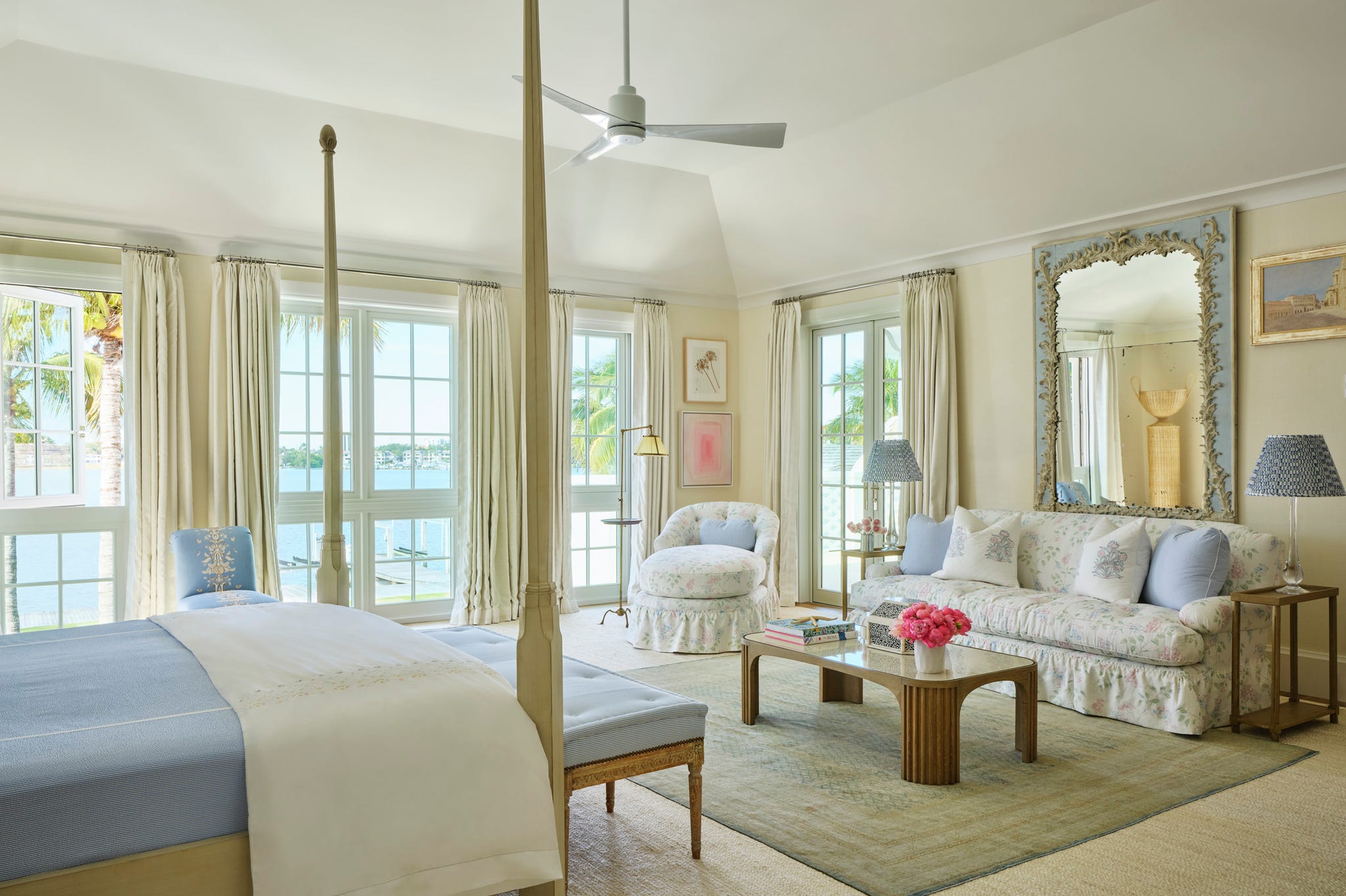 Carmel Brantley for VERANDACream silk matka wraps the waterfront primary bedroom’s walls. A 19th-century Louis XV-style painted and parcel-gilt mirror (Doyle) presides over the sitting area. Sofa fabric, Kathryn M. Ireland.
And even as the architecture adheres to good form, there are covered porches and loggias for parties; a primary suite where the couple can live small within a large space; and comforts made for the coast, including a “sand room.” “It’s like a mudroom,” says Kupi, who, with the decorators, adorned it with Moroccan-inspired mosaic tiles that feel ancient.
“We wanted people to come in with sandy feet, to lie on the sofa in wet bathing suits,” the homeowner says. “For a lot of people, there’s design you like intellectually. For example, I love modern architecture and we’ve done a modern house, but that’s not how our family wants to feel here and now. This house is for congregating together and having a good time.”
Family Room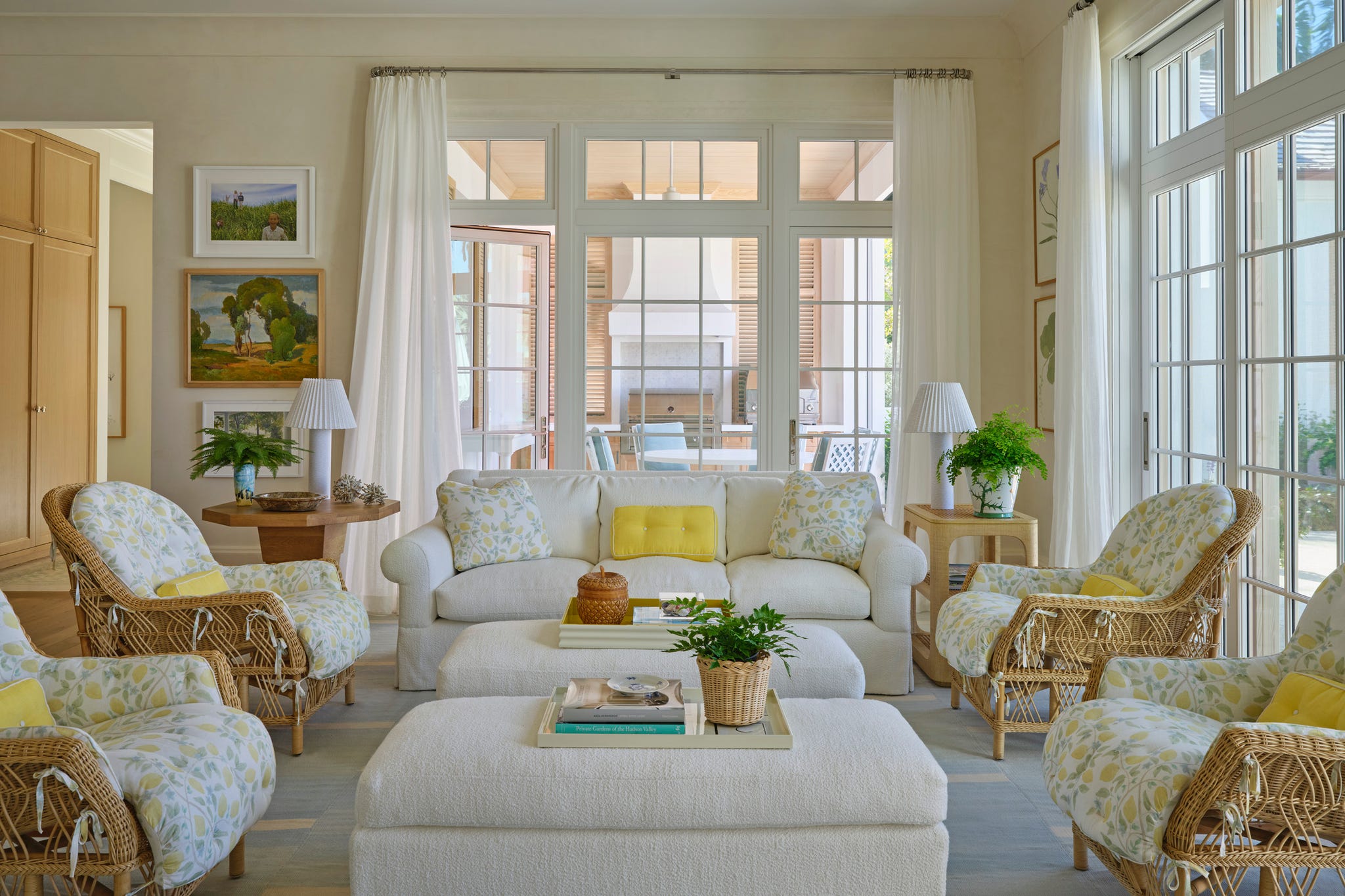
Carmel Brantley for VERANDA
The family room’s terry cloth sofas are wet-swimsuit-friendly. Fabric, Rogers & Goffigon.
Kitchen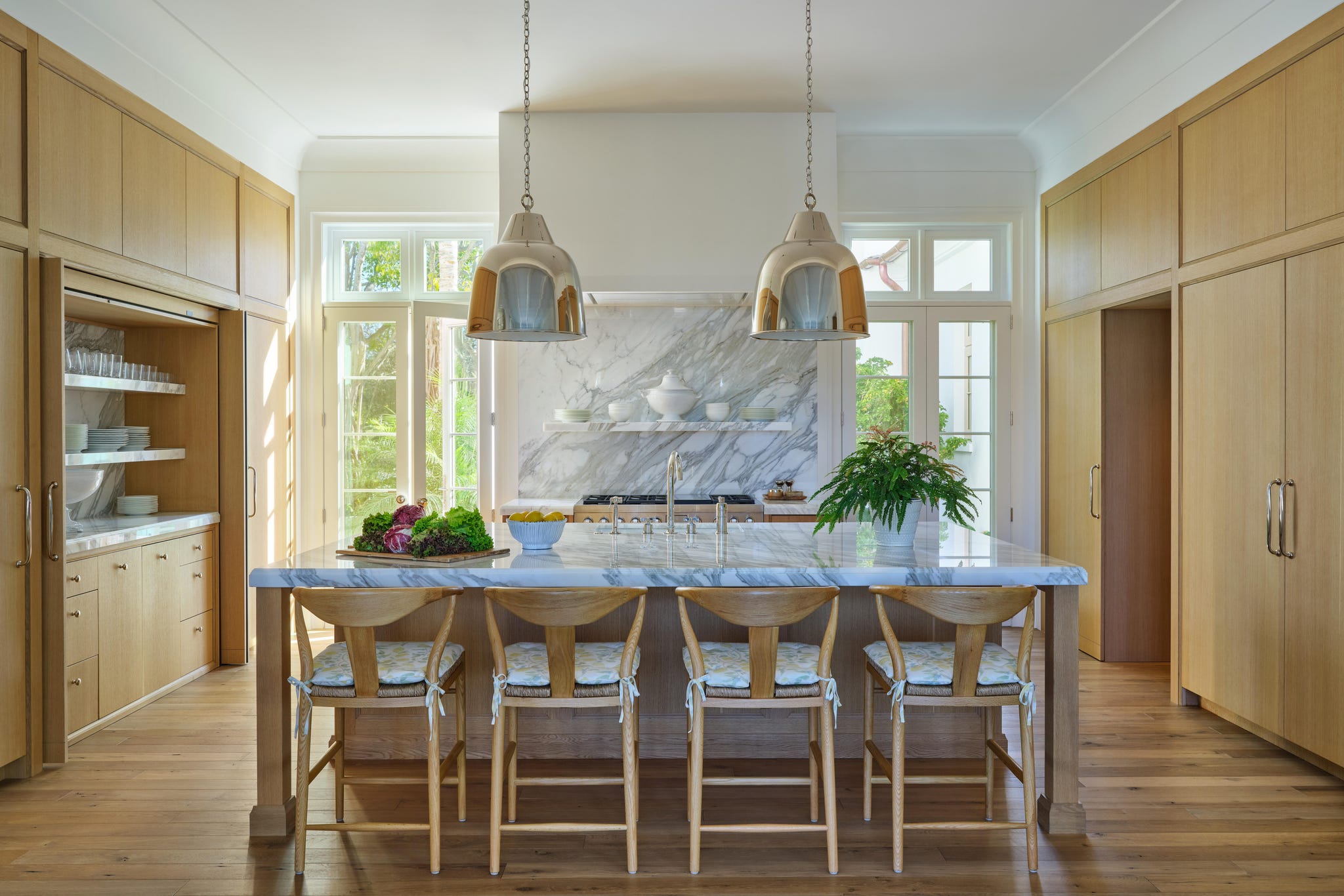
Carmel Brantley for VERANDA
White oak warms the kitchen’s nickel pendants (Ann-Morris) and Calacatta Oro Supreme countertops and backsplash.
Dining Room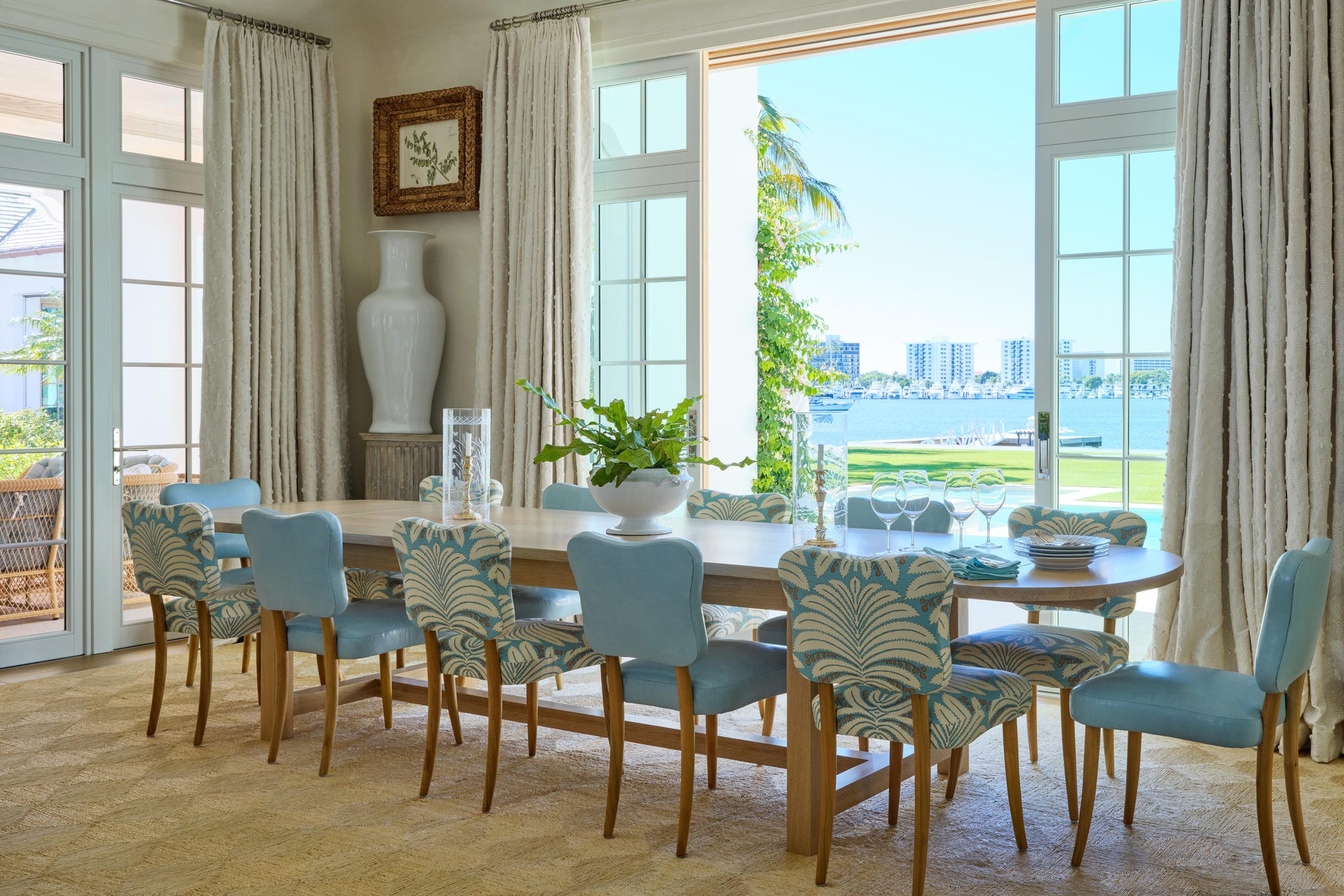
Carmel Brantley for VERANDA
The dining chairs’ leather and Quadrille palm-patterned upholstery is in the homeowner’s signature “family blue.”
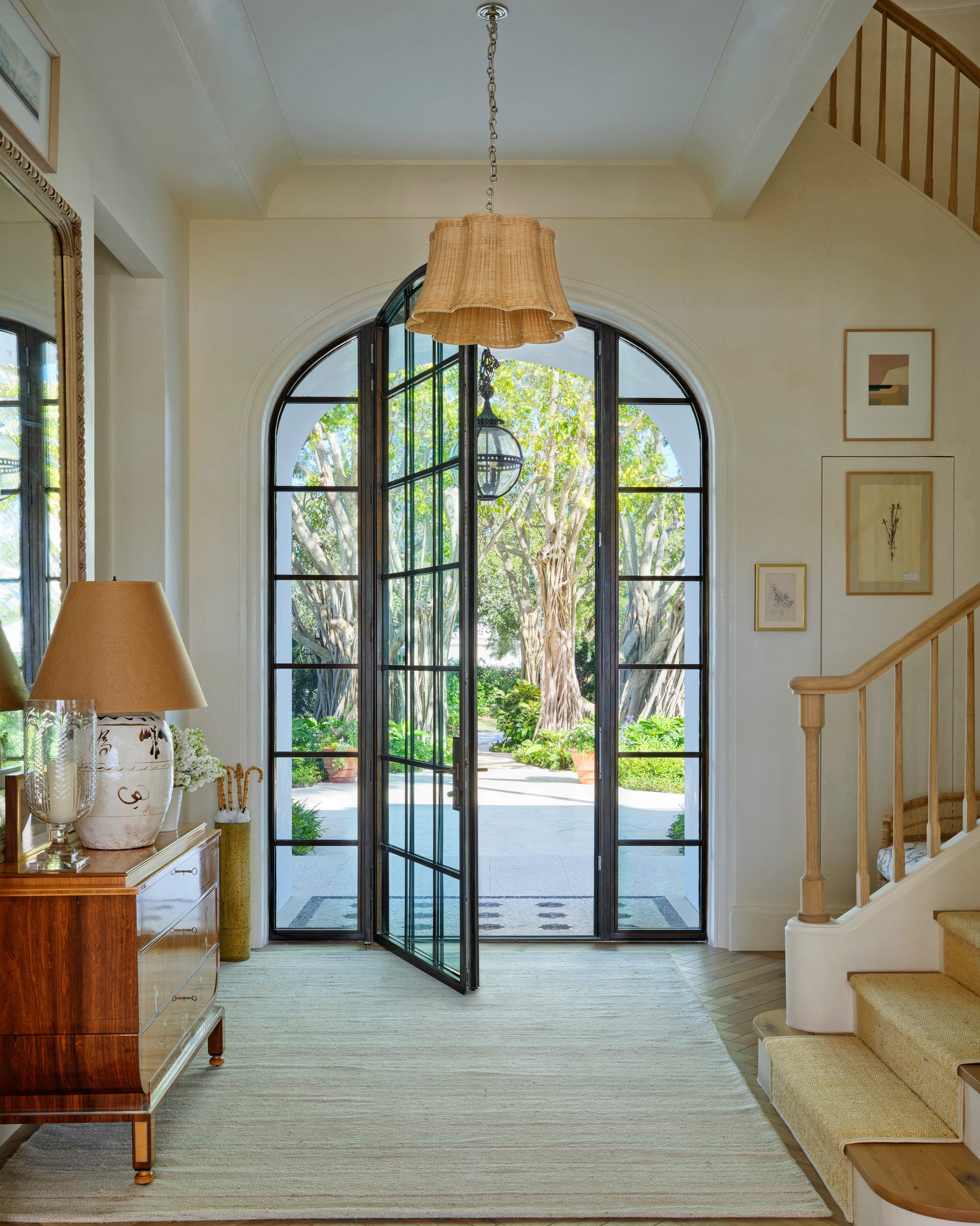
Foyer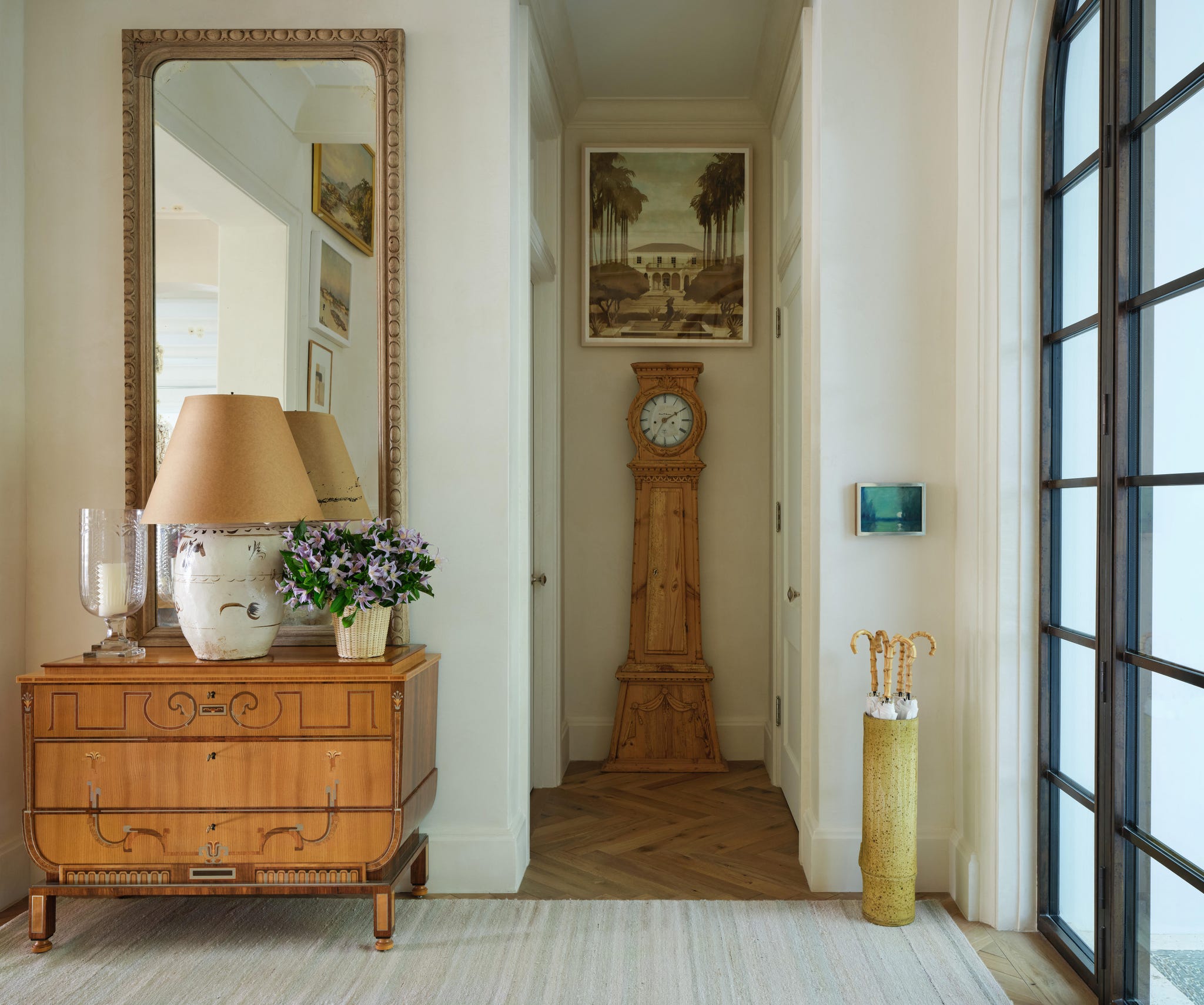
Carmel Brantley for VERANDA
A Ming dynasty Cizhou wine jar refashioned into a lamp sits atop an antique Swedish chest in the foyer (both from Doyle).
Carmel Brantley for VERANDA
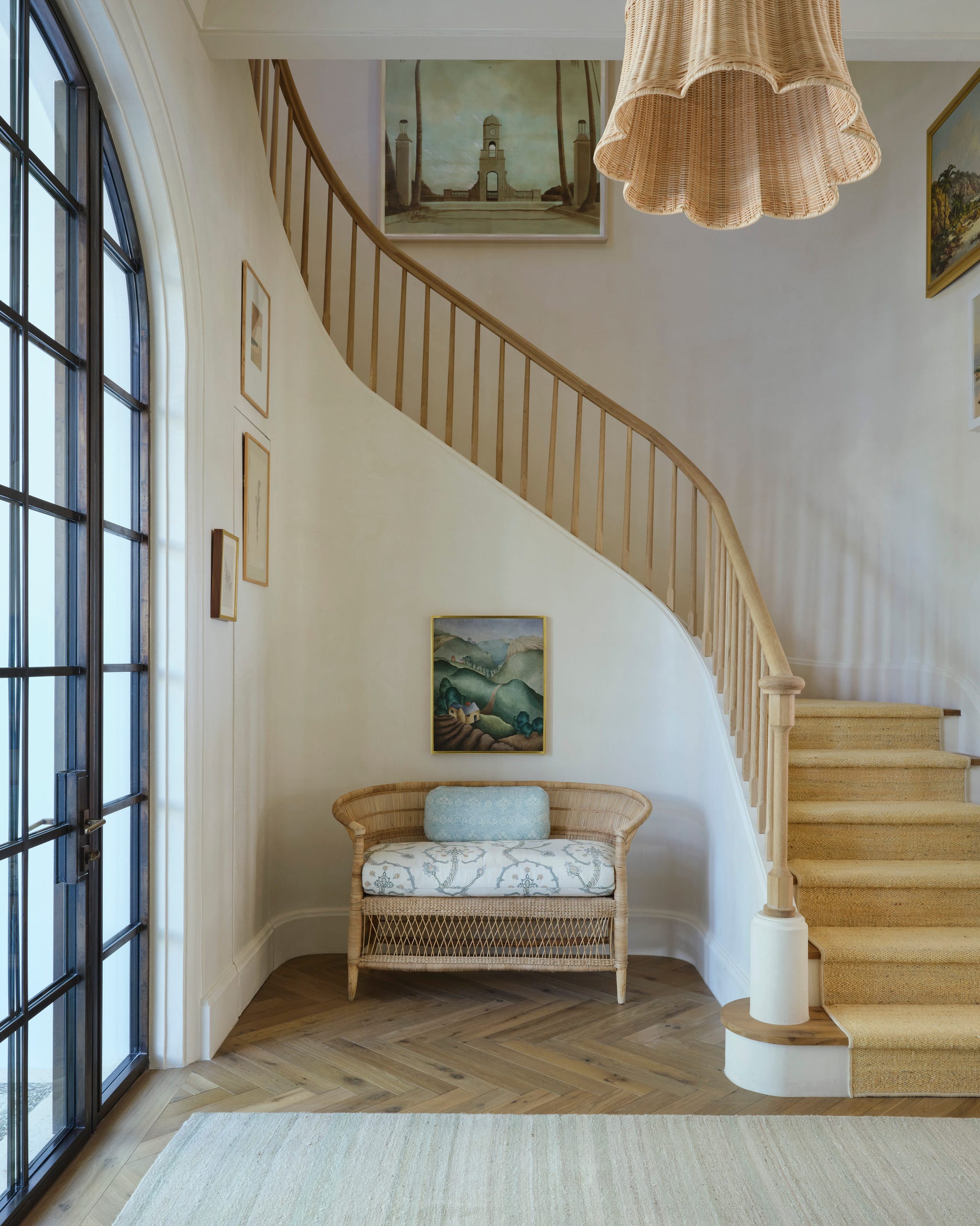
Carmel Brantley for VERANDA
At left, the scalloped rattan pendant is by Soane. At right, a woven settee (cushion fabric, Chelsea Textiles) is nestled within the curved arch of the stairway. The custom architectural painting of the Worth Avenue Clock Tower (top) is by artist Tim Kent.
Pool and Cabana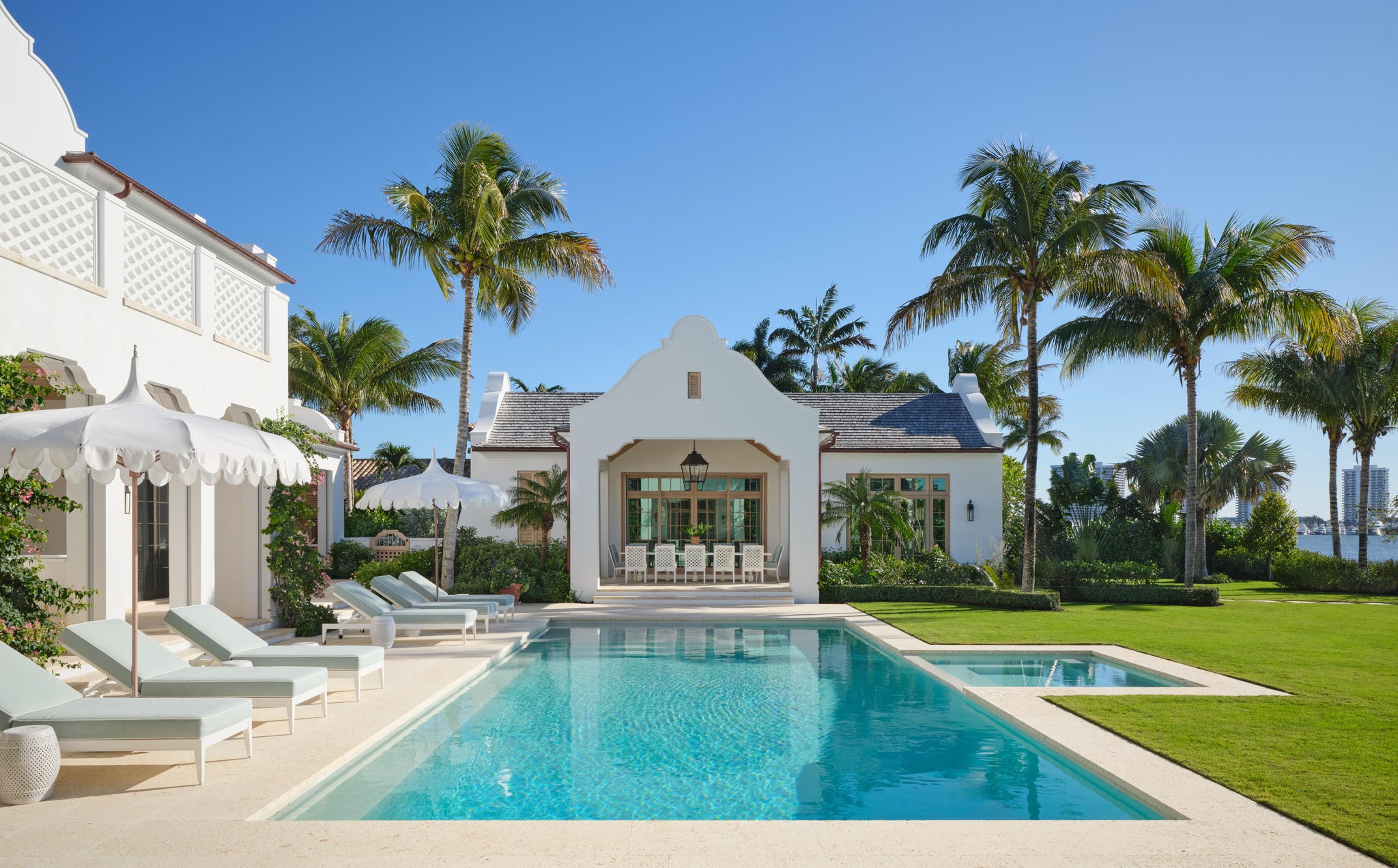
Carmel Brantley for VERANDA
McKinnon and Harris chaises await sunbathers from the pool cabana (below), a popular hangout for the couple’s children.
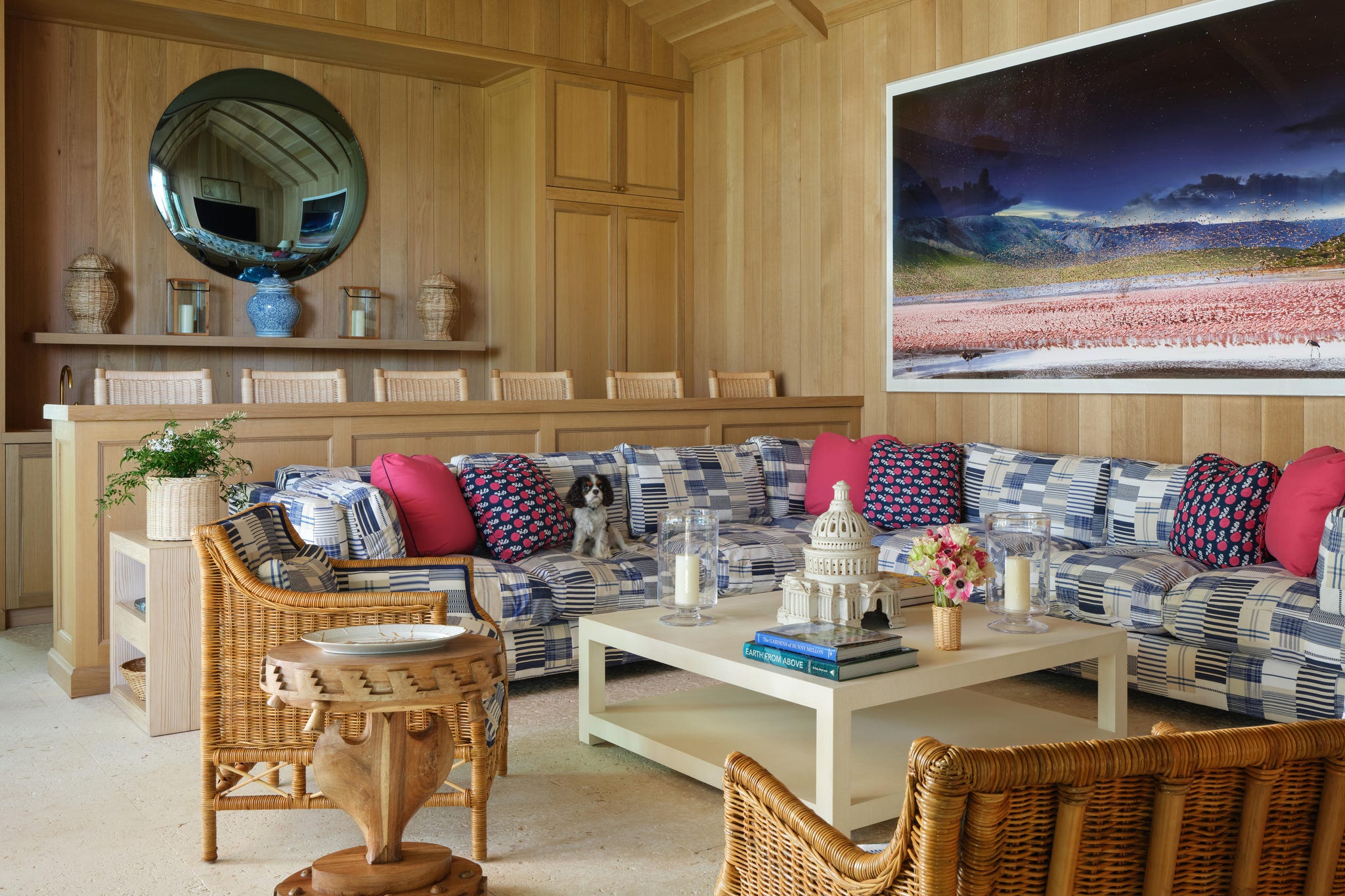
Carmel Brantley for VERANDA
A scenic photograph by Stephen Wilkes animates the white oak-clad cabana. The woven club chairs are from Casa Gusto, and the grass cloth coffee table is from Serena & Lily.
Powder Room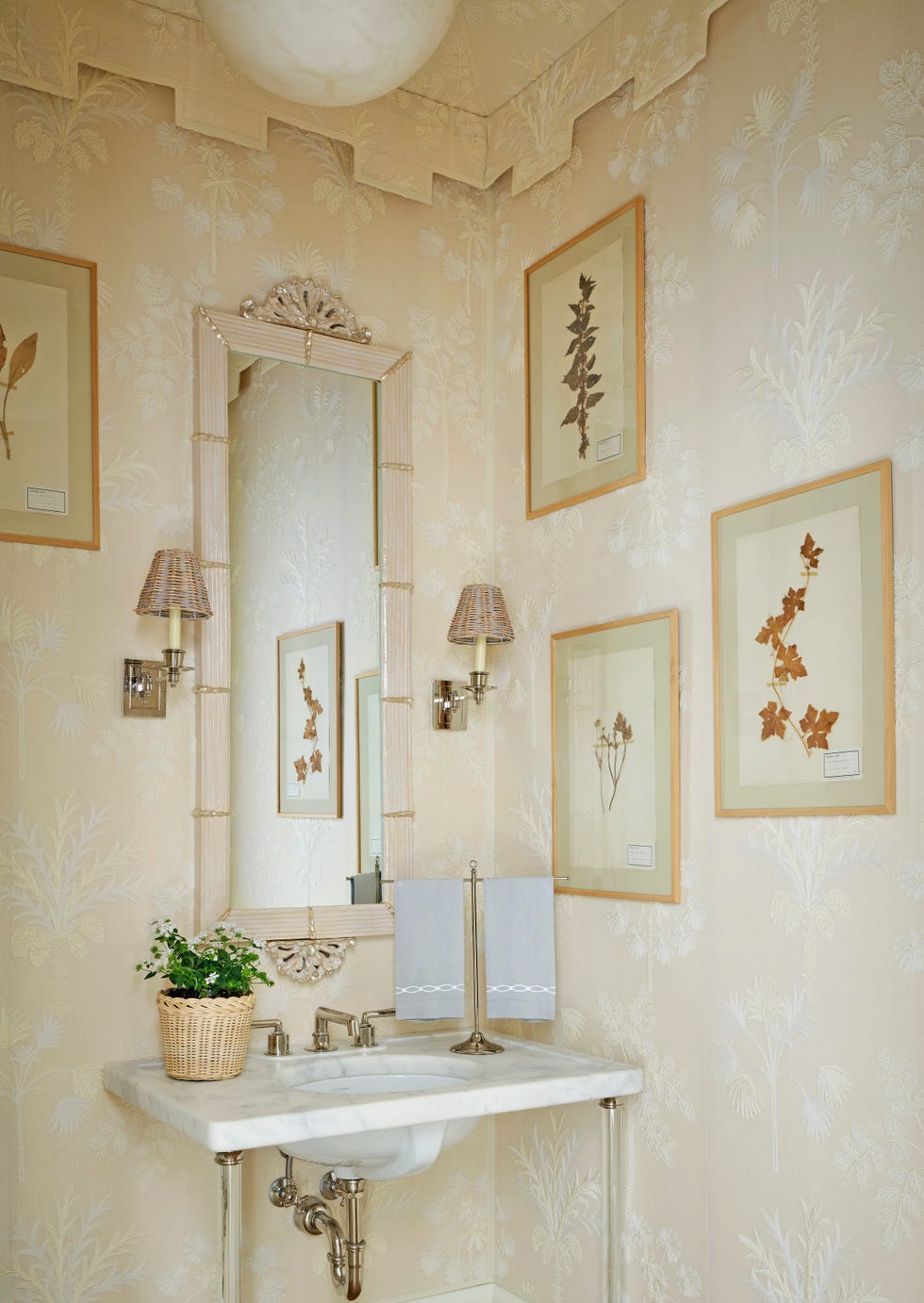
Carmel Brantley for VERANDA
Embroidered florals (wallcovering and valance, Cowtan & Tout) bloom in the powder room. Sink and fixtures, Waterworks. Sconces, Visual Comfort & Co.
Living Room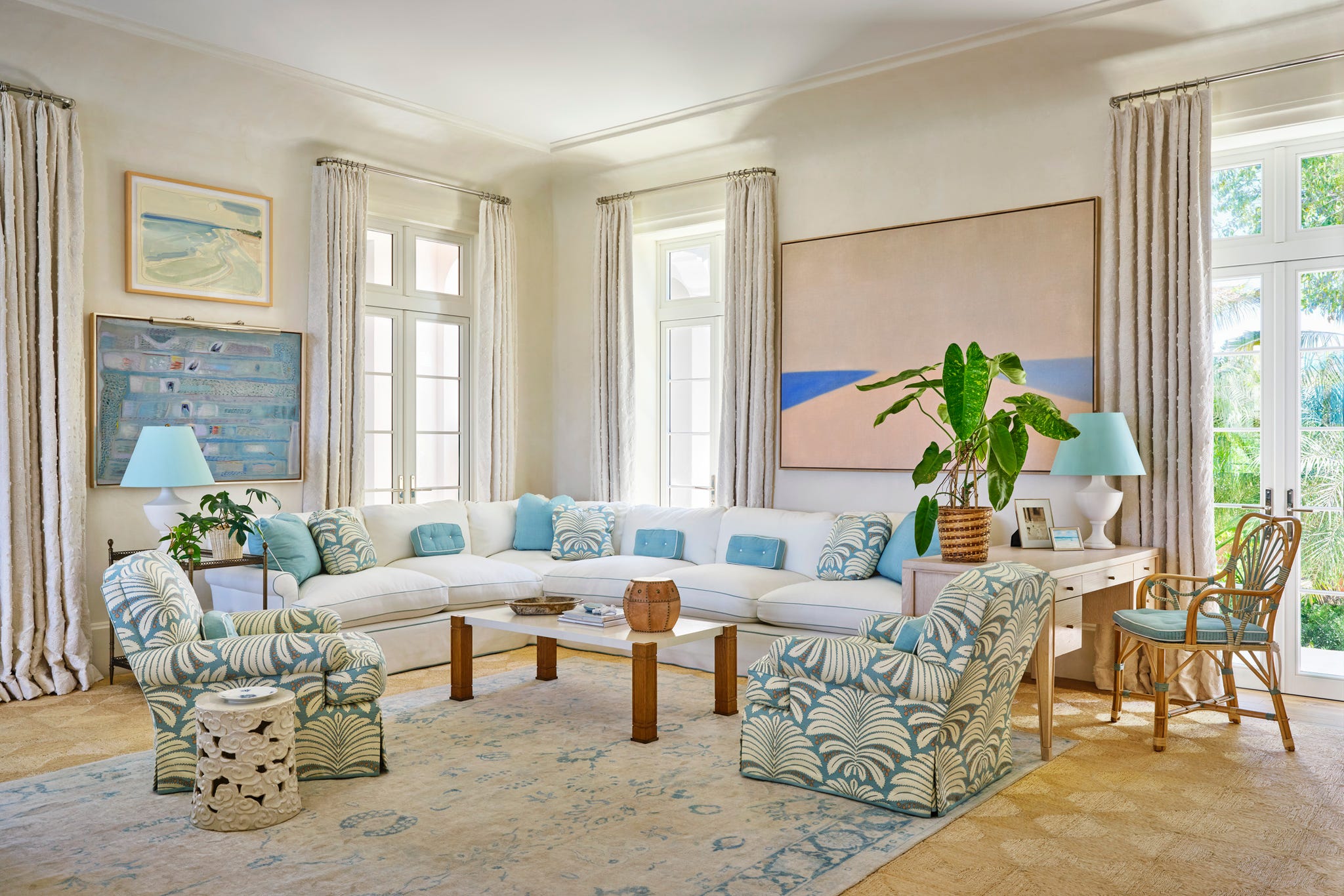
Carmel Brantley for VERANDA
Stirring abstracts by artists Tony O’Malley (bottom left) and Susan Vecsey (right) bring modern verve to a living room in Palm Beach County. Parchment and oak coffee table, Galerie Lerebours.
Carmel Brantley for VERANDA
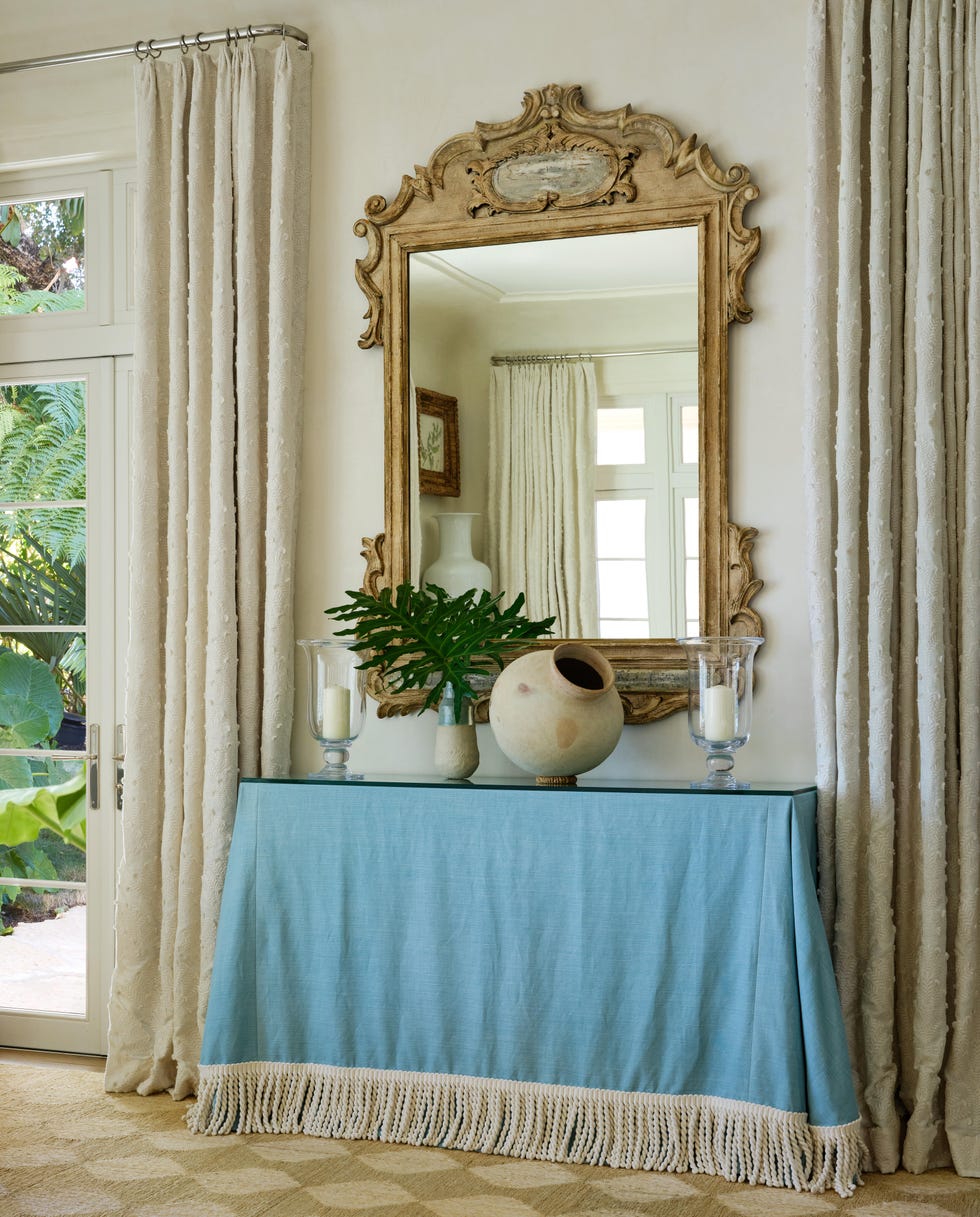
An Italian Baroque mirror (Bunny Williams Home) hangs above the living room’s skirted console.
Bedrooms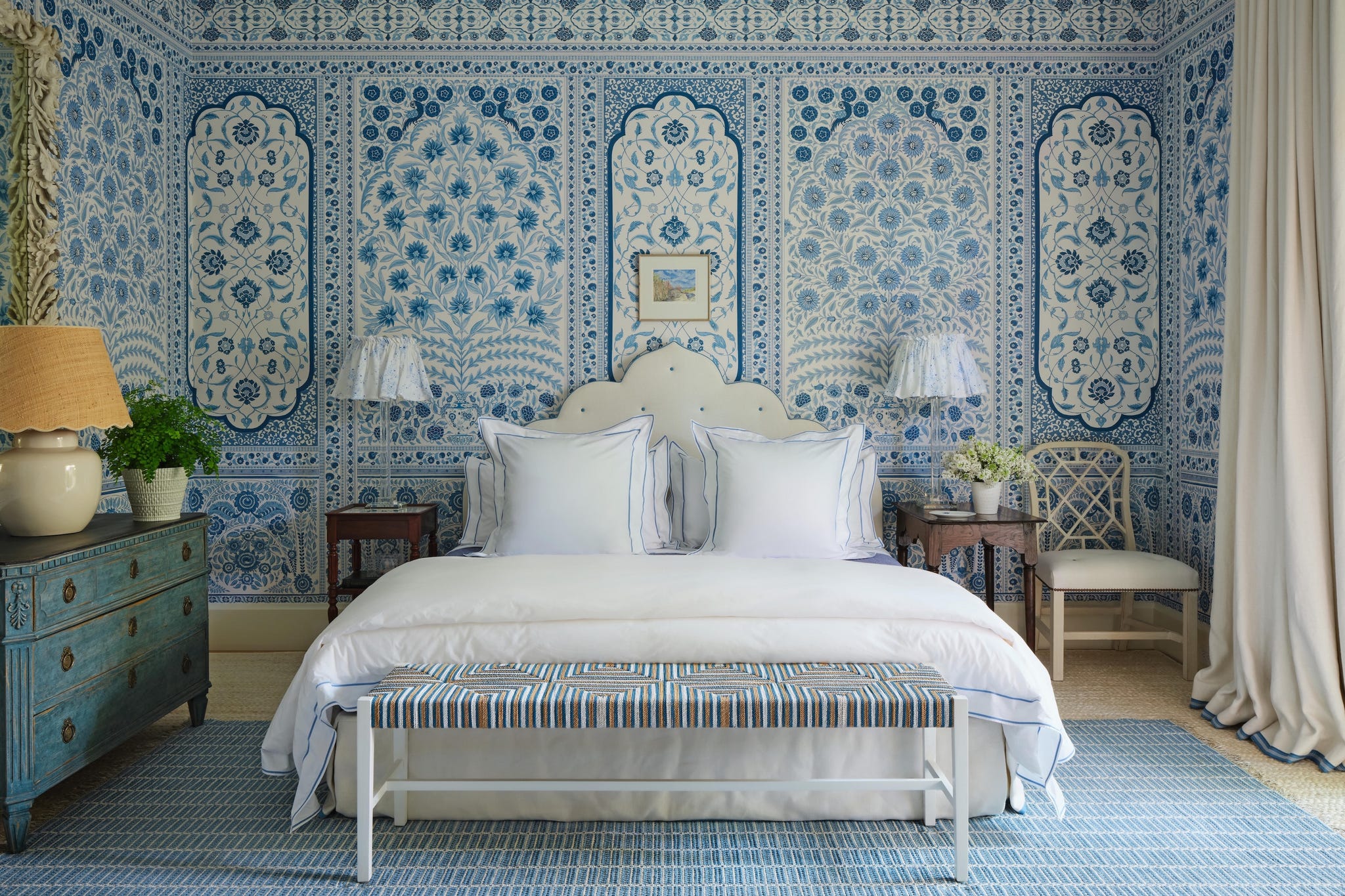
Carmel Brantley for VERANDA
In a daughter’s bedroom, a painted 19th-century Gustavian chest grounds the walls’ blue-and-white florals.
Carmel Brantley for VERANDA
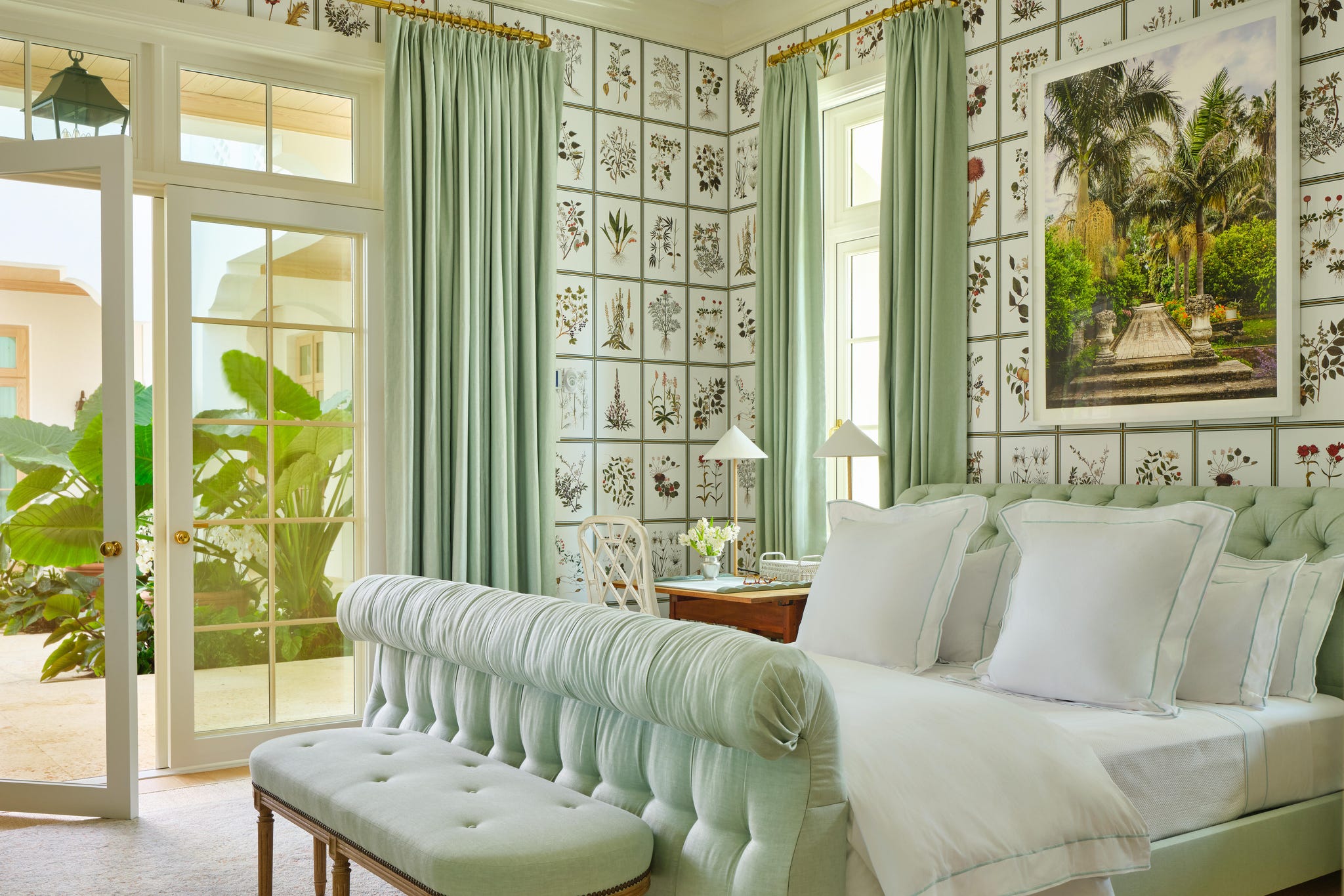
A Dale Goffigon tropical photograph (KRB) presides over another daughter’s botanical-wrapped bedroom (wallcovering, Iksel).
Carmel Brantley
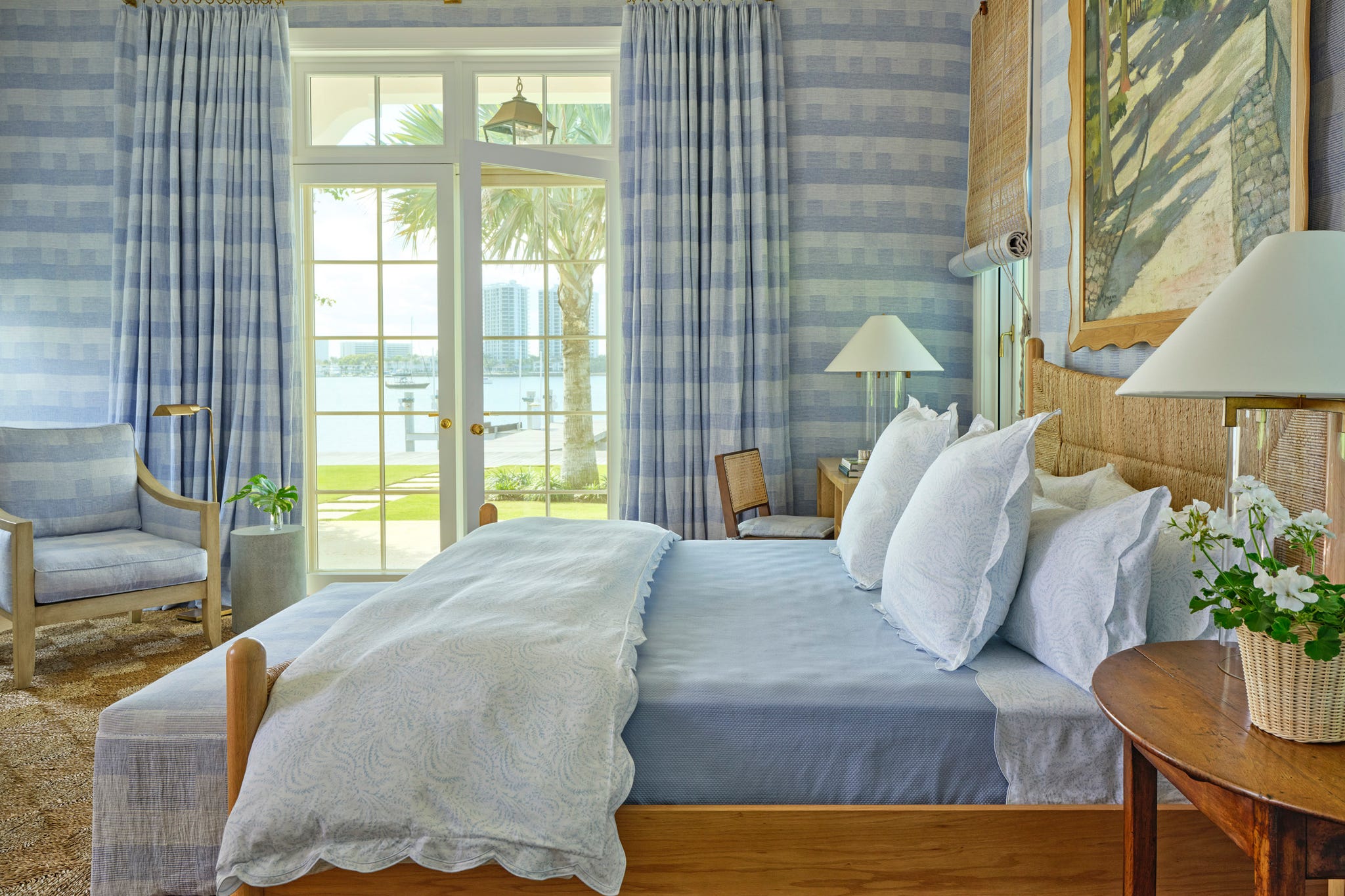
A linen patchwork wallcovering (Kathryn M. Ireland) brings shades of sky and sea into a son’s bedroom. Bed, Crate & Barrel. Duvet and shams, Serena & Lily.
Become a VERANDA Design Society Member
Featured in our May/June 2026 issue. Interior Design by Miles Redd and David Kaihoi; Architecture by Rustem Kupi; Landscape Design by Mario Nievera; Photography by Carmel Brantley; Styling by Page Mullins; Written by Sophie Donelson.