
Published March 17, 2026 03:28AM
Along with burpees, push-ups, and deadlifts, Bulgarian split squats are among the exercises that, honestly, lots of gym-goers hate. A big reason for that is the howl-inducing burn they deliver to the glutes. Do just a few reps of them, and you’ll feel it in your backside muscles, sometimes for days afterwards.
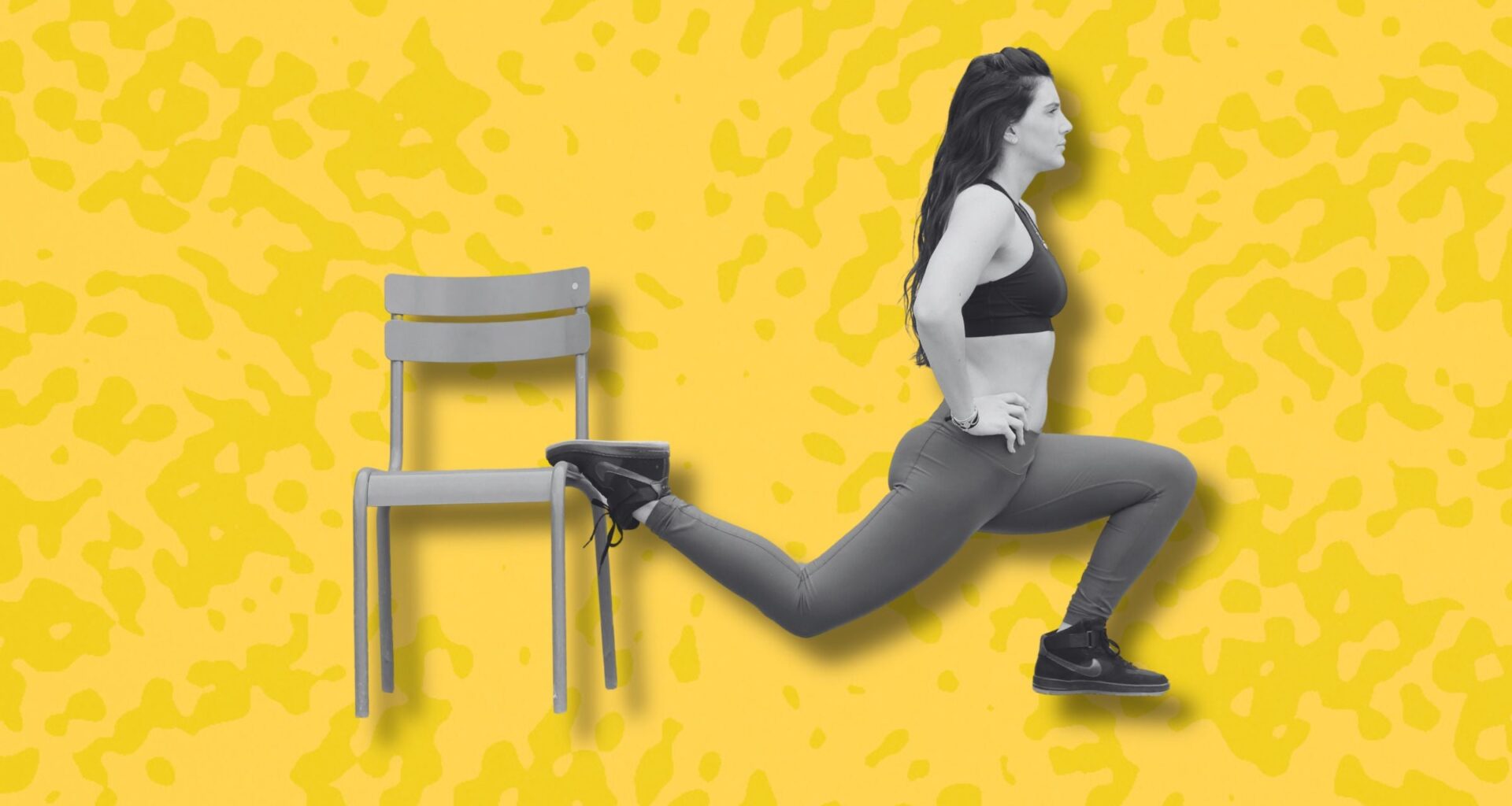
Also called the rear-foot elevated split squat, this move involves raising one leg onto a bench or step behind you and performing split squats from that position. It’s “a very, very effective lower-body exercise,” says certified strength and conditioning specialist Susie Reiner, an assistant professor in the exercise science department at Seton Hall University.
If you do this move the traditional way—while holding weights—“it’s a pretty advanced exercise,” Reiner says. Luckily, there are lots of ways to make it easier, which can come in handy if you want to reap the butt-building benefits but aren’t quite physically or mentally ready for the OG Bulgarian split squat.
Read on to learn which muscles this exercise works, why it’s so great for your glutes, how to master perfect form, common mistakes to avoid, and Bulgarian split squat modification options to make doing them suck a little less.
What Muscles Do Bulgarian Split Squats Work Most?
This move works all three of your glute muscles, including the gluteus maximus (the biggest butt muscle), as well as the gluteus medius and gluteus minimus (two smaller muscles that form your side butt and help stabilize your hips), Reiner says.
It also engages the quads, hamstrings, and core, plus the small hip stabilizer muscles that help keep your pelvis level as you bust out reps, she explains.
How Bulgarian Split Squats Work the Glutes
The reason this exercise is a great one for the glutes is that it puts your hip at a “substantial mechanical demand,” Reiner says.
Basically, the key concept at play here is the “moment arm,” which is the distance between a joint (in this case, the hip) and the line of force acting on it (in this case, your elevated foot). “The larger that distance is, the more torque that’s needed from the muscle around the joint to produce and control movement around it,” Reiner says.
So when you elevate your back leg in the Bulgarian split squat—versus keeping it on the ground, as you would with a traditional split squat—it lengthens the moment arm. That means your glutes (which power hip extension) have to work harder through a longer range of motion to complete the movement, and they also have to overcome more torque to do so, Reiner explains. This puts more stress on the glutes, activating them.
Are Bulgarian Split Squats Worth Doing? Yes. Here’s Why.
Even though this exercise can be kind of a pain in the butt (ha), there are a few benefits to doing it.
Better Hip Mobility
The Bulgarian split squat strengthens your gluteus maximus, which powers hip extension. “You don’t think about extending your hips that often in your day, but it’s literally what you’re doing to move forward in any direction at any time,” Reiner says. That means pretty much every activity of daily life—from standing up to walking across the room, to climbing the stairs—uses hip extension, Reiner says. And the stronger your glutes are, the easier these movements will feel, she adds. This is especially important for folks who spend a lot of time sitting, as prolonged sitting can weaken the glutes, Reiner says.
Improved Stability
This exercise also targets the glute medius and glute minimus, which play an essential role in stabilizing the pelvis as you walk or run. By bolstering all three glute muscles, you can bring more strength, stability, control, and force production to the way you move in sports and day-to-day life, Reiner says.
Moreover, the Bulgarian split squat is a single-leg exercise (meaning, you perform it with the strength of primarily just one leg at a time), which makes it great for challenging your stability, she says. Single-leg exercises are also helpful for identifying mobility and strength imbalances you may have between sides.
Reduced Lower Back Pain
Strengthening the glutes may help alleviate low back pain, she says. That’s because the glutes can help absorb force as it moves through the hip joint, and reduce the amount of stress transferred to the lower back.
How to Do a Traditional Bulgarian Split Squat
Before you even attempt a Bulgarian split squat, make sure you’re comfortable doing walking lunges, forward lunges, reverse lunges, and a regular split squat where both feet are on the ground, Reiner says. “These are all great set-ups to get used to that position before you transition into the Bulgarian,” she explains.
How to Do It:
Hold a weight in each hand and stand about three feet in front of a bench.
Keep one foot firmly planted on the floor, parallel to the bench, and elevate the back leg onto the bench so that the top of that foot is resting on the bench. (Feel free to place a pad underneath your back foot if resting it straight on the bench is uncomfortable.)
Keep your ribcage stacked over your pelvis and bend slightly forward from the hips as you bend your front knee and lower down into the split squat.
Make sure the front leg is far enough forward that the knee doesn’t extend too far past your toes as you lower down.
Lower down far enough so that your front quad is parallel with the ground, but stop before that point if you feel any pain, are struggling to stay balanced, feel intense tightness in your ankle or the front of your hip, or if your front heel starts to lift off the ground.
Drive through the heel of your front leg and extend your hip to return to standing. Keep your core engaged and back straight the entire time. This is one rep.
4 Ways to Modify Bulgarian Split Squats to Make Them Feel Less Terrible
If the traditional Bulgarian split squat still feels too challenging, make it easier with the following tweaks.
1. Rest Your Hands on Something, like the Back of a Chair, for Balance Support
One tough aspect of the Bulgarian split squat is its intense balance challenge. Make that easier by ditching your weights and resting your hands on an object in front of you, like the back of a chair, as you do your reps, Reiner says.
Just be sure to avoid firmly gripping the object; instead, use a light touch. The object is really just there for balance, Reiner explains.
2. Use a Shorter Platform for Your Back Leg
Most gym benches are a fixed height. But if you can find a lower elevated surface to prop your back leg on, that’ll make the move less challenging, Reiner says. Consider a small box, pad, or step stool. “It’s just about elevating the foot at least a little bit off the floor,” she says.
3. Decrease the Range of Motion
The goal with a Bulgarian split squat is to lower down so that your front quad is parallel to the ground, but for some people, that can be too much of a balance or mobility challenge, Reiner says.
Two ways to reduce the range of motion: lower down three-quarters of the way or just halfway.
By shortening your range of motion, you can practice the movement pattern but with less intensity. Over time, you can gradually increase the range of motion.
4. Swap Your Dumbbells for a Single Kettlebell
If you’re ready to try weights with the Bulgarian split squat, but are feeling wobbly with dumbbells, try holding a single kettlebell in front of your chest. “That can also help improve the stability of the movement,” Reiner says.
Common Mistakes to Avoid
The Bulgarian split squat is a complex move that can be tricky to execute. Increase your chances of doing it correctly by avoiding these common form errors:
Placing your front foot too close–or too far–from the bench: Planting that front foot too close to the bench can put a lot of pressure on your knee, Reiner explains. At the same time, stepping it too far away can diminish the effectiveness of the exercise, she adds. So instead, aim for that Goldilocks zone where your front foot is about two to three feet away from the bench.
Putting too much weight on your back leg: When performed correctly, the Bulgarian split squat is essentially a single-leg move, which means that most of your weight should be on that front foot. “It’s not your traditional split squat, where the weight is equal between the two limbs,” Reiner says.
Arching your lower back: This can naturally happen if you’re not activating your core during the move. Focus on bracing your core the entire time, which will help keep your back straight, Reiner says.
Ignoring discomfort in the back foot: A common complaint with this exercise is that the elevated foot feels uncomfortable, Reiner says. You don’t have to suffer through that. Play around with the positioning of your foot on the bench to see if you can find a location that feels more tolerable. Or, place a pad underneath your foot to create a softer surface, she adds.
Limitations of the Bulgarian Split Squat
The Bulgarian split squat is an awesome glute move, but because it’s a single-leg exercise that challenges your stability, you aren’t able to use as much weight with it compared to other glute-focused moves that have both feet on the ground, Reiner says, like the hip thrust or squat, for example.
If you’re looking to build maximum strength in your lower body, the Bulgarian split squat likely won’t cut it, Reiner says. But it is really great for hypertrophy (increasing muscle size), she adds, explaining that she sees it as an essential exercise to include in a workout program.
Want more Outside health stories? Sign up for the Bodywork newsletter. If you’re ready to become a runner, join The Weekly 45 Challenge on MapMy. The goal is to log 45 minutes of running or run-walking each week in March. That’s it. Plus, you can earn badges along the way and even win some cool prizes.