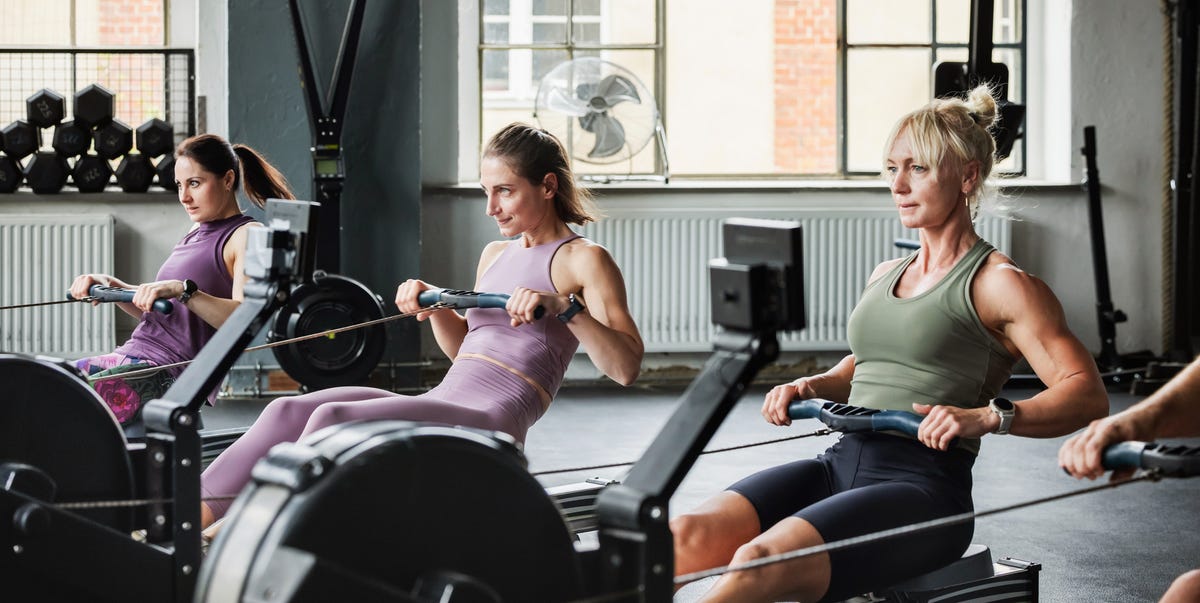
Many of us add a rowing session to our workouts from time to time, but did you know a rowing machine could help you work out how fit you are? A common benchmark used in indoor rowing, the 500m row is a classic high-intensity, flat-out sprint test which provides a snapshot of everything from your muscular power to your cardiovascular fitness.
‘The 500m row is short and brutally effective: a true test of power and pacing,’ says Marcus Prestegard, PT at Dabbs Fitness and Strength and Conditioning BSc undergraduate.
Sprinting is also an effective way to develop muscular power, as it recruits and enhances the function of fast-twitch or Type II muscle fibres, which are responsible for producing quick bursts of speed for short periods.
‘In your perimenopausal and menopausal 40s and 50s, however, you may notice a loss of these Type II fibres, [causing] a plateau or a drop in your athletic explosiveness’, says Dr Stephanie Estima, a chiropractor and women’s health expert. This may be partly due to declining oestrogen levels, alongside age-related muscular changes.
Maintaining high-intensity training – including 500m rowing sprints and resistance exercise – can help to counteract this decline, says Dr Estima.
DOMYOS Self-powered Rowing Machine 500b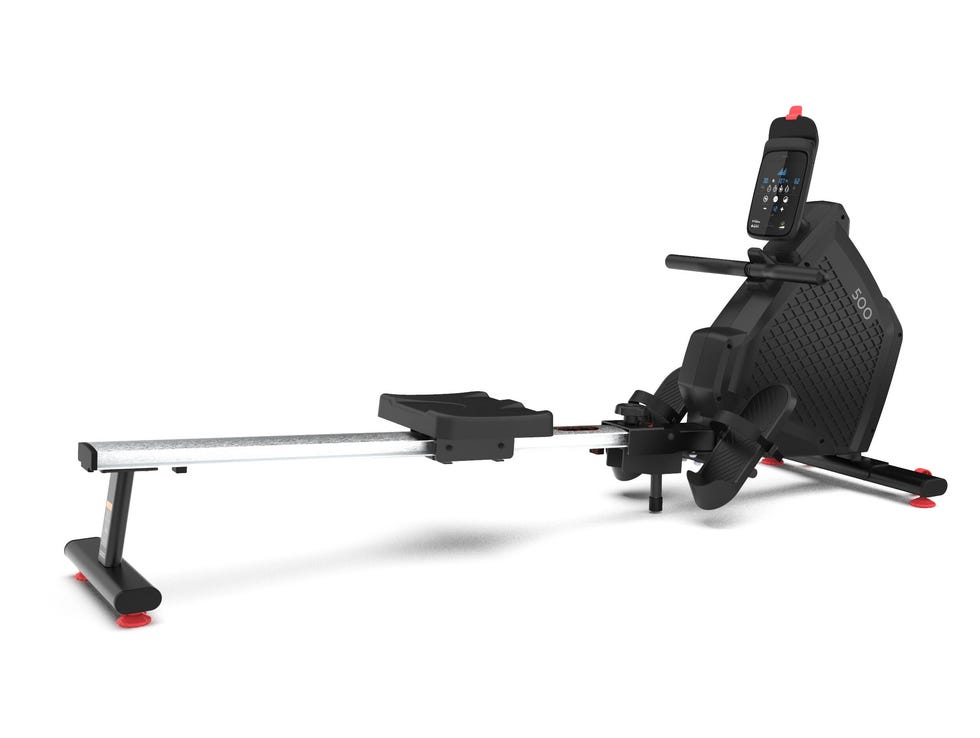 DOMYOS Self-powered Rowing Machine 500bAverage 500m row times for women in their 40s
According to Rowing Level, beginner rowers in their 40s should aim to complete 500m in between 2:26 (the time recommended for 40-year-olds) and 2:36 (the time recommended for 50-year-olds).
Breaking the sub 2:01 barrier for the 500m row puts you in the intermediate zone, and is a great indicator of solid cardiovascular fitness and muscular endurance.
Edge closer to the 1:50 barrier, and you’re stepping into the elite zone – seriously impressive.
How to row faster in your 40s
Your 40s are when rowing starts becoming more about strategy than simply effort, says Daniel Booth, PT, strength and conditioning coach, performance psychologist and the co-founder of MyoLab Performance Concierge.
‘Recovery isn’t quite as instant as it was a decade ago, so the biggest gains often come from training smarter rather than simply harder,’ he explains.
1. Keep interval training
Booth advises including two interval sessions a week:
5-6 x 500m at goal pace with 3 minutes’ rest between each interval.4 x 750m with 2-3 minutes’ rest between each interval, which builds your ability to hold a strong pace for longer rather than just going fast in short bursts.2. Focus on good technique
This is also the age where technique starts to matter as much as effort. ‘A cleaner catch – the start of each stroke – and a fuller leg drive can shave real time off your split without costing you anything extra physically,’ notes Booth.
‘It’s worth filming a few strokes on your phone to spot where power is leaking.’
3. Strength train
Strength work becomes less of a nice-to-have and more of a necessity, since this is roughly when muscle and power naturally start to erode if left unchallenged, says Booth.
Two sessions a week focused on your posterior chain (the muscles on the back of your body like your glutes, hamstrings and lats) and core protect your lower back while keeping the power behind your stroke intact.
‘Lower-back pain is a common gripe for erg rowers in this age bracket, since the fixed footplate loads your spine differently from rowing on the water,’ he explains.
Perform deadlift variations, rows and anti-rotation work like the Palloff press or single-arm farmer’s carry.
4. Recover properly
Give yourself at least 48 hours to recover after a hard session, and resist the urge to ramp up your easy days. ‘In your 40s, under-recovering is a far more common reason for a stalled 500m time than under-training,’ Booth points out.
One of our most frequently asked questions here at Women’s Health? How to build muscle and burn fat at the same time. So, we asked superstar trainer Oyinda Okunowo exactly how to do it. In this 4-week plan – created exclusively for Women’s Health COLLECTIVE members – you’ll get the workouts and nutrition guidance needed to help you on your way to better body composition. Tap the link below to unlock 14 days of free access to Oyinda’s plan and start training today.