
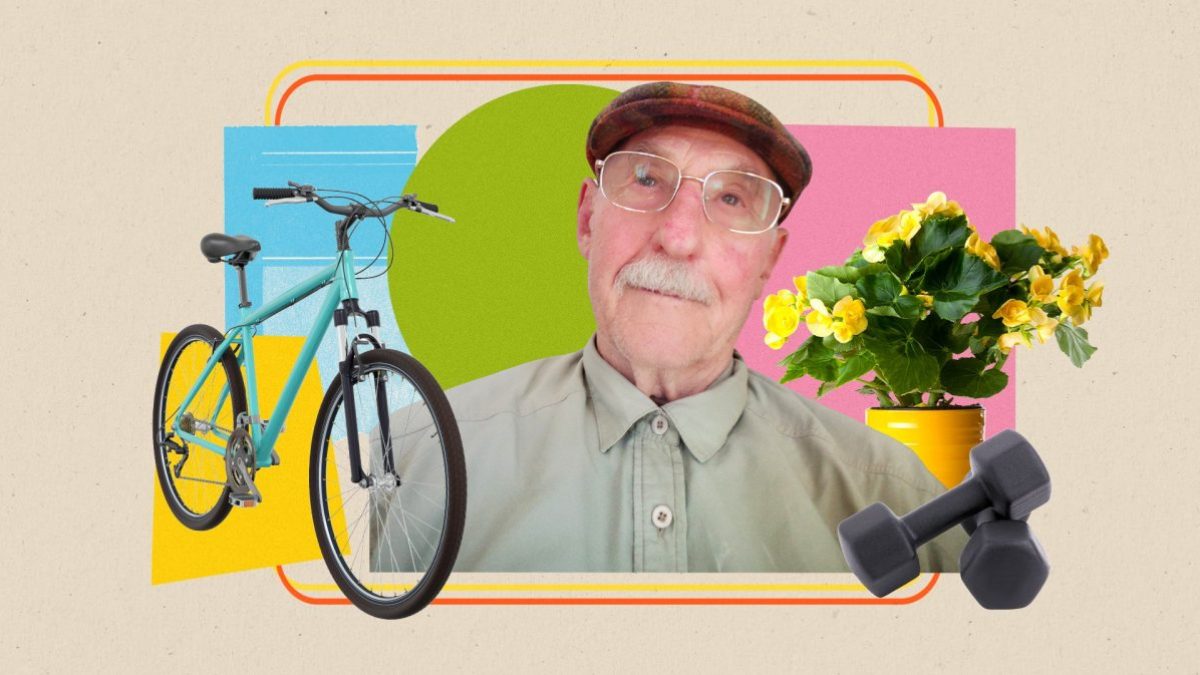
Dr Norman Lazarus, an expert on the physiology of healthy human ageing, shares his 10 tips for living well in old age
Dr Norman Lazarus, 90, is a professor at the Centre for Human and Applied Physiological Sciences, King’s College London. He is an expert on the physiology of healthy human ageing, author of The Lazarus Strategy, and living proof that our later years can be lived well.
For our new weekly series Life Lessons, he shares his daily habits and the way in which his life is informed by his research and experience in the field.
Accept ageing
I’m 90 now and I’ll never be younger than that again. I have at best five to 10 years to live. People tell me I look like I’m 70, but that can only mean that a 70-year-old has not been keeping themselves in good condition: that the 70-year-old we’re talking about is non-exercising or overweight. And that person is in terrible trouble if so because they have shortened their life.
New FeatureIn ShortQuick Stories. Same trusted journalism.
For me, it’s very important not to fight against the fact you’re going to get older. Nearly everything that lives, whether it’s a tree or a worm or a human being, will wind down. If you can integrate that into your thinking, you realise that what you must do is try and make yourself as optimal as you can for your age.
The fact we are living for longer than we have historically has mostly been worked out by environmental factors: vaccines, housing, all the rest of it. All that was given to me – I didn’t do anything. But what was in my control was the following pillars.
Choose exercise that won’t bore you – and never stop
I’ve always been physically active, but when I was about 50 I decided that I had to be serious about it: exercise has long been known to have a very positive influence on keeping some diseases at bay.
Crucially, I chose an exercise I loved – cycling – and then thought about whether the exercise was good for me or not. I didn’t say I’m going to go to the gym and jump 100 times because I knew that would bore me, it wouldn’t satisfy me, and so I’d stop.
So whether you play squash, tennis, or walk around the block, that automatically is going to give you the benefit of being out and loving what you’re doing, as well as the health benefits.
As I’ve gotten older, the amount of cycling I can do has gone down, but the important thing is I’ve never stopped. In other words, do not quit what you’re doing simply because you can’t do it the way you used to. This is an important mindset to counter: that exercise, if you love what you’re doing, is going to support your mental wellbeing.
If you also accept that you are not going to be able to do what you did five years ago, you are mentally prepared to still enjoy it. I cycle about once or twice a week, which at my age is fine – I go at a speed appropriate for me, I climb hills when I can, and if they’re too steep, I walk up them.
Make regular weight training accessible
While cycling is fantastic exercise, it’s not a weight-bearing exercise. You’ve got to remember that your muscles must be kept optimal for your age, too.
I obviously can’t lift enormous amounts of weight, but I have covered weights at home which I rest on my arms and on my leg: they give resistance but don’t overburden. I use it on my arms, I use it on my legs, I do the plank exercise and push ups most mornings (about five times a week).
Sometimes I get up and don’t feel like doing it, but I do it most mornings.
Eat less, not more, as you get older
The key thing I do is make sure I don’t overeat. You can find your own limit by going online, looking up your age, height and sex, and it will tell you the correct amount of calories you’ve got to eat for your age.
As you get older, the amount of food you need decreases because the amount of exercise you can do decreases, and you yourself are physically decreasing in strength and size. It’s another one of these things you’ve got to incorporate into your mindset and into your lifestyle.
Cut the snacks and start cooking
I never snack, which people think is terrible – but what I mean is I keep snacking as a very, very small part of my diet. I eat in the morning, I eat at midday, I eat in the evening, and then I will not eat between meals. I know that I’m eating the correct amount of calories to do what I want to do, and I really don’t need more.
If you just throw away all those snacks that come in those little plastic packets, that will really improve your diet 100 per cent.
As for meals, I know what I like. I don’t have to go around looking for exotic foods. I make my breakfast with porridge and a bit of fruit and nuts. For lunch I make myself a variety of sandwiches – maybe a sardine sandwich, maybe a tomato sandwich – and I drink tea.
Then at dinner, my wife will make what I think is a proper meal: maybe meat with potatoes and vegetables and all the necessary ingredients of carbs, fats, and protein. It’s much better to prepare your own meals than buy ready made stuff. You’ve got time to prepare things as you get older, you can’t use that excuse anymore.
Don’t change your diet for the sake of it
My diet might seem boring to others but because of my age I’ve eaten many cuisines and tried lots of things. My wife and I know what we like – through trial and error we have been able to modify our diet and find those foods that are suitable for what we want.
It also might seem difficult because eating is part of everyone’s social life. It’s integrated into the way our family is brought up and our heritage. People all have totally different approaches to the kinds of foods they eat.
I know sometimes it’s said by experts that the healthiest thing is to eat a Japanese diet, or Mediterranean diet. That’s so silly, because there must be Chinese food, Indian food, African food, South American food, which have all the necessary ingredients. If they weren’t eating right in those places, they’d all have died by now. So you must make choices from within the diet that is your heritage.
I advise people not to change their diet on a big scale but simply to select from what is available and what is important. Protein, carbohydrates, fat, vegetables and various minerals and salts. And remember you only need small quantities of protein, about 100 grams a day, and it can be any kind. Make sure you supplement that with other carbohydrates and vegetables.
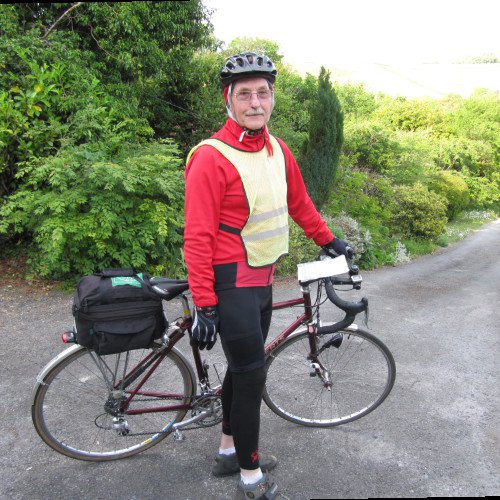 At 50, Norman Lazarus decided that he had to be serious about exercise and, crucially, chose an exercise he loved – instead of boring himself in the gym (Photo: LinkedIn)
Treat alcohol with caution
Drinking is one of those things that is going to hurt my age the same way that overeating affects my age. We must never forget that alcohol, even though this sounds dramatic, is a poison. And like all poisons, it has no dietary advantage, so if you’re taking it, it’s either because you like the taste, or you specifically want to affect your brain.
The solution then is to treat it as a poison and be very certain that you only keep to doses that are not poisoning you. Those doses are not big, and they decrease over time. I mainly drink cider occasionally now because I like the taste, and I find that sharing a can with my wife is within my limits.
Smaller horizons can still be joyful
For the other pillars to work, you have to change your mindset to ageing.
One: I accept the fact that I’m going to get older.
Two: And because I’m going to get older, I’m going to be able to do less.
Three: I accept the fact that my horizons will be more restricted. I can’t run up a steep mountain or climb in the Andes anymore. But just because your horizons are smaller, that doesn’t mean you can’t maintain an interesting position.
Let’s presume that before I was in Hyde Park and now I am in a small garden. I’ve still got lovely trees, I’ve got lovely flowers, I’ve got butterflies. Once I’ve accepted the restrictions of the environment, I can ensure that that environment gives as much pleasure as is possible. And the amount of pleasure you can get is enormous.
Social activity
Everything is intertwined. If I want to go somewhere to meet my friends, I am physically able. I don’t have to worry about how I am going to get there or who is going to take me. If I wish I can go do anything that interests me. I may do it slowly, but I can do it.
These things are all essential for keeping my individuality and independence. If I have those, then I am then able, within the confines of what my age allows, to do those things to the fullest extent.
Your next read
Don’t fall for gimmicks
There are certain supplements that you absolutely need, like you need vitamin C and vitamin D, which you don’t make. If you can’t get ahold of fruit or sunlight, then those are helpful. And some people have medical deficiencies that require them to take supplements.
But if we’re talking about just people on the street who take supplements based on the belief they will do great things for them, we have a big population of evidence, and in the last 30-40 years, there is no evidence anywhere that this group has ended up better than me who takes none.
There are no secrets to ageing except maybe internal fortitude. I say internal because it’s got to be personal: what drives you to want to ensure that what you eat is nutritional, that you can walk down the road, and that you can think about the future because your mind knows your body can take you wherever you want to go within the confines of your age.