
NCD Risk Factor Collaboration (NCD-RisC). Worldwide trends in underweight and obesity from 1990 to 2022: a pooled analysis of 3663 population-representative studies with 222 million children, adolescents, and adults. Lancet 403, 1027–1050 (2024).
Global Burden of Disease 2021 Adult BMI Collaborators. Global, regional, and national prevalence of adult overweight and obesity, 1990-2021, with forecasts to 2050: a forecasting study for the Global Burden of Disease Study 2021. Lancet 405, 813–838 (2025).
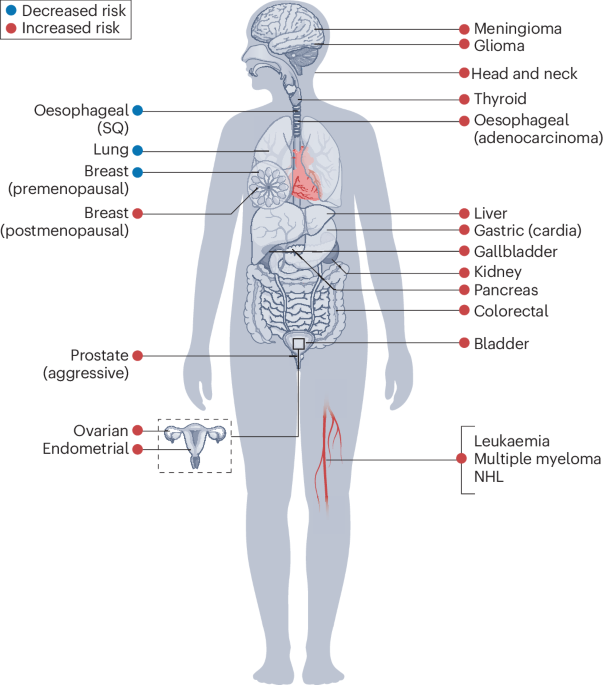
Watts, E. L., Gonzalez-Feliciano, A., Gunter, M. J. & Chatterjee, N. Adiposity and cancer: systematic review and meta-analysis. Nat. Metab. https://doi.org/10.1038/s42255-026-01542-8 (2026).
WCRF/AICR. Judging the evidence. https://www.wcrf.org/wp-content/uploads/2024/11/judging-the-evidence.pdf (2018).
Lauby-Secretan, B. et al. Body fatness and cancer — viewpoint of the IARC Working Group. N. Engl. J. Med. 375, 794–798 (2016).
Sun, M. et al. Body mass index and risk of over 100 cancer forms and subtypes in 4.1 million individuals in Sweden: the Obesity and Disease Development Sweden (ODDS) pooled cohort study. Lancet Reg. Health Eur. 45, 101034 (2024).
GBD 2019 Demographics Collaborators. Global age-sex-specific fertility, mortality, healthy life expectancy (HALE), and population estimates in 204 countries and territories, 1950-2019: a comprehensive demographic analysis for the Global Burden of Disease Study 2019. Lancet 396, 1160–1203 (2020).
McGrosky, A. et al. Energy expenditure and obesity across the economic spectrum. Proc. Natl Acad. Sci. USA 122, e2420902122 (2025).
Jastreboff, A. M. et al. Tirzepatide once weekly for the treatment of obesity. N. Engl. J. Med. 387, 205–216 (2022).
Davies, M. et al. Semaglutide 2.4 mg once a week in adults with overweight or obesity, and type 2 diabetes (STEP 2): a randomised, double-blind, double-dummy, placebo-controlled, phase 3 trial. Lancet 397, 971–984 (2021).
Blüher, M. Metabolically healthy obesity. Endocr. Rev. 41, bnaa004 (2020).
WHO Expert Committee. Physical status: the use and interpretation of anthropometry. World Health Organ. Tech. Rep. Ser. 854, 1–452 (1995).
Pischon, T. et al. General and abdominal adiposity and risk of death in Europe. N. Engl. J. Med. 359, 2105–2120 (2008).
Moore, S. C. Waist versus weight: which matters more for mortality? Am. J. Clin. Nutr. 89, 1003–1004 (2009).
Flegal, K. M. & Graubard, B. I. Estimates of excess deaths associated with body mass index and other anthropometric variables. Am. J. Clin. Nutr. 89, 1213–1219 (2009).
Christakoudi, S., Tsilidis, K. K., Evangelou, E. & Riboli, E. Association of body-shape phenotypes with imaging measures of body composition in the UK Biobank cohort: relevance to colon cancer risk. BMC Cancer 21, 1106 (2021).
Caballero, B. The global epidemic of obesity: an overview. Epidemiol. Rev. 29, 1–5 (2007).
Swinburn, B. A. et al. The global obesity pandemic: shaped by global drivers and local environments. Lancet 378, 804–814 (2011).
Swinburn, B. A. et al. The global syndemic of obesity, undernutrition, and climate change: The Lancet Commission report. Lancet 393, 791–846 (2019).
Lear, S. A. et al. Visceral adipose tissue accumulation differs according to ethnic background: results of the Multicultural Community Health Assessment Trial (M-CHAT). Am. J. Clin. Nutr. 86, 353–359 (2007).
Yaghootkar, H., Whitcher, B., Bell, J. D. & Thomas, E. L. Ethnic differences in adiposity and diabetes risk – insights from genetic studies. J. Intern. Med. 288, 271–283 (2020).
Scott, W. R. et al. Investigation of genetic variation underlying central obesity amongst South Asians. PLoS ONE 11, e0155478 (2016).
Marete, I. et al. Regional trends in birth weight in low- and middle-income countries 2013-2018. Reprod. Health 17, 176 (2020).
Martin, M., Beekley, A., Kjorstad, R. & Sebesta, J. Socioeconomic disparities in eligibility and access to bariatric surgery: a national population-based analysis. Surg. Obes. Relat. Dis. 6, 8–15 (2010).
Ford, N. D., Patel, S. A. & Narayan, K. M. V. Obesity in low- and middle-income countries: burden, drivers, and emerging challenges. Annu. Rev. Public Health 38, 145–164 (2017).
Fink, H. et al. Global and regional cancer burden attributable to modifiable risk factors to inform prevention. Nat. Med. 32, 1306–1315 (2026).
Tran, K. B. et al. The global burden of cancer attributable to risk factors, 2010–19: a systematic analysis for the Global Burden of Disease Study 2019. Lancet 400, 563–591 (2022).
Sung, H., Siegel, R. L., Rosenberg, P. S. & Jemal, A. Emerging cancer trends among young adults in the USA: analysis of a population-based cancer registry. Lancet Public Health 4, e137–e147 (2019).
Anekwe, C. V. et al. Socioeconomics of obesity. Curr. Obes. Rep. 9, 272–279 (2020).
Zavala, V. A. et al. Cancer health disparities in racial/ethnic minorities in the United States. Br. J. Cancer 124, 315–332 (2021).
Hales, C. M., Carroll, M. D., Fryar, C. D. & Ogden, C. L. Prevalence of obesity and severe obesity among adults: United States, 2017–2018. National Center for Health Statistics, CDC https://www.cdc.gov/nchs/products/databriefs/db360.htm (2020).
Bissell, M. C. S. et al. Breast cancer population attributable risk proportions associated with body mass index and breast density by race/ethnicity and menopausal status. Cancer Epidemiol. Biomarkers Prev. 29, 2048–2056 (2020).
Scarton, L. et al. Pancreatic cancer related health disparities: a commentary. Cancers 10, 235 (2018).
Doubeni, C. A. Contribution of behavioral risk factors and obesity to socioeconomic differences in colorectal cancer incidence. J. Natl Cancer Inst. 104, 1353–1362 (2012).
Fang, Z. & Giovannucci, E. L. The timing of adiposity and changes in the life course on the risk of cancer. Cancer Metastasis Rev. 41, 471–489 (2022).
Mariosa, D. et al. Body size at different ages and risk of 6 cancers: a Mendelian randomization and prospective cohort study. J. Natl Cancer Inst. 114, 1296–1300 (2022).
Richardson, T. G., Sanderson, E., Elsworth, B., Tilling, K. & Smith, G. D. Use of genetic variation to separate the effects of early and later life adiposity on disease risk: Mendelian randomisation study. BMJ 369, m1203 (2020).
Smit, R. A. J. et al. Polygenic prediction of body mass index and obesity through the life course and across ancestries. Nat. Med. 31, 3151–3168 (2025).
Maciejewski, M. L. et al. Bariatric surgery and long-term durability of weight loss. JAMA Surg. 151, 1046–1055 (2016).
Zhang, K., Luo, Y., Dai, H. & Deng, Z. Effects of bariatric surgery on cancer risk: evidence from meta-analysis. Obes. Surg. 30, 1265–1272 (2020).
Aminian, A. et al. Association of bariatric surgery with cancer risk and mortality in adults with obesity. JAMA 327, 2423–2433 (2022).
Teras, L. R. et al. Sustained weight loss and risk of breast cancer in women 50 years and older: a pooled analysis of prospective data. J. Natl Cancer Inst. 112, 929–937 (2020).
Luo, J. et al. Intentional weight loss and obesity-related cancer risk. JNCI Cancer Spectr. 3, pkz054 (2019).
Wilding, J. P. H. et al. Once-weekly semaglutide in adults with overweight or obesity. N. Engl. J. Med. 384, 989–1002 (2021).
Wang, L., Wang, Q., Li, L., Kaelber, D. C. & Xu, R. Glucagon-like peptide-1 receptor agonists and pancreatic cancer risk: target trial emulation using real-world data. J. Natl Cancer Inst. 117, 476–485 (2025).
Pasternak, B. et al. Glucagon-like peptide 1 receptor agonist use and risk of thyroid cancer: Scandinavian cohort study. BMJ 385, e078225 (2024).
Figlioli, G. et al. Glucagon-like peptide-1 receptor agonists and risk of gastrointestinal cancers: a systematic review and meta-analysis of randomized controlled trials. Pharmacol. Res. 208, 107401 (2024).
Wang, L., Wang, W., Kaelber, D. C., Xu, R. & Berger, N. A. GLP-1 receptor agonists and colorectal cancer risk in drug-naive patients with type 2 diabetes, with and without overweight/obesity. JAMA Oncol. 10, 256–258 (2024).
Wang, L., Xu, R., Kaelber, D. C. & Berger, N. A. Glucagon-like peptide 1 receptor agonists and 13 obesity-associated cancers in patients with type 2 diabetes. JAMA Netw. Open 7, e2421305 (2024).
Mao, X. et al. Association between glucagon-like peptidase 1 receptor agonist and obesity-related cancer in overweight or obese patients with type 2 diabetes: a nationwide cohort study. J. Natl Cancer Inst. 117, 2053–2061 (2025).
Yarmolinsky, J. & Gunter, M. J. GLP-1 receptor agonists: an emerging tool for obesity-related cancer prevention? J. Natl Cancer Inst. 117, 1966–1969 (2025).
O’Connor, L. et al. Association of metformin use and cancer incidence: a systematic review and meta-analysis. J. Natl Cancer Inst. 116, 518–529 (2024).
Dai, H. et al. GLP-1 receptor agonists and cancer risk in adults with obesity. JAMA Oncol 11, 1186–1193 (2025).
Ma, C. et al. Effects of weight loss interventions for adults who are obese on mortality, cardiovascular disease, and cancer: systematic review and meta-analysis. BMJ 359, j4849 (2017).
Look AHEAD Research Group; Yeh, H. -C. et al. Intensive weight loss intervention and cancer risk in adults with type 2 diabetes: analysis of the Look AHEAD randomized clinical trial. Obesity 28, 1678–1686 (2020).
Cirulli, E. T. et al. Profound perturbation of the metabolome in obesity is associated with health risk. Cell Metab. 29, 488–500 (2019).
Goudswaard, L. J. et al. Effects of adiposity on the human plasma proteome: observational and Mendelian randomisation estimates. Int. J. Obes. 45, 2221–2229 (2021).
Moore, S. C. et al. A metabolomics analysis of body mass index and postmenopausal breast cancer risk. J. Natl Cancer Inst. 110, 588–597 (2018).
Sun, M. et al. Metabolically (un)healthy obesity and risk of obesity-related cancers: a pooled study. J. Natl Cancer Inst. 115, 456–467 (2023).
Calle, E. E. & Kaaks, R. Overweight, obesity and cancer: epidemiological evidence and proposed mechanisms. Nat. Rev. Cancer 4, 579–591 (2004).
Simpson, E. R. Sources of estrogen and their importance. J. Steroid Biochem. Mol. Biol. 86, 225–230 (2003).
Watts, E. L. et al. Circulating sex hormones in relation to anthropometric, sociodemographic and behavioural factors in an international dataset of 12,300 men. PLoS ONE 12, e0187741 (2017).
Key, T. J. et al. Circulating sex hormones and breast cancer risk factors in postmenopausal women: reanalysis of 13 studies. Br. J. Cancer 105, 709–722 (2011).
Endogenous Hormones and Breast Cancer Collaborative Group; Key, T. J. et al. Sex hormones and risk of breast cancer in premenopausal women: a collaborative reanalysis of individual participant data from seven prospective studies. Lancet Oncol. 14, 1009–1019 (2013).
Narinx, N. et al. Role of sex hormone-binding globulin in the free hormone hypothesis and the relevance of free testosterone in androgen physiology. Cell. Mol. Life Sci. 79, 543 (2022).
Simó, R., Sáez-López, C., Barbosa-Desongles, A., Hernández, C. & Selva, D. M. Novel insights in SHBG regulation and clinical implications. Trends Endocrinol. Metab. 26, 376–383 (2015).
Larsson, S. C. et al. Serum estradiol and 20 site-specific cancers in women: Mendelian randomization study. J. Clin. Endocrinol. Metab. 107, e467–e474 (2022).
Lukanova, A. et al. Circulating levels of sex steroid hormones and risk of endometrial cancer in postmenopausal women. Int. J. Cancer 108, 425–432 (2004).
Collaborative Group On Epidemiological Studies Of Ovarian Cancer; Beral, V. et al. Menopausal hormone use and ovarian cancer risk: individual participant meta-analysis of 52 epidemiological studies. Lancet 385, 1835–1842 (2015).
Hvidtfeldt, U. A. et al. Quantifying mediating effects of endogenous estrogen and insulin in the relation between obesity, alcohol consumption, and breast cancer. Cancer Epidemiol. Biomarkers Prev. 21, 1203–1212 (2012).
Dashti, S. G. et al. Adiposity and endometrial cancer risk in postmenopausal women: a sequential causal mediation analysis. Cancer Epidemiol. Biomarkers Prev. 30, 104–113 (2021).
Hazelwood, E. et al. Identifying molecular mediators of the relationship between body mass index and endometrial cancer risk: a Mendelian randomization analysis. BMC Med. 20, 125 (2022).
Ose, J. et al. Androgens are differentially associated with ovarian cancer subtypes in the ovarian cancer cohort consortium. Cancer Res. 77, 3951–3960 (2017).
Kaaks, R. et al. Postmenopausal serum androgens, oestrogens and breast cancer risk: the European prospective investigation into cancer and nutrition. Endocr. Relat. Cancer 12, 1071–1082 (2005).
Ruth, K. S. et al. Using human genetics to understand the disease impacts of testosterone in men and women. Nat. Med. 26, 252–258 (2020).
Perez-Cornago, A. et al. Tall height and obesity are associated with an increased risk of aggressive prostate cancer: results from the EPIC cohort study. BMC Med. 15, 115 (2017).
Tan, M. E., Li, J., Xu, H. E., Melcher, K. & Yong, E. Androgen receptor: structure, role in prostate cancer and drug discovery. Acta Pharmacol. Sin. 36, 3–23 (2015).
Watts, E. L. et al. Circulating free testosterone and risk of aggressive prostate cancer: prospective and Mendelian randomisation analyses in international consortia. Int. J. Cancer 151, 1033–1046 (2022).
Thompson, I. M. et al. Long-term survival of participants in the prostate cancer prevention trial. N. Engl. J. Med. 369, 603–610 (2013).
Watts, E. L. et al. Low free testosterone and prostate cancer risk: a collaborative analysis of 20 prospective studies. Eur. Urol. 74, 585–594 (2018).
Ahmed, B., Sultana, R. & Greene, M. W. Adipose tissue and insulin resistance in obese. Biomed. Pharmacother. Biomedecine Pharmacother. 137, 111315 (2021).
Gallagher, E. J. & LeRoith, D. Hyperinsulinaemia in cancer. Nat. Rev. Cancer 20, 629–644 (2020).
Pearson-Stuttard, J. et al. Type 2 diabetes and cancer: an umbrella review of observational and Mendelian randomization studies. Cancer Epidemiol. Biomarkers Prev. 30, 1218–1228 (2021).
Ohkuma, T., Peters, S. A. E. & Woodward, M. Sex differences in the association between diabetes and cancer: a systematic review and meta-analysis of 121 cohorts including 20 million individuals and one million events. Diabetologia 61, 2140–2154 (2018).
Murphy, N. et al. Associations between glycemic traits and colorectal cancer: a Mendelian randomization analysis. J. Natl Cancer Inst. 114, 740–752 (2022).
Dashti, S. G. et al. Adiposity and breast, endometrial, and colorectal cancer risk in postmenopausal women: quantification of the mediating effects of leptin, C-reactive protein, fasting insulin, and estradiol. Cancer Med. 11, 1145–1159 (2022).
Petrick, J. L. et al. Diabetes in relation to Barrett’s esophagus and adenocarcinomas of the esophagus: a pooled study from the International Barrett’s and Esophageal Adenocarcinoma Consortium. Cancer 125, 4210–4223 (2019).
Jubber, I. et al. Epidemiology of bladder cancer in 2023: a systematic review of risk factors. Eur. Urol. 84, 176–190 (2023).
Hidaka, A. et al. Plasma insulin, C-peptide and blood glucose and the risk of gastric cancer: the Japan Public Health Center-based prospective study. Int. J. Cancer 136, 1402–1410 (2015).
Shi, D. et al. Diabetes increases the risk of meningioma: a systematic review and meta-analysis of observational studies. Cancer Epidemiol. 73, 101946 (2021).
LeRoith, D., Holly, J. M. P. & Forbes, B. E. Insulin-like growth factors: ligands, binding proteins, and receptors. Mol. Metab. 52, 101245 (2021).
Watts, E. L. et al. Circulating insulin-like growth factors and risks of overall, aggressive and early-onset prostate cancer: a collaborative analysis of 20 prospective studies and Mendelian randomization analysis. Int. J. Epidemiol. 52, 71–86 (2023).
Murphy, N. et al. Insulin-like growth factor-1, insulin-like growth factor-binding protein-3, and breast cancer risk: observational and Mendelian randomization analyses with ∼430 000 women. Ann. Oncol. 31, 641–649 (2020).
Murphy, N. et al. Circulating levels of insulin-like growth factor 1 and insulin-like growth factor binding protein 3 associate with risk of colorectal cancer based on serologic and Mendelian randomization analyses. Gastroenterology 158, 1300–1312 (2020).
Knuppel, A. et al. Circulating insulin-like growth factor-I concentrations and risk of 30 cancers: prospective analyses in UK Biobank. Cancer Res. 80, 4014–4021 (2020).
Watts, E. L. et al. The associations of anthropometric, behavioural and sociodemographic factors with circulating concentrations of IGF-I, IGF-II, IGFBP-1, IGFBP-2 and IGFBP-3 in a pooled analysis of 16,024 men from 22 studies. Int. J. Cancer 145, 3244–3256 (2019).
D’Esposito, V. et al. Adipocyte-released insulin-like growth factor-1 is regulated by glucose and fatty acids and controls breast cancer cell growth in vitro. Diabetologia 55, 2811–2822 (2012).
Fasshauer, M. & Blüher, M. Adipokines in health and disease. Trends Pharmacol. Sci. 36, 461–470 (2015).
Stolzenberg-Solomon, R. Z. et al. Circulating leptin and risk of pancreatic cancer: a pooled analysis from 3 cohorts. Am. J. Epidemiol. 182, 187–197 (2015).
Luhn, P. et al. Circulating adipokine levels and endometrial cancer risk in the prostate, lung, colorectal, and ovarian cancer screening trial. Cancer Epidemiol. Biomarkers Prev. 22, 1304–1312 (2013).
Michels, N., van Aart, C., Morisse, J., Mullee, A. & Huybrechts, I. Chronic inflammation towards cancer incidence: a systematic review and meta-analysis of epidemiological studies. Crit. Rev. Oncol. Hematol. 157, 103177 (2021).
Renehan, A. G., Zwahlen, M. & Egger, M. Adiposity and cancer risk: new mechanistic insights from epidemiology. Nat. Rev. Cancer 15, 484–498 (2015).
Dimou, N. L. et al. Circulating adipokine concentrations and risk of five obesity-related cancers: a Mendelian randomization study. Int. J. Cancer 148, 1625–1636 (2021).
Nigro, E. et al. New insight into adiponectin role in obesity and obesity-related diseases. Biomed. Res. Int. 2014, 658913 (2014).
Ho, G. Y. F. et al. Adipokines linking obesity with colorectal cancer risk in postmenopausal women. Cancer Res. 72, 3029–3037 (2012).
Song, M. et al. Plasma adiponectin and soluble leptin receptor and risk of colorectal cancer: a prospective study. Cancer Prev. Res. 6, 875–885 (2013).
Bao, Y. et al. A prospective study of plasma adiponectin and pancreatic cancer risk in five US cohorts. J. Natl Cancer Inst. 105, 95–103 (2013).
Liao, L. M. et al. Circulating levels of obesity-related markers and risk of renal cell carcinoma in the PLCO cancer screening trial. Cancer Causes Control 28, 801–807 (2017).
Soliman, P. T., Cui, X., Zhang, Q., Hankinson, S. E. & Lu, K. H. Circulating adiponectin levels and risk of endometrial cancer: the prospective Nurses’ Health Study. Am. J. Obstet. Gynecol. 204, 1–5 (2011).
Zhu, M. et al. C-reactive protein and cancer risk: a pan-cancer study of prospective cohort and Mendelian randomization analysis. BMC Med. 20, 301 (2022).
Bouras, E. et al. Circulating inflammatory cytokines and risk of five cancers: a Mendelian randomization analysis. BMC Med. 20, 3 (2022).
Yarmolinsky, J. et al. Association between circulating inflammatory markers and adult cancer risk: a Mendelian randomization analysis. EBioMedicine 100, 104991 (2024).
Considine, R. V. et al. Serum immunoreactive-leptin concentrations in normal-weight and obese humans. N. Engl. J. Med. 334, 292–295 (1996).
Shiels, M. S. et al. Cigarette smoking and variations in systemic immune and inflammation markers. J. Natl Cancer Inst. 106, dju294 (2014).
Quail, D. F. & Dannenberg, A. J. The obese adipose tissue microenvironment in cancer development and progression. Nat. Rev. Endocrinol. 15, 139–154 (2019).
Iyengar, N. M., Gucalp, A., Dannenberg, A. J. & Hudis, C. A. Obesity and cancer mechanisms: tumor microenvironment and inflammation. J. Clin. Oncol. 34, 4270–4276 (2016).
Lengyel, E., Makowski, L., DiGiovanni, J. & Kolonin, M. G. Cancer as a matter of fat: the crosstalk between adipose tissue and tumors. Trends Cancer 4, 374–384 (2018).
Rios Garcia, M. et al. Acetyl-CoA carboxylase 1-dependent protein acetylation controls breast cancer metastasis and recurrence. Cell Metab. 26, 842–855 (2017).
Lagergren, J., Bergström, R., Lindgren, A. & Nyrén, O. Symptomatic gastroesophageal reflux as a risk factor for esophageal adenocarcinoma. N. Engl. J. Med. 340, 825–831 (1999).
Hampel, H., Abraham, N. S. & El-Serag, H. B. Meta-analysis: obesity and the risk for gastroesophageal reflux disease and its complications. Ann. Intern. Med. 143, 199–211 (2005).
van de Pol, J. A. A., van den Brandt, P. A. & Schouten, L. J. Kidney stones and the risk of renal cell carcinoma and upper tract urothelial carcinoma: the Netherlands Cohort Study. Br. J. Cancer 120, 368–374 (2019).
Cheungpasitporn, W. et al. The risk of kidney cancer in patients with kidney stones: a systematic review and meta-analysis. QJM 108, 205–212 (2015).
Poore, W. et al. Obesity and its impact on kidney stone formation. Rev. Urol. 22, 17–23 (2020).
Chow, W. H., Gridley, G., Fraumeni, J. F. & Järvholm, B. Obesity, hypertension, and the risk of kidney cancer in men. N. Engl. J. Med. 343, 1305–1311 (2000).
Stinton, L. M. & Shaffer, E. A. Epidemiology of gallbladder disease: cholelithiasis and cancer. Gut Liver 6, 172–187 (2012).
Reeves, G. K. et al. Hospital admissions in relation to body mass index in UK women: a prospective cohort study. BMC Med. 12, 45 (2014).
Barahona Ponce, C. et al. Gallstones, body mass index, c-reactive protein, and gallbladder cancer: Mendelian randomization analysis of Chilean and European genotype data. Hepatology 73, 1783–1796 (2021).
Kanwal, F. et al. Risk of hepatocellular cancer in patients with non-alcoholic fatty liver disease. Gastroenterology 155, 1828–1837 (2018).
Thomas, J. A., Kendall, B. J., El-Serag, H. B., Thrift, A. P. & Macdonald, G. A. Hepatocellular and extrahepatic cancer risk in people with non-alcoholic fatty liver disease. Lancet Gastroenterol. Hepatol. 9, 159–169 (2024).
Kirkegård, J., Mortensen, F. V. & Cronin-Fenton, D. Chronic pancreatitis and pancreatic cancer risk: a systematic review and meta-analysis. Am. J. Gastroenterol. 112, 1366–1372 (2017).
Hansen, S. E. J., Madsen, C. M., Varbo, A. & Nordestgaard, B. G. Body mass index, triglycerides, and risk of acute pancreatitis: a population-based study of 118,000 individuals. J. Clin. Endocrinol. Metab. 105, dgz059 (2020).
Smedby, K. E. et al. Autoimmune and chronic inflammatory disorders and risk of non-Hodgkin lymphoma by subtype. J. Natl Cancer Inst. 98, 51–60 (2006).
Lu, B. et al. Being overweight or obese and risk of developing rheumatoid arthritis among women: a prospective cohort study. Ann. Rheum. Dis. 73, 1914–1922 (2014).
Moore, S. C. et al. A metabolomics analysis of postmenopausal breast cancer risk in the cancer prevention study II. Metabolites 11, 95 (2021).
Stevens, V. L. et al. A prospective case-cohort analysis of plasma metabolites and breast cancer risk. Breast Cancer Res. 25, 5 (2023).
His, M. et al. Prospective analysis of circulating metabolites and breast cancer in EPIC. BMC Med. 17, 178 (2019).
Lécuyer, L. et al. Plasma metabolomic signatures associated with long-term breast cancer risk in the SU.VI.MAX prospective cohort. Cancer Epidemiol. Biomarkers Prev. 28, 1300–1307 (2019).
Jobard, E. et al. Investigation of circulating metabolites associated with breast cancer risk by untargeted metabolomics: a case-control study nested within the French E3N cohort. Br. J. Cancer 124, 1734–1743 (2021).
Stevens, V. L., Carter, B. D., McCullough, M. L., Campbell, P. T. & Wang, Y. Metabolomic profiles associated with BMI, waist circumference, and diabetes and inflammation biomarkers in women. Obesity 28, 187–196 (2020).
Guida, F. et al. The blood metabolome of incident kidney cancer: A case-control study nested within the MetKid consortium. PLoS Med. 18, e1003786 (2021).
McClain, K. M. et al. Metabolomic analysis of renal cell carcinoma in the prostate, lung, colorectal, and ovarian cancer screening trial. Metabolites 12, 1189 (2022).
Breeur, M. et al. Pan-cancer analysis of pre-diagnostic blood metabolite concentrations in the European Prospective Investigation into Cancer and Nutrition. BMC Med. 20, 351 (2022).
Kliemann, N. et al. Metabolic signatures of greater body size and their associations with risk of colorectal and endometrial cancers in the European Prospective Investigation into Cancer and Nutrition. BMC Med. 19, 101 (2021).
Dickerman, B. A. et al. A metabolomics analysis of adiposity and advanced prostate cancer risk in the health professionals follow-up study. Metabolites 10, 99 (2020).
Brantley, K. D. et al. A metabolomic analysis of adiposity measures and pre- and postmenopausal breast cancer risk in the Nurses’ Health Studies. Br. J. Cancer 127, 1076–1085 (2022).
Yang, M. et al. A metabolomic signature of obesity and risk of colorectal cancer: two nested case-control studies. Metabolites 13, 234 (2023).
Yao, P. et al. Conventional and genetic associations of adiposity with 1463 proteins in relatively lean Chinese adults. Eur. J. Epidemiol. 38, 1089–1103 (2023).
Eldjarn, G. H. et al. Large-scale plasma proteomics comparisons through genetics and disease associations. Nature 622, 348–358 (2023).
Mälarstig, A. et al. Evaluation of circulating plasma proteins in breast cancer using Mendelian randomisation. Nat. Commun. 14, 7680 (2023).
Wang, S. E. et al. The effect of circulating proteins and their role in mediating adiposity’s effect on endometrial cancer risk: Mendelian randomisation and colocalization analyses. Cancer Epidemiol. Biomarkers Prev. 34, 1534–1543 (2025).
Liu, W., Chen, W., Dong, D., Zhang, G. & Xing, N. Pre-diagnostic plasma proteomics profile uncovers new biomarkers and mechanistic insights for incident kidney cancer. Int. J. Surg. 112, 873–886 (2025).
Marchal, M. I. et al. Distinct genetic profiles of obesity have different effects on breast cancer risk: leveraging Mendelian randomisation to interrogate causal pathways and identify mediating proteins. Breast Cancer Res. 28, 23 (2026).
Maretty, L. et al. Proteomic changes upon treatment with semaglutide in individuals with obesity. Nat. Med. 31, 267–277 (2025).
Shah, R. V. et al. Proteins altered by surgical weight loss highlight biomarkers of insulin resistance in the community. Arterioscler. Thromb. Vasc. Biol. 39, 107–115 (2019).
Sumithran, P. et al. Long-term persistence of hormonal adaptations to weight loss. N. Engl. J. Med. 365, 1597–1604 (2011).
Bull, C. J. et al. Impact of weight loss on cancer-related proteins in serum: results from a cluster randomised controlled trial of individuals with type 2 diabetes. EBioMedicine 100, 104977 (2024).
Boulangé, C. L., Neves, A. L., Chilloux, J., Nicholson, J. K. & Dumas, M. -E. Impact of the gut microbiota on inflammation, obesity, and metabolic disease. Genome Med. 8, 42 (2016).
Cani, P. D. et al. Changes in gut microbiota control metabolic endotoxemia-induced inflammation in high-fat diet-induced obesity and diabetes in mice. Diabetes 57, 1470–1481 (2008).
Baker, J. M., Al-Nakkash, L. & Herbst-Kralovetz, M. M. Estrogen-gut microbiome axis: physiological and clinical implications. Maturitas 103, 45–53 (2017).
Agus, A., Clément, K. & Sokol, H. Gut microbiota-derived metabolites as central regulators in metabolic disorders. Gut 70, 1174–1182 (2021).
Munsell, M. F., Sprague, B. L., Berry, D. A., Chisholm, G. & Trentham-Dietz, A. Body mass index and breast cancer risk according to postmenopausal estrogen-progestin use and hormone receptor status. Epidemiol. Rev. 36, 114–136 (2014).
Collaborative Group on Epidemiological Studies of Ovarian Cancer. Ovarian cancer and body size: individual participant meta-analysis including 25,157 women with ovarian cancer from 47 epidemiological studies. PLoS Med. 9, e1001200 (2012).
Crosbie, E. J., Zwahlen, M., Kitchener, H. C., Egger, M. & Renehan, A. G. Body mass index, hormone replacement therapy, and endometrial cancer risk: a meta-analysis. Cancer Epidemiol. Biomarkers Prev. 19, 3119–3130 (2010).
Hoyo, C. et al. Body mass index in relation to oesophageal and oesophagogastric junction adenocarcinomas: a pooled analysis from the International BEACON Consortium. Int. J. Epidemiol. 41, 1706–1718 (2012).
Chen, X., Li, H., Mandic, M., Hoffmeister, M. & Brenner, H. Assessment of body mass index, polygenic risk score, and development of colorectal cancer. JAMA Netw. Open 5, e2248447 (2022).
Kapoor, P. M. et al. Combined associations of a polygenic risk score and classical risk factors with breast cancer risk. J. Natl Cancer Inst. 113, 329–337 (2021).
Campbell, P. T. et al. Association of body mass index with colorectal cancer risk by genome-wide variants. J. Natl Cancer Inst. 113, 38–47 (2020).
Aglago, E. K. et al. A genetic locus within the FMN1/GREM1 gene region interacts with body mass index in colorectal cancer risk. Cancer Res. 83, 2572–2583 (2023).
Crew, K. D. & Neugut, A. I. Epidemiology of gastric cancer. World J. Gastroenterol. 12, 354–362 (2006).
Abnet, C. C., Arnold, M. & Wei, W. -Q. Epidemiology of esophageal squamous cell carcinoma. Gastroenterology 154, 360–373 (2018).
Zhou, W. et al. Causal relationships between body mass index, smoking and lung cancer: univariable and multivariable Mendelian randomization. Int. J. Cancer 148, 1077–1086 (2021).
Yu, D. et al. Overall and central obesity and risk of lung cancer: a pooled analysis. J. Natl Cancer Inst. 110, 831–842 (2018).
Papadimitriou, N. et al. Body size and risk of colorectal cancer molecular defined subtypes and pathways: Mendelian randomization analyses. EBioMedicine 101, 105010 (2024).
Murphy, N. et al. Body mass ind ex and molecular subtypes of colorectal cancer. J. Natl Cancer Inst. 115, 165–173 (2023).
Tang, C. et al. Obesity-dependent selection of driver mutations in cancer. Nat. Genet. 56, 2318–2321 (2024).
Afsari, B. et al. Supervised mutational signatures for obesity and other tissue-specific etiological factors in cancer. eLife 10, e61082 (2021).
Pinyol, R. et al. Molecular characterisation of hepatocellular carcinoma in patients with non-alcoholic steatohepatitis. J. Hepatol. 75, 865–878 (2021).
Drucker, D. J. Mechanisms of action and therapeutic application of glucagon-like peptide-1. Cell Metab. 27, 740–756 (2018).
Jeong, S. -M., Lee, D. H. & Giovannucci, E. L. Predicted lean body mass, fat mass and risk of lung cancer incidence: prospective US cohort study. Eur. J. Epidemiol. 34, 1151–1160 (2019).
Yamazaki, H. et al. Evidence for a causal link between intra-pancreatic fat deposition and pancreatic cancer: a prospective cohort and Mendelian randomization study. Cell Rep. Med. 5, 101391 (2024).
Peila, R. & Rohan, T. E. MRI measures of fat distribution and risk of cancer. Cancer Epidemiol. Biomarkers Prev. 34, 534–540 (2025).
Hazelwood, E. et al. Adiposity distribution and risks of 12 obesity-related cancers: a Mendelian randomization analysis. J. Natl Cancer Inst. 117, 2621–2642 (2025).
Huang, L. O. et al. Genome-wide discovery of genetic loci that uncouple excess adiposity from its comorbidities. Nat. Metab. 3, 228–243 (2021).
Winkler, T. W. et al. A joint view on genetic variants for adiposity differentiates subtypes with distinct metabolic implications. Nat. Commun. 9, 1946 (2018).
Kutalik, Z. Commentary on: “The contribution of tissue-specific BMI-associated gene sets to cardiometabolic disease risk: a Mendelian randomization study. Int. J. Epidemiol. 49, 1257–1258 (2020).
Jin, J., Qi, G., Yu, Z. & Chatterjee, N. Mendelian randomization analysis using multiple biomarkers of an underlying common exposure. Biostatistics 25, 1015–1033 (2024).
Agrawal, S. et al. BMI-adjusted adipose tissue volumes exhibit depot-specific and divergent associations with cardiometabolic diseases. Nat. Commun. 14, 266 (2023).
Kim, M. S. et al. Genomics reveals eleven obesity endotypes with distinct biological and phenotypic signatures. Preprint at medRxiv https://doi.org/10.1101/2025.06.30.25330607 (2025).
Marshall, S. W. Power for tests of interaction: effect of raising the type I error rate. Epidemiol. Perspect. Innov. 4, 4 (2007).
Lawlor, D. A., Tilling, K. & Davey Smith, G. Triangulation in aetiological epidemiology. Int. J. Epidemiol. 45, 1866–1886 (2016).
OpenSAFELY: Home. https://www.opensafely.org/
Our Future Health. Our Future Health https://ourfuturehealth.org.uk/
Strasser-Weippl, K. et al. Progress and remaining challenges for cancer control in Latin America and the Caribbean. Lancet Oncol. 16, 1405–1438 (2015).
Znaor, A. et al. Cancer surveillance in northern Africa, and central and western Asia: challenges and strategies in support of developing cancer registries. Lancet Oncol. 19, e85–e92 (2018).
Ngwa, W. et al. Cancer in sub-Saharan Africa: a Lancet Oncology Commission. Lancet Oncol. 23, e251–e312 (2022).
Herms, A. et al. Organismal metabolism regulates the expansion of oncogenic PIK3CA mutant clones in normal esophagus. Nat. Genet. 56, 2144–2157 (2024).
Naqvi, A. et al. The impact of obesity and bariatric surgery on the immune microenvironment of the endometrium. Int. J. Obes. 46, 605–612 (2022).
Beeken, R. J. et al. The impact of diet-induced weight loss on biomarkers for colorectal cancer: an exploratory study (INTERCEPT). Obesity 25, S95–S101 (2017).
Ama, M. et al. Selective remodelling of the adipose niche in obesity and weight loss. Nature 644, 769–779 (2025).
World Health Organization. Report of the Commission on Ending Childhood Obesity: implementation plan: executive summary. WHO https://apps.who.int/iris/handle/10665/259349 (2017).
Cawley, J. & Frisvold, D. Review: Taxes on sugar-sweetened beverages: political economy, and effects on prices, purchases, and consumption. Food Policy 117, 102441 (2023).
Kickbusch, I., Allen, L. & Franz, C. The commercial determinants of health. Lancet Glob. Health 4, e895–e896 (2016).
Ghusn, W. & Hurtado, M. D. Glucagon-like Receptor-1 agonists for obesity: weight loss outcomes, tolerability, side effects, and risks. Obes. Pillars 12, 100127 (2024).
Rodriguez, P. J. et al. Discontinuation and reinitiation of dual-labeled GLP-1 receptor agonists among US adults with overweight or obesity. JAMA Netw. Open 8, e2457349 (2025).
Blood proteins predict the risk of many diseases years before onset. Nat. Med. 30, 2419–2420 (2024).
You, J. et al. Plasma proteomic profiles predict individual future health risk. Nat. Commun. 14, 7817 (2023).
Kundu, P., Burgess, S. & Chatterjee, N. Estimating burden of mortality due to excess body mass index in the US adult population by combining evidence from a Mendelian randomization study and national health surveys. Preprint at medRxiv https://doi.org/10.1101/2023.03.17.23287394 (2023).
Institute for Health Metrics and Evaluation. Global Burden of Disease results. IHME https://www.healthdata.org/data-tools-practices/interactive-visuals/gbd-results (2025).
Baron, R. M. & Kenny, D. A. The moderator-mediator variable distinction in social psychological research: conceptual, strategic, and statistical considerations. J. Pers. Soc. Psychol. 51, 1173–1182 (1986).
Richiardi, L., Bellocco, R. & Zugna, D. Mediation analysis in epidemiology: methods, interpretation and bias. Int. J. Epidemiol. 42, 1511–1519 (2013).
VanderWeele, T. J. & Vansteelandt, S. Mediation analysis with multiple mediators. Epidemiol. Methods 2, 95–115 (2014).
Carter, A. R. et al. Mendelian randomisation for mediation analysis: current methods and challenges for implementation. Eur. J. Epidemiol. 36, 465–478 (2021).