
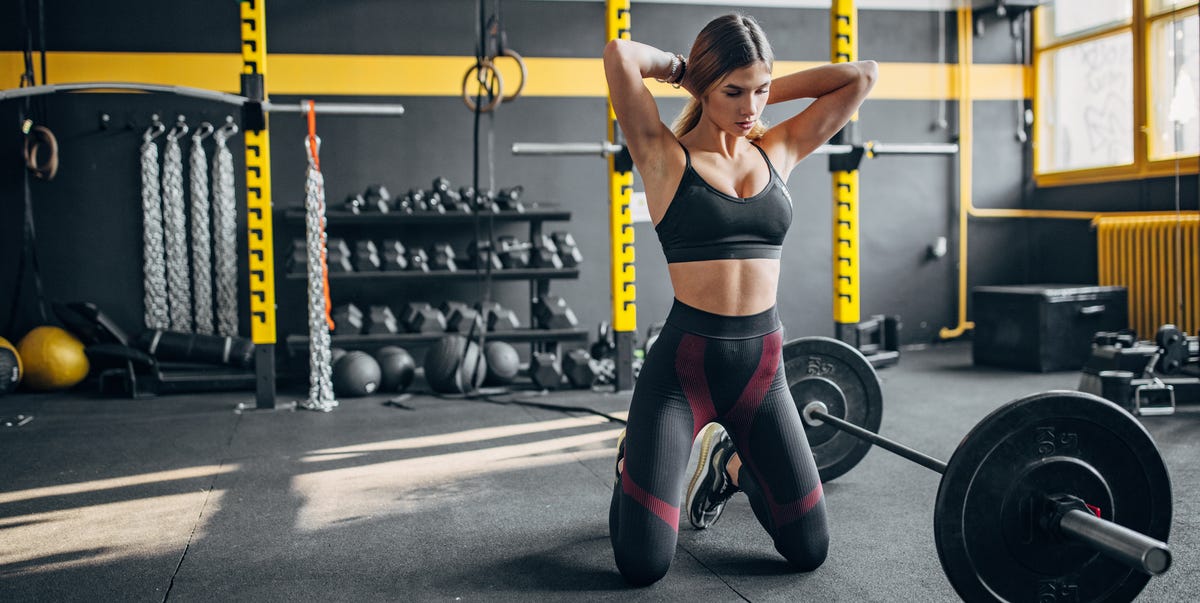
Increasing the effectiveness of your arm workout doesn’t always require heavier weights or more complicated movements. Sometimes, a simple change in position can make all the difference.
‘Want to level up your arm workout? Get on your knees,’ advises Dr Jennifer Ashton, fitness expert, board-certified obstetrician-gynaecologist and nutritionist.
Switching from a standing to a tall-kneeling position can improve control and help you focus more on each movement, says Joseph Webb, award-winning trainer, nutritionist and author with more than 20 years of coaching experience.
‘By taking much of your lower body out of the exercise, you reduce some of the opportunities to generate momentum and are encouraged to pay closer attention to your posture, core engagement and the quality of each rep,’ he says.
‘It isn’t necessarily better than standing in every situation, but it can be an excellent variation for improving body awareness and exercise technique.’
4 reasons to kneel during your arm workouts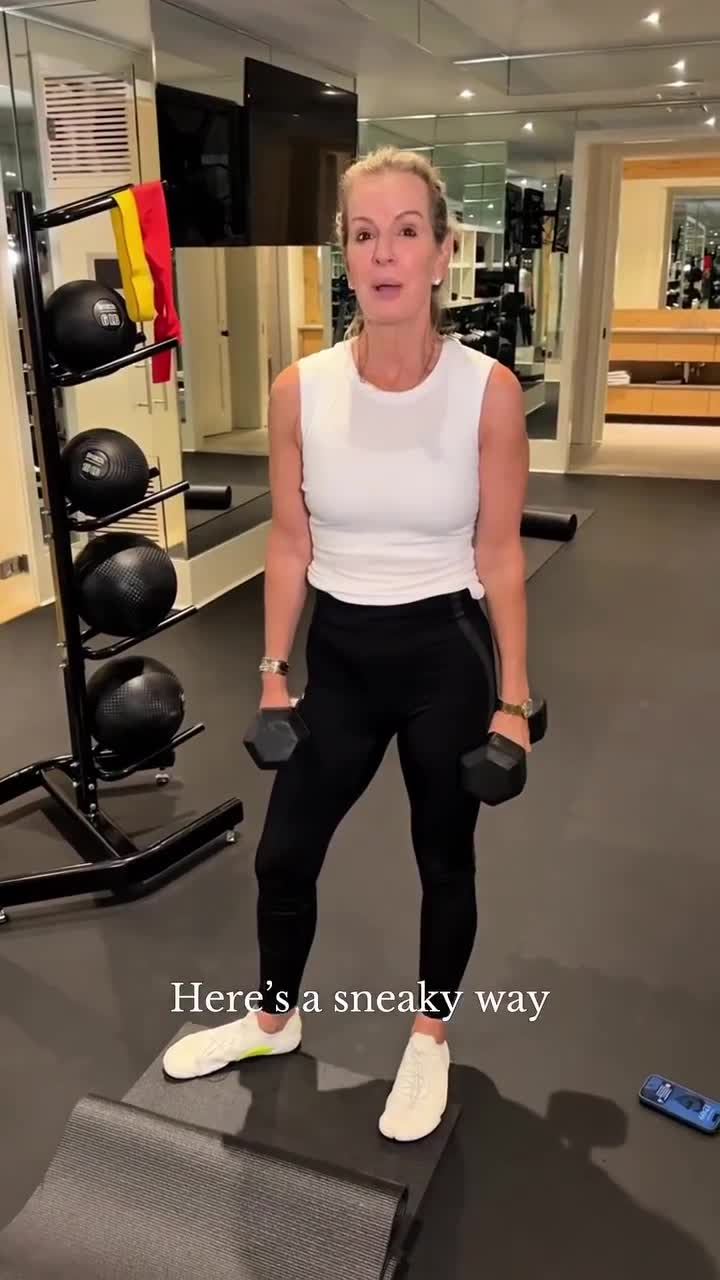 1. It cuts out ‘cheating’
Performing an arm exercise in a tall-kneeling position takes much of the lower body out of the movement.
‘During standing curls, people often generate momentum by bending their knees, driving through their hips or leaning backwards as the weight becomes challenging,’ says Webb.
‘Kneeling makes those compensations harder, encouraging slower, more deliberate repetitions and keeping more emphasis on the intended muscles.’
‘The supporting muscles are not really “cheating”, but kneeling can be a useful way to improve form and make every repetition more purposeful,’ he explains.
2. It engages your core
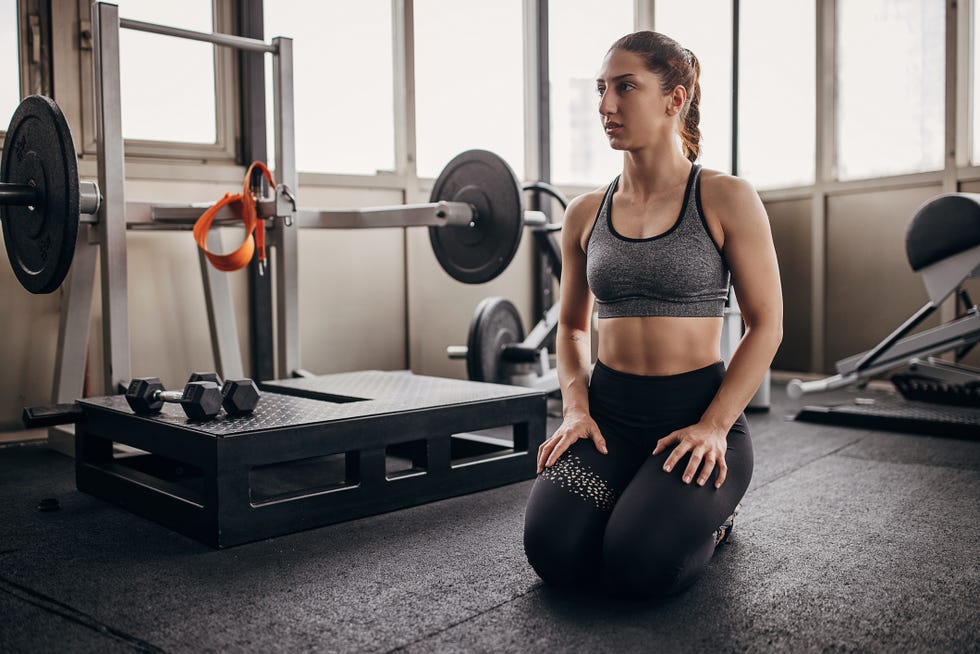
Tall kneeling removes the support and adjustments normally provided by your feet, ankles and lower legs. Your abdominal muscles and glutes therefore need to work together to keep your hips and ribcage stable while your arms move, says Webb.
Research agrees, suggesting kneeling positions can be a useful way to challenge core stability and control. One study found that a half-kneeling test effectively assessed a person’s ability to maintain posture with reduced support from the lower limbs.
‘It’s especially helpful because it encourages people to become more aware of their posture and prevents them from simply rushing through repetitions,’ Webb continues. This is supported by research suggesting kneeling changes the way the body maintains postural control compared with standing.
‘Keep your glutes gently engaged, maintain a tall position and exhale during the lifting phase without holding your breath.’
South_agency//Getty Images
3. It can protect your lower back
Kneeling can also make it harder to use excessive hip drive or lean backwards to complete a rep, potentially reducing unnecessary movement through the lower back.
However, the position alone does not guarantee protection, cautions Webb.
‘You still need to engage your core, keep your ribs stacked over your pelvis and choose a weight you can control,’ he advises.
‘I encourage people to finish the set when they can no longer maintain their position. Reaching “form failure” is a better stopping point than sacrificing technique to reach complete muscular failure.’
4. It highlights imbalances
Combining a kneeling position with single-arm exercises can make differences between sides much easier to spot.
‘Without help from your legs or as much opportunity to shift your body, you may quickly identify that one arm is stronger or that you rotate towards one side,’ Webb points out.
‘It encourages controlled, high-quality repetitions, which can support muscle development.’
One of our most frequently asked questions here at Women’s Health? How to build muscle and burn fat at the same time. So, we asked superstar trainer Oyinda Okunowo exactly how to do it. In this 4-week plan – created exclusively for Women’s Health COLLECTIVE members – you’ll get the workouts and nutrition guidance needed to help you on your way to better body composition. Tap the link below to unlock 14 days of free access to Oyinda’s plan and start training today.


Joseph Webb FCIMSPA, FRSPH, is an award-winning trainer and author whose distinctions place him among the most highly accredited professionals in the UK health and fitness industry. With over 20 years of coaching experience, he has worked with a diverse range of clients including celebrities, corporate CEOs, orthopaedic surgeons and athletes, and is recognised for his commitment to evidence-based practice and delivering results. He has been featured by BBC, The Standard, GQ and Marie Claire. Browse his site here