
 5 min read
For most millennial women, reading The Care and Keeping of You is a core memory. You could probably close your eyes and picture the cover art in detail: three girls sketched onto a white background, smiling and wrapped in towels, water dripping around them like they just stepped out of the shower.
Written by Valorie Lee Schaefer and first published in 1998 by American Girl, this “body book for girls” became the ultimate guide to knowing and caring for your body, especially during the many changes of puberty. It carried information about what to expect for your first period, when to start wearing a training bra, how to shave your legs, how to treat acne, and many more topics. Topics that seemed too daunting to bring up to your mom or friends were a little less scary in these charmingly illustrated pages (courtesy of Norm Bendell).
“I do think the book talked to girls in a voice they could really hear in a moment [when] they were hungry for what it had to say,” Schaefer tells ELLE. Through the guide, she and the American Girl team offered facts, advice, and reassurance “that the changes ahead were completely normal. We reminded [preteen girls] they were smart and capable; they were going to be okay.”
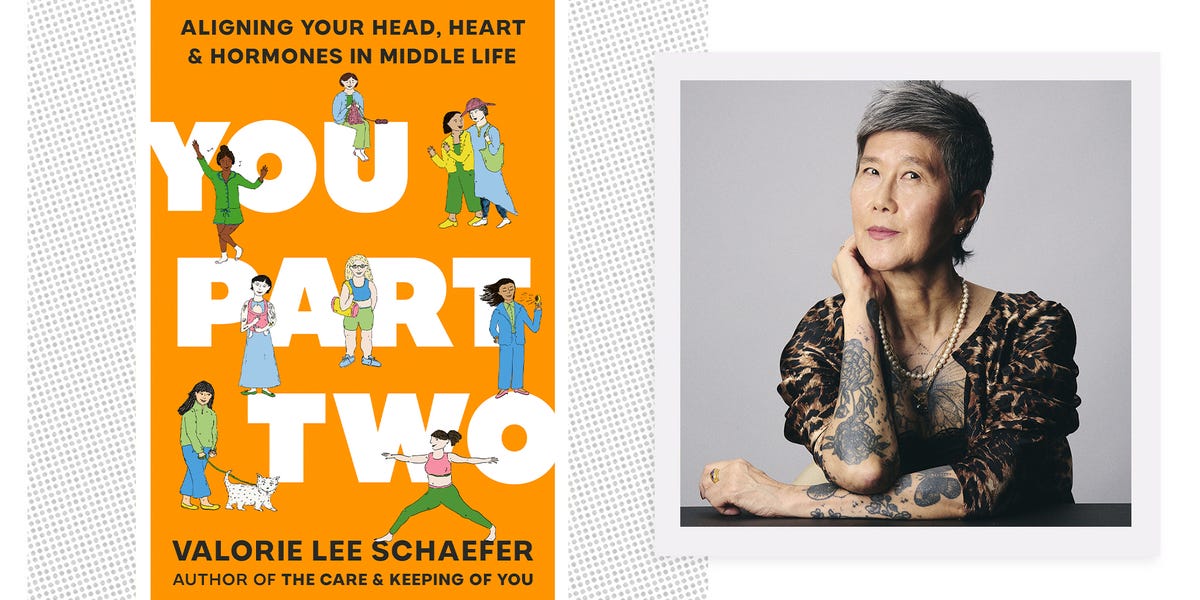
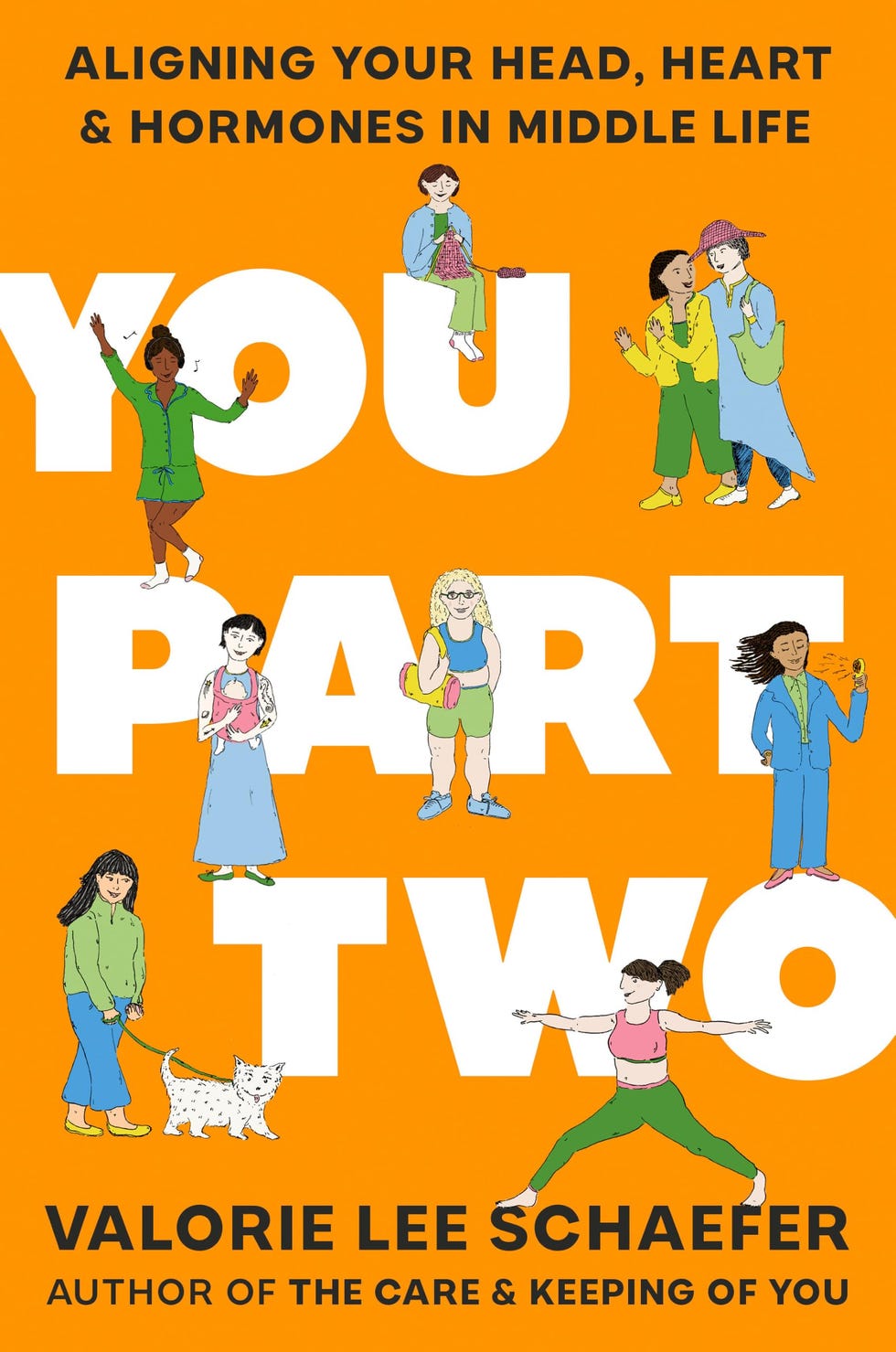
That’s one of the reasons why, 28 years later, The Care and Keeping of You continues to resonate. And it’s the perfect time for a follow-up. On April 27, 2027, Schaefer will publish You Part Two, which focuses on the changes women experience in adulthood as they head into perimenopause. This version, featuring illustrations by Edith Young, will likely reach the same fans—but this time they’ll be 30-something instead of 13.
“Maybe more than a sequel, You Part Two is the continuation of a conversation started almost 30 years ago. We’re just picking up the thread again, readers and I,” Schaefer says.
“I can’t tell you how many hundreds of times I’ve seen social media posts over the years—especially on TikTok—of women asking, ‘Where in the actual hell is The Care and Keeping book for grown-ups?’” she continues. “My friends or my daughters send me links, and some of them are just hilarious, and some are a little heartbreaking. A lot of women feel just as freaked out, stressed, and unprepared as they did as girls approaching puberty. I totally get that.”
Schaefer began talking about writing this book about seven years ago, she says, but things picked up after she appeared on Phoebe Judge’s This Is Love podcast in 2024. At the end of her interview, Schaefer happened to mention that she wanted to write “a slim little volume” about perimenopause for women in their mid-thirties and older. Laura Tisdel, her now-editor at Penguin Random House, reached out after hearing the episode, hoping to make that a reality.
“I struggled myself in the transitional years, especially in my forties, and I was chomping at the bit to get what I’ve learned out of my head and onto the page,” Schaefer, now 66, explains. “I’m so glad I finally get the chance to pass on lessons from my own experiences, guided by knowledgeable health care practitioners who’ve put midlife care at the core of their practices.”
You Part Two is meant to be a straightforward “quick-start guide to perimenopause” rather than an “exhaustive, encyclopedic manual that covers every facet of every topic,” the author says. Many such resources already exist in the world. But it is meant to help normalize discussions of perimenopause at every age before women are in the thick of it. Schaefer wanted to help readers “start adopting practices that will help ease their way” into midlife.
It’s also meant to be comforting, as if to say, These changes you’re experiencing, like the ones in puberty, are normal and human. “I want women to feel empowered to talk openly with their community of family, friends, health care providers, and especially other women about what they’re experiencing without shame or embarrassment so they can find the support they need,” Schaefer says.
“I think that a woman in her twenties or thirties has almost a bone-deep remembrance of the preteen girl she used to be. That girl was so curious, so bright, so full of dreams!”
The timing for a new book felt right too. “The first generation of girls who grew up with The Care and Keeping of You are approaching their mid- to late thirties,” she explains. “If you think of puberty and menopause as bookends, those readers are at the beginning of their middle chapter. Just as in puberty, midlife brings changes that affect us as whole people—mentally, physically, emotionally, socially—the whole deal. And just as in the run-up to puberty, information is our friend and preparation, or the lack of it, affects our experiences and outcomes.”
The book doesn’t only focus on biology and hormones, but also on how all aspects of a woman’s life are interconnected. One section of the book, for example, is “devoted to the importance of building and protecting our allyship with other women,” which acts like “a ribbon woven throughout the chapters,” Schaefer points out. “I will never shut up about the importance of building a supportive community, especially a community of other women.”
Schaefer would be open to writing more You installments in the future (“Resoundingly, yes!” she says). But she’s also still grateful for how readers remain so connected with the original—her first book ever. “I mean, what a crazy, wondrous, and deeply gratifying thing to have been a part of birthing! I don’t think I could have predicted that the book would still hold such a special place in the lives of women who read it as a kid,” she says.
The idea for The Care and Keeping of You first came from Pleasant T. Rowland, founder and creator of The American Girls Collection. At the time, Schaefer had been working at American Girl for about five years. She remembers Rowland being concerned that young girls approaching puberty were “feeling unprepared and full of questions they were too embarrassed to ask.” Sure enough, the young readers of the American Girl magazine were asking many of these questions via handwritten letters to the company. Schaefer was hesitant to write something herself, but Rowland encouraged her. “She said, ‘You’re the best person to do it, you can do it, and you will do it.’”
As for why women still hold the book so close to their hearts today, she muses, “I think that a woman in her twenties or thirties has almost a bone-deep remembrance of the preteen girl she used to be. That girl was so curious, so bright, so full of dreams! As grown women, I think that girl still lives inside our hearts somewhere, and we hold a deep affection for who she was at age 8, 9, 10. Maybe we even feel a little protective toward her. I really believe that this nostalgia, as much as anything, is what’s made the book resonant for women all these years later.”