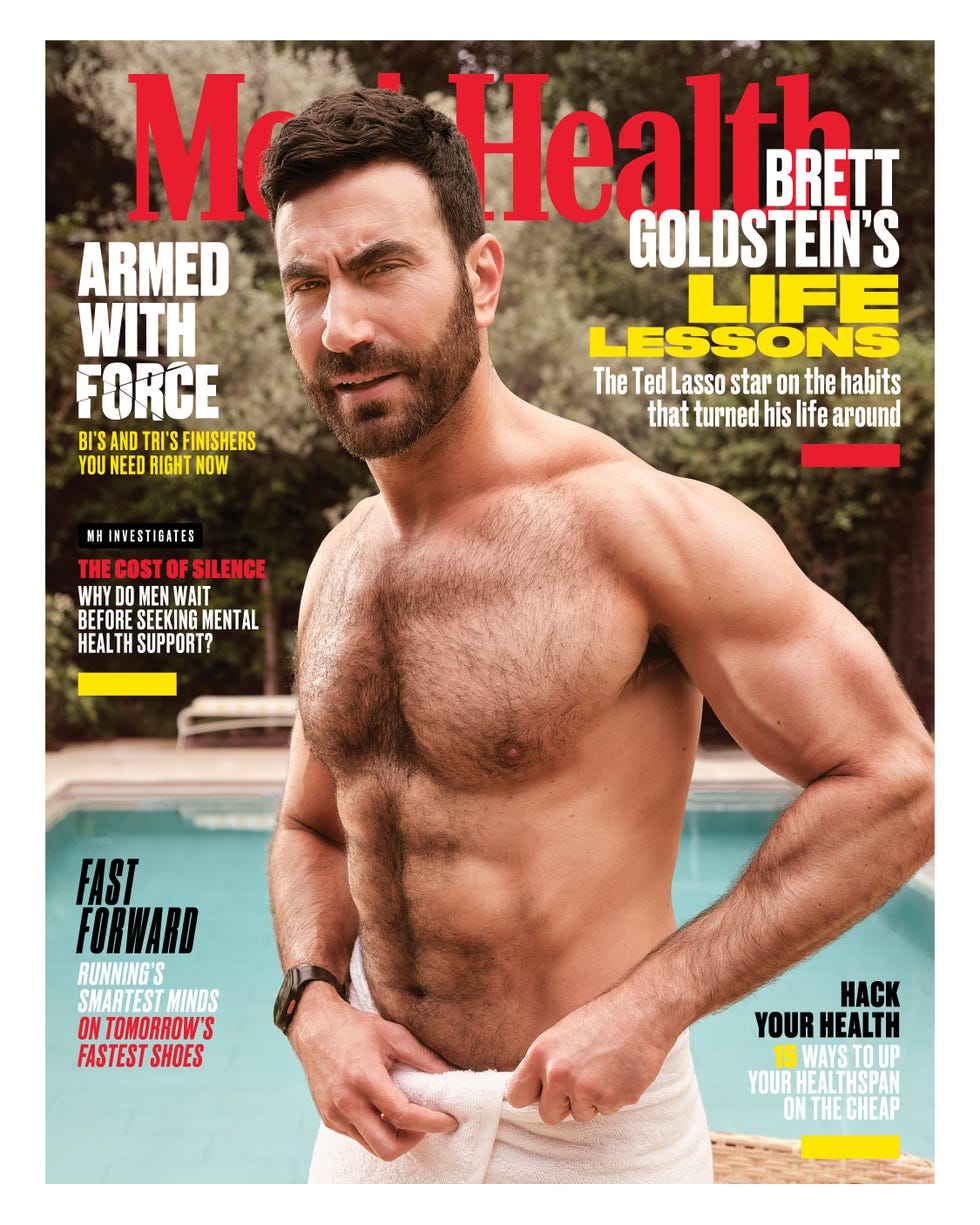
Brett Goldstein is no stranger to putting in the work. The 46-year-old Ted Lasso star first began training seriously for his homegrown superhero film SuperBob, before later levelling up to play Hercules in Thor: Love and Thunder and, more recently, gracing our cover.
But the biggest training lesson he’s learned? More isn’t always better.
Asked what a good week looks like when tackling our ‘World’s Toughest Interview’, Goldstein – ever relatable – reeled off a refreshingly achievable schedule: ‘Weights Monday, Wednesday, Friday, walking or running the other days, one day of Pilates.’
Working with New York trainer and former bodybuilder Victor Del Valle, however, Goldstein originally had slightly more ambitious ideas.
‘He said, “What do you want to do?” I said, “Weights five days a week.” He said, “We’re going to do three days a week.”’
What about the other two days?
‘He said, “Brother, you’re not going to be able to walk the other days.” And he was right.’
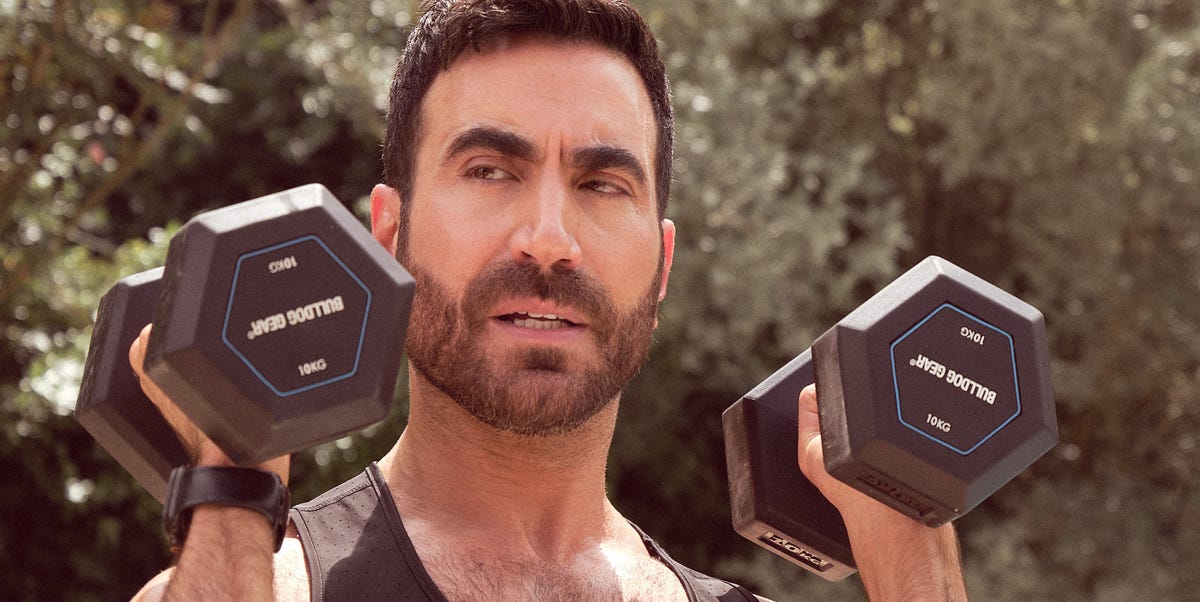
When we spoke to Goldstein he told us those sessions revolve around ‘superset circuits’ and ‘very heavy weights’. Goldstein says his trainer ‘absolutely fucking destroys me Monday, Wednesday, Friday’, leaving the rest of the week for recovery.
Sure, on paper, five days sounds better than three. More sessions. More sets. More opportunities to grow. But muscle building isn’t about how much work you can compress into a single week. It’s about how much work you can actually recover from.
Training provides the stimulus. Recovery is where your body rebuilds and adapts. If every session is a demolition job, throwing another two into the mix can quickly turn productive volume into junk reps, stalled progress and a body that feels as though it’s been put through the ringer without much in the way of results.
That doesn’t mean Goldstein spends the other four days slouching, though. Walking, running and Pilates keep him active without repeatedly dipping into the same recovery reserves. ‘I have to exercise every day or I go mad,’ he told MH. But daily movement and daily hard training are two very different propositions.
As for the health habit that’s made the biggest difference? ‘Weights,’ Goldstein says. ‘Doing more weights. Training more.’
Just, crucially, not all the time.
Read our full interview with Brett at this link. You can subscribe to Men’s Health by clicking here.