
Balancing a busy lifestyle means Angela Scanlon takes her recovery just as seriously as her most demanding days.
‘I do rebounding for three minutes before bed to settle my nervous system, which I’m much more aware of now than I was before,’ the broadcaster said on The Energy Equation Podcast, which explores guests’ sleep, stress, fitness and recovery – and how they’re connected.
It’s part of the 42-year-old’s renewed focus on sleep. ‘Lemon balm, holy basil, magnesium spray straight on the skin, lavender on the pillow. I like an eye mask and I’m now into earplugs. Phone out of the room. It’s a full shutdown situation,’ she told host Oli Patrick, a physiologist and lifestyle specialist.
Benefits of rebounding
Alongside its potential to reduce stress, rebounding – jumping on a mini trampoline – also comes with a number of physical benefits.
1. It’s low-impact
The soft trampoline mat and elastic cords absorb the force of each landing, reducing stress on the joints, says Aly Giampolo, founder of The Ness. ‘This allows rebounding to be both high-intensity and low-impact.’
2. It’s a full-body workout
Rebounding engages the whole body, activating the glutes, hamstrings and core as they work to stabilise you while jumping, Giampolo adds.
3. It improves balance and co-ordination
Because the trampoline surface is unstable, rebounding can help improve balance, coordination and functional mobility, says Milica McDowell, a doctor of physical therapy, exercise physiologist and owner of Clearwater Physical Therapy. A 2019 study published in Clinical Interventions in Aging found that 12 weeks of rebounding significantly improved balance and mobility in women over 50 with osteopenia.
4. It counts as cardio
According to an American Council on Exercise (ACE) study, 24 college students took part in a rebounder workout, reaching an average of 79% of their maximum heart rate – within the recommended range for cardio training set by the American College of Sports Medicine.
Angela’s fitness scores
Angela wore a monitor for three-and-a-half days, providing a snapshot of her daily energy levels and generating scores across key areas of her health.
Out of a possible 100 for fitness, she scored 74 – despite not formally exercising. ‘I don’t do it,’ she admitted. Her relatively high score was likely due to how much she moves day to day, Patrick noted, alongside a recovery routine that supports her overall energy levels.
‘Based on your training history and your active lifestyle, you are as fit as you need to be,’ he said.
Patrick then carried out two additional tests to build a more complete picture of her physical capacity. ‘Cardiorespiratory fitness – your ability to use oxygen – plays a big role in everyday energy and fatigue,’ he explained.
VO2 max
Patrick measured Angela’s VO2 max, which reflects the maximum amount of oxygen the body can use during intense exercise.
‘It shows how efficiently you deliver oxygen to your tissues and remove carbon dioxide,’ he said.
Angela scored 43.5 mL/kg/min – placing her well above Patrick’s 32 mL/kg/min lower threshold and the 40 mL/kg/min benchmark for good fitness.
‘At 40, you’ve got good physiological fitness. At 45, you’re really good,’ he said.
Her recent completion of the CoppaFeel charity trek – a four-day hike through the Himalayas in India, reaching elevations of up to 1,300m – likely contributed to the result.
Heart rate variability
‘You’ve got a super HRV,’ Patrick told her, referring to heart rate variability – the variation in time between heartbeats, which reflects how well the body recovers.
Angela scored 97/100. Patrick attributed this, in part, to her evening routine, noting that she begins shifting into recovery mode up to two hours before bed.
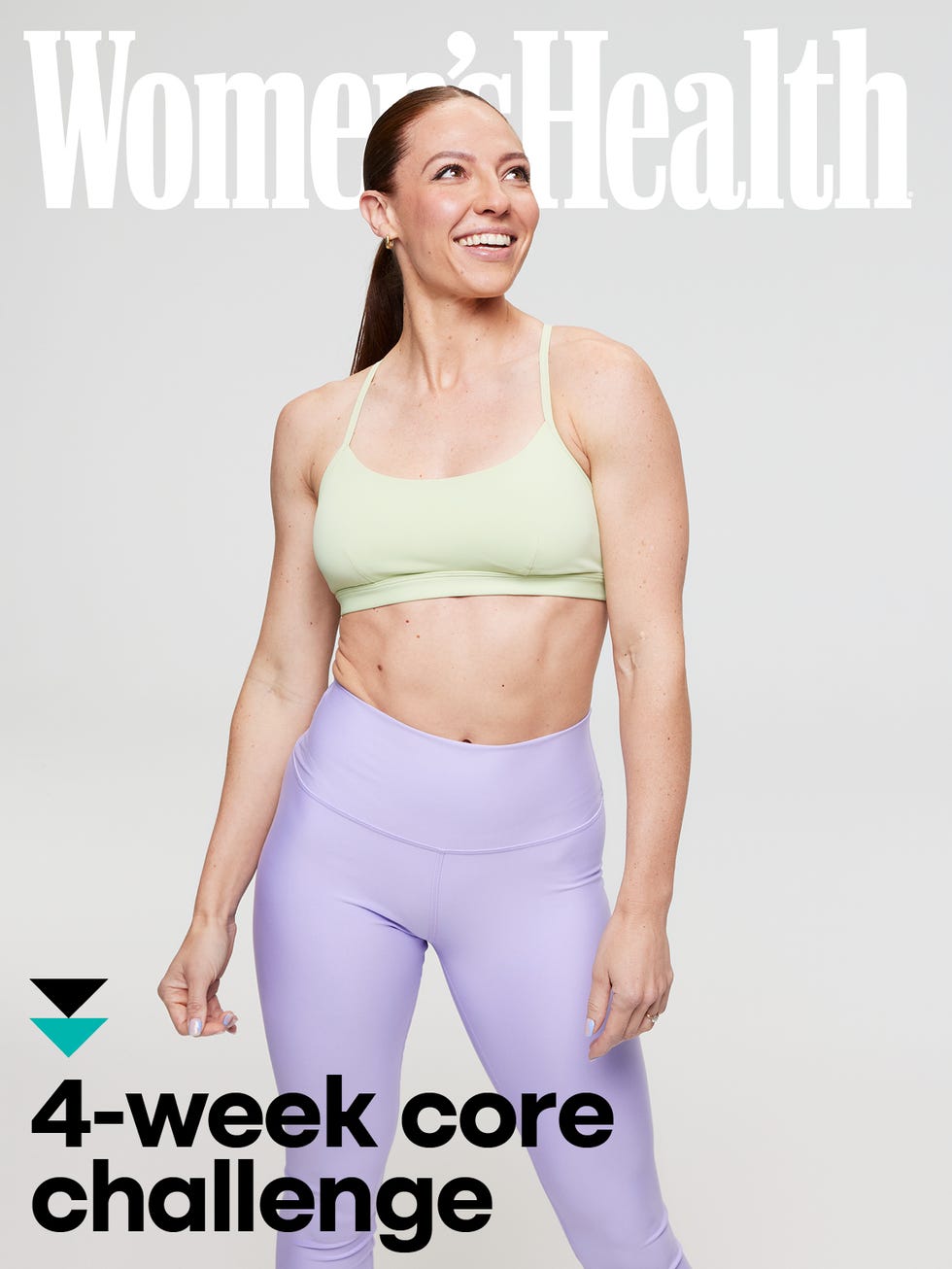
Having a strong core is about far more than sporting a six-pack. Build functional mid-section strength – while also improving your power, posture, coordination and balance – with WH COLLECTIVE coach Izy George’s 4-week core challenge. Download the Women’s Health UK app to access the full training plan today.
 Related Stories