
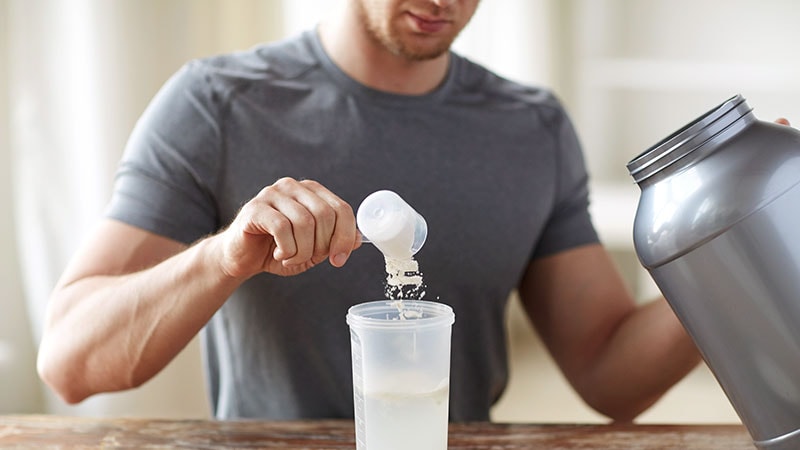
Canadian teenagers and young adults who use pre-workout dietary supplements are likely to get too little sleep, potentially jeopardizing their health, researchers say.
 Kyle T. Ganson, PhD
Sleep is particularly important for young people, “who are going through significant physiological, psychological, and cognitive development,” Kyle T. Ganson, PhD, of the Factor-Inwentash Faculty of Social Work at the University of Toronto in Toronto, told Medscape News Canada.
“Ironically,” he noted, “adolescents and young adults may turn to pre-workout supplements to support and catalyze their workout, but that may come at the risk of losing critical hours of sleep, which is necessary for rejuvenating energy levels, overall recovery, and muscle repair.
“One of the key findings of the study is that adolescents and young adults require between 7 and 10 hours of sleep per night, and we found that those who used [pre-workout supplements] have 5 or fewer hours,” Ganson said.
The study was published on December 3 in Sleep Epidemiology.
Demographically Diverse Sample
The researchers analyzed data from 912 participants in Wave 2 of the Canadian Study of Adolescent Behaviors. They used multinomial logistic regression analyses to investigate the cross-sectional association between the use of pre-workout dietary supplements in the past 12 months and average sleep duration in the past 2 weeks.
Pre-workout use (any/none) was assessed with the question, “Over the past 12 months, have you used any of the following appearance- and performance-enhancing dietary supplements and substances?” with “pre-workout drinks or powders” listed as a response option.
Average sleep duration was self-reported based on the question, “In the past 2 weeks, how many hours per night did you sleep on average?”
The sample was demographically diverse. The mean age was 23.4 years. More than half of participants (57.4%) identified as girls or young women. Nearly two thirds (62.2%) identified as White, and 55.1% identified as heterosexual.
About one third of participants (34.9%) reported averaging 7 hours of sleep per night over the past 2 weeks. More than one fifth (22.2%) reported using pre-workout supplements in the past 12 months.
The data were adjusted for age, gender, race/ethnicity, sexual orientation, highest completed education, Patient Health Questionnaire-9 score, General Anxiety Disorder-7 score, and any weight training in the past 30 days.
Developmental Implications
Adolescents and young adults who reported using pre-workout dietary supplements were more than twice as likely to report 5 hours or less of average sleep per night as those who did not, relative to 8 hours of sleep. The relative risk ratio was 2.53.
“Findings underscore that the high caffeine content of pre-workout dietary supplements is associated with shorter sleep durations that are well below the recommended guidelines for adolescents and young adults,” the authors wrote.
“These products commonly contain large doses of caffeine — anywhere between 90 and over 350 mg of caffeine — more than a can of Coke (which has roughly 35 mg) and a cup of coffee (with about 100 mg),” said Ganson. “Our results suggest that pre-workout use may contribute to inadequate sleep, which is critical for healthy development, mental well-being, and academic functioning.”
The authors noted several limitations of the study. The sample was collected via social media, and participants self-selected their involvement in the data collection, which limited the generalizability of the findings.
The study also had relatively high attrition. No details were provided on the dose, frequency, and timing of pre-workout supplement use, or the various formulations — all of which might affect sleep duration.
Despite these limitations, the authors concluded that “health and mental health care professionals should provide education and guidance on the potential adverse effects that pre-workout use can have on sleep duration if consumed too close to bedtime.” They also recommended providing sleep hygiene information, particularly given the importance of sleep for athletic performance and muscle building.
Young people should be informed about the safety and efficacy of these dietary supplements, Ganson said. “Just because they are easy to purchase and readily available doesn’t necessarily mean they are effective and safe.”
Fatigue and Stimulants Alex Dimitriu, MD
“We are sleeping less and stimulating or caffeinating ourselves more, and this study shows the massive impact of stimulant use on sleep,” Alex Dimitriu, MD, founder of Menlo Park Psychiatry & Sleep Medicine in Menlo Park, California, told Medscape News Canada.
While his younger clientele doesn’t often report use of pre-workout supplements, many are using caffeine and other stimulants, including prescription methylphenidate, he said. These patients “get into loops of fatigue requiring stimulants, then that impairs sleep. They get insufficient sleep and then need more stimulants — most often, coffee.”
Dimitriu said more research is needed to assess specific products, caffeine doses, and timing of use. “However, even globally, the association of decreased sleep with workout enhancers appears strong.”
He also cited a recent study published online in Nature, in which the authors assessed sleep and activity (measured in steps). “Sleep improved the next day’s physical activity substantially,” Dimitriu said. So, patients may be told, “Before taking more coffee or a workout enhancer, get some sleep. It’s natural, and it’s good for you, at any stage of life.”
This study was funded by the Connaught New Researcher Award at the University of Toronto. Ganson and Dimitriu reported no relevant financial relationships.
Marilynn Larkin, MA, is an award-winning medical writer and editor whose work has appeared in numerous publications, including Medscape Medical News and its sister publication MDEdge, The Lancet (where she was a contributing editor), and Reuters Health.