
From pregnancy to older age, our bodies respond differently to food. Researchers explore how biology, lifestyle, and even meal timing could reshape the way we approach healthy eating.
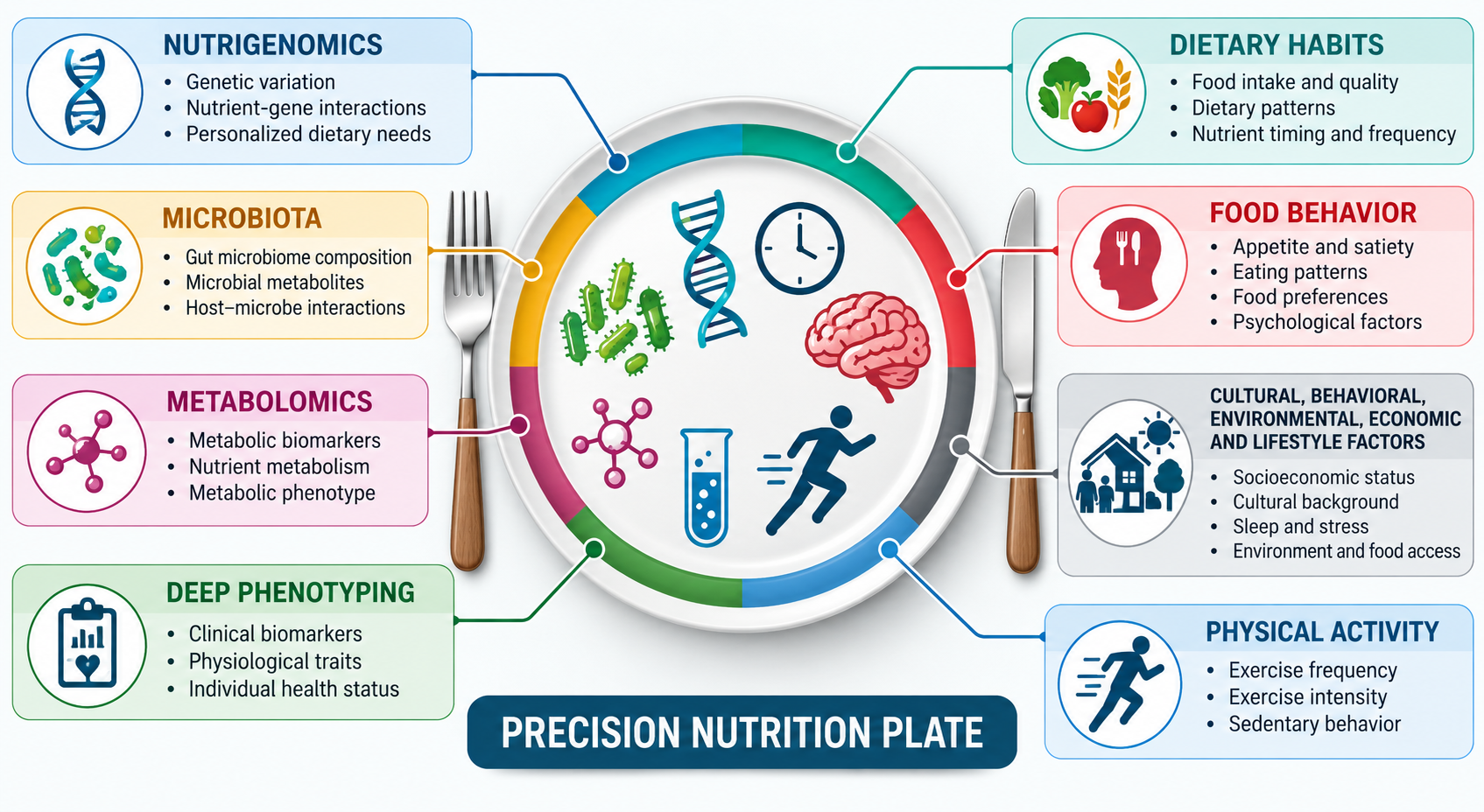
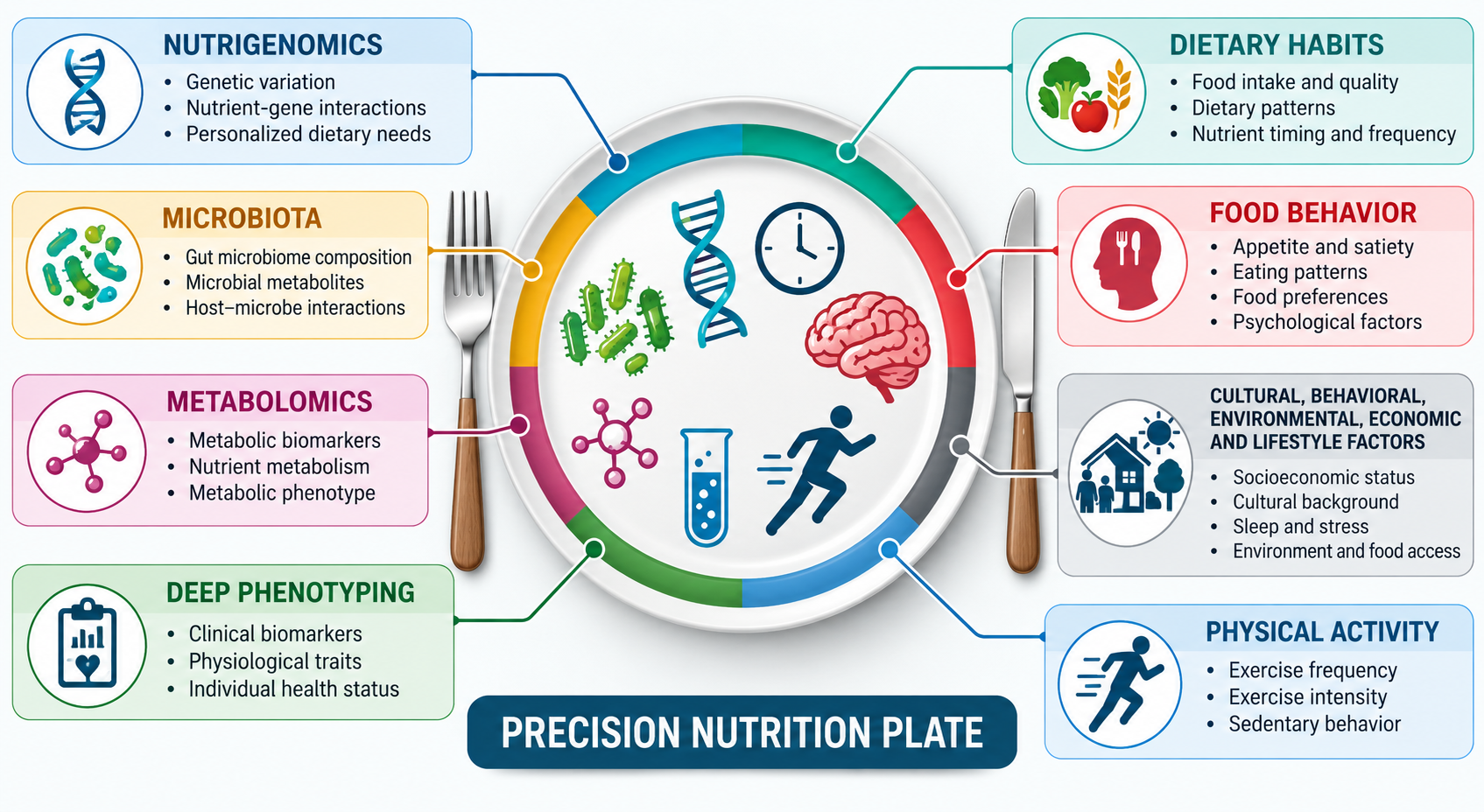
Proposed precision nutrition plate (adapted from De Toro- Martín et al. Review: Precision Nutrition and Health Outcomes Across the Lifespan.
A review published in the journal Nutrients proposes seven research pillars for applying precision nutrition to improve health outcomes across the lifespan. The proposed strategies aim to support disease prevention across diverse populations by accounting for changing nutritional needs, disease vulnerabilities, and biological and behavioral differences. If further studies support them, precision nutrition approaches could make health interventions more effective, sustainable, and accessible for people worldwide.
As people age, nutritional needs change, and disease risk often increases as physiological functions decline. Yet individual differences in biology and health status call for nutritional interventions tailored to each person’s needs and stage of life. These differences can influence how individuals respond to the same diet, highlighting the need for more personalized nutritional guidance.
In this narrative, non-systematic review, the researchers discussed precision nutrition strategies and future directions, drawing primarily on literature published since 2020. They examined cardiovascular, respiratory, blood, and sleep health and proposed seven connected research pillars.
How precision nutrition can guide disease prevention
Individual differences in dietary needs and responses limit conventional “one-size-fits-all” strategies. Precision nutrition aims to tailor recommendations to individual characteristics, potentially using artificial intelligence (AI) or machine learning (ML) to analyze multi-omics data and wearable-sensor information for personalized risk assessment.
To bring precision nutrition into clinical practice across life stages, interventions must account for changing nutritional needs, microbiome and metabolic factors, and psychological, social, environmental, and behavioral influences. They should also be practical, accessible, and suitable for wider use. Combining quantitative and qualitative data with workforce training and community education may help researchers develop tailored interventions that reflect differences in genetic makeup, metabolism, dietary habits, education, income, and access to food.
Considering a mother’s existing nutrient levels, genetic differences, and metabolic profile may help tailor nutritional support during pregnancy and potentially benefit cardiovascular health, though long-term outcomes and genotype-specific dosing remain uncertain.
Introducing allergenic foods during infancy may reduce food allergy risk, though evidence for preventing asthma is less certain. Vitamin D status can be assessed by measuring 25-hydroxyvitamin D in the blood, while carotenoid levels in plasma or skin can provide clues about fruit and vegetable consumption. Fractional exhaled nitric oxide (FeNO) measurements can help assess type-2 inflammation in the airways. These measures may help researchers assess nutritional status and airway inflammation when developing personalized prevention strategies.
For guiding obesity and cardiovascular disease prevention, researchers could combine demographic, behavioral, environmental, and cultural factors with body composition, physical activity, metabolic biomarkers, and genetic information.
Long-chain omega-3 fatty acids can reduce triglyceride levels and may improve blood vessel function in people with elevated triglycerides, while the Dietary Approaches to Stop Hypertension (DASH) diet is particularly effective for those with high blood pressure. Women who show lipid changes after menopause may benefit from dietary strategies that target cholesterol and apolipoprotein B (apoB), whereas middle-aged men with metabolic syndrome and hypertension may benefit more from weight management and sodium restriction.
Nutrient deficiencies become more common with advancing age, often resulting from reduced intake and absorption, chronic conditions, or interactions between different medications. Low levels of vitamin D, vitamin B12, potassium, and magnesium may affect vascular function, blood pressure, heart rhythm, and metabolism. Proposed precision nutrition approaches prioritize targeted screening to identify individual risk factors and address specific deficiencies, with supplement recommendations guided by individual needs. This is particularly important for older adults with impaired kidney function or those taking multiple medications.
Individualized nutrition may also help address iron deficiency and changing nutrient needs in sickle cell disease and thalassemia. The review considers meal timing, sleep rhythms, and physical activity when tailoring dietary interventions, but clinical evidence for these combined approaches remains limited.
Key components of precision nutrition
The seven proposed pillars cover prevention for all, data sources, quantitative and qualitative sciences, intervention implementation, communities, and education and workforce training. Precision nutrition research evaluates the nutritional exposome using self-reported surveys, electronic medical records, biomarkers, and clinical parameters. These data may be combined with genetic, microbiome, metabolomic, proteomic, and circadian information, alongside lifestyle, behavioral, environmental, and geographical factors. Advanced models and AI/ML may help identify phenotypic subgroups, predict dietary responses, and assess sociodemographic, environmental, and biological interactions.
Qualitative studies of cultural norms, lived experiences, and behavioral barriers help shape acceptable interventions. Integrating qualitative and quantitative data supports tailored strategies across life stages. Community participation builds trust and relevance by involving people in strategy development. Workforce training equips multidisciplinary teams with nutrition, data analysis, and social and behavioral science skills needed for implementation.
Together, these pillars link individual and contextual differences to intervention design and implementation across the lifespan. But challenges involving dietary-intake comparability, multi-omics data harmonization, food terminology, and ethical and regulatory requirements must be addressed.
Standardized food terminology can help link dietary records with metabolomics-derived biomarkers. Statistical methods can reduce technical differences between datasets and improve estimates of usual dietary intake, while federated learning (FL) allows researchers to analyze health information across institutions without sharing raw patient data.
Conclusion
Based on the review, precision nutrition brings together biological, behavioral, and environmental information to guide preventive care. Combining information from wearable devices with molecular data may help identify people most likely to benefit from specific dietary interventions. It remains uncertain whether these approaches improve cardiovascular, respiratory, blood, and sleep-related outcomes in routine care.
Further phenotype-guided trials in diverse populations and standardized data methods are needed to test clinical benefits and establish effective strategies that can reach more people. The authors acknowledge that their review was not systematic and focused on selected health domains.
Source:
Journal reference:
Shi, Y., Brown, A. G. M., Dixit, S., Shiroma, E. J., Farmer, N., Lu, Q., Sood, B., Vitalis, D., Ilias, M., Lachowicz-Scroggins, M., & Pratt, C. A. (2026). Precision Nutrition and Health Outcomes Across the Lifespan. Nutrients, 18(20), 3424. DOI: 10.3390/nu18203424, https://www.mdpi.com/2072-6643/18/20/3424